
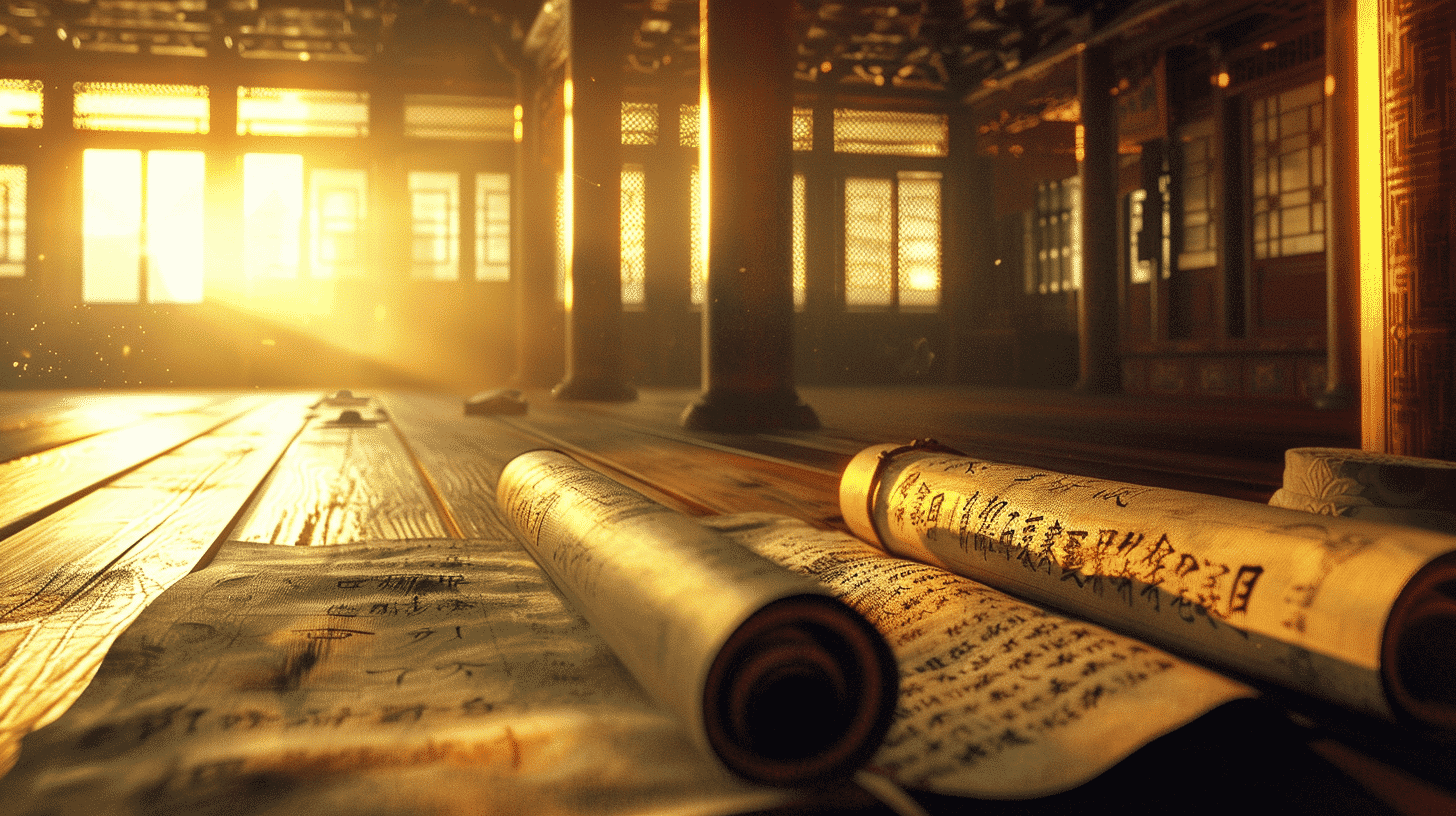
Meihoki: A Tang Dynasty Treasure Preserved Only in Japan
Deep in the mountains of Togano-o, northwest of Kyoto, stands the World Heritage site of Kosanji Temple. This ancient temple safeguards a precious National Treasure: the Meihoki, a collection of Buddhist tales from Tang Dynasty China that now exists only in Japan.
What is Meihoki? Ancient Wisdom on Karmic Retribution
The Meihoki (Records of Karmic Retribution) is a collection of Buddhist tales compiled by Tang Lin, a high-ranking official of the Tang Dynasty, around 650 CE. The title "Meihoki" refers to the Buddhist teaching that every action in this world inevitably brings its corresponding consequence, whether visible or invisible.
The 53 tales contained in three scrolls convey the fundamental Buddhist teaching that good deeds bring good results and bad deeds bring bad results, using concrete stories that resonated deeply with people of that era and profoundly influenced Chinese society.
Why It Became a National Treasure: Immeasurable Cultural Value
The Meihoki was designated as a National Treasure for its rarity and historical significance.
First, this text was lost early in China and now survives only in Japan as a "lost work" (itsuzon-sho). The Kosanji manuscript is believed to be the oldest surviving copy, brought from Tang China by the monk Engyo in 838 during the early Heian period.
Second, its enormous influence on Japanese literature cannot be overstated. From the Nihon Ryoiki, Japan's oldest collection of Buddhist tales compiled in the early Heian period, to the Konjaku Monogatari-shu which incorporated 49 tales from the Meihoki, this work served as the wellspring that decisively influenced the development of Japanese narrative literature.
The Appeal and Highlights of Meihoki
The greatest appeal of the Meihoki lies in its vivid depiction of the lives, beliefs, and values of people from over 1,300 years ago. The characters range from emperors to commoners, showing people from all social strata living according to the law of karma.
The beauty of the manuscript itself, transmitted as handscrolls, should not be overlooked. As a precious document preserving Tang Dynasty calligraphy styles, it holds an important position in calligraphy history. The three scrolls measure 339cm, 558cm, and 673cm in length respectively, with each character written in elegant regular script speaking to us across the centuries.
Kosanji Temple and the Meihoki: A Cultural Treasure Protected for 800 Years
Kosanji Temple, re-established in 1206 by the monk Myoe Shonin, is an ancient temple of the Kegon school. Known for housing numerous National Treasures including the famous Choju-jinbutsu-giga (Scrolls of Frolicking Animals), it is called the "treasure house of cultural properties in western Kyoto."
The story of how the Meihoki came to Kosanji involves an important chapter in Japanese Buddhist history. The wrapper bears the inscription "Brought by Ajari Engyo, Chinese writing," indicating it was brought back by Engyo, one of Kukai's leading disciples and one of the Eight Monks who Entered Tang China, when he returned in 838. It was later catalogued in the temple's sacred text inventory by the monk Gien in 1250, and has been carefully preserved for nearly 800 years since.
The Surrounding Environment: A World Heritage Temple in Harmony with Nature
Kosanji Temple is located about an hour northwest of Kyoto city center, deep in the mountains of Togano-o. Surrounded by giant cedar trees with the clear waters of the Kiyotaki River flowing nearby, this naturally rich environment truly embodies the atmosphere of a sacred place removed from the secular world.
Known for its spring greenery and autumn colors, the gradation of maple leaves viewed from the National Treasure Sekisui-in is particularly spectacular during the November foliage season. The temple is also famous for having Japan's oldest tea garden, where Myoe Shonin cultivated tea seeds brought from Song China by the Zen master Eisai, which later became the origin of Uji tea.
Located just a short walk from the "Togano-o" bus stop, about 55 minutes by JR bus from JR Kyoto Station, visitors can appreciate cultural treasures in peace, away from the city's hustle and bustle.
- 📍 Plan Your Visit to Kyoto
- Find tours, activities & transport passes near Meihoki
- [ Kinkakuji Fushimi Inari & Kimono Rental ]
Q&A
- Can I see the actual Meihoki manuscript?
- The actual National Treasure is not usually displayed for preservation reasons. Accurate replicas are exhibited at Kosanji's Sekisui-in, where you can learn about its contents. The original is occasionally shown during special exhibitions.
- Why was the Meihoki lost in China?
- Many Buddhist texts were lost in China due to historical upheavals including wars, dynastic changes, and Buddhist persecution. In Japan, however, it was carefully preserved in temples, allowing it to survive to the present day.
- When is the best time to visit Kosanji Temple?
- Spring greenery (April-May) and autumn colors (November) are particularly beautiful. However, an additional entrance fee is required during foliage season and it becomes crowded. For quiet appreciation of cultural properties, other times are recommended.
- What other National Treasures can be seen at Kosanji?
- The temple houses 8 National Treasures including the Choju-jinbutsu-giga scrolls (replicas on display), Sekisui-in building, portrait of Myoe Shonin, Kegon sect patriarch paintings, Butsugen Butsumo painting, Gyokuhen dictionary, and Tenrei Bansho Meigi, plus over 10,000 Important Cultural Properties.
Basic Information
| Name | Meihoki |
|---|---|
| Category | National Treasure (Calligraphy and Books) |
| Period | Tang Dynasty (7th century) |
| Compiler | Tang Lin |
| Format | 3 handscrolls |
| Dimensions | Vol.1: H28.2cm L339.0cm / Vol.2: H28.2cm L558.0cm / Vol.3: H28.2cm L673.0cm |
| Contents | 53 Buddhist tales |
| Location | Kosanji Temple (8 Umegahata Togano-o-cho, Ukyo-ku, Kyoto) |
| Designated | November 22, 1952 |
References
- Meihoki - Wikipedia
- https://ja.wikipedia.org/wiki/冥報記
- About Kosanji Temple National Treasures and Important Cultural Properties │World Heritage Togano-osan Kosanji Temple Official Website
- https://kosanji.com/about/national_treasure/
- Database of Nationally Designated Cultural Properties
- https://kunishitei.bunka.go.jp/heritage/detail/201/671
- Access│World Heritage Togano-osan Kosanji Temple Official Website
- https://kosanji.com/access/
Last verified: 2025.10.23