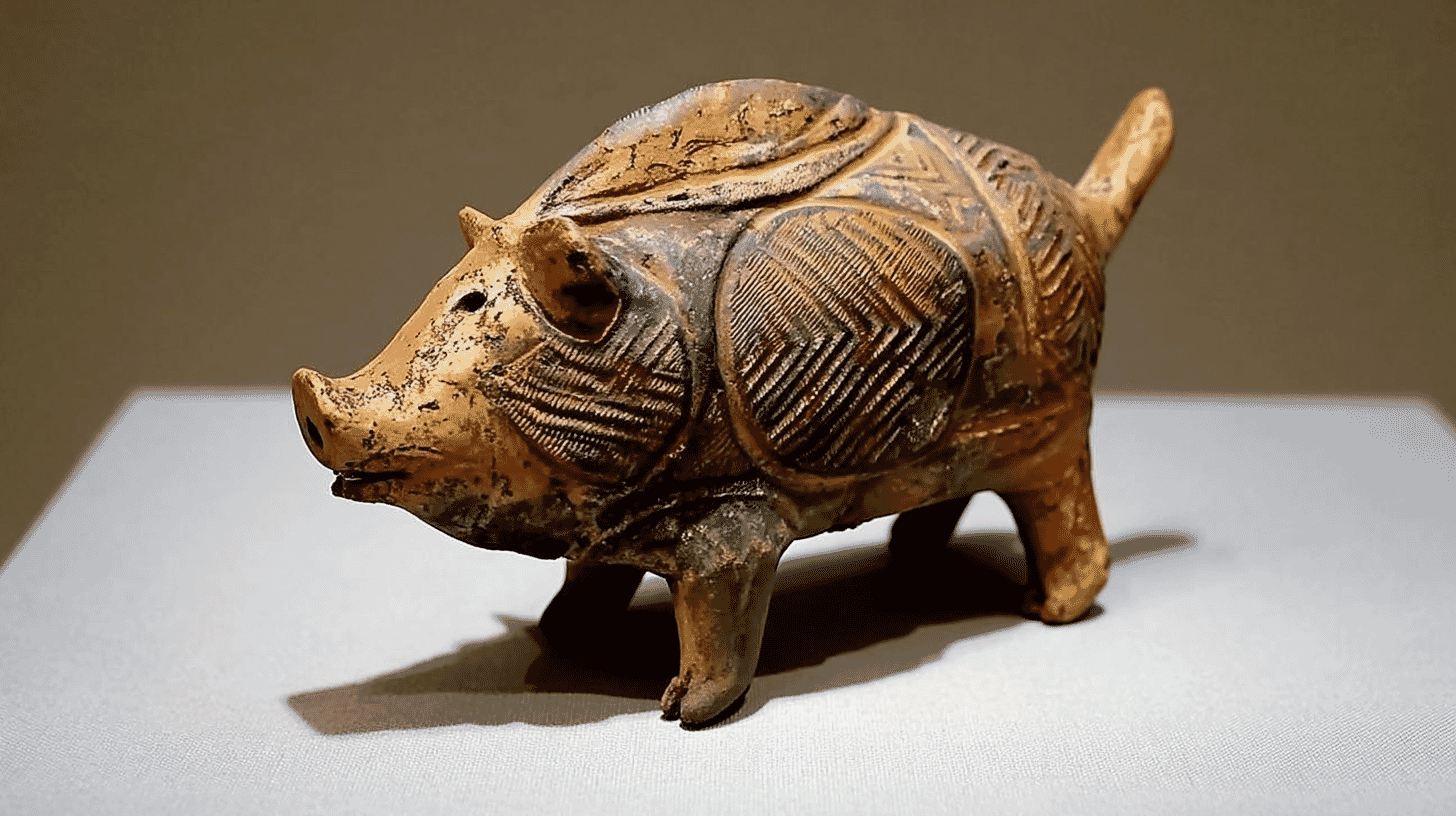
Boar-shaped Clay Object from Tokoshinai Site: A 4,000-Year-Old Jomon Masterpiece in Hirosaki

Discover the remarkable Boar-shaped Clay Object, a 4,000-year-old Important Cultural Property from Japan's Jomon period. Visit Hirosaki City Museum in Aomori to see this exceptional artifact showcasing ancient spiritual culture and artistic mastery.

Boar-shaped Clay Object: A Window into Jomon Spirituality

Deep in the northern reaches of Japan's Honshu island lies an extraordinary artifact that offers a rare glimpse into the spiritual world of our prehistoric ancestors. The Boar-shaped Clay Object (猪形土製品, Inoshishigata Doseihin) from the Tokoshinai 2 Site is one of Japan's most remarkable archaeological treasures, designated as an Important Cultural Property for its exceptional artistic quality and cultural significance.

Unearthed in 1960 from the foothills of the sacred Mount Iwaki in Hirosaki City, Aomori Prefecture, this clay figurine stands as testimony to the sophisticated artistic sensibilities and rich spiritual practices of the Jomon people who inhabited these lands some 4,000 years ago.

What Makes This Artifact So Special?

The Jomon period (approximately 14,000-300 BCE) produced numerous animal-shaped clay objects across the Japanese archipelago, from Hokkaido to the Kanto region. However, what sets the Tokoshinai boar apart is its exceptional size and stunning realism.

Measuring 18.0 centimeters in length, 9.7 centimeters in height, and 4.8 centimeters in thickness, this clay boar is remarkably large compared to its contemporaries. While most Jomon animal figurines were small and highly stylized or abstracted, this specimen captures the wild boar's form with striking naturalism. Every curve of its body, the positioning of its legs, and its overall proportions demonstrate an artist who had carefully observed these animals in nature.

This combination of exceptional size and realistic representation makes the Tokoshinai boar virtually unparalleled among Jomon animal figurines, earning it recognition as an Important Cultural Property on June 27, 2011.

The Spiritual Significance of Boar Figurines

Wild boars held profound significance in Jomon society. As one of the primary game animals hunted by these prehistoric people, boars represented not just sustenance but were deeply woven into their spiritual worldview.

Archaeologists believe that boar-shaped clay objects like this one were used in hunting rituals and ceremonies. The Jomon people likely believed that creating such realistic representations would ensure successful hunts or honor the spirits of animals they depended upon for survival. This practice reflects animistic beliefs where animals were seen as sacred beings deserving of reverence.

The exceptional care and skill invested in creating this particular figurine suggests it may have held special importance in ceremonial activities, perhaps used by shamans or community leaders during important rituals related to hunting, seasonal celebrations, or offerings to nature spirits.

The Tokoshinai Archaeological Site

The Tokoshinai 2 Site, where this treasure was discovered, lies at the northeastern foot of Mount Iwaki at an elevation of approximately 100 meters. Mount Iwaki itself, often called "Tsugaru Fuji" for its elegant conical shape, has been a sacred mountain for thousands of years and continues to be revered today.

Archaeological excavations conducted in 1960 revealed a Late Jomon period settlement with pit dwellings, stone arrangements, and an abundance of artifacts. The site has become particularly famous as the type site for "Tokoshinai-style pottery," a distinct ceramic tradition that serves as a chronological marker for the Late Jomon period in northern Tohoku.

Besides the boar figurine, excavations yielded numerous clay and stone artifacts including clay figurines (dogu), triangular clay objects, bell-shaped clay objects, stone arrowheads, stone knives, polished stone axes, stone swords, and various ornaments. Together, these finds paint a vivid picture of a thriving Jomon community with rich material culture and spiritual practices.

Meet "Inocchi" - The Museum's Beloved Mascot

The charming appearance of this ancient boar has captured the hearts of modern visitors. The Hirosaki City Museum has embraced this 4,000-year-old figurine as their mascot character, affectionately named "Inocchi" (いのっち). The name combines "ino" from "inoshishi" (wild boar) with a cute Japanese suffix.

This mascot has helped bring attention to Jomon culture and makes the museum experience more accessible and enjoyable for visitors of all ages. You can find Inocchi-themed merchandise and displays throughout the museum, creating a wonderful bridge between ancient archaeology and contemporary museum culture.

Visiting Hirosaki City Museum

The Boar-shaped Clay Object has been on permanent display at Hirosaki City Museum since April 2014. The museum itself is a cultural destination worth visiting, designed by the renowned architect Kunio Maekawa, a disciple of the legendary Le Corbusier.

Located within the historic Hirosaki Park in the Sannomaru (third bailey) area of Hirosaki Castle, the museum building harmoniously blends with its surroundings of ancient pines and castle walls. The red brick exterior creates a dignified atmosphere befitting its role as a guardian of Tsugaru region's cultural heritage.

The museum's permanent exhibition traces Tsugaru's history from prehistoric times through the modern era, with particular emphasis on the Tsugaru clan's rule during the Edo period. Special exhibitions throughout the year highlight various aspects of regional art, history, and culture.

Exploring the Surrounding Area

A visit to see the Boar-shaped Clay Object can easily be combined with exploring Hirosaki's many other attractions:

Hirosaki Castle and Park: One of Japan's most celebrated cherry blossom viewing spots, the park contains approximately 2,600 cherry trees of about 50 varieties. The castle tower itself is one of only 12 original castle keeps remaining in Japan. Spring brings spectacular pink landscapes, while autumn offers stunning foliage displays.

Mount Iwaki: The sacred mountain where the Tokoshinai site was discovered offers hiking opportunities and spiritual connections to the Jomon past. The mountain's distinctive silhouette has been revered for millennia and continues to dominate Hirosaki's western skyline.

Iwaki Shrine: Located at the mountain's base, this ancient shrine has been a center of regional worship for over 1,200 years. The approach is lined with towering cedar trees, creating a mystical atmosphere.

Omori Katsuyama Site: A UNESCO World Heritage site as part of "Jomon Prehistoric Sites in Northern Japan," this stone circle site offers another perspective on Jomon spiritual practices. It's located nearby and makes an excellent day trip for those interested in prehistoric Japan.

Best Times to Visit

Hirosaki offers unique experiences throughout the year:

  • Spring (late April - early May): The famous Hirosaki Cherry Blossom Festival transforms the park into a sea of pink. This is the most popular time to visit but also the most crowded.
  • Summer (August 1-7): The Hirosaki Neputa Festival features spectacular illuminated floats parading through the streets. The museum offers extended context for understanding local traditions.
  • Autumn (late October - early November): The Chrysanthemum and Autumn Leaves Festival showcases the park's beautiful fall colors alongside chrysanthemum displays.
  • Winter (February): The Snow Lantern Festival creates a magical winter wonderland with snow sculptures and lanterns throughout the park.

For a quieter museum experience with pleasant weather, consider visiting in early June or September when tourist crowds are smaller.

📍 Plan Your Visit to Aomori
Find tours, activities & transport passes near Boar Shaped Clay Product / Excavated from Tokoshinai 2 Site,
[ Discover Hirosaki Castle & Oirase Gorge Tours ]

Q&A

QWhat exactly is the Boar-shaped Clay Object and how old is it?
AThe Boar-shaped Clay Object is a clay figurine shaped like a wild boar, created approximately 4,000 years ago during the Late Jomon period. It was excavated in 1960 from the Tokoshinai 2 archaeological site in Hirosaki City, Aomori Prefecture. It measures 18 cm in length, 9.7 cm in height, and 4.8 cm in thickness, making it exceptionally large for Jomon animal figurines.
QWhy is this artifact designated as an Important Cultural Property?
AThe figurine was designated an Important Cultural Property on June 27, 2011, because of its exceptional size and realistic representation. While most Jomon animal figurines are small and stylized, this specimen is remarkably large and captures the boar's form with stunning naturalism. It is considered one of the finest examples of Jomon animal sculpture and provides valuable insights into the spiritual culture of prehistoric Japan.
QCan I take photographs of the artifact at the museum?
APhotography policies may vary depending on current exhibitions. The permanent exhibition areas generally allow photography, but flash photography may be restricted. For the most current information on photography rules, please check with museum staff upon arrival or contact the museum directly before your visit.
QIs there English-language information available at the museum?
AHirosaki City Museum provides some English signage and materials for international visitors. For the most comprehensive experience, consider downloading translation apps or arranging for a guide in advance. The tourist information center near Hirosaki Station can provide additional English-language resources about the museum and surrounding attractions.
QHow can I access the museum from Hirosaki Station?
AFrom JR Hirosaki Station, take a Konan Bus bound for Komagoe or Shigemorishimmachi and get off at "Shiyakusho-mae Koen-iriguchi" (City Hall Park Entrance). The museum is about a 5-minute walk from there. Alternatively, it's about a 30-minute walk from the station, or approximately 10 minutes by taxi. The museum is located within Hirosaki Park, so you can combine your visit with exploring the historic castle grounds.

Basic Information

Official Name Boar-shaped Clay Object from Tokoshinai 2 Site, Aomori Prefecture (猪形土製品 青森県十腰内2遺跡出土)
Cultural Property Designation Important Cultural Property (designated June 27, 2011)
Period Late Jomon Period (approximately 4,000 years ago)
Dimensions Length: 18.0 cm, Height: 9.7 cm, Thickness: 4.8 cm, Front leg length: 2.0 cm
Discovery Excavated in 1960 from Tokoshinai 2 Site, Hirosaki City
Owner Hirosaki City
Current Location Hirosaki City Museum (on permanent display since April 2014)
Museum Address 1-6 Shimoshirogane-cho, Hirosaki City, Aomori Prefecture 036-8356, Japan
Opening Hours 9:30 - 16:30 (last entry at 16:00)
Closed 3rd Monday of each month (or following day if Monday is a holiday), December 28 - January 3, and during exhibition changes
Admission (Regular Exhibition) Adults: 300 yen, High School/University students: 150 yen, Elementary/Junior High students: 100 yen
Contact Tel: 0172-35-0700

References

猪形土製品 青森県十腰内2遺跡出土 - 弘前市
https://www.city.hirosaki.aomori.jp/gaiyou/bunkazai/kuni/kuni32.html
猪形土製品 青森県十腰内2遺跡出土 - 文化遺産オンライン
https://bunka.nii.ac.jp/heritages/detail/426126
弘前市立博物館 - Wikipedia
https://ja.wikipedia.org/wiki/弘前市立博物館
弘前市立博物館|スポット・体験|青森県観光情報サイト Amazing AOMORI
https://aomori-tourism.com/spot/detail_208.html
新編弘前市史 資料編1(考古編) - 弘前市立弘前図書館
https://adeac.jp/hirosaki-lib/texthtml/d110000/mp000070-110000/ht050060
About the Jomon period - World Heritage Jomon Prehistoric Sites in Northern Japan
https://jomon-japan.jp/en/learn/jomon-culture

Last verified: 2026.01.02

Nearby heritages