
National Treasure
国 宝 一 覧Browse Japan’s National Treasures by prefecture, period, and type. Clear stories highlight what to look for at temples, shrines, castles, and museums—plus maps and travel tips.
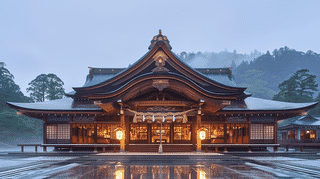
The main hall of Izumo Taisha in Shimane was built in 1744 in the taisha-zukuri form and is the largest surviving example. It became a National Treasure in 1952.
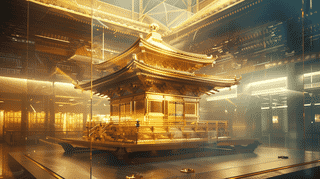
The Golden Hall of Chusonji in Iwate, built in 1124, is lacquered and gilded inside and out, with four Fujiwara coffins beneath its altars. A National Treasure.
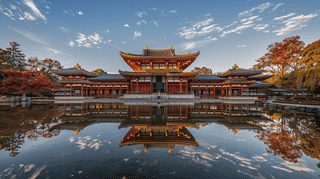
The Phoenix Hall of Byodoin in Uji, built in 1053, is four symmetrical buildings, a central hall, two floorless wings and a tail, facing a pond as a Pure Land palace
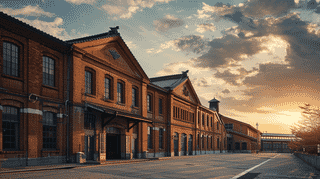
The Former Tomioka Silk Mill in Gunma opened in 1872 as a state reeling mill. Its 140-metre reeling hall and two 104-metre cocoon warehouses are National Treasures.
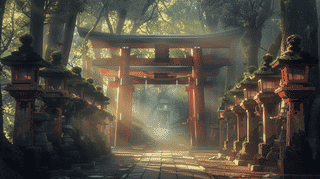
Kamo Mioya Shrine in Kyoto, known as Shimogamo, holds two National Treasure sanctuaries of 1863 and 31 Important Cultural Property buildings of 1629, listed as one.
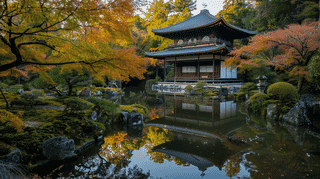
A pavilion of 1489 at Jishoji in Kyoto, its first storey a dwelling in the shoin manner and its second a Zen-style Buddhist hall. National Treasure since 1951.
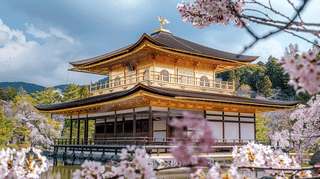
A Buddhist hall at Daigoji in Kyoto, moved here from Yuasa in Kishu between 1598 and 1600. Its year of building is unknown; the largest surviving late Heian work.
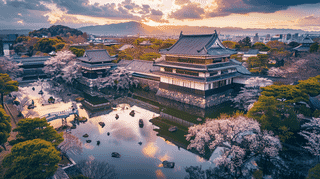
Nijo Castle in Kyoto, occupied by Ieyasu in 1603 and remodelled in 1626, holds Japan's only surviving castle palace: six National Treasure shoin buildings in echelon
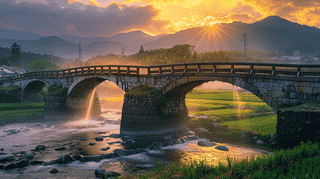
Tsujun Bridge in Kumamoto, a stone aqueduct of 1854, lifts water to a plateau above itself through stone-pipe siphons. Japan's first engineering National Treasure.
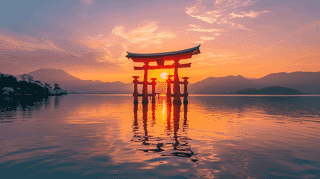
Itsukushima Shrine in Hiroshima rests on a rebuilding of 1241, its main sanctuary alone from 1571. Six of its twelve buildings are National Treasures.
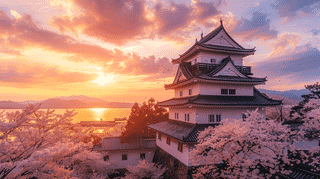
The keep of Hikone Castle in Shiga, finished in 1606, has three tiers with gables and stepped roofs. It and its two turrets became National Treasures in 1952.

An Asuka-period straight sword owned by Shitennoji in Osaka, the Big Dipper and clouds inlaid in gold. Star-inlaid blades survive in only three groups.

A Southern Song Jian bowl at the Museum of Oriental Ceramics in Osaka, silver spots packed tightly across both surfaces. Once owned by the regent Hidetsugu.

A Southern Song tenmoku bowl at the Fujita Museum in Osaka, its black glaze scattered with haloed spots. Alone among yohen bowls, it is mottled inside and out.
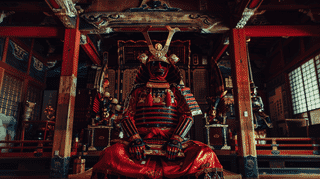
A Heian-period great armour at Musashi Mitake Shrine in Tokyo. The Agency calls it the finest work in Kanto; Meiji repairs took the colour from its lacing.
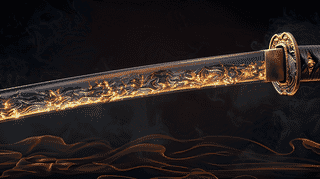
A Kamakura tachi owned by Setouchi City in Okayama, made by the Ichimonji smiths of Bizen. It descended in the Uesugi family. National Treasure since 1952.
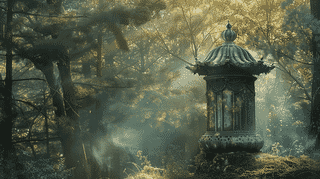
Finds from sutra mounds at Kuramadera in Kyoto, over twenty entries including three reliquary pagodas. Inscriptions show deposits made over 140 years from 1120.
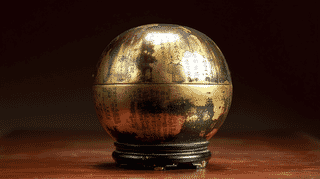
A gilt bronze funerary urn found at Kashiba in Nara, now at the Kyoto National Museum. A sphere parting in two, inscribed inside the lid with 391 characters.
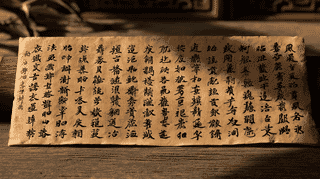
A Chinese calligraphy album in Kyoto Prefecture, the Thousand Character Classic written twice in two scripts. The Agency leaves the maker field blank.
A Heian manuscript in Kagawa Prefecture recording the gazetteer of Hizen, now Saga and Nagasaki. One of five surviving fudoki. National Treasure since 1955.