A Keep of 1606, Said to Have Been Moved from Otsu
Hikone Castle Tower, Attached Turret and Tamon Turret (彦根城天守、附櫓及び多聞櫓) is a castle building of 1606 at Konki-cho, Hikone City, Shiga Prefecture, designated an Important Cultural Property on 22 September 1951 and a National Treasure on 29 March 1952. The quantity is two buildings: the keep, and the attached turret with the tamon turret. It belongs to the city of Hikone.
The Agency for Cultural Affairs sets out the building of the castle. Hikone was the seat of successive generations of the Ii family. Ii Naotsugu, later renamed Naokatsu, began work in 1603; the main bailey and keep were finished by the end of 1606, and his successor Naotaka brought the castle close to completion in 1622.
On the origin of the keep there is a transfer theory. The citation continues: an ink inscription dated 1606 has been found in the keep, but it is said that the keep of Otsu Castle was moved here at the founding. The date of Otsu Castle's construction is itself unknown. However, since a great deal of old timber is used in the present keep and the plan of its predecessor can largely be made out, this transfer theory is broadly accepted.
The Agency's hedged wording, broadly accepted, is worth passing on as it stands. With the date of Otsu Castle unknown, certainty is not possible. Two grounds are offered: the quantity of old timber, and the recoverable plan of the earlier building.
Three Tiers, Three Storeys: Past the Early Keep Form
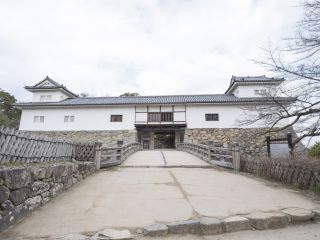
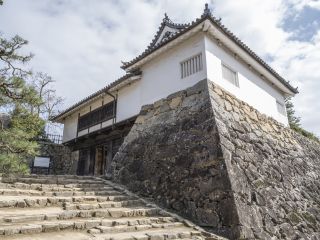
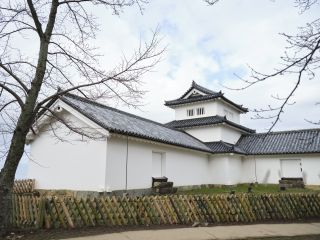
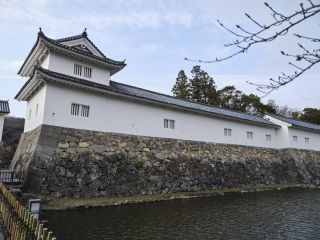
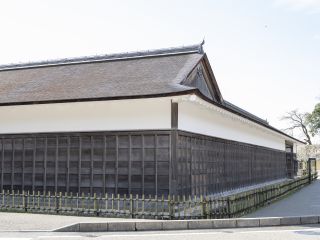
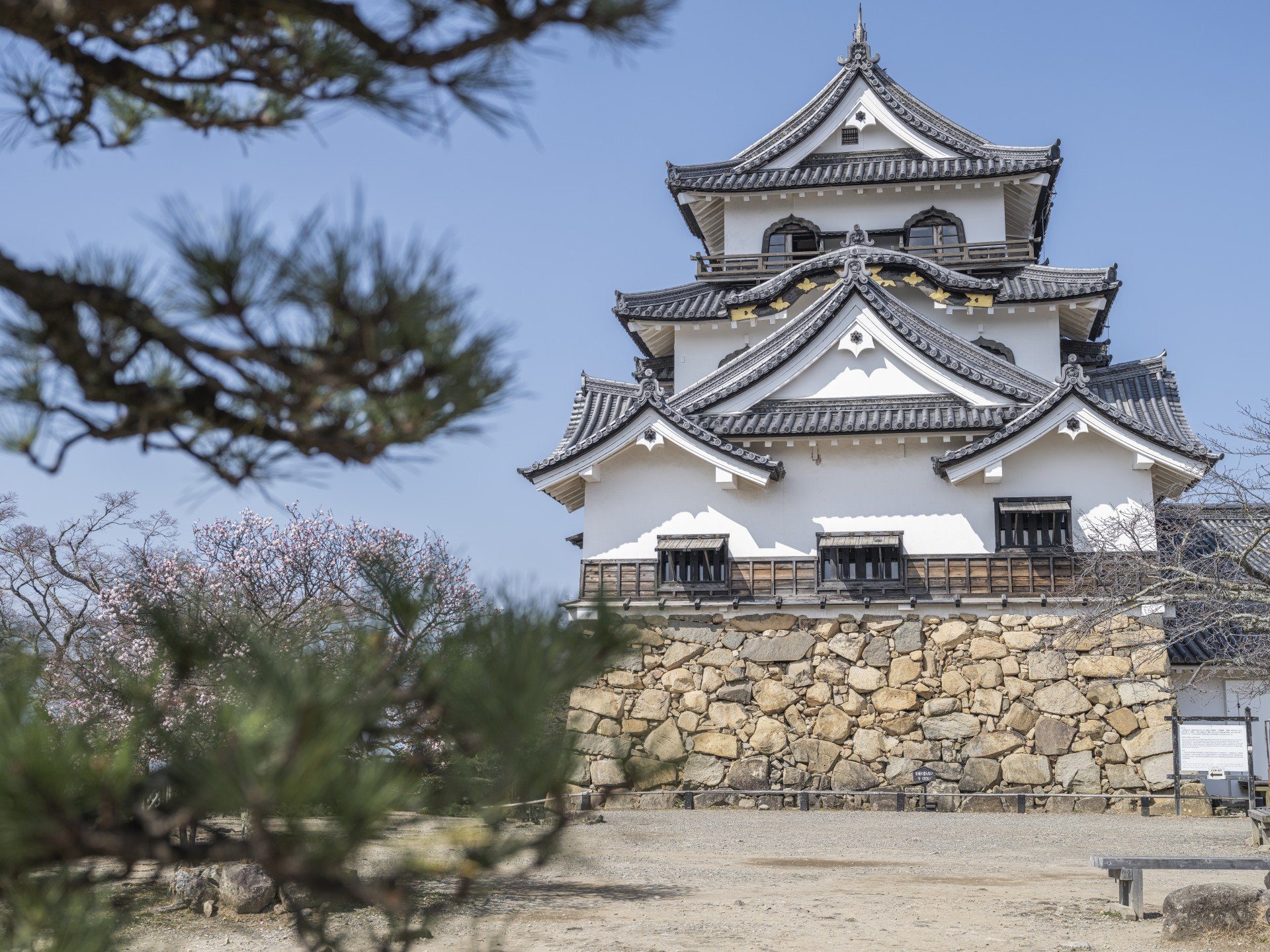
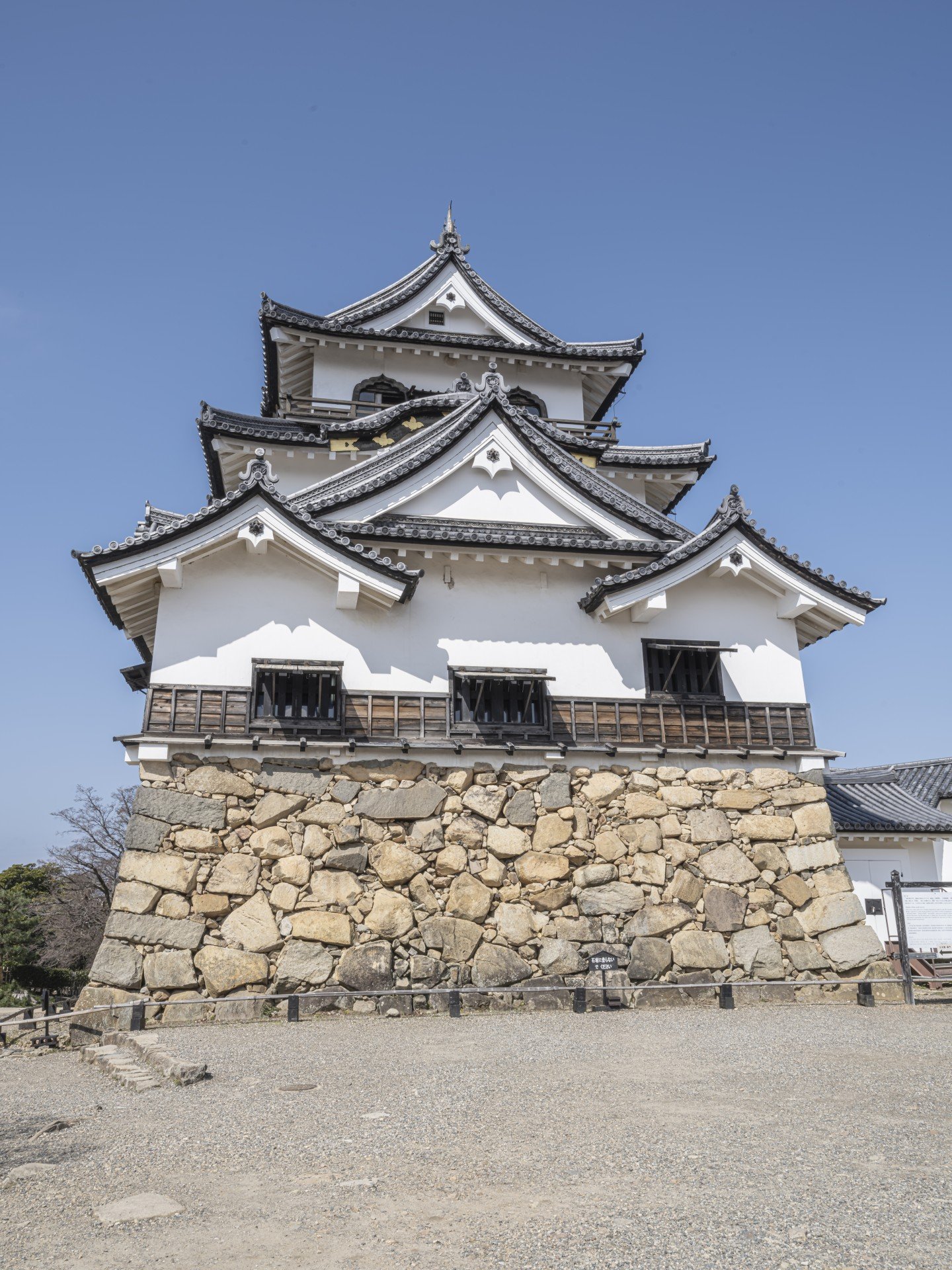
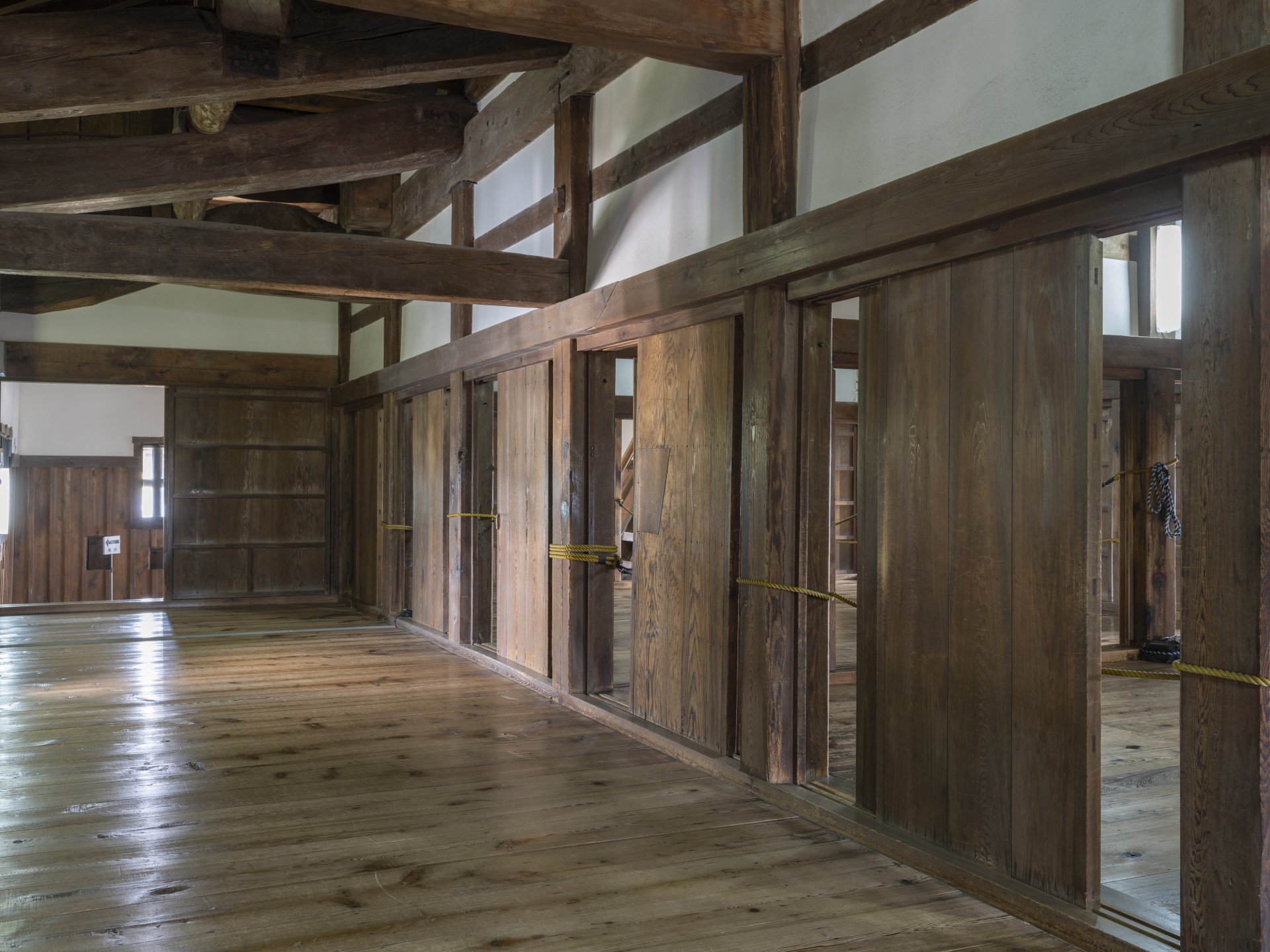
The keep has three tiers and three storeys, and with the attached turret and the tamon turret it forms a single enclosure. An attached turret adjoins the keep; a tamon turret runs long along the top of a stone wall. It is not the keep alone but these two buildings together that carry the designation.
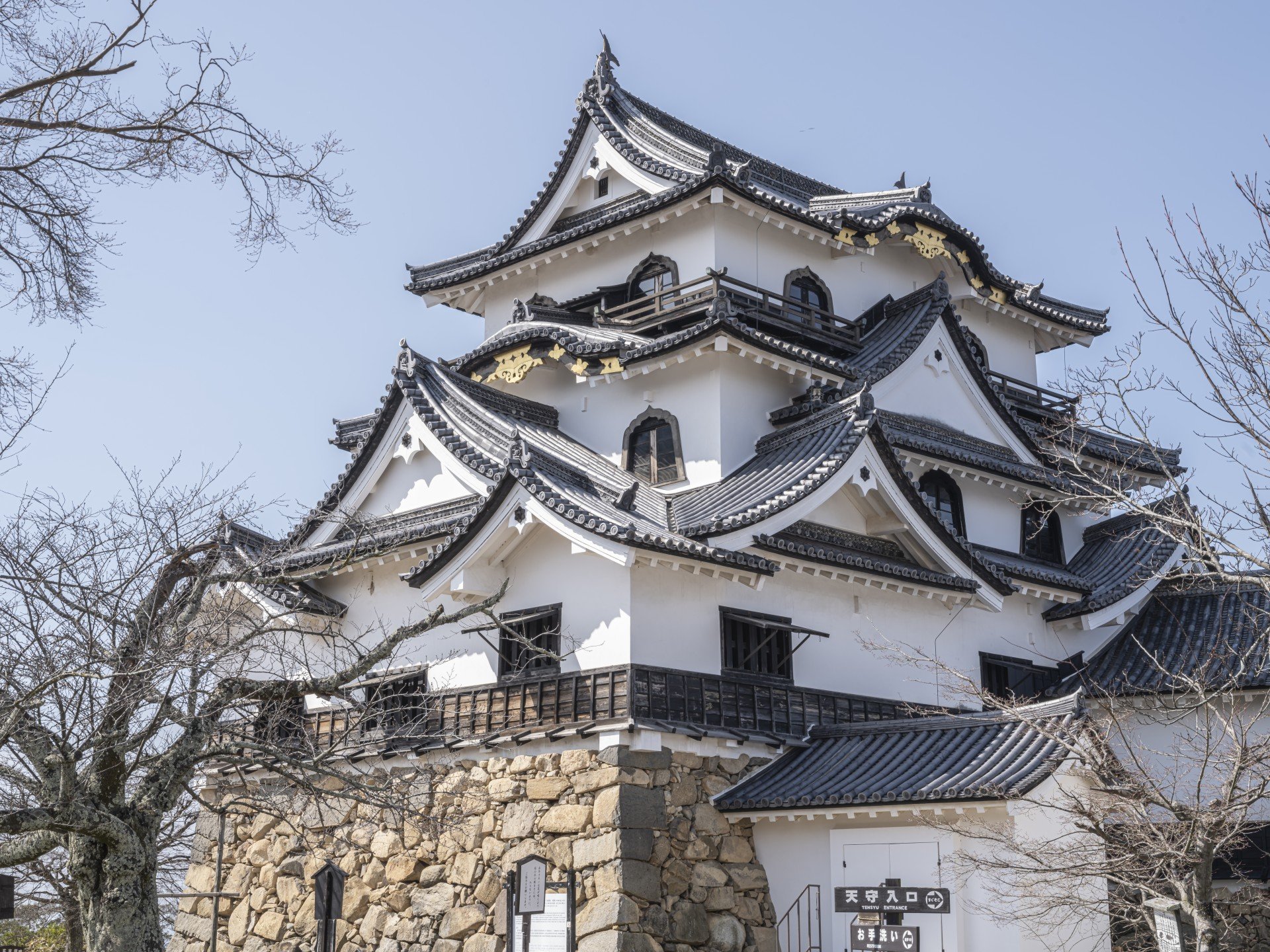
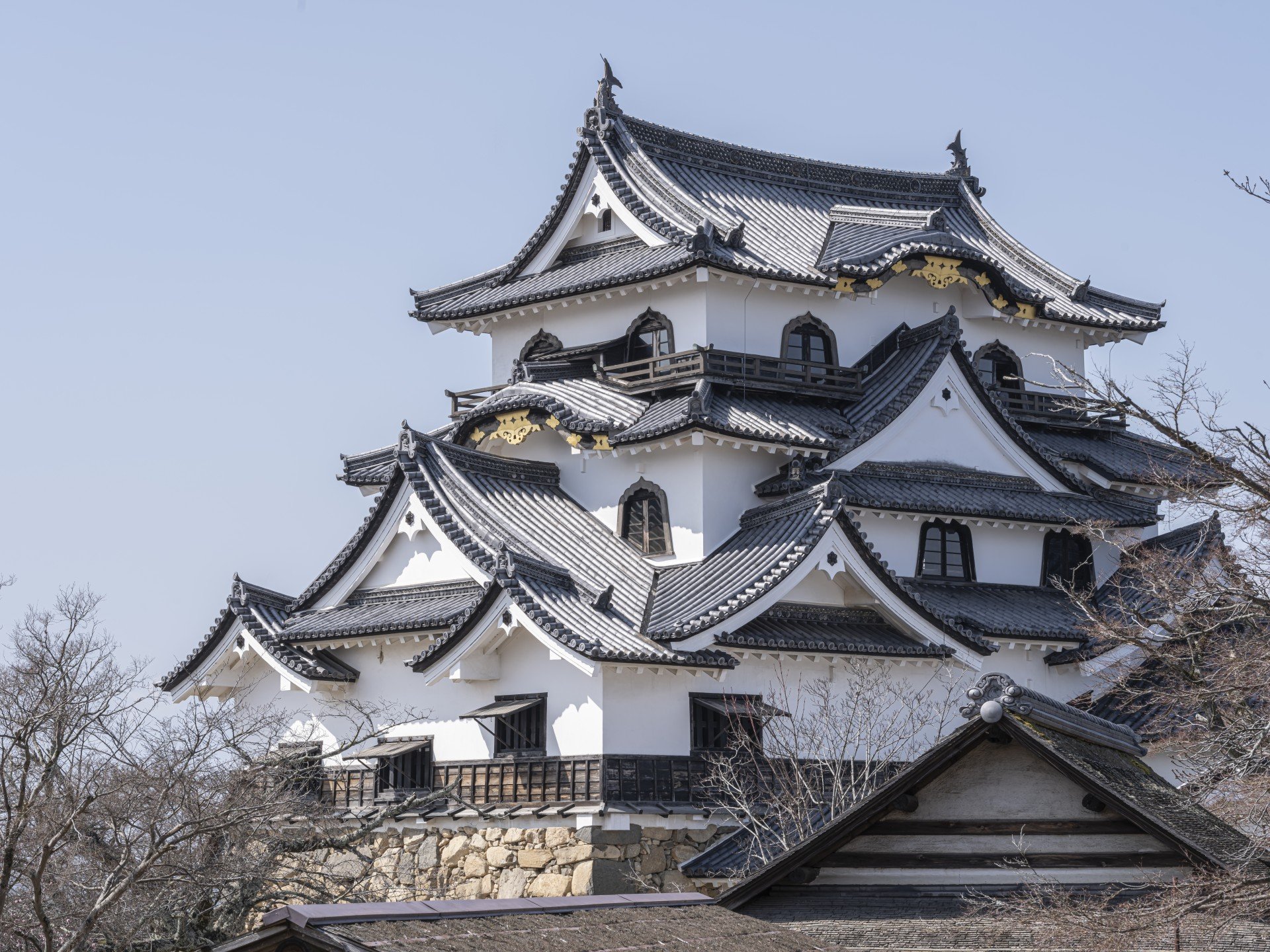
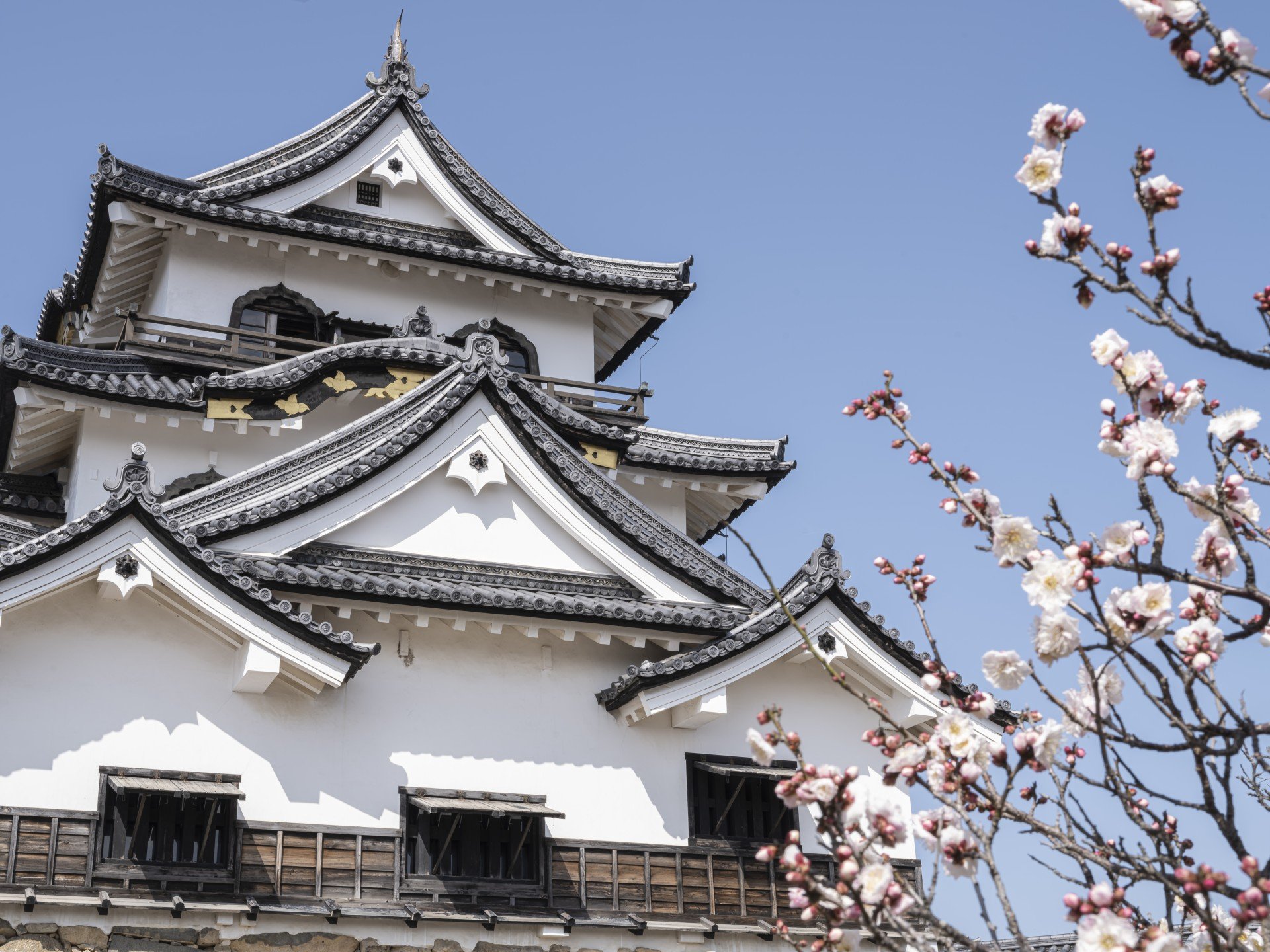
The Agency names the design features precisely. The form has already moved past that of the early keep: cusped and dormer gables are set at various points on the roofs, the roofs are stepped out of line, and other skilful devices are used, while the railing and the ogee-arched windows of the third storey are also of fine design.
A cusped gable curves the eave line in a bow; a dormer gable is set triangular on the roof slope. Placing both across the roofs and stepping the roof levels creates variety within the limited height of three tiers. The railing encircles the top storey, and the ogee-arched window is shaped in a flame curve at its head; both are strongly decorative.
The closing judgement runs: though not large overall, it is a keep of the height of the Momoyama period, well composed in form and fine in design, one of the representative surviving works of castle architecture in Japan. The building is valued for how it is composed, not for its size.
It Narrowly Escaped Demolition
The citation also traces the building's survival. After construction, the roof was repaired in 1796 and strengthening work was carried out in 1841; in 1878 it narrowly escaped demolition and has come down to the present.
The castle abolition order of 1873 saw most castles across Japan pulled down. Hikone was among those marked for demolition and escaped it in 1878. The Agency writes narrowly because dismantling had in fact begun.
Roof repairs and strengthening in the Edo period, survival in Meiji, designation in Showa. Through that sequence a keep carrying an ink inscription of 1606 remains. Twelve original keeps survive in Japan, of which five are National Treasures.
Why Two Buildings Form One Item
The keep alone is a three-tier tower. The attached and tamon turrets alone are single-tier turrets on a wall. Only with the two together is it clear that the keep was not built to stand by itself but as part of an enclosure.
The Agency's phrase, forming a single enclosure with the attached turret and the tamon turret, says as much. To reach the keep one passes through the attached turret, and the attached turret is entered from the tamon. The defensive route survives as a sequence of buildings.
The attached and tamon turrets are recorded simply as single-tier turrets with tiled roofs. Plain beside the keep, but without them the keep would be an isolated tower. What is valued here as castle architecture cannot be read from the keep alone.
Visiting
The keep of Hikone Castle stands at the summit inside the paid zone, and the interior is open.
The stairs inside are steep and narrow, as in any surviving keep, and are climbed with a handrail. Travel light and wear shoes you can climb in.
Wheelchair access is not possible. Neither the approach nor the interior has a lift or a ramp. Nothing restricts photography.
Opening hours, admission and directions to Hikone Castle are collected on the Hikone Castle page.
Q&A
- When was Hikone Castle keep built and designated?
- Ii Naotsugu began work in 1603 and the main bailey and keep were finished by the end of 1606; Naotaka brought the castle close to completion in 1622. It became an Important Cultural Property on 22 September 1951 and a National Treasure on 29 March 1952, as two buildings: the keep, and the attached turret with the tamon turret.
- Was the keep moved from Otsu Castle?
- The Agency for Cultural Affairs calls the transfer theory broadly accepted. An ink inscription of 1606 was found in the keep, while a great deal of old timber is used in it and the plan of its predecessor can largely be made out. Because the date of Otsu Castle is unknown, the point is not settled.
- Why was Hikone Castle keep designated a National Treasure?
- The Agency found that its form had moved past that of the early keep, with cusped and dormer gables at various points, roofs stepped out of line and other skilful devices, and fine railing and ogee-arched windows on the third storey. Though not large, it is well composed and stands as a representative surviving work of Japanese castle architecture.
- Why are the attached and tamon turrets designated with the keep?
- Because, as the Agency puts it, the keep forms a single enclosure with them. To reach the keep one passes through the attached turret, which is entered from the tamon turret, so the defensive route survives as a sequence of buildings. The keep was not built to stand alone.
- Can visitors go inside the keep of Hikone Castle?
- Yes. The keep stands at the summit inside the paid zone with its interior open. The stairs are steep and narrow and are climbed with a handrail; there is no lift or ramp, so wheelchair access is not possible.
Basic Information
| Name | Hikone Castle Tower, Attached Turret and Tamon Turret (彦根城天守、附櫓及び多聞櫓) |
|---|---|
| Location | 1-1 Konki-cho, Hikone City, Shiga Prefecture |
| Designation | National Treasure, Important Cultural Property |
| Year Designated | 1951 (22 September), Important Cultural Property; 1952 (29 March), National Treasure |
| Quantity | 2 buildings (keep; attached turret with tamon turret) |
| Dimensions | Keep: 3 tiers, 3 storeys, cusped and dormer gables at various points, roofs stepped out of line, railing and ogee-arched windows on storey 3. Attached and tamon turrets: 1-tier turrets, tiled roofs. Built 1606 |
| Owner | City of Hikone |
| Public Access | Paid zone, interior open |
References
- Cultural Heritage Online: Hikone Castle Tower, Attached Turret and Tamon Turret
- https://bunka.nii.ac.jp/heritages/detail/189233
- Hikone City: the cultural properties of Hikone Castle
- https://www.city.hikone.lg.jp/kanko/rekishi/6/4/index.html
- Hikone City: World Heritage inscription campaign
- https://www.hikonejo-worldheritage.jp/
- Hikone Castle official site
- https://hikonecastle.com/
Last verified: 2026.09.15
Cultural Treasures in the Same Area
All are within walking distance in the same area, so we recommend visiting them together.
- Hikone Castle Tower, Attached Turret and Tamon Turret castle tower 0.00 km
- Hikone Castle Tower, Attached Turret and Tamon Turret Attached turret and Tamon turret 0.01 km