
National Treasure
国 宝 一 覧Browse Japan’s National Treasures by prefecture, period, and type. Clear stories highlight what to look for at temples, shrines, castles, and museums—plus maps and travel tips.
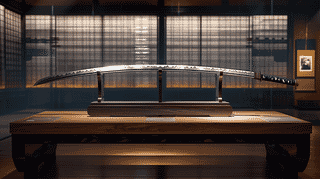
A Kamakura-period naginata in Shizuoka Prefecture. Its tang, hidden away inside the shaft, runs some twenty centimetres longer than the blade does here.
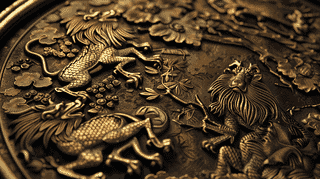
A mirror owned by Katori Jingu in Chiba Prefecture. Another one made from the very same mould is now among the Shosoin treasures over in Nara as well.
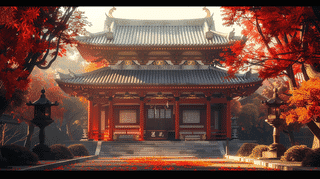
The Golden Hall of Kanshinji in Kawachinagano, Osaka, rebuilt before 1378, is a leading eclectic-style hall that mixes three styles around a divided sanctuary.
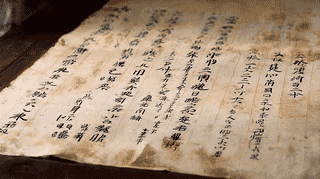
A Heian-period text owned by Amanosan Kongoji in Osaka Prefecture. Its own date field is empty, and yet a year still survives in another field of it here.
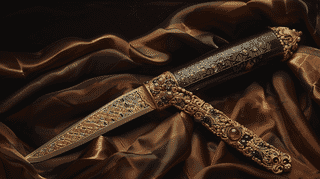
A Heian-period knife owned by Domyoji Tenmangu in Osaka Prefecture. Its own handle runs some three centimetres longer than the blade that it holds now.
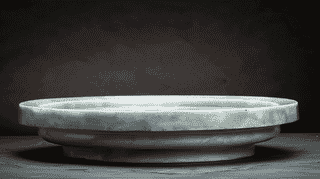
An inkstone owned by Domyoji Tenmangu in Osaka Prefecture. Its own country field reads Japan, while its own text still calls the work Tang instead here.
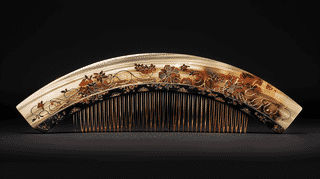
A Heian-period comb owned by Domyoji Tenmangu in Osaka Prefecture. Red and green colouring lies beneath its tortoiseshell and shows right through it now.
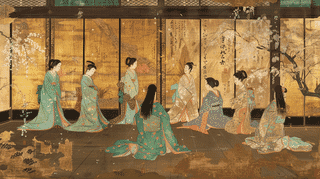
A Heian-period handscroll in Nara owned by a listed company. The company owns the scroll itself while a museum that it runs is the place that keeps it.
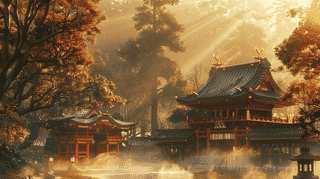
The main hall of Usa Jingu in Oita was raised between 1855 and 1861. Two gabled buildings front and back with a gutter between typify the Hachiman style.
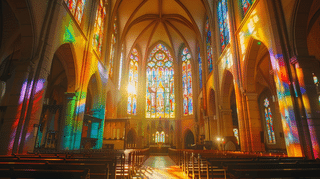
A church of 1864 at Minamiyamate in Nagasaki, the oldest surviving in Japan. Altered from three aisles to five in 1879, it keeps its original core within.
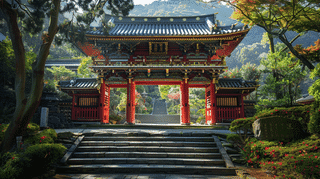
An early Edo-period gate in Nagasaki Prefecture. Its timbers were cut in China and were carried over there divided among several separate vessels at once.
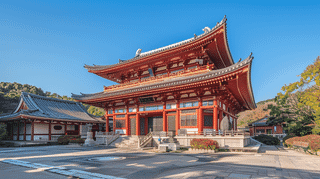
An early Edo-period hall in Nagasaki Prefecture. Its upper storey came some decades later on, and it follows a different tradition from the lower one.
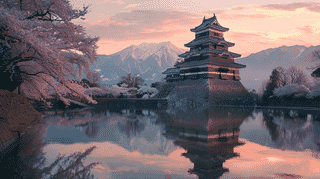
The keep of Matsumoto Castle in Nagano, built between 1594 and 1599, rises five tiers on gently sloped walling. Five buildings of differing dates make it up.
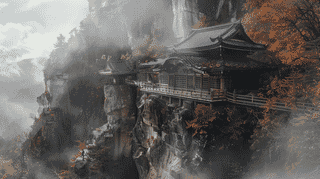
Nageiredo, the inner hall of Sanbutsuji on Mt. Mitoku, Tottori, is a late Heian building set into a cliff-face cave on long posts, reached by a steep pilgrim trail.
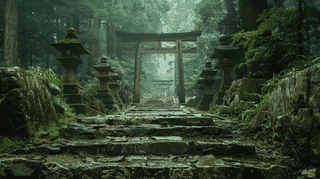
The main hall of Kamosu Shrine in Matsue was rebuilt in 1583 and is the oldest surviving taisha-zukuri, a form found only in the old province of Izumo.
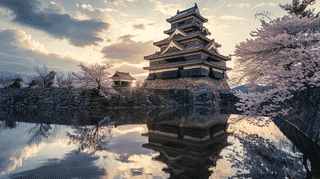
The keep of Matsue Castle in Shimane was finished in 1611. Columns spanning two storeys, reinforced with cladding boards, brought National Treasure status in 2015.
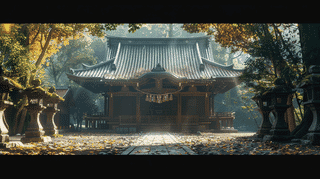
A middle Muromachi-period hall in Tokyo. One single ink inscription found there fixed its own date, the temple's own name and its own image all at once.
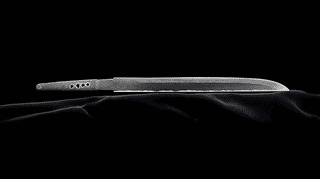
A Kamakura-period tanto at the Tokugawa Art Museum in Aichi. The two records give its length differently here, by a tenth of a centimetre in each case.

Twelve Heian-period hanging scrolls held at the Kyoto National Museum. Twelve more of the very same name and owner hang at a different museum entirely.
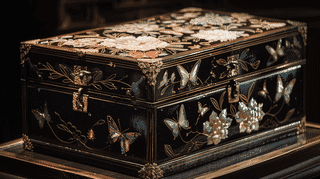
A Kamakura-period hand box kept in Tokyo. Three techniques answer to three colours in it: the gold of lacquer, the white of shell, the silver of inlay.