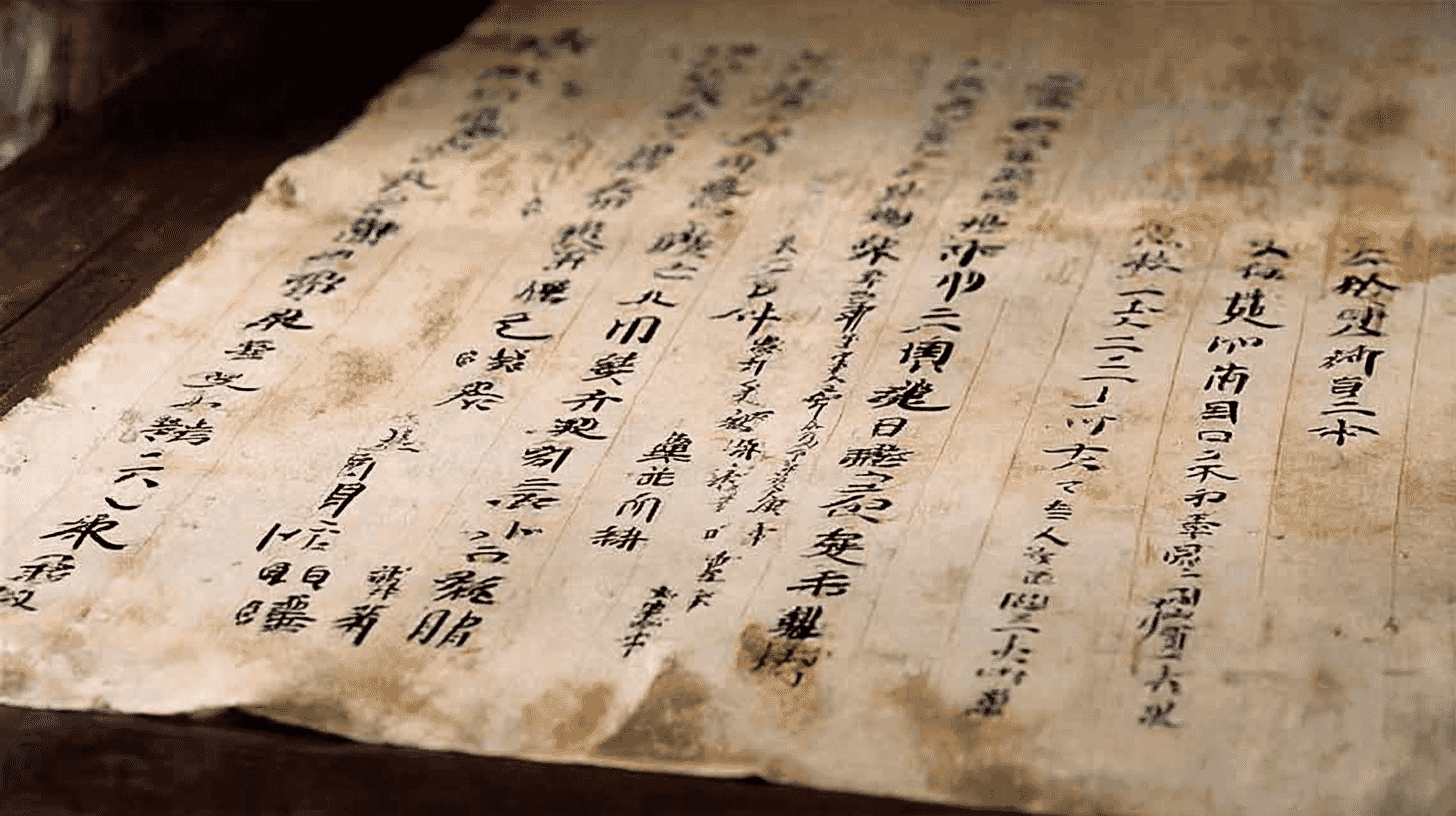
Engishiki: Japan's Oldest Surviving Manuscript of the Ancient Legal Code — A National Treasure at Amanosan Kongoji Temple

Discover the Engishiki, a National Treasure housed at Amanosan Kongoji Temple in Osaka. Copied in 1127 CE, these scrolls are the oldest surviving manuscripts of Japan's most complete ancient legal code, revealing Heian-period governance, Onmyōdō divination, and imperial court culture.

Engishiki: Japan's Oldest Surviving Legal Manuscript — A National Treasure Hidden in the Mountains of Osaka

Deep in the forested hills of Kawachinagano, south of Osaka, lies the ancient temple of Amanosan Kongoji — a place known as "Women's Mount Kōya" for its centuries-long tradition of welcoming female pilgrims. Within its treasure halls rests one of Japan's most historically significant documents: three scrolls of the Engishiki, hand-copied in 1127 CE and designated a National Treasure. These fragile brushwork manuscripts are the oldest known copies of a monumental 50-volume legal compendium that once governed every aspect of life in Heian-period Japan — from Shinto rituals and imperial ceremonies to astrology, textile production, and the mysterious art of Onmyōdō divination.

What Is the Engishiki?

The Engishiki (延喜式, "Procedures of the Engi Era") is a 50-volume compendium of administrative laws, court rituals, and Shinto practices compiled during the Heian period. In 905 CE, Emperor Daigo commanded the scholar-official Fujiwara no Tokihira to begin its compilation. After Tokihira's death in 909, his brother Fujiwara no Tadahira continued the ambitious project, which was finally completed in 927 CE. It took another 40 years of revision before the code was officially enforced in 967 CE.

Comprising approximately 3,300 articles, the Engishiki served as a comprehensive operations manual for the imperial government. Volumes 1 through 10 covered Shinto shrine administration and religious rituals. Volumes 11 through 40 detailed the workings of the Grand Council of State and the eight government ministries. The remaining volumes addressed military logistics, police operations, and miscellaneous procedures. It is the only one of the "Three Great Codes" (Sandai Kyakushiki) — alongside the earlier Kōnin and Jōgan codes — that survives in nearly complete form, making it an irreplaceable window into ancient Japanese governance and society.

The Kongoji Manuscripts: Oldest Surviving Copies

The original manuscripts of the Engishiki have been lost to the centuries. What survives today are handwritten copies made by later scribes. Among these, the scrolls preserved at Amanosan Kongoji Temple hold a place of singular importance. Copied in the second year of the Daiji era (1127 CE) during the late Heian period, these three scrolls — Volume 12 (a fragmentary portion), Volume 14, and Volume 16 — represent the oldest known manuscript copies of the Engishiki in existence. Together with a fourth scroll (Volume 9, designated separately as a National Treasure under the title "Engishiki Jinmyōchō"), they form an exceptionally rare survival from nearly 900 years ago.

The colophon of Volume 14 includes a postscript dated the 12th day of the 7th month of Daiji 2 (1127), providing precise evidence of when these copies were made. This level of documentation adds immense scholarly value to the manuscripts, anchoring them firmly within the timeline of Japanese textual history.

Why Were These Scrolls Designated a National Treasure?

These manuscripts were designated a National Treasure on November 22, 1952, for several compelling reasons. First, they are the oldest surviving copies of their respective volumes, predating other known manuscripts by considerable margins. Second, the textual content they preserve is extraordinarily valuable for understanding how the ancient Japanese state functioned at the most granular level. Because the Engishiki provides detailed operational regulations rather than abstract legal principles, these manuscripts offer concrete, practical insights into daily governance — from what materials were needed for court ceremonies to how astronomical observations were officially conducted.

Moreover, the physical manuscripts themselves are significant artifacts of Heian-period calligraphy and book production. The quality of the brushwork, the preparation of the paper, and the format of the scrolls all reflect the refined literary culture of late Heian Japan. These documents are not merely texts to be read; they are tangible evidence of how knowledge was transmitted and preserved in pre-modern Japan.

What Do These Three Volumes Contain?

Each of the three volumes preserved at Kongoji covers a distinct branch of the Heian-period imperial bureaucracy, offering fascinating glimpses into different aspects of court life.

Volume 12 — The Ministry of Central Affairs (Nakatsukasa-shō): This volume details the regulations governing the ministry that served as the administrative nerve center closest to the Emperor. It oversaw the drafting of imperial edicts, the management of the imperial seal, and the coordination between the sovereign and the broader government apparatus. Although only a fragment survives at Kongoji, even this partial text provides valuable evidence of how imperial authority was exercised through bureaucratic procedure.

Volume 14 — The Bureau of the Imperial Wardrobe (Nuidono-ryō): This volume prescribed the operations of the bureau responsible for producing and managing imperial garments, ceremonial textiles, and fabrics used in court rituals. It reveals the meticulous standards applied to everything from the selection of raw materials to the dyeing techniques and sewing methods used for clothing worn by the Emperor and court officials. For historians of textile arts and material culture, this volume is an invaluable primary source.

Volume 16 — The Bureau of Divination (Onmyō-ryō): Perhaps the most intriguing of the three for modern visitors, this volume covers the regulations of the Onmyōdō bureau — the government office responsible for divination, astrology, calendar production, and the observation of natural phenomena. The Onmyō-ryō employed specialists in reading celestial signs, determining auspicious dates for imperial activities, and interpreting omens. This volume provides a rare official record of how the Japanese court integrated cosmological and divinatory practices into state governance, a tradition that captivates imaginations to this day through popular culture depictions of the legendary Onmyōji Abe no Seimei.

Amanosan Kongoji Temple: Guardian of a Thousand Years

The manuscripts' survival is inseparable from the history of Amanosan Kongoji Temple itself. Founded in the Tenpyō era (729–749 CE) by the monk Gyōki under the orders of Emperor Shōmu, the temple was later associated with the great monk Kūkai (Kōbō Daishi), who is said to have practiced esoteric Buddhist training on the mountain. After falling into decline, the temple was revived in the late Heian period by the monk Akan, with the support of Retired Emperor Go-Shirakawa and his sister, Princess Hachijō-in.

Princess Hachijō-in enshrined a portrait of Kōbō Daishi that had been brought from Mount Kōya, establishing Kongoji as a sacred site where women could venerate the great master — something not permitted at Kōya-san itself at the time. This is the origin of the temple's beloved epithet, "Nyonin Kōya" (Women's Mount Kōya). During the turbulent 14th century, Emperor Go-Murakami of the Southern Court established his temporary palace here, making Kongoji a center of imperial governance during the wars between the Northern and Southern Courts.

Today, the temple preserves an extraordinary collection of National Treasures and Important Cultural Properties, including magnificent Buddhist sculptures, paintings, and these precious Engishiki manuscripts — all carefully maintained across more than a millennium of unbroken stewardship.

Highlights and What to See

While the Engishiki manuscripts themselves are typically displayed only during special exhibitions at the temple or at national museums, visiting Amanosan Kongoji offers a deeply rewarding cultural experience. The temple's expansive grounds feature a remarkable collection of historic architecture, nearly all designated as Important Cultural Properties. The Kondō (Main Hall), the Tahōtō (Pagoda), and the Rōmon (Tower Gate) create an atmosphere of timeless serenity.

The Honbō (Abbot's Quarters) area contains an exquisite Muromachi-period garden that transforms with the seasons — blanketed in cherry blossoms in spring and ablaze with crimson maples in autumn. The Treasure Hall occasionally displays items from the temple's remarkable collection, offering visitors a chance to encounter Buddhist art and historical artifacts spanning centuries. The Kanzō-in garden at the rear of the Honbō area, which once served as the Northern Court's temporary palace, provides a particularly contemplative space for reflection.

For those interested in the Engishiki specifically, the manuscripts have been exhibited at major institutions including the Kyoto National Museum (2015 and 2022 exhibitions on Kongoji's treasures), the Tokyo National Museum (2018 Ninna-ji exhibition), and other national venues. Checking exhibition schedules at these museums may provide opportunities to see the manuscripts in person.

Surrounding Area and Nearby Attractions

Kawachinagano is a city rich in cultural heritage, nestled at the foot of the Kongō mountain range that forms the border between Osaka and Nara Prefectures. The area around Amanosan Kongoji offers several complementary attractions. Kanshinji Temple, another National Treasure-bearing Shingon temple approximately 5 kilometers away, houses the celebrated seated statue of Nyoirin Kannon — one of the finest examples of Heian Buddhist sculpture in Japan. Together, Kongoji and Kanshinji make for a compelling day exploring two of southern Osaka's most important Buddhist heritage sites.

The Amanoyama Forest Park surrounding the temple provides pleasant hiking trails through the lush woodland. For families, the Kansai Cycle Sports Center is located nearby. The area is also known for its hot springs and traditional Japanese inns, making it a wonderful base for experiencing the quieter, more authentic side of the Osaka region, far from the bustling city center.

📍 Plan Your Visit to Osaka
Find tours, activities & transport passes near Engishiki〈Volume 12, Remaining Volumes, 14th/16th〉
[ USJ Tickets Osaka Castle & Dotonbori Food Tours ]

Q&A

QCan I see the actual Engishiki manuscripts when I visit Amanosan Kongoji Temple?
AThe Engishiki manuscripts are not on permanent public display at the temple due to conservation requirements. They are occasionally exhibited during special events at the temple or loaned to major national museums such as the Kyoto National Museum or Tokyo National Museum. It is advisable to check the temple's official website or the websites of national museums for upcoming exhibition schedules before planning your visit.
QHow do I get to Amanosan Kongoji Temple from central Osaka?
ATake the Nankai Kōya Line or Kintetsu Nagano Line to Kawachinagano Station. From there, board a Nankai Bus bound for "Cycle Sports Center" or "Asahigaoka" from bus stop No. 3, and alight at the "Amanoyama" stop. The bus ride takes approximately 20 minutes. Please note that bus frequency can be limited (about one per hour on weekdays), so checking the timetable in advance is recommended. Taxis are also available at Kawachinagano Station.
QIs there an English-language guide or signage at the temple?
AAmanosan Kongoji is a historic temple in a relatively rural area, and English-language signage may be limited. Preparing some background information about the temple's history and cultural properties before your visit will greatly enhance the experience. The temple grounds are peaceful and easy to navigate even without extensive signage.
QWhat is the connection between the Engishiki and Onmyōdō (Japanese divination)?
AVolume 16 of the Engishiki preserved at Kongoji covers the regulations of the Onmyō-ryō, the government bureau responsible for divination, astrology, and calendar production. This is one of the most important primary sources documenting how Onmyōdō was officially practiced as a state institution during the Heian period. Fans of the legendary diviner Abe no Seimei will find this historical context particularly fascinating.
QWhat other National Treasures can I see at Amanosan Kongoji?
AIn addition to the Engishiki manuscripts, Kongoji houses several other National Treasures, including a magnificent set of three Buddhist sculptures in the Kondō — the seated Dainichi Nyorai (Mahāvairocana), Fudō Myōō, and Gōzanze Myōō — which were designated as National Treasures in 2017. The temple also holds the separately designated Engishiki Jinmyōchō (Volume 9) as another National Treasure. Numerous other Important Cultural Properties, from paintings to metalwork, are part of the temple's collection.

Basic Information

Designated Name Engishiki (Volumes 12 [fragment], 14, and 16) — 延喜式〈巻第十二残巻、第十四/第十六〉
Category National Treasure (Books and典籍 / Written Works)
Quantity 3 scrolls
Period Late Heian period — copied in Daiji 2 (1127 CE)
Original Compilation Engi 5 – Enchō 5 (905–927 CE), by order of Emperor Daigo; compiled by Fujiwara no Tokihira and Fujiwara no Tadahira
Designation Date November 22, 1952 (Shōwa 27)
Owner / Repository Amanosan Kongoji Temple (天野山金剛寺)
Location 996 Amano-chō, Kawachinagano-shi, Osaka 586-0086, Japan
Visiting Hours 9:00 – 16:30
Admission Main Hall area: 200 yen / Honbō Garden: 400 yen / Combined ticket: 500 yen (adults only)
Access From Kawachinagano Station (Nankai Kōya Line / Kintetsu Nagano Line), take Nankai Bus to "Amanoyama" stop (approx. 20 min)
Official Website https://amanosan-kongoji.jp/

References

延喜式〈巻第十二残巻、第十四/第十六〉 — 文化遺産オンライン
https://bunka.nii.ac.jp/heritages/detail/132787
国宝 延喜式 — 河内長野市ホームページ
https://www.city.kawachinagano.lg.jp/site/history/5602.html
文化財 — 天野山金剛寺 公式サイト
https://amanosan-kongoji.jp/about/cultural-assets/
国宝-書跡典籍|延喜式 12・14・16巻[金剛寺/大阪] — WANDER 国宝
https://wanderkokuho.com/201-07429/
延喜式 — Wikipedia(日本語版)
https://ja.wikipedia.org/wiki/%E5%BB%B6%E5%96%9C%E5%BC%8F
Engishiki — Wikipedia (English)
https://en.wikipedia.org/wiki/Engishiki_Jinmyocho
Engishiki — Japanese Wiki Corpus
https://www.japanesewiki.com/Shinto/Engishiki.html
アクセス — 天野山金剛寺 公式サイト
https://amanosan-kongoji.jp/access/
国指定文化財等データベース — 文化庁
https://kunishitei.bunka.go.jp/bsys/maindetails/201/7429

Last verified: 2026.02.17