
National Treasure
国 宝 一 覧Browse Japan’s National Treasures by prefecture, period, and type. Clear stories highlight what to look for at temples, shrines, castles, and museums—plus maps and travel tips.
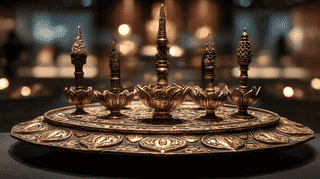
A Kamakura-period set owned by Itsukushima Shrine in Hiroshima Prefecture. Its own three vajras all lie within just nine millimetres of each other here.
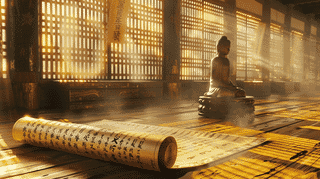
A Heian-period text owned by Zentsuji in Kagawa Prefecture. Its own fields stand almost empty, while the title itself states how it was all made here.
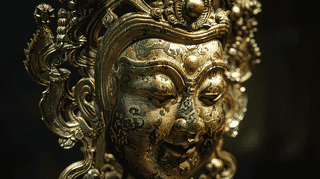
A Tang-period staff head owned by Zentsuji in Kagawa Prefecture. It came over from China long ago and is said to have changed the metalwork made here.
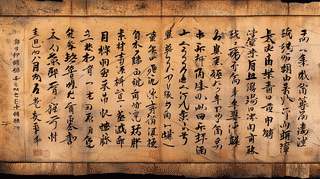
A late Heian-period scroll kept in Kochi Prefecture, handed down under one single name but held to be the work of three quite separate hands in the end.
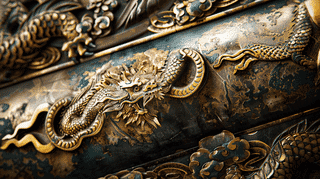
A Kofun-period sword owned by Omura Shrine in Kochi Prefecture. Its own commentary carries two slips, and its own dimensions come in two full runs here.
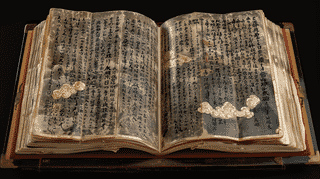
A late Heian-period score book in Saga Prefecture. The music itself had ceased entirely, and then it began again from the old notation in the 1600s here.

The Shodendo of Kangiin in Kumagaya, Saitama, a gongen-zukuri hall paid for by ordinary worshippers and covered in colour carving, a National Treasure since 2012.
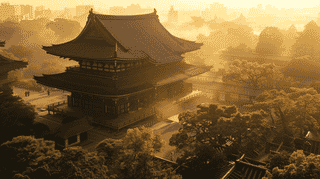
A middle Edo-period hall in Mie Prefecture. Zen in its outward appearance, it nonetheless keeps the plan usual to a Shin Buddhist main hall inside it.

A middle Edo-period hall in Mie Prefecture. Nine bays in each direction, it has the largest square plan met among all of the buildings covered so far.
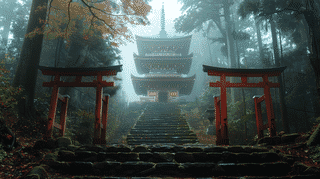
An early Muromachi pagoda on the approach to Hagurosan in Yamagata, over 29 metres in plain timber under a shingle roof. Made a National Treasure in 1966.
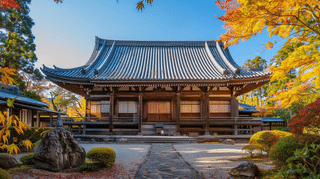
The Buddha hall of Kozanji in Shimonoseki, Yamaguchi, dated 1320 by an ink inscription older than the temple itself, is a typical Zen-style hall with a pent roof.
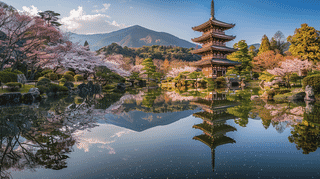
The pagoda at Rurikoji in Yamaguchi dates from about 1442. Slender above the third tier, it holds a circular altar platform found in no other pagoda in Japan.
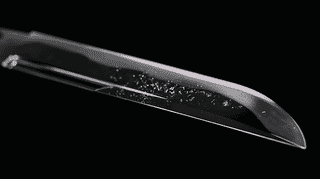
A Kamakura-period waist sword in Yamaguchi Prefecture. Its name comes from the chrysanthemums carved upon the hilt of it, and not upon the blade itself.
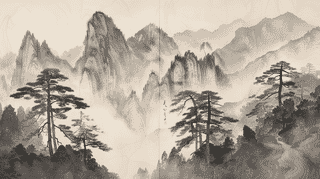
A handscroll by Sesshu in Yamaguchi Prefecture. A scroll held in Kyoto calls this one the long landscape scroll and calls itself the shorter of the two.
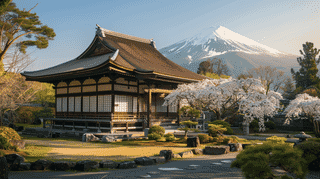
A middle Muromachi-period hall in Yamanashi Prefecture. Its own date field and its own commentary each give a year, and the two lie eighty-two years apart.
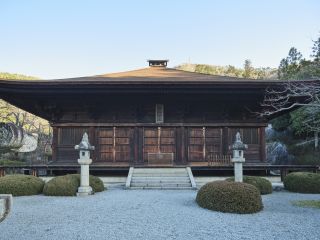
A Kamakura-period hall in Yamanashi Prefecture. Ten mon levied on each household across the two provinces went into paying for the whole building here.
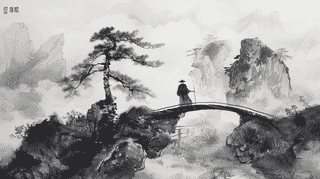
A Southern Song painting on one scroll at Kuonji in Yamanashi, recorded as having once formed a single set with two other scrolls held elsewhere today.
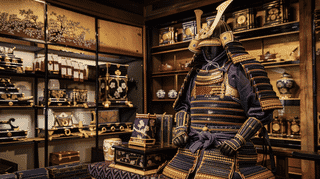
A suit of armour owned by Kanda Tenjinja in Yamanashi Prefecture. Its own fittings there are called the original of the Takeda crest itself even today.
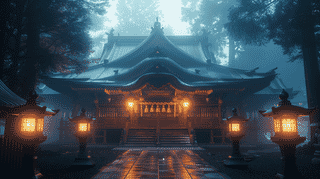
A hall of 1640 at Enryakuji on Mount Hiei in Shiga. Its earthen inner sanctuary lies three metres below the boarded worship space, keeping the basic esoteric plan.
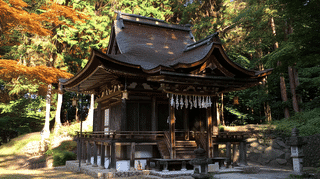
A middle Muromachi-period shrine hall in Shiga Prefecture. Its own name and its address here use two quite different characters for the one same sound.