A Thousand-Year Journey Through Japanese Calligraphy: The Koya-gire Manuscript
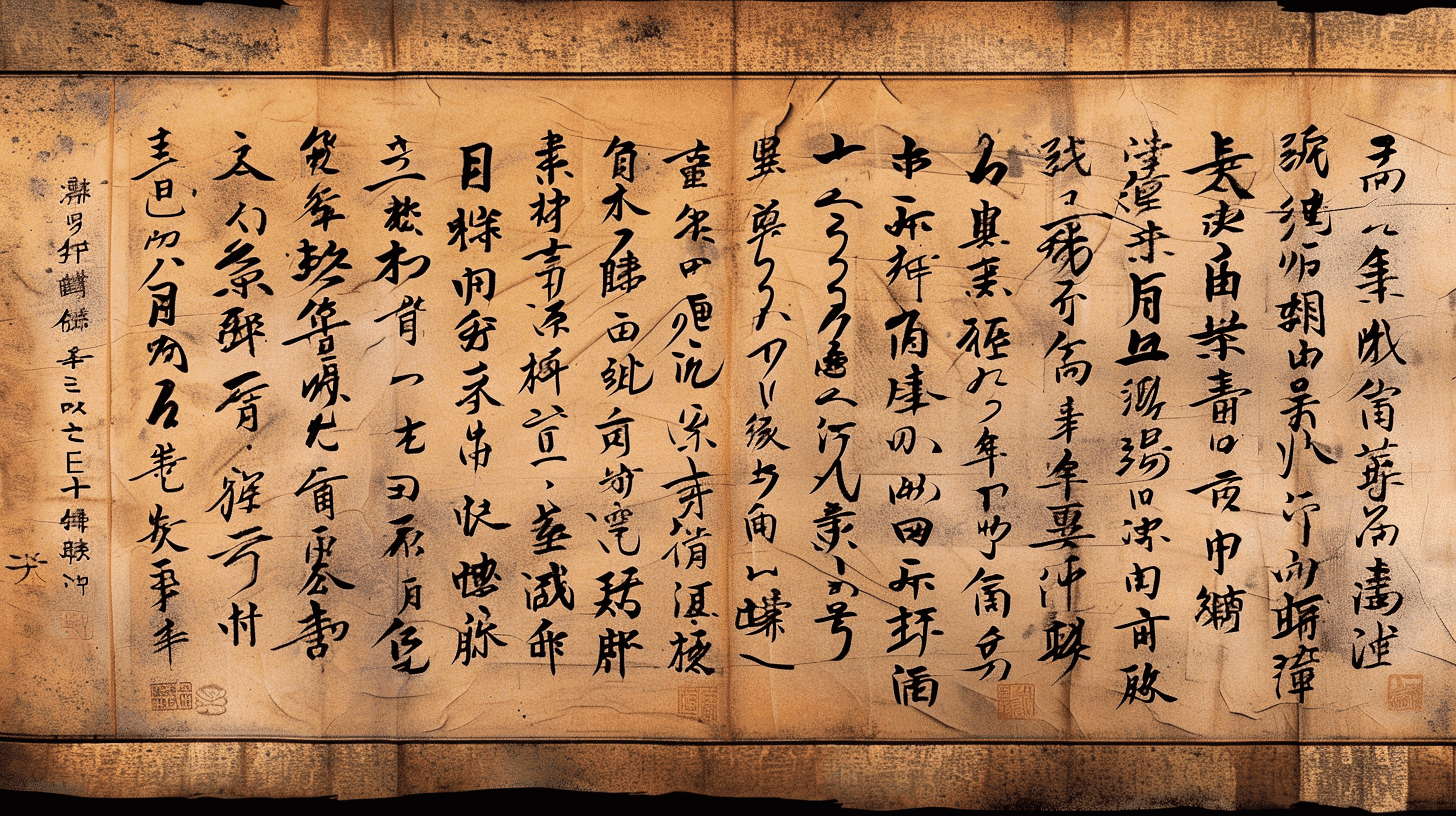
In the heart of Kochi City, nestled within the Kochi Castle History Museum, lies one of Japan's most precious literary treasures: the Kokin Wakashu Volume 20, known as the Koya-gire. This National Treasure represents the oldest surviving manuscript of Japan's first imperial poetry anthology and stands as the pinnacle of Heian period calligraphy. For over a millennium, these graceful characters have preserved not only poetry but the essence of Japanese aesthetic refinement.
The Koya-gire is more than a historical document; it is a masterwork of artistic expression that continues to inspire calligraphers and art lovers worldwide. Its flowing kana script, executed with extraordinary skill and sensitivity, exemplifies the sophisticated court culture of 11th-century Japan. For international visitors seeking to understand the depths of Japanese cultural heritage, encountering this manuscript offers an unparalleled glimpse into a world where poetry and visual art achieved perfect harmony.
The Kokin Wakashu: Japan's First Imperial Poetry Collection
Commissioned by Emperor Daigo in 905, the Kokin Wakashu (Collection of Ancient and Modern Poems) established the tradition of imperial poetry anthologies in Japan. Compiled by four distinguished poets including Ki no Tsurayuki, the collection contains 1,111 poems organized into twenty volumes covering themes from seasons to love, congratulations to travel. This monumental work shaped Japanese poetic tradition for centuries to come and became essential reading for the Heian aristocracy.
The anthology's significance extends far beyond literature. The preface, written by Ki no Tsurayuki in both Japanese kana and Chinese, articulated fundamental principles of Japanese aesthetics that would influence art, music, and philosophy throughout Japanese history. The collection demonstrated that Japanese language and sensibility could express emotions and concepts with a sophistication equal to Chinese literature, marking a crucial moment in the development of Japanese cultural identity.
Volume 20, preserved as the Koya-gire manuscript, forms the final chapter of this anthology, focusing on poems expressing deep emotions and philosophical reflections. That this concluding volume survives as a complete scroll makes it exceptionally precious among the scattered fragments of this ancient manuscript tradition.
The Koya-gire: Oldest Surviving Manuscript of the Kokin Wakashu
Among all surviving Kokin Wakashu manuscripts, the Koya-gire stands as the oldest, dating to the mid-11th century, approximately 150 years after the anthology's original compilation. The manuscript takes its name from a fascinating historical connection: Toyotomi Hideyoshi, the powerful warlord who unified Japan, gifted a portion of Volume 9 to Mokujiki Ougo of Mount Koya. Though that section resided at the sacred mountain, the entire set of twenty scrolls came to be known collectively as "Koya-gire" (Koya fragments).
Originally, the complete anthology was transcribed as a set of twenty handscrolls. Through the centuries, as tea ceremony culture flourished and appreciation for ancient calligraphy intensified, portions of these scrolls were cut and remounted as hanging scrolls or inserted into collectors' albums. Today, only three complete volumes survive: Volumes 5, 8, and 20. Volume 20, preserved in the collection of the former Tosa domain lord Yamauchi family, represents one of these rare complete scrolls.
The manuscript measures 26.4 cm in height and extends 262.2 cm in length, executed on paper enhanced with mica dust that creates a subtle shimmer. This luxurious material choice reflects the manuscript's significance and the reverence with which the Kokin Wakashu was regarded in Heian society.
Three Masters, One Masterpiece: The Art of Collaborative Transcription
Recent scholarly research has revealed that the Koya-gire manuscripts were created through an aristocratic practice called "yoriai-gaki" (collaborative writing), where three distinguished calligraphers divided the work among themselves. These scribes are classified by their distinctive styles as "First Type," "Second Type," and "Third Type." The Second Type has been identified as Minamoto no Kaneyuki, a renowned calligrapher of the era, while the identities of the other two remain subjects of scholarly discussion.
Volume 20 exemplifies the "First Type" style, characterized by its restrained elegance and refined execution. Among the three calligraphers, this scribe is believed to have been the most accomplished and highest-ranked, as evidenced by his assignment to transcribe both Volume 1 (the anthology's opening) and Volume 20 (its conclusion). This placement at the collection's bookends suggests his preeminent status among the three collaborators.
The First Type calligraphy displays extraordinary discipline combined with lyrical flow. Each character maintains perfect proportion while flowing seamlessly into the next through the "renmen-tai" (connected style) technique, where kana syllables link together in continuous brush movements. The result is writing that appears simultaneously controlled and spontaneous, embodying the Heian aesthetic ideal of "refined elegance" (miyabi).
Why National Treasure Status? Understanding Its Cultural Significance
The designation of Kokin Wakashu Volume 20 (Koya-gire) as a National Treasure in 1951 recognizes multiple layers of exceptional value that make this manuscript irreplaceable in Japanese cultural heritage.
First, as the oldest complete manuscript of any Kokin Wakashu volume, it provides invaluable evidence of how this foundational literary work was transmitted and preserved. Textual scholars rely on such early manuscripts to understand variations in the anthology's poems and to trace how the work evolved through successive copying generations.
Second, the manuscript represents the apex of Heian period calligraphy. The "First Type" calligrapher achieved a level of technical mastery and aesthetic refinement that has made Koya-gire the gold standard for kana calligraphy instruction even today, more than a thousand years after its creation. Contemporary calligraphy students still study and emulate these character forms.
Third, the manuscript embodies the intersection of literature and visual art that characterized Heian court culture. Creating such manuscripts required not only calligraphic skill but also deep literary understanding, aesthetic sensitivity to paper selection and decoration, and the spiritual discipline to maintain focus throughout the transcription process. The manuscript thus preserves multiple aspects of aristocratic culture simultaneously.
Finally, as part of the Yamauchi family collection passed down through generations of Tosa domain lords, the manuscript connects us to Japan's feudal history and the samurai class's role in preserving cultural treasures.
The Beauty That Transcends Time: Appreciating Kana Calligraphy
Even visitors who cannot read Japanese can appreciate the visual artistry of the Koya-gire manuscript. The flowing kana characters create rhythmic patterns across the paper surface, alternating between denser passages and lighter, more spacious areas. This visual rhythm, called "gyou no bi" (beauty of rows), generates a musical quality as the eye moves along the columns of text.
The calligrapher's brush pressure varied continuously, creating characters that swell and narrow, darken and lighten, in organic patterns that feel alive. Look closely and you can almost sense the breath of the scribe, the pauses for thought, the moments of confident execution. The connected characters flow together like dancers moving in perfect synchronization.
The subtle shimmer of mica dust on the paper adds another dimension of beauty. As light moves across the surface or as the viewer changes position, the page seems to glow from within, creating an ethereal quality appropriate for poetry describing the transient beauties of nature and human emotion.
This combination of literary content, calligraphic virtuosity, and material refinement represents what Japanese aesthetics term "sou ni ki o kanae-ta" - achieving perfect unity between content and form. The medium enhances the message; the visual beauty deepens the emotional impact of the poetry.
Visiting the Kochi Castle History Museum
The Kochi Castle History Museum, which opened in March 2017, provides an ideal setting for experiencing the Koya-gire manuscript. Located directly across from Kochi Castle's impressive main gate, the museum houses approximately 67,000 items from the Yamauchi family collection, including nine National Treasures and fifty-three Important Cultural Properties.
The museum's exhibition philosophy emphasizes displaying actual historical objects rather than reproductions, allowing visitors to encounter authentic pieces from Japan's past. Exhibitions rotate approximately every two months, ensuring that delicate items like ancient manuscripts receive proper conservation care while providing repeat visitors with fresh experiences. When planning your visit, check the museum's official website or contact them directly to confirm whether the Koya-gire manuscript is currently on display.
The museum building itself merits attention. Its modern design incorporates viewing platforms offering spectacular panoramas of Kochi Castle, creating a dialogue between contemporary architecture and historic structures. The observation lobby on the upper floors provides one of the best vantage points for photographing the castle.
Multilingual audio guides and tablet devices are available, offering detailed explanations in English and other languages. The museum also features interactive displays and media installations that help visitors understand Tosa domain history and samurai culture. Allow at least two hours to properly explore the exhibitions and appreciate the building's architectural features.
Exploring Kochi: Beyond the Museum
The museum's central location makes it an excellent starting point for exploring Kochi City's historic district. Immediately adjacent is the famous Sunday Market (Nichiyou-ichi), a 300-year-old street market stretching approximately one kilometer along the road leading to Kochi Castle. Every Sunday (except during the Yosakoi Festival in August), over 400 vendors sell fresh produce, local foods, handicrafts, and traditional items. Arrive before noon for the best selection.
Just a three-minute walk from the museum, Hirome Market offers covered, all-weather dining in a lively atmosphere that epitomizes Kochi's friendly culture. This indoor market features approximately sixty food stalls and shops surrounding communal seating areas. Sample local specialties including katsuo no tataki (seared bonito), sawachi ryori (feast platters), and imo-ten (sweet potato tempura). The market welcomes both tourists and locals, creating opportunities for cultural exchange over food and drink.
Kochi Castle itself, a five-minute walk from the museum, ranks among Japan's twelve surviving original castles. Both the main tower and palace buildings remain from the Edo period, making this one of only two castles in Japan where these structures survive together. The castle offers commanding views of the city and mountains beyond.
For those interested in natural history, the Kochi Prefectural Makino Botanical Garden, dedicated to renowned botanist Makino Tomitaro, showcases local and international plant species in beautifully landscaped grounds. The coastal area of Katsurahama, about thirty minutes by bus from the city center, features a famous beach with a statue of Sakamoto Ryoma, the revolutionary samurai from Kochi who helped modernize Japan.
Practical Information for International Visitors
Reaching Kochi requires some advance planning, as the city lies off the main Shinkansen network. From major cities like Tokyo, Osaka, or Kyoto, travelers typically take the Shinkansen to Okayama, then transfer to the JR limited express train to Kochi (approximately 2.5 hours). Alternatively, Kochi Ryoma Airport offers direct flights from Tokyo, Osaka, Nagoya, and Fukuoka.
From Kochi Station, reach the museum via a fifteen-minute walk or a five-minute ride on the charming streetcar system. The streetcar stop "Ootesuji" lies closest to the museum. Consider purchasing a one-day streetcar pass for convenient exploration of the city center.
The museum district, including the castle, Hirome Market, and Sunday Market area, concentrates most major attractions within walking distance. This compact historic quarter allows visitors to experience multiple facets of Kochi culture - samurai heritage, traditional markets, castle architecture, and local cuisine - within a single afternoon.
English signage appears throughout the museum and major tourist areas. Museum staff includes English speakers, and the tourist information center at Kochi Station provides English-language maps and guidance. While Kochi receives fewer international tourists than major cities, this creates opportunities for more authentic encounters with local culture and hospitality.
Best Times to Visit
Kochi's climate varies significantly by season, each offering distinct advantages for visitors. Spring (March through May) brings comfortable temperatures and the spectacular cherry blossom season. The castle grounds become particularly beautiful when hundreds of cherry trees bloom, creating a classic Japanese scene.
Summer (June through August) can be hot and humid, with occasional heavy rainfall during the June rainy season. However, summer also brings the famous Yosakoi Festival in August, one of Japan's most energetic dance festivals, filling the city streets with colorful costumes and thunderous drums. The Sunday Market takes a brief hiatus during festival weekend.
Autumn (September through November) offers ideal weather conditions with clear skies, moderate temperatures, and stunning fall foliage coloring the mountains surrounding the city. This season provides excellent conditions for photography and outdoor exploration.
Winter (December through February) brings cooler but generally mild weather compared to much of Japan. This low season means fewer crowds at major attractions, though the Sunday Market and outdoor activities may feel less inviting. The museum maintains comfortable indoor temperatures year-round, making cultural exploration pleasant regardless of outside conditions.
- 📍 Plan Your Visit to Kochi
- Find tours, activities & transport passes near Kokin Wakashu Volume 20 (Koya-Giri Version)
- [ Katsurahama Beach & Kochi Castle Ryoma Tour ]
Q&A
- Is the Koya-gire manuscript always on display at the museum?
- No, as a National Treasure requiring careful conservation, the manuscript appears in rotating exhibitions, typically displayed for limited periods. The museum changes exhibitions approximately every two months. Before visiting, check the museum's official website or call to confirm current displays. Even when the Koya-gire is not exhibited, the museum displays numerous other National Treasures and Important Cultural Properties from the Yamauchi family collection.
- Can I take photographs of the manuscript?
- Photography policies vary by exhibition. Generally, flash photography is prohibited to protect delicate historical materials, and some special exhibitions may restrict all photography. Signs at each display indicate photography permissions. The museum exterior, observation lobby, and general spaces welcome photography. Always respect posted guidelines and ask staff if uncertain.
- Do I need to understand Japanese to appreciate the manuscript?
- Not at all. While understanding the poetry adds depth, the visual beauty of the calligraphy transcends language barriers. The flowing characters, masterful brush techniques, and aesthetic composition can be appreciated purely as visual art. The museum provides English audio guides and explanatory materials to help international visitors understand the historical and cultural context. Many visitors find that appreciating the artistry first, then learning about the content, creates a layered understanding of the manuscript's significance.
- What other attractions in Kochi relate to traditional Japanese calligraphy and literature?
- The Kochi Castle History Museum regularly displays other calligraphic works and historical documents from the Yamauchi family collection. The museum also hosts special exhibitions on Japanese literature, poetry, and writing traditions. Additionally, some temples in Kochi preserve historic calligraphy and manuscripts. The museum staff and tourist information centers can recommend current exhibitions and sites related to your specific interests in Japanese literary arts.
- How much time should I allocate for the museum visit?
- Allow a minimum of two hours to explore the permanent exhibitions, temporary displays, and observation areas properly. Visitors particularly interested in samurai culture, Japanese calligraphy, or Edo-period history may wish to spend three to four hours. The museum also houses a tea room, museum shop, and information corner where you can learn about other Kochi attractions, so consider extra time for these amenities. Combining the museum visit with nearby Kochi Castle, Hirome Market, and the castle town district makes for a full day of cultural exploration.
Basic Information
| Artifact Name | Kokin Wakashu Volume 20 (Koya-gire) |
|---|---|
| Designation | National Treasure (Designated June 9, 1951) |
| Period | Heian Period, 11th century (mid-1000s) |
| Dimensions | Height: 26.4 cm, Length: 262.2 cm |
| Material | Paper with mica dust enhancement, ink calligraphy |
| Current Location | Kochi Castle History Museum |
| Museum Address | 2-7-5 Otsuji, Kochi City, Kochi Prefecture 780-0842 |
| Museum Hours | 9:00-18:00 (Monday-Saturday), 8:00-18:00 (Sunday) Last entry: 30 minutes before closing |
| Museum Closed | December 26-31 annually |
| Admission Fee | General: 500 yen (800 yen during special exhibitions) Combined ticket with Kochi Castle available Free for high school students and younger |
| Access | 5-minute walk from Otsuji streetcar stop 15-minute walk from JR Kochi Station |
| Official Website | https://www.kochi-johaku.jp/ |
| Phone | +81-88-871-1600 |
References
- Kokin Wakashu Volume 20 (Koya-gire) - Cultural Heritage Online
- https://bunka.nii.ac.jp/heritages/detail/284850
- Kokin Wakashu - Wikipedia
- https://ja.wikipedia.org/wiki/古今和歌集
- Koya-gire - Wikipedia
- https://ja.wikipedia.org/wiki/高野切
- Beautiful Calligraphy as a Model - Fujita Museum
- https://fujita-museum.or.jp/topics/2020/04/24/877/
- Kochi Castle History Museum - Official Website
- https://www.kochi-johaku.jp/
- Kochi Castle History Museum - Guide Information
- https://www.kochi-johaku.jp/guide/
- National Treasure: Kokin Wakashu Volume 20 (Koya-gire) - Kochi City
- https://www.city.kochi.kochi.jp/soshiki/90/cas-state-1500200.html
- Hirome Market - Official Website
- https://hirome.co.jp/
- Kochi Prefecture Tourism Information - Kochi Tabi Net
- https://kochi-tabi.jp/
Last verified: 2025.11.06
Nearby heritages
- Chosokabe District Inspection Record
- 2-7-5 Otesuji, Kochi City, Kochi Prefecture
- Tachi〈Bizen Province Nagafune Kanemitsu/Bunwa 4th Year Otsu
- Kochi Castle History Museum, Kochi Prefecture, 2-7-5 Otesuji, Kochi City, Kochi Prefecture
- Kochi Castle
- Marunouchi, Kochi City, Kochi Prefecture
- Kochi Castle Ruins
- Marunouchi, Kochi City
- Tosa-Bushi Manufacturing Techniques
- Kochi Prefecture
- Kochi Otemae High School Main Building
- 2-2-10 Otesuji, Kochi City, Kochi Prefecture
- Former Yamauchi Family Lower Residence Tenement
- 1-3-35 Takajocho, Kochi City, Kochi Prefecture
- Oda Dental Clinic Main Building
- 76-2 Masugata, Kochi City, Kochi Prefecture
- Oda Dental Clinic Wall
- 76-2 Masugata, Kochi City, Kochi Prefecture
- Graveyard of the Yamauchi Family, Lords of the Tosa Domain
- Kochi City, Kochi Prefecture