
A Zen Hall Older Than Its Temple
The Kozanji Temple Buddha Hall (功山寺仏殿) is a Zen-style Buddha hall of 1320 in Chofu Kawabata, Shimonoseki City, Yamaguchi Prefecture, and was designated a National Treasure on November 14, 1953 (Agency for Cultural Affairs).
The Agency records three bays by three, single-storey with a pent roof (mokoshi), hip-and-gable, roofed in cypress bark; designation number 00158.
The Agency record also gives an earlier designation date of April 15, 1903, the date of its designation under the former law.
An Inscription Older Than the Temple
The Agency's commentary says Kozanji was founded in 1327 by the priest Koan Genjaku and was first called Chofukuji. An ink inscription high on a column of the inner sanctuary records that "the pillars of this hall were raised on the fifth day of the fourth month of 1320". Some date the hall a little later on grounds of style, but the Agency considers it reasonable to take the inscription as the date of building.
Why It Is a National Treasure
The Agency values it highly as a typical example of a Zen-style Buddha hall.
A Three-Bay Zen Hall with a Pent Roof
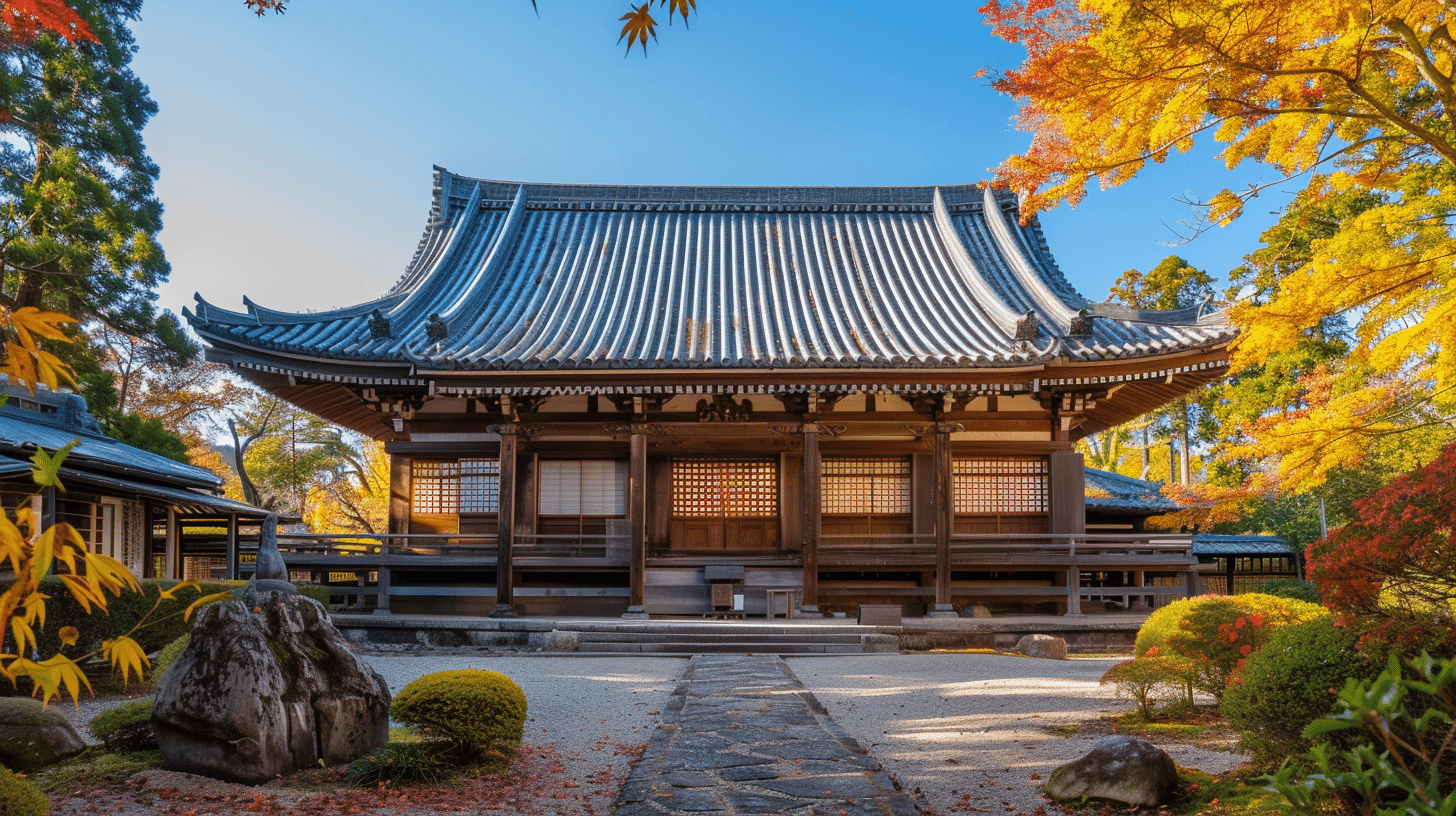
Three bays square with a pent roof, the hall has the proper form of a Zen-style Buddha hall (Agency for Cultural Affairs). Inside, the central bay rises highest under a flat mirror ceiling, surrounded by exposed roof framing in which the tails of the projecting rafters carry the purlins, the frame typical of the Zen style. Outside, the pent roof forms a low exposed ceiling tied to the core by curved beams.
The rear of the pent roof is made slightly wider, which the Agency reads as a first sign of the looser structure that came in the Muromachi period.
What to Look For
Look for the cypress-bark roof, which the pent roof makes appear double (Agency for Cultural Affairs). The Yamaguchi tourism site notes the autumn colours around the hall.
Visiting
It is owned by Kozanji Temple (Agency for Cultural Affairs). The two structures, visiting and access are covered on the Kozanji Temple page. The Yamaguchi tourism site says the grounds are open to visitors.
Q&A
- When was the hall built?
- An inscription dates the raising of its pillars to 1320, which the Agency accepts as the date.
- Is the hall older than the temple?
- The temple was founded in 1327, seven years after the date of the inscription.
- What is its form?
- A three-bay Zen hall with a pent roof, hip-and-gable, in cypress bark.
- Why is it a National Treasure?
- It is a typical and valuable example of a Zen-style Buddha hall.
- When was the Kozanji Temple Buddha Hall designated a National Treasure?
- On November 14, 1953 (Agency for Cultural Affairs).
Basic Information
| Name | Kozanji Temple Buddha Hall (功山寺仏殿) |
|---|---|
| Location | Chofu Kawabata, Shimonoseki City, Yamaguchi Prefecture |
| Designation | National Treasure (Structure) |
| Year Designated | Designated National Treasure 1953/11/14 (Showa 28) |
| Quantity | 1 building |
| Dimensions | 3 × 3 bays, single storey with mokoshi, hip-and-gable, cypress-bark roof |
| Owner | Kozanji Temple |
| Public Access | Grounds open to visitors (Yamaguchi tourism site) |
References
- Kozanji Temple Buddha Hall (Database of National Cultural Properties, Agency for Cultural Affairs)
- https://kunishitei.bunka.go.jp/heritage/detail/102/3198
- Kozanji Temple (Yamaguchi tourism site, Japanese)
- https://yamaguchi-tourism.jp/spot/detail_10468.html
Last verified: 2026.10.21
