Kiku-zukuri Koshigatana: A National Treasure of Chrysanthemum-Adorned Sword Craftsmanship | Mōri Museum, Yamaguchi

Discover the Kiku-zukuri Koshigatana, a Japanese National Treasure featuring exquisite chrysanthemum metalwork and a Kamakura-period blade attributed to the Taima school. Housed at the Mōri Museum in Hofu, Yamaguchi Prefecture.

Kiku-zukuri Koshigatana: A Kamakura-Period Masterpiece Adorned with Chrysanthemums

Among the remarkable treasures of the Mōri Museum in Hofu City, Yamaguchi Prefecture, lies a small yet extraordinary blade that has captivated sword connoisseurs and cultural historians for centuries. The Kiku-zukuri Koshigatana (菊造腰刀) — a chrysanthemum-themed short sword with an unsigned blade attributed to the renowned Taima school — was designated a National Treasure of Japan in 1952. Despite its compact size of just 26.5 centimeters, this exquisite weapon embodies the pinnacle of both swordsmithing and decorative metalwork from the late Kamakura period (late 13th to early 14th century).

The name "Kiku-zukuri," meaning "chrysanthemum construction," derives from the magnificent chrysanthemum motifs that adorn nearly every surface of its mountings. A koshigatana was a short sword worn at the waist by high-ranking samurai alongside their longer tachi, making it both a practical sidearm and an expression of the warrior's status and aesthetic sensibility.

The Blade: A Masterwork of the Yamato Tradition

The blade of the Kiku-zukuri Koshigatana is unsigned (mumei), but it has long been attributed to the Taima school, one of the five prestigious swordsmithing schools of the Yamato tradition based in present-day Nara Prefecture. The Taima school was founded by a smith named Kuniyuki, who is believed to have been active during the Hōji era (1247–1249) or the Shōō era (1288–1293). Alongside the Senjuin, Tegai, Hōshō, and Shikkake schools, the Taima school produced blades primarily for warrior monks (sōhei) serving powerful temples in the ancient capital of Nara.

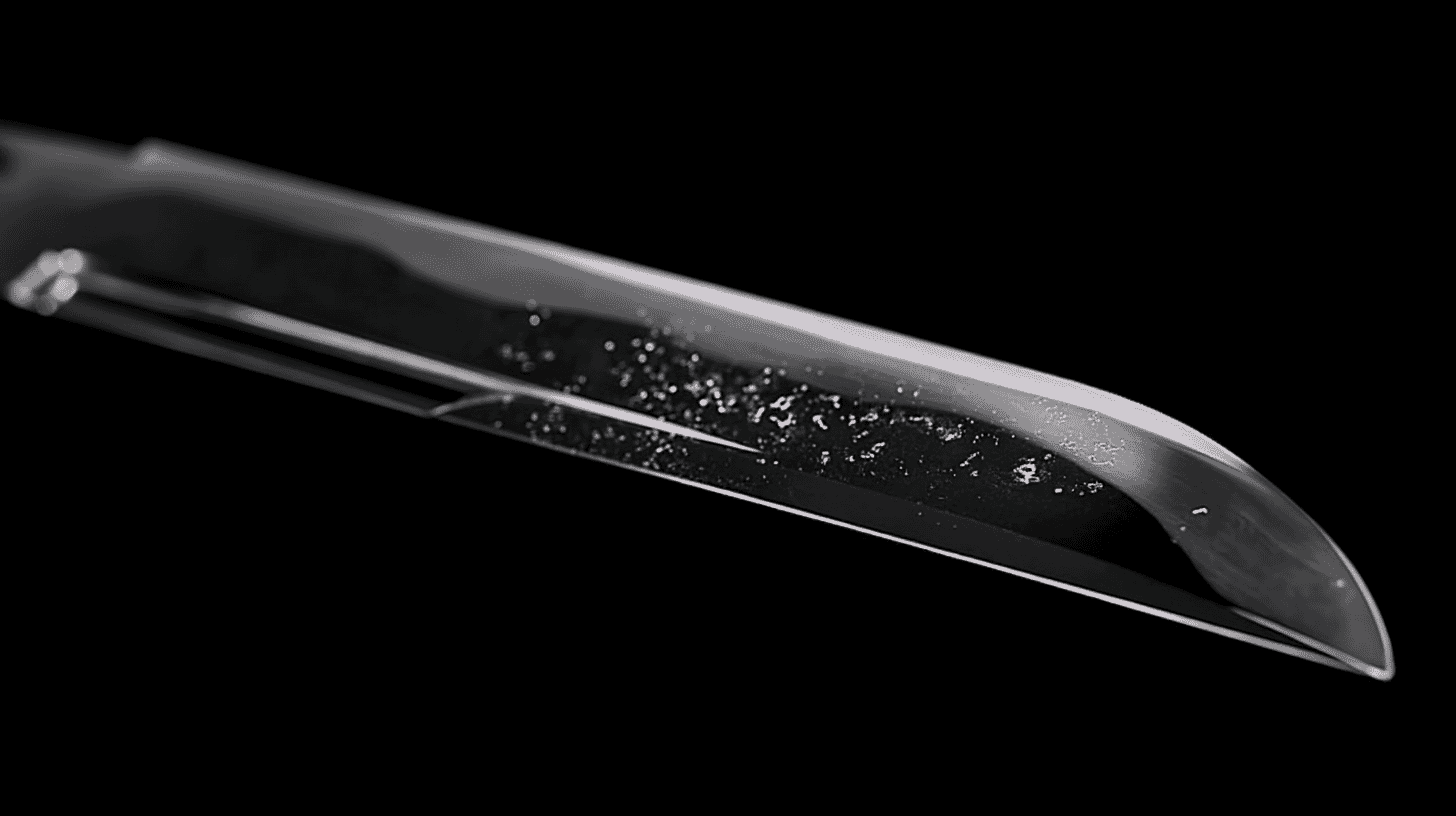
The blade is forged in the unokubi-zukuri style — a distinctive "cormorant neck" shape where the ridge (shinogi) drops away near the tip, creating a silhouette reminiscent of a cormorant's slender neck. This construction, combined with a kanmuri-otoshi profile, is characteristic of Yamato-tradition tantō. The blade features masame-hada (a straight grain pattern in the steel), and the hamon (temper line) is a clean suguha (straight line) created through nie-deki tempering. These qualities are hallmarks of the Taima school's craftsmanship and represent the finest characteristics of late Kamakura-period Yamato swordwork.

Remarkably, the blade remains in excellent condition despite being over seven hundred years old, with its forging characteristics well preserved and clearly visible — a testament to the skill of its anonymous creator.

The Mountings: A Flowering of Chrysanthemum Metalwork

What truly sets this koshigatana apart — and earns it the "Kiku-zukuri" designation — are its breathtaking mountings (koshirae). The sword is constructed in the aikuchi style, meaning it has no tsuba (handguard), with the handle and scabbard meeting directly at the mouth. Both the handle (tsuka) and scabbard (saya) are finished in gold nashiji lacquer, a technique that produces a luminous, pear-skin-textured surface by sprinkling gold flakes beneath layers of translucent lacquer.

The handle features a ground of shakudō (a copper-gold alloy producing a deep purplish-black patina) with nanako (fish-roe) texturing, upon which chrysanthemum branches are carved in high relief (takabori). Accents of silver iroe (color overlay) bring additional depth and contrast to the botanical motifs. The tsutsu-gane — a tubular metal fitting at the junction of handle and scabbard — is silver-rimmed and integrates seamlessly into the design, marking this as a type of koshigatana specifically referenced in medieval military chronicles (gunki-mono).

The kozuka (utility knife), kōgai (hair-styling implement), and kojiri (scabbard tip) all bear the same exquisite chrysanthemum workmanship, indicating they were crafted as a matching set. Only the menuki (handle ornaments depicting chrysanthemum flowers) are recognized as later replacements. The remainder of the mountings are original and are considered no later than the early Muromachi period in their creation, making the entire ensemble a remarkably intact example of medieval Japanese decorative metalwork.

Why Was It Designated a National Treasure?

The Kiku-zukuri Koshigatana was first recognized as an Important Cultural Property in 1933 and elevated to National Treasure status on March 29, 1952. Several factors contributed to this prestigious designation.

First, the sword represents an exceptionally rare surviving example of a tsutsu-gane-iri (tube-fitted) koshigatana — a type frequently mentioned in medieval Japanese military tales but almost never found intact today. Among the very few extant examples of this type, this piece is considered one of the finest, comparable in quality to a similar koshigatana preserved at Itsukushima Shrine in Hiroshima.

Second, the blade itself is a superb and well-preserved representative of late Kamakura-period Yamato swordsmithing. Its attribution to the Taima school is supported by its characteristic construction style, grain pattern, and temper line, providing valuable insight into the forging techniques of one of Japan's most historically significant swordsmithing traditions.

Third, the unified quality of the mountings — with their intricate chrysanthemum carvings, gold nashiji lacquer, and harmonious metalwork — demonstrates the extraordinary heights of Japanese decorative arts during the medieval period. The combination of a superior blade with intact, museum-quality mountings from the same era is exceptionally uncommon.

Highlights and What to Look For

When viewing the Kiku-zukuri Koshigatana, there are several key details that reward careful attention. The chrysanthemum carvings on the handle display remarkable depth and naturalism for metalwork of this period — observe how the branches and petals emerge from the dark shakudō ground with lifelike dimensionality. The silver accents (iroe) applied to certain areas of the chrysanthemum design create a subtle interplay of warm and cool metallic tones.

The gold nashiji lacquer on the handle and scabbard has the warm, luminous quality that makes this technique one of the most admired in Japanese lacquer art. Even after seven centuries, the surface retains its gentle golden shimmer.

For those interested in sword metallurgy, the blade offers a clear example of the Yamato tradition's distinctive forging qualities: the straight masame grain visible on the surface of the steel, and the calm, composed suguha hamon running along the cutting edge. The unokubi-zukuri shape at the tip is a distinctive and somewhat rare construction that is worth noting.

Finally, the tsutsu-gane fitting at the junction of handle and scabbard is a historically significant detail — this is the very type of construction described in medieval war chronicles, making this koshigatana a tangible link to the world of Kamakura-era warriors.

The Mōri Museum: Where History Lives

The Kiku-zukuri Koshigatana is housed at the Mōri Museum, located within the grounds of the former Mōri family residence in Hofu City, Yamaguchi Prefecture. The Mōri clan was one of Japan's most illustrious warrior families, rising to prominence under the legendary strategist Mōri Motonari during the Sengoku (Warring States) period and going on to rule the Chōshū domain throughout the Edo period. After the Meiji Restoration — in which the Chōshū domain played a pivotal role — the family was granted the highest aristocratic rank of kōshaku (duke).

The main residence, completed in 1916 during the Taishō era, is itself designated as a National Important Cultural Property. This grand all-cypress structure spans approximately 3,300 square meters and blends traditional Japanese architecture with cutting-edge technology of its day, including electrical power systems, running water, and flush toilets.

Today, part of the residence serves as the museum, housing approximately 20,000 items from the Mōri family collection, including four National Treasures and nine Important Cultural Properties. The museum holds about seven exhibitions per year, with a special annual National Treasures exhibition each autumn — the best opportunity to see the Kiku-zukuri Koshigatana alongside the museum's other National Treasures, including Sesshū's magnificent "Four Seasons Landscape Scroll."

Surrounding Attractions

Hofu City offers visitors a wealth of cultural experiences beyond the Mōri Museum. The surrounding Mōri Garden, a nationally designated Place of Scenic Beauty, is a magnificent stroll garden spanning approximately 84,000 square meters. With its picturesque pond, stone bridges, and seasonal plantings — including spectacular cherry blossoms in spring and vivid autumn foliage — the garden alone is worth the visit.

Hōfu Tenman-gū, located about a 10-minute drive from the museum, is considered the very first Tenjin shrine ever built in Japan and one of the country's three great Tenjin shrines alongside Kitano Tenman-gū in Kyoto and Dazaifu Tenman-gū in Fukuoka. Dedicated to the scholar-deity Sugawara no Michizane, it welcomes approximately 500,000 worshippers annually.

Suō Kokubunji Temple, about a 5-minute drive from the shrine, preserves a history of roughly 1,200 years and houses numerous important Buddhist sculptures and architectural treasures. Nearby Tōdaiji Betsuin Amidaji Temple offers yet another layer of historical depth, with connections to Nara's famous Tōdaiji.

Hofu is also well known for its seasonal festivals, including the dramatic Hadaka-bō Matsuri (Naked Festival) held each November at Hōfu Tenman-gū, and the plum blossom festival in February and March. The city's compact layout makes it possible to visit multiple cultural sites in a single day.

Practical Tips for International Visitors

As a National Treasure, the Kiku-zukuri Koshigatana is not on permanent display. It is typically exhibited during the museum's annual special National Treasures exhibition, held each autumn (usually from late October through early December). Checking the museum's official website or contacting them directly before your visit is strongly recommended.

English-language signage within the museum is limited, so visitors interested in detailed explanations may wish to research the collection in advance or inquire about available English resources at the reception desk. Photography policies vary by exhibition, so please ask the staff about current rules during your visit.

The Mōri Museum and its garden make an excellent half-day excursion that can be combined with visits to Hōfu Tenman-gū and other cultural sites in the area for a full day of immersive Japanese cultural heritage.

📍 Plan Your Visit to Yamaguchi
Find tours, activities & transport passes near Kikuzukuri Waist Sword (Blade Unsigned, Attributed to Toma)
[ Kintaikyo Bridge & Hagi Castle Town Tours ]

Q&A

QWhen can I see the Kiku-zukuri Koshigatana at the Mōri Museum?
AThe sword is typically exhibited during the museum's annual special National Treasures exhibition, held each autumn (usually late October to early December). As exhibition schedules change yearly, please check the Mōri Museum's official website or contact them directly at 0835-22-0001 to confirm display dates before your visit.
QWhy is the sword called "Kiku-zukuri" (Chrysanthemum Style)?
AThe name comes from the elaborate chrysanthemum (kiku) motifs that decorate the handle, scabbard fittings, kozuka, and kōgai. Chrysanthemum branches are carved in high relief on a shakudō ground with silver accents, making the chrysanthemum the dominant decorative theme of the entire ensemble.
QWhat is the Taima school, and why is this blade attributed to it?
AThe Taima school is one of the five great swordsmithing schools of the Yamato tradition, based in Taima in present-day Nara Prefecture. The blade is attributed to this school based on its characteristic construction style (unokubi-zukuri/kanmuri-otoshi), straight grain pattern (masame-hada), and straight temper line (suguha) — all hallmarks of Taima craftsmanship from the late Kamakura period.
QHow do I get to the Mōri Museum from central Hofu?
AFrom JR Hofu Station, take the bus bound for Amidaji (approximately 6 minutes) and alight at the "Mōri Hontei Iriguchi" stop. By car, the museum is about 15 minutes from either the Hofu-Higashi or Hofu-Nishi interchanges on the San'yō Expressway. Free parking is available for 116 standard vehicles and 8 large buses.
QAre there other National Treasures at the Mōri Museum?
AYes. The Mōri Museum holds four National Treasures in total, including the famous "Four Seasons Landscape Scroll" (Shiki Sansui-zu) by the master ink painter Sesshū, Volume 8 of the Kokin Wakashū (the oldest surviving manuscript of this classical poetry anthology), and Volume 9 of the Shiki (Records of the Grand Historian). All four National Treasures are typically displayed together during the annual autumn special exhibition.

Basic Information

Designated Name Kiku-zukuri Koshigatana (Blade: Unsigned, Attributed to Taima)
菊造腰刀〈刀身無銘伝当麻〉
Category National Treasure (Craft — Metalwork)
Period Late Kamakura Period (late 13th – early 14th century)
Dimensions Overall length: 40.9 cm; Blade length: 26.5 cm; Base width: 2.6 cm; Scabbard length: 30.8 cm; No curvature
Quantity 1 piece
Important Cultural Property Designation January 23, 1933
National Treasure Designation March 29, 1952
Owner Hofu Mōri Hōkōkai Foundation (公益財団法人防府毛利報公会)
Location Mōri Museum, 1-15-1 Tatara, Hofu City, Yamaguchi Prefecture 747-0023
Museum Hours 9:00 – 17:00 (last admission 16:30)
Closed December 22 – December 31 (garden open year-round)
Admission Museum: Adults ¥900 (¥1,300 during special exhibition) / Children ¥250; Combined with Garden: Adults ¥1,200 (¥1,500 during special exhibition) / Children ¥250
Access Bus from JR Hofu Station (Amidaji line, approx. 6 min) to "Mōri Hontei Iriguchi" stop; or approx. 15 min by car from San'yō Expressway Hofu-Higashi/Nishi IC
Contact Tel: 0835-22-0001 / Fax: 0835-24-2039

References

菊造腰刀〈刀身無銘伝当麻/〉 — 文化遺産オンライン
https://bunka.nii.ac.jp/heritages/detail/125544
指定文化財の検索 — 山口県の文化財
https://bunkazai.pref.yamaguchi.lg.jp/sp/bunkazai/summary.asp?mid=70061
国宝-工芸|菊造腰刀(刀身 無銘 伝当麻)[毛利博物館/山口] — WANDER 国宝
https://wanderkokuho.com/201-00348/
毛利博物館 -山口県防府市-(公式サイト)
https://mohri-museum.com/
毛利氏庭園・毛利博物館 — 山口県観光サイト おいでませ山口へ
https://yamaguchi-tourism.jp/spot/detail_14783.html
防府天満宮 — 山口県観光サイト おいでませ山口へ
https://yamaguchi-tourism.jp/spot/detail_14780.html
Gokaden Part 1: Yamato-den — Tozando Katana Shop
https://japanesesword.net/blogs/news/gokaden-part-1-yamato-den
THE TANTÔ 短刀 — NIHONTO
https://nihonto.com/the-tanto-%E7%9F%AD%E5%88%80/

Last verified: 2026.02.17

Nearby heritages