Yamaguchi's Hidden Treasure: Japan's Most Beautiful Pagoda
Ruriko-ji Temple's Five-Story Pagoda (瑠璃光寺五重塔) stands as one of Japan's three greatest pagodas, yet remains blissfully free from tourist crowds. This 31.2-meter National Treasure, completed in 1442, represents the pinnacle of mid-Muromachi period architecture and offers international visitors a rare combination: world-class cultural heritage, stunning natural setting, and authentic Japanese atmosphere without the overtourism plaguing Kyoto and Nara. Located in Yamaguchi City—once known as the "Western Kyoto"—this architectural masterpiece rewards those who venture off the beaten path with unforgettable beauty across all four seasons, evening illumination that transforms the setting into pure magic, and completely free admission to boot.
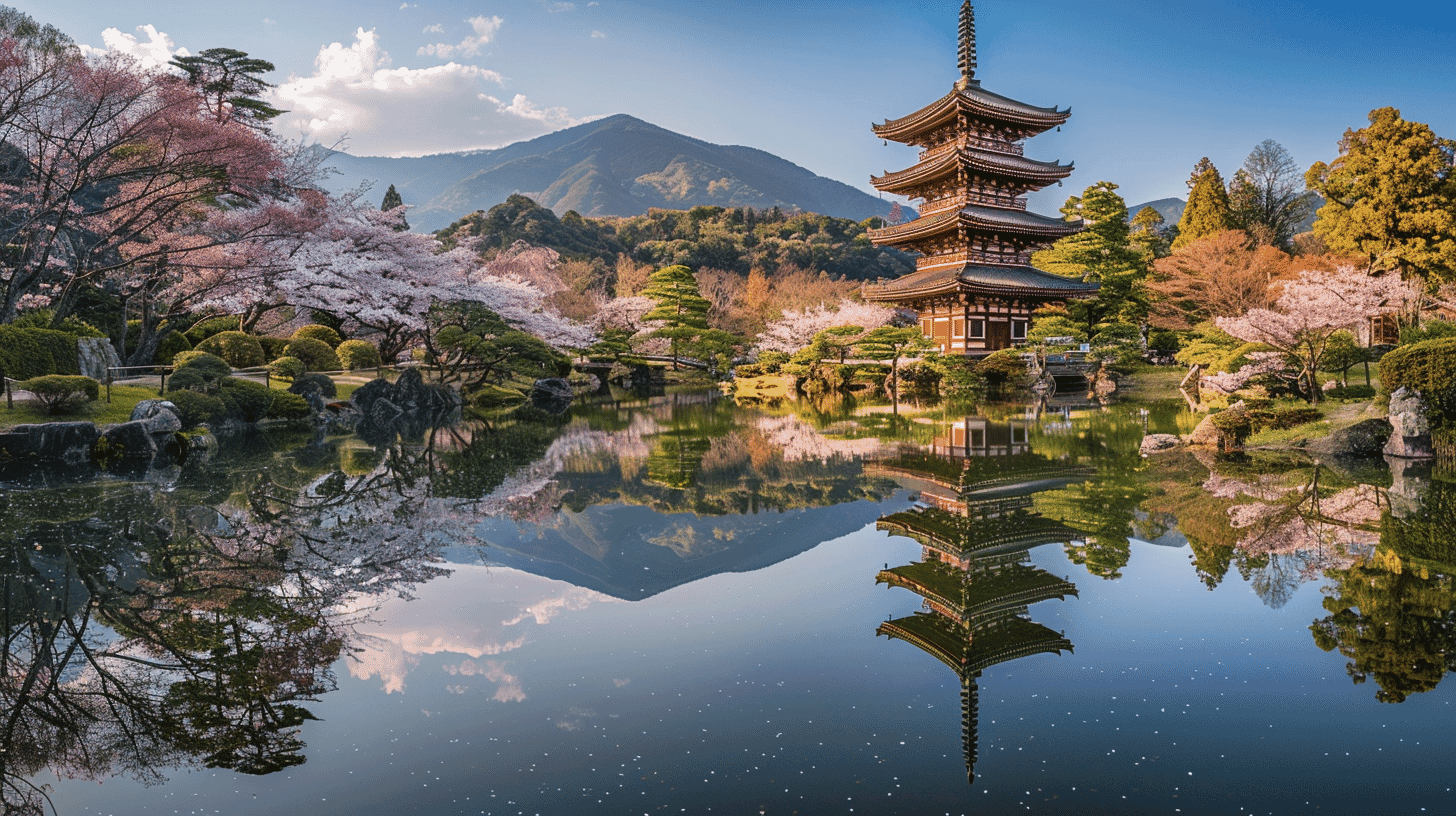
The pagoda was commissioned by Ouchi Moriharu, the 26th chieftain of the powerful Ouchi clan, as a memorial to his elder brother Yoshihiro who died in battle in 1399. Tragically, Moriharu himself was killed in combat before its completion in 1442, making this elegant structure a monument to both brothers and a testament to the Ouchi family's cultural sophistication despite adversity. Today it anchors Kozan Park, where its reflection in the pond below creates the iconic "upside-down five-story pagoda" image that has become Yamaguchi's most recognizable symbol.
A National Treasure That Defines Architectural Perfection
The Japanese government designated Ruriko-ji's pagoda as a National Treasure in 1952 under the Law for the Protection of Cultural Properties, recognizing it as "the most outstanding structure surviving from the middle of the Muromachi period." To achieve this highest designation, cultural properties must demonstrate exceptional workmanship, high value for world cultural history, and exceptional scholarly importance. This pagoda meets all criteria brilliantly.
What makes it truly special architecturally? The pagoda ranks as the 10th oldest five-story pagoda in Japan and one of only three consistently praised as the nation's finest, alongside Horyuji Temple (circa 710 CE, the world's oldest wooden structure) in Nara and Daigoji Temple (951 CE) in Kyoto. While Horyuji claims primacy through age and Daigoji impresses with sheer size at 38 meters, Ruriko-ji achieves distinction through something more subtle: perfect proportions and refined aesthetic restraint.
The cypress bark roof (hiwadabuki) alone demonstrates extraordinary craftsmanship. Multiple layers of hand-cut bark from nearly 100-year-old cypress trees are meticulously overlaid and secured exclusively with bamboo nails—no metal fasteners anywhere in the roof structure. This traditional technique, maintained for over 1,350 years in Japanese architecture, creates both a massive visual presence and distinctive texture while remaining naturally rot-resistant. The pagoda just completed its first complete roof replacement in 70 years, finishing the "Reiwa Era Great Renovation" in 2025 to preserve this treasure for future generations.
Architectural Genius in Wood and Restraint
Standing before the pagoda, you immediately notice its elegant silhouette—slender, refined, with what Japanese architectural experts call a "delicate body clearly visible." This effect comes from the teigen principle: the progressive narrowing of each ascending story. The first story stands notably tall with thick pillars, providing visual and structural stability, while each subsequent level becomes narrower, creating a graceful tapering effect that tricks the eye into perceiving greater height than the actual 31.2 meters.
Remarkably, only the second story features an exterior balcony or railing—a highly unusual design choice for the period that creates a subtle focal point while maintaining overall minimalism. This restraint in ornamentation was revolutionary for mid-Muromachi architecture and presaged the refined aesthetic that would come to define Japanese design. Where other pagodas from this era feature elaborate decorative elements, Ruriko-ji lets structural beauty speak for itself.
The interior houses statues of Amida Nyorai (Amitābha Buddha) and Ouchi Yoshihiro himself on a circular altar. Like all Buddhist pagodas, the structure embodies profound religious symbolism: each of the five stories represents one of the five elements in Buddhist cosmology—earth, water, fire, wind, and void/ether—reflecting the spiritual journey from the physical world to enlightenment. The metal finial (sorin) crowning the top completes this cosmic symbolism.
But perhaps the pagoda's most impressive feature is one you can't see: the shinbashira system. A massive central pillar runs through all five stories, but it's not rigidly connected to the floor structures. During earthquakes, each story can sway independently, with the central pillar acting like a pendulum to dissipate seismic energy. This ingenious engineering—similar to principles later adopted for Tokyo Skytree—has enabled the structure to survive 580+ years in earthquake-prone Japan without major damage.
The Golden Age of Ouchi Culture and the Western Kyoto
To understand why this pagoda exists in Yamaguchi rather than Kyoto or Nara, you need to know the extraordinary story of the Ouchi clan. These powerful lords controlled six provinces in western Japan during the 14th-16th centuries and claimed descent from Korean royalty—Prince Imseong of Baekje, who immigrated to Japan in the 7th century. This heritage became their economic foundation.
The Ouchi leveraged their Korean connections to establish exclusive trade relationships with Ming Dynasty China and Joseon Dynasty Korea, along with the Ryukyu Kingdom. This monopoly on foreign trade made them one of Japan's wealthiest clans and enabled unprecedented cultural patronage. Around 1360, Ouchi Hiroyo relocated to Yamaguchi and deliberately recreated Kyoto, designing a grid street pattern, naming thoroughfares after Kyoto streets, and bringing deities from Kyoto's famous shrines. Yamaguchi became known as "Saikyo"—the Western Capital.
The Ouchi created what historians call "Ouchi culture"—a sophisticated fusion of Kyoto elegance with Chinese and Korean influences. They invited renowned painter Sesshu Toyo to Yamaguchi in 1486, where he designed gardens that UNESCO later recognized as world cultural treasures. In 1551, they hosted Portuguese Jesuit missionary Francis Xavier, and Japan's first Christmas was celebrated in Yamaguchi in 1552. The clan patronized poets, artists, scholars, and Confucian learning while accumulating countless items of artistic significance from across East Asia.
The Ruriko-ji pagoda represents the zenith of this cultural achievement—historians consistently describe it as "the best work in Ouchi culture" and "the masterpiece of Ouchi culture." When you stand before it, you're witnessing not just Japanese architecture but the culmination of international cultural exchange at medieval Japan's most cosmopolitan court. The Ouchi clan fell in the 1550s, conquered by the Mori clan, but their architectural legacy survived in this perfect structure.
How the Pagoda Compares to Japan's Other Architectural Icons
Comparing Ruriko-ji to other famous five-story pagodas reveals why it consistently ranks among the top three:
Horyuji Temple (Nara) measures 32.5 meters tall and dates to approximately 710 CE, making it the world's oldest surviving wooden structure—an astonishing 1,300+ years old. Its central pillar comes from a cypress tree felled in 594 CE. As a UNESCO World Heritage Site, Horyuji claims primacy through sheer age and historical importance. It houses 97 clay figurines in religious tableaux and features scythes on the uppermost roof as lightning protection.
Daigoji Temple (Kyoto) stands 38 meters tall with a massive 12.8-meter spire (sorin) comprising 33% of total height—the most dramatic vertical emphasis among major pagodas. Built in 951 during the Heian period, it's the oldest verified wooden building in Kyoto and houses National Treasure murals of the Mandala of Two Realms from the 10th century. Daigoji survived the devastating Onin War that destroyed much of medieval Kyoto, preserving its historical continuity.
Toji Temple (Kyoto) claims the title of Japan's tallest wooden pagoda at 54.8 meters, though the current structure dates to 1644 after multiple fire-related reconstructions. Kofuku-ji Temple (Nara) ranks second tallest at 50.1 meters, originally built in 730 but reconstructed in 1426.
Against these giants, Ruriko-ji's distinction lies not in superlatives but in perfection of form. Architectural experts consistently praise it as having the "most refined silhouette" and "most beautiful proportions" among all Japanese pagodas. Its authentic hiwadabuki roofing—maintained continuously since 1442 while many other pagodas switched to tile roofs—preserves the original Muromachi design philosophy. The minimal ornamentation, single second-story balcony, and elegant teigen create what observers describe as architecture at its purest: structural beauty without ornamental distraction.
The Perfect Setting Amplifies Natural and Architectural Beauty
Ruriko-ji's Kozan Park setting transforms the pagoda from architectural specimen into living art across four seasons. The design centers on a pond positioned to reflect the pagoda, creating the famous "reverse five-story pagoda" (sakasa-gojunoto) that appears in every Yamaguchi tourism poster. Mountains rise behind, providing layered depth and natural framing. Walking paths circle the grounds, offering constantly changing perspectives and photography angles.
Spring brings 170 cherry trees (Somei Yoshino variety) into spectacular bloom, typically late March to early April, along with 40 plum trees that flower slightly earlier. The pink canopy over dark cypress bark roofing creates stunning contrast. This is peak season, though crowds remain modest compared to Kyoto's famous cherry blossom spots—you can actually enjoy peaceful contemplation while photographing world-class beauty.
Autumn delivers equally spectacular fall foliage, with maple trees turning brilliant red and gold from late October through mid-November. Yellow irises and seasonal flowers add accent colors. The warm autumn palette complements the natural cypress bark color, and professional photographers consistently rate this among Japan's most photogenic autumn scenes. Occasional special events feature 1,000-candle illuminations along pathways during autumn weekends, creating fairytale atmosphere.
Winter offers the rarest beauty: snow-covered pagoda against white landscape creates ethereal, almost mystical scenes when weather cooperates (not guaranteed in this relatively mild climate). Crystal-clear winter days provide sharp mountain views, and the serene, contemplative atmosphere attracts minimal crowds—you might have this National Treasure almost to yourself.
Summer provides fresh green foliage and fewer crowds, though heat and humidity challenge comfort. Azaleas bloom in early summer, and the lush vegetation frames the structure beautifully for those seeking peaceful off-season visits.
But here's what many visitors miss: the pagoda is illuminated nightly from sunset until 10:00 PM, creating a completely different experience. The golden uplighting emphasizes architectural details invisible by day, reflections double in the dark pond water, and the dramatic atmosphere borders on magical. Visiting both during daytime and after dark reveals two distinct sides of the same treasure—don't skip the evening illumination.
Practical Information for International Visitors
Getting to Yamaguchi requires some planning but rewards effort. From Tokyo, take the Shinkansen to Shin-Yamaguchi Station—Nozomi direct trains take 4.5 hours, while JR Pass-compatible Hikari/Sakura trains take about 5.5 hours. Alternatively, fly from Haneda Airport to Yamaguchi Ube Airport (95 minutes) then bus to Shin-Yamaguchi. From Osaka, Sakura Shinkansen trains reach Shin-Yamaguchi in 2 hours and are covered by JR Pass. From Hiroshima it's just 30-45 minutes, and from Fukuoka's Hakata Station only 35 minutes.
From Shin-Yamaguchi Station, take the local JR Yamaguchi Line to Yamaguchi Station (20 minutes, 240 yen, 1-3 trains hourly). From Yamaguchi Station, take the bus toward Yamaguchi Daigaku or Nakaoguchi and get off at Kenchomae stop—only 6 minutes, 170 yen, departures every 20-30 minutes. Then walk 10 minutes to the temple. The bus saves significant time versus the 40-minute walk or 2.5 km bicycle ride (rentals available at station for 300-700 yen).
Kozan Park is open 24 hours year-round with completely free admission—a remarkable bargain for a National Treasure site. The Pagoda Museum costs just 200 yen for adults (100 yen students, 50 yen children). Park illumination runs from sunset to 10:00 PM nightly. Free parking accommodates approximately 100 cars. Allow 1.5-2 hours minimum for comprehensive exploration, or 3+ hours if returning for evening illumination.
Why Ruriko-ji Deserves Your Itinerary Space
In 2024, the New York Times selected Yamaguchi City for its "52 Places to Go" list, specifically citing Ruriko-ji Temple's Five-Story Pagoda as the primary attraction. This recognition reflects what savvy travelers already know: Japan offers incredible cultural treasures beyond the overcrowded Kyoto-Osaka-Tokyo triangle. Ruriko-ji provides everything international visitors seek—world-class architecture with National Treasure designation, profound historical significance, stunning natural setting, four-season beauty, free admission, convenient access via Shinkansen, and peaceful atmosphere without tourist hordes.
Most importantly, Ruriko-ji demonstrates that Japan's greatest treasures aren't always the most visited. While Kyoto's famous temples struggle with overtourism and Nara's deer park fills with selfie-takers, Yamaguchi quietly preserves one of the nation's three most beautiful pagodas in a setting that enhances rather than diminishes the experience. The journey to Yamaguchi requires some extra effort compared to staying on the main tourist circuit, but that's precisely what makes it special. Those willing to venture to Japan's "Western Kyoto" discover what travel should be: meaningful cultural engagement, authentic experiences, remarkable beauty, and memories that last because you discovered something most visitors miss.
- 📍 Plan Your Visit to Yamaguchi
- Find tours, activities & transport passes near Rurikoji Temple Five-Story Pagoda
- [ Kintaikyo Bridge & Hagi Castle Town Tours ]
Q&A
- What is the best way to access Ruriko-ji Temple's Five-Story Pagoda?
- From Shin-Yamaguchi Station, take the Yamaguchi Line to Yamaguchi Station (20 minutes), then catch a bus to Kenchomae stop (6 minutes), followed by a 10-minute walk. Shin-Yamaguchi is accessible from Tokyo in 4.5-5.5 hours, Osaka in 2 hours, and Hiroshima in 30-45 minutes by Shinkansen.
- How much is admission and how long should I plan to visit?
- Kozan Park and the pagoda are completely free and open 24 hours year-round. Only the museum costs 200 yen. Plan 1.5-2 hours for thorough exploration, or 3+ hours if you want to see both daytime and evening illumination.
- What's the best season to visit?
- Cherry blossoms (late March-early April) and autumn leaves (late October-mid November) are most popular but still less crowded than Kyoto or Nara. Snow scenes are rare but magical, while summer offers fewer crowds and peaceful atmosphere.
- Are there other attractions nearby?
- Yuda Onsen hot springs (10-15 minutes by bus) offers 800-year-old bathing culture and makes an ideal base for accommodation. Within 1-1.5 hours, you can visit Sesshu's garden at Joeiji Temple, Japan's largest karst landscape at Akiyoshidai, and UNESCO World Heritage Hagi castle town.
- When is the best time for photography?
- Early morning at sunrise offers still pond water for perfect reflections, soft lighting, and near-exclusive access. Evening illumination (sunset-10 PM) creates a completely different atmosphere—bring a tripod for magical night shots. Both times offer unique photographic opportunities.
References
- Rurikoji Temple Five-Storied Pagoda|Kozan Park Rurikoji Temple Pagoda
- https://yamaguchi-city.jp/qrvoice/spot01/voiceen.html
- Rurikoji Temple - Yamaguchi Travel
- https://www.japan-guide.com/e/e6101.html
- Rurikoji Temple and Its Famous Five-Storied Pagoda in Yamaguchi
- https://matcha-jp.com/en/1851
- Ruriko-ji Temple (National Treasure) | Travel Yamaguchi
- https://otanisanso.co.jp/en/sightseeing/rurikoji-temple/
- Ruriko-ji Temple's five-storied pagoda, a national treasure - ANA
- https://www.ana.co.jp/en/us/japan-travel-planner/yamaguchi/0000010.html
- Rurikō-ji - Wikipedia
- https://en.wikipedia.org/wiki/Rurikō-ji
- 国宝 瑠璃光寺五重塔|【公式】山口県観光/旅行サイト
- https://yamaguchi-tourism.jp/spot/detail_15401.html
Basic Information
| Name | Ruriko-ji Temple Five-Story Pagoda |
|---|---|
| Location | 7-1 Kozan-cho, Yamaguchi City, Yamaguchi Prefecture |
| Built | 1442 (Kakitsu 2) |
| Height | 31.2 meters |
| Cultural Property Status | National Treasure (designated 1952) |
| Architectural Style | Wa-yo (Japanese style) |
| Roof Type | Hiwadabuki (cypress bark) |
| Commissioner | Ouchi Moriharu |
| Affiliation | Soto Zen sect, Ruriko-ji Temple |
| Admission | Free (Museum: 200 yen) |
| Opening Hours | 24 hours |
| Illumination | Sunset - 10:00 PM |