
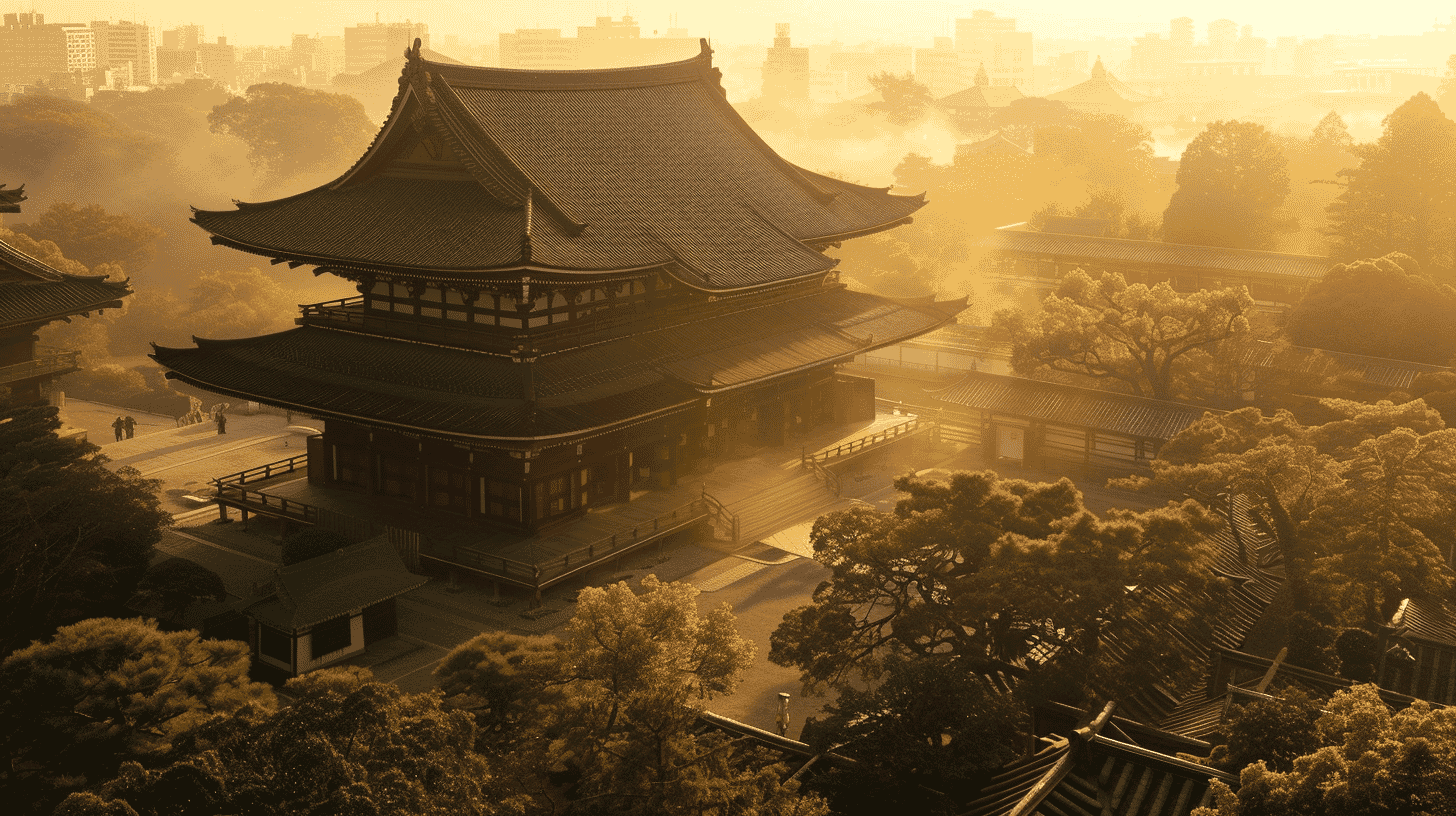
One Hall, National Treasure since 2017
Senshu-Ji Temple Nyorai-Do Hall (専修寺如来堂, Senjuji Nyoraido) is a middle Edo structure at Isshinden-cho, Tsu City, Mie Prefecture, made an Important Cultural Property on 7 June 1961 and designated a National Treasure on 28 November 2017. The quantity is one building and the owner the temple as a religious corporation.
Fifty-six years separate the two listings. The designation of 28 November 2017 is the most recent met here after the Shirataki finds of 2023.
The hall is five bays by four, single-storeyed with a skirt roof, hip-and-gable, roofed in plain tile. The date field gives 1748.
Zen Outside, a Shin Buddhist Hall Within
Style divides between the outside and the inside.
The Agency records that in outward appearance it is a Zen-style hall of the single-storey-with-skirt-roof type, among the largest of its kind surviving in Japan.
It continues: within, the plan keeps the form usual to a Shin Buddhist main hall, and an ingenious framing produces an original interior space.
Seen from outside, the Zen manner; entered, the plan of a Shin hall.
At Sofukuji Daiyuhoden the manners divided by storey, the lower Chinese and the upper native. At the Jodoji main hall, three manners were mixed together.
Here the division runs between shell and interior. One building belongs to two traditions, outside and in.
The Record Itself Sets It Against the Neighbouring Hall
The assessment contains a comparison with another building.
It shows a clear contrast, the record says, with the founder's hall, which is native in manner.
That founder's hall is a National Treasure of the same temple: an Important Cultural Property on 7 June 1961 and a National Treasure on 28 November 2017, sharing both dates with this one.
The founder's hall is called native and this one Zen, and the record places the two side by side.
Sofukuji Daiyuhoden and the temple's first gate shared one commentary. The red-laced armour was paired with a shrine's armour of the same name as twin peaks.
Here two halls of one temple are contrasted by style. Together, the record adds, they form the heart of a vast main-temple complex.
The Two Halls Were Paid For Differently
Whose effort raised each building is recorded.
Of this hall: it was built from donations by the temple's followers.
Of the founder's hall: it was built in 1666 under the patronage of the Todo house, lords of the Tsu domain.
One came from the congregation, the other from a domain lord. Within one temple, two buildings drew on different purses.
At the Daizenji main hall, ten mon was levied on each household across two provinces. At Kankiin, the work was said to have been achieved through popular devotion.
Here the difference shows when the two halls are set beside each other.
Visiting
The hall stands at Isshinden-cho, Tsu City, Mie Prefecture, owned by the temple. It stands in the precinct and its exterior can be seen on a visit.
The span of the work is recorded: the frame was raised in 1744, twenty-five years after the vow to build.
Twenty-five years from vow to frame. The Daizenji main hall took six years from start to completion; this is far longer.
The year of the vow is not given. The date field reads 1748 against the raising of the frame in 1744, a difference that reads as frame against completion.
The assessment calls it a valuable structure showing the culmination of early modern temple architecture in Japan, of deep significance in cultural history. Access to the interior follows the temple's own arrangements. Check before travelling.
Q&A
- When was the hall designated?
- It became an Important Cultural Property on 7 June 1961 and a National Treasure on 28 November 2017, fifty-six years apart. The temple's founder's hall shares both dates.
- What style is it?
- Outside and inside differ. The Agency calls it Zen in outward appearance while noting that within, the plan keeps the form usual to a Shin Buddhist main hall.
- How does it differ from the founder's hall?
- The Agency records that it shows a clear contrast with the founder's hall, which is native in manner. The record places the two buildings side by side.
- Who built it?
- The Agency records that this hall was built from donations by the temple's followers, while the founder's hall was built under the patronage of the lords of the Tsu domain.
- How long did the work take?
- The Agency records that the frame was raised in 1744, twenty-five years after the vow to build. The year of the vow is not given, and the date field reads 1748.
Basic Information
| Name | Senshu-Ji Temple Nyorai-Do Hall (専修寺如来堂, Senjuji Nyoraido); the temple's founder's hall is also a National Treasure |
|---|---|
| Location | Isshinden-cho, Tsu City, Mie Prefecture |
| Designation | National Treasure (structure, religious architecture) |
| Year Designated | 1961 (7 June), Important Cultural Property; 2017 (28 November), National Treasure |
| Quantity | 1 building |
| Dimensions | 5 bays by 4, single-storeyed with a skirt roof, hip-and-gable, with a lean-to gable at the rear of the skirt roof, a 3-bay porch at its front under an undulating gable, roofed in plain tile. The date field gives 1748, and the frame was raised in 1744, 25 years after the vow to build. The period is the middle Edo |
| Owner | Senjuji, as a religious corporation |
| Public Access | Standing in the precinct; the exterior can be seen on a visit, while the interior follows the temple's own arrangements |
References
- Cultural Heritage Online: the Senjuji Nyorai hall
- https://bunka.nii.ac.jp/heritages/detail/174532
- Cultural Heritage Online: the Senjuji founder's hall
- https://bunka.nii.ac.jp/heritages/detail/146491
- Tsu City: Takada Honzan Senjuji
- https://www.info.city.tsu.mie.jp/www/senjuji/
- Agency for Cultural Affairs, National Cultural Properties Database
- https://kunishitei.bunka.go.jp/
Last verified: 2026.09.06