
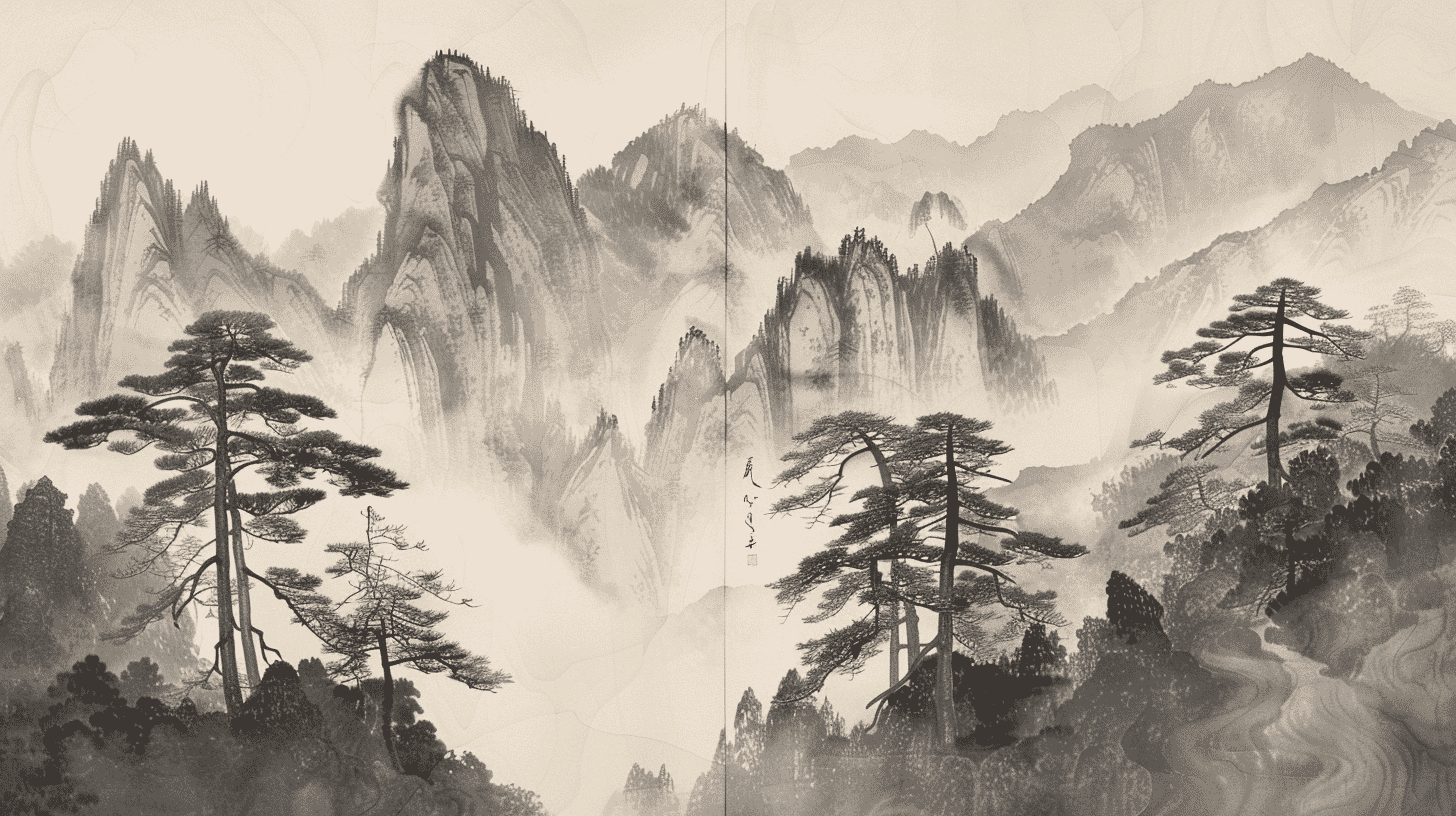
One Handscroll, National Treasure since 1951
Landscape of the Four Seasons, Ink and Light Color on Paper (by Sesshu) (紙本墨画淡彩四季山水図, Shihon Bokuga Tansai Shiki Sansui Zu) is a handscroll in Yamaguchi Prefecture, designated a National Treasure on 9 June 1951. The owner is the Mori Hokokai Foundation.
Ink and light color on paper means a work drawn in ink on paper with light washes of color added. The angle brackets in the title read by Sesshu, so the painter is recorded.
The Agency for Cultural Affairs leaves the field for designation as an Important Cultural Property blank, so the work went to National Treasure without that earlier step, the eleventh such case among the properties covered here.
Another Work Explains Itself by Reference to This One
An interesting passage about this scroll appears in the record for a different property.
The Kyoto National Museum holds a handscroll of landscapes of the four seasons, an Important Cultural Property attributed to Sesshu Toyo, of the fifteenth to sixteenth century in the Muromachi period, 21.5 centimetres by 1151.5 centimetres, in one scroll.
Its commentary states: against the long landscape scroll handed down at the Mori Museum, this is commonly called the short landscape scroll.
The Kyoto scroll explains itself by pointing at this one. Its very nickname exists only in contrast with the long scroll.
Records refer to one another elsewhere too, as when the account of the Daigoji pagoda paintings cited those of the Phoenix Hall. What is unusual here is that a common name derives from the comparison.
The Comparison Extends to Brushwork
The Kyoto scroll's commentary carries the comparison further.
Its brushwork clearly shows the influence of the Southern Song painter Xia Gui, and it is marked by firm composition and disciplined handling.
It goes on: compared with the long landscape scroll, a certain quietness is discernible in the handling of the brush, and some hold it to be a work of the painter's later years.
Quieter than this one, in other words. Even the suggested date of the Kyoto scroll is reached by comparison with the present work.
All of this belongs to the record for the Kyoto scroll, not to the record for this one. How this scroll itself is assessed cannot be told from that source.
Several Records Carry the Painter's Name
Properties naming Sesshu appear more than once on Cultural Heritage Online.
A landscape of the four seasons in ink and light color on paper, attributed to Sesshu, is at the Kyoto National Museum and became an Important Cultural Property on 19 February 1957. Others include a landscape in ink, a figure subject in ink, an ox-herding scene in light color, and a landscape of the four seasons in light color on silk.
The angle brackets repay attention. By Sesshu and attributed to Sesshu are written differently, the latter meaning that the work is held to be his.
This scroll reads by Sesshu, without the qualifier. As with the empty slot in the title of the screens of pines and flowering plants, and the supplementary note on the Saigyo scrolls, how authorship stands shows in how the title is written.
Several works share the title landscape of the four seasons, in screens, scrolls and other forms. Owner and date of listing are what tell them apart.
Seeing It
The Mori Hokokai Foundation owns the scroll. It is a foundation's holding, not an object kept on permanent display.
Handscrolls are vulnerable to light and are usually shown only for short periods. Being a long scroll, it can hardly be opened out in full for display.
Opportunities to see it are limited, so watch for notice of a showing.
The Kyoto scroll that serves as its point of comparison is likewise not on permanent display. The two will not necessarily be seen together.
Q&A
- When was the scroll designated?
- On 9 June 1951, as a National Treasure. The owner is the Mori Hokokai Foundation and the location is Yamaguchi Prefecture. The field for designation as an Important Cultural Property is blank, so it went to National Treasure without that earlier step.
- Why is it called the long landscape scroll?
- The record for the Kyoto National Museum's handscroll states that, against the long landscape scroll handed down at the Mori Museum, that one is commonly called the short landscape scroll. The Kyoto scroll's nickname rests on the contrast with this work.
- How does it differ from the Kyoto scroll?
- The Kyoto record notes the influence of the Southern Song painter Xia Gui in its brushwork and adds that, compared with the long landscape scroll, a certain quietness is discernible, with some holding it a work of the painter's later years. Even its suggested date rests on the comparison.
- Is by Sesshu different from attributed to Sesshu?
- Yes. The two are written differently inside the angle brackets of a title, the latter meaning that a work is held to be his. This scroll reads by Sesshu, without that qualifier.
- Can it be seen?
- It is a foundation's holding and not on permanent display. Handscrolls are vulnerable to light and shown only briefly, and a long scroll can hardly be opened out in full, so opportunities are limited.
Basic Information
| Name | Landscape of the Four Seasons, Ink and Light Color on Paper, by Sesshu (紙本墨画淡彩四季山水図, Shihon Bokuga Tansai Shiki Sansui Zu) |
|---|---|
| Location | Yamaguchi Prefecture; the owner is the Mori Hokokai Foundation |
| Designation | National Treasure (painting); designated without an earlier listing as an Important Cultural Property |
| Year Designated | 1951 (9 June), National Treasure |
| Quantity | 1 scroll |
| Dimensions | A handscroll drawn in ink on paper with light washes of color. The angle brackets in the title read by Sesshu, without the qualifier used for attributed works. The record for the Kyoto National Museum's handscroll calls this one the long landscape scroll and itself the short landscape scroll |
| Owner | Mori Hokokai Foundation |
| Public Access | Not on permanent display. Handscrolls are vulnerable to light, and a long scroll can hardly be opened out in full |
References
- Cultural Heritage Online: handscroll of landscapes of the four seasons, Kyoto National Museum
- https://bunka.nii.ac.jp/heritages/detail/511457
- Cultural Heritage Online: landscape of the four seasons attributed to Sesshu
- https://bunka.nii.ac.jp/heritages/detail/190566
- Agency for Cultural Affairs, National Cultural Properties Database
- https://kunishitei.bunka.go.jp/
- Agency for Cultural Affairs: introduction to fine arts and crafts
- https://www.bunka.go.jp/seisaku/bunkazai/shokai/bijutsu_kogei/
Last verified: 2026.09.05