
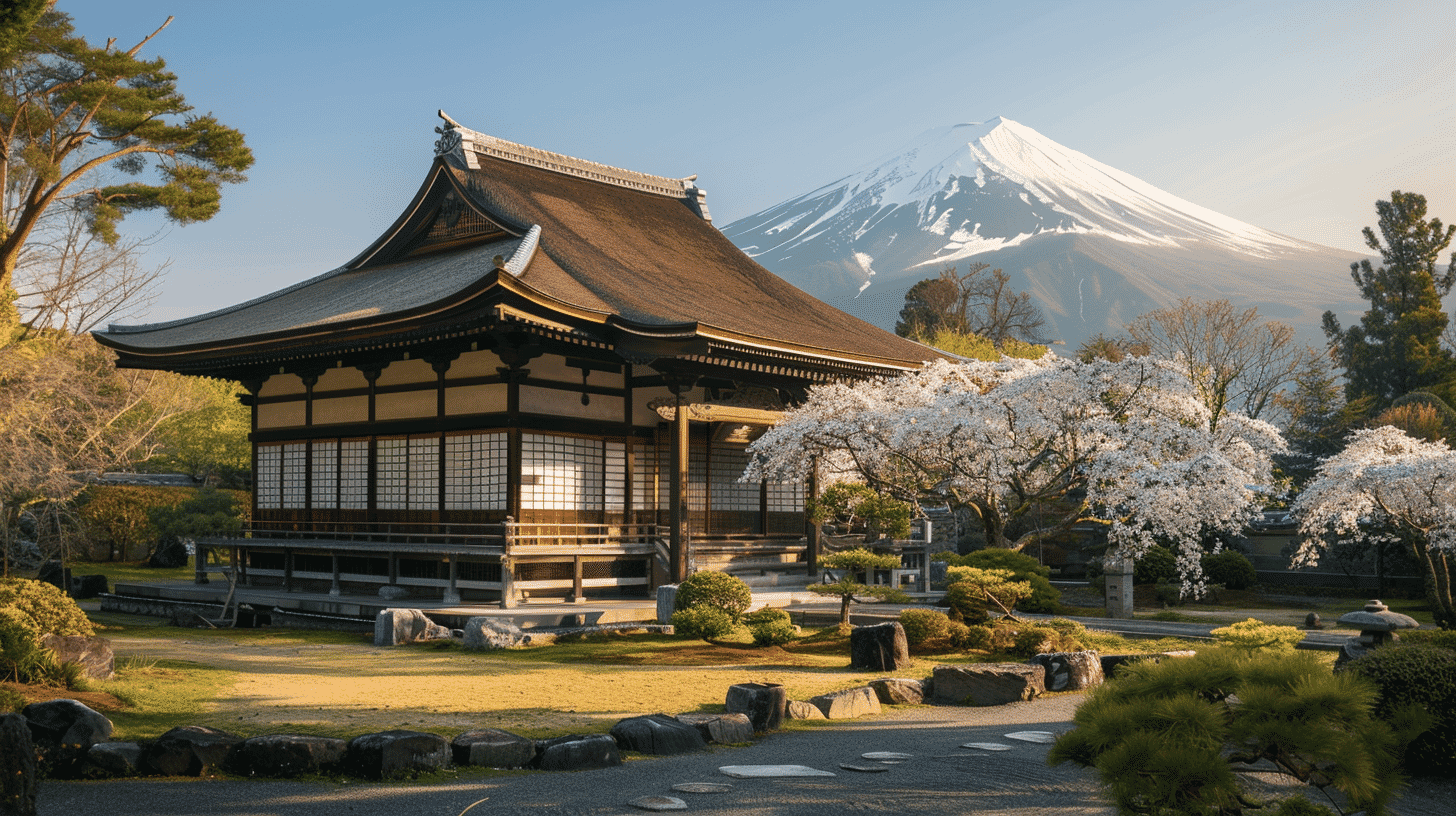
One Hall, National Treasure since 1955
Seihakuji Temple Buddha Hall (清白寺仏殿, Seihakuji Butsuden) is a middle Muromachi structure at Sangasho, Yamanashi City, Yamanashi Prefecture, made an Important Cultural Property on 28 August 1907 and designated a National Treasure on 22 June 1955. The quantity is one building and the owner the temple.
The hall is three bays by three bays, single-storeyed with a skirt roof, hip-and-gable, roofed in cypress bark. The date field gives 1415.
The temple's kitchen quarters became an Important Cultural Property on 22 July 2005, their National Treasure field left blank, and are dated to the middle Edo period, 1689 to 1693.
Date Field and Commentary Differ by Eighty-Two Years
Within one record, the numbers do not agree.
The date field reads: middle Muromachi, 1415.
The commentary states that the hall was built in 1333 with the priest Muso Kokushi as founder.
Eighty-two years separate 1415 from 1333. This is the widest such gap met here.
At the Jodoji pagoda the gap was ten years, at the Jodoji main hall eighteen. At the Sofukuji first gate two records differed by fifty-one. At the Kanshinji golden hall by one.
Here it is eighty-two. The commentary's year may be that of the founding and the date field that of the building, but the record does not say. This article gives both.
Called a Kanto Masterpiece, Yet Standing in Yamanashi
A regional name appears in the assessment.
It is called a masterpiece of Zen architecture in the Kanto region.
The address, however, is in Yamanashi City, Yamanashi Prefecture, and the heritage database files the property under the Chubu region.
The assessment says Kanto, the classification says Chubu, the address says Yamanashi. The three do not align.
The Fudoin main hall was measured against medieval Zen Buddha halls, the Jodoji main hall against buildings along the shores of the Inland Sea. How a field is named varies from property to property.
Here the field named in the assessment does not match the region under which the property is filed. The record gives no reason. This article quotes the assessment and gives the address as Yamanashi.
Fire Left Only the Buddha Hall Standing
The record for the kitchen quarters tells the temple's history.
In a fire of 1682, all the buildings burned except the Buddha hall.
One building survived and the rest were lost. What is now a National Treasure is that one.
At Jodoji, a fire of 1325 took both the pagoda and the main hall, and each was rebuilt. There, what burned was raised again.
Here it is what did not burn that remains.
Of the kitchen quarters: the present building is thought to have been rebuilt between 1689 and 1693, after that fire. The hall dates from 1415 and the quarters from 1689 onward, some two hundred and seventy years apart.
Visiting
The hall stands at Sangasho, Yamanashi City, Yamanashi Prefecture, owned by the temple. It stands in the precinct and its exterior can be seen on a visit.
The layout is recorded: from the south, an outer gate, a bell gate, the Buddha hall and the main hall stand in a line, with the kitchen quarters east of the main hall.
The kitchen quarters are measured in metres, 17.5 by 12.2, while the Buddha hall is measured in bays. Units differ within one temple.
Of the quarters the record says they are large and regularly planned, with elegant rooms within and a boldly framed earthen-floored area, and that they hold high value.
Access to the interior follows the temple's own arrangements. Check before travelling.
Q&A
- When was the hall designated?
- It became an Important Cultural Property on 28 August 1907 and a National Treasure on 22 June 1955. The quantity is one building, at Sangasho, Yamanashi City, owned by the temple.
- When was it built?
- The numbers do not agree. The date field gives 1415 while the commentary says the hall was built in 1333 with Muso Kokushi as founder, eighty-two years apart. This article gives both.
- Why is it called a Kanto masterpiece?
- The record gives no reason. The assessment names the Kanto region, the address is in Yamanashi Prefecture, and the database files the property under Chubu, so the three do not align.
- Was there a fire?
- Yes. The record for the kitchen quarters states that in a fire of 1682 all the buildings burned except the Buddha hall. What is now a National Treasure is the one that survived.
- Are there other listed buildings at the temple?
- Yes. The kitchen quarters became an Important Cultural Property on 22 July 2005. They are thought to have been rebuilt between 1689 and 1693, some two hundred and seventy years after the hall.
Basic Information
| Name | Seihakuji Temple Buddha Hall (清白寺仏殿, Seihakuji Butsuden); the temple's kitchen quarters are an Important Cultural Property |
|---|---|
| Location | Sangasho, Yamanashi City, Yamanashi Prefecture |
| Designation | National Treasure (structure, religious architecture); filed under the Chubu region, though the assessment calls it a Kanto masterpiece |
| Year Designated | 1907 (28 August), Important Cultural Property; 1955 (22 June), National Treasure |
| Quantity | 1 building |
| Dimensions | 3 bays by 3 bays, single-storeyed with a skirt roof, hip-and-gable, roofed in cypress bark. The date field gives 1415, while the commentary says the hall was built in 1333 with Muso Kokushi as founder. The period is the middle Muromachi |
| Owner | Seihakuji |
| Public Access | Standing in the precinct; the exterior can be seen on a visit, while the interior follows the temple's own arrangements |
References
- Cultural Heritage Online: the Seihakuji Buddha hall
- https://bunka.nii.ac.jp/heritages/detail/155405
- Cultural Heritage Online: the Seihakuji kitchen quarters
- https://bunka.nii.ac.jp/heritages/detail/149111
- Yamanashi City: cultural properties
- https://www.city.yamanashi.yamanashi.jp/site/cultural-assets/7835.html
- Seihakuji official site
- https://seihakuji.com/
Last verified: 2026.09.06