
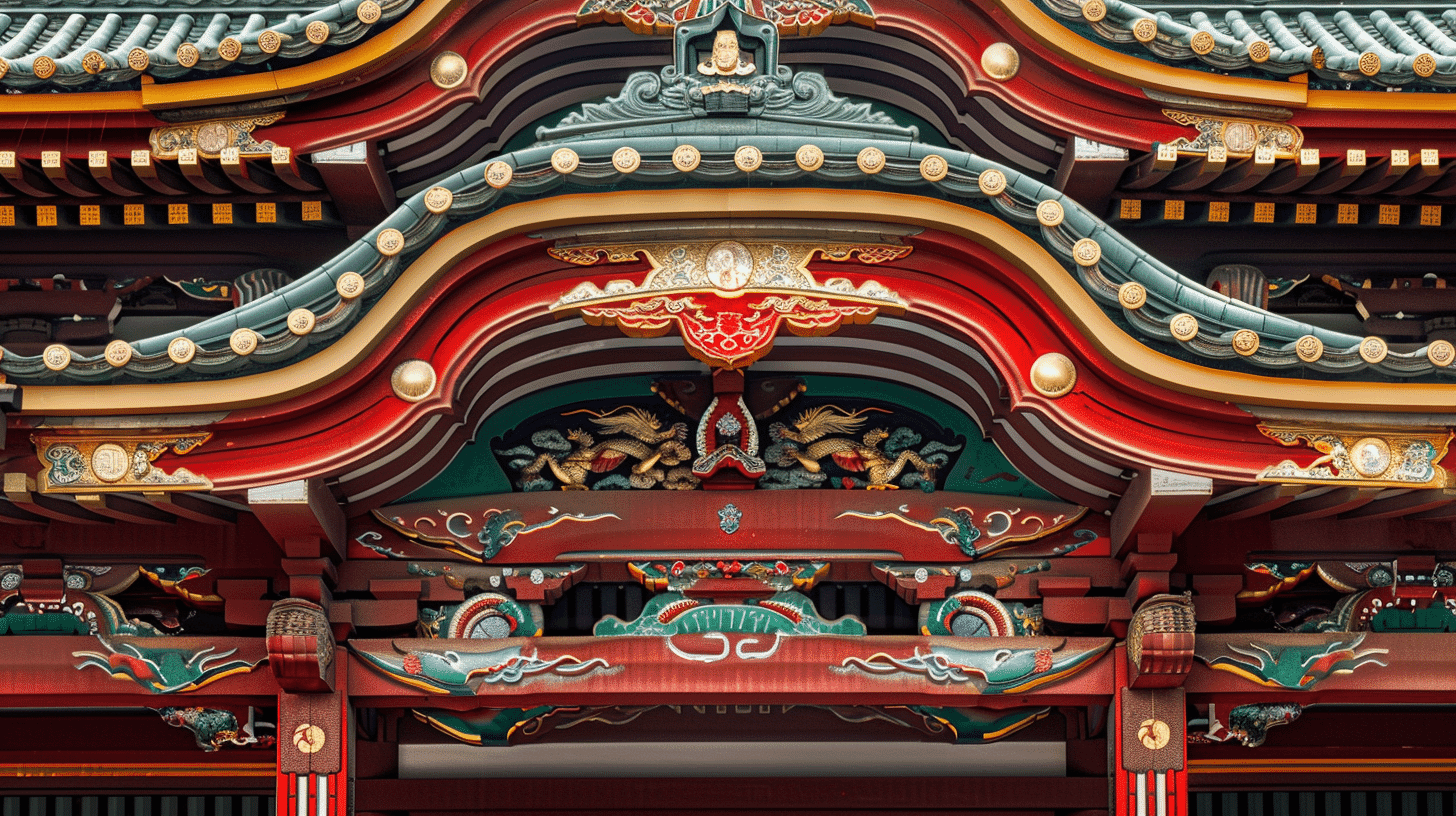
One Building, National Treasure since 2012
Kankiin Temple (歓喜院, Kangiin) stands at Menuma, Kumagaya City, Saitama Prefecture, and its Shodendo hall became an Important Cultural Property on 28 December 1984 and was designated a National Treasure on 9 July 2012. The quantity is one building and the owner is the temple.
Twenty-eight years separate the two listings, shorter than the seventy-five for Aoi Aso Shrine or the hundred and nine for the Five Wisdom Buddhas.
The hall consists of an inner sanctuary, a middle hall and a worship hall in the linked style, roofed throughout in copper plate. Three parts are counted as one building.
Three Categories within One Precinct
Buildings under different systems stand together in this precinct.
The Shodendo hall is a National Treasure. The Kisomon gate is an Important Cultural Property, its National Treasure field left blank. A water pavilion, a gate of the guardian kings, a shrine to Tenman, a well house, a hall for pilgrims, a bell tower, two further shrines and a memorial tower are registered tangible cultural properties, registered on 2 May 2017.
At Aoi Aso Shrine, five buildings were a National Treasure and a bridge was registered: two tiers. Kankiin has three.
National Treasure, Important Cultural Property and registered property stand together in one temple precinct. In one place, three systems of protection apply.
The registered water pavilion is recorded with an area of 3.4 square metres. After the 65.3 hectares of the Aso cultural landscape, this is a building given an area as well.
Two Buildings Listed on One Day, Then Parted
The hall and the gate both became Important Cultural Properties on 28 December 1984.
In 2012 only the hall went on to National Treasure. The gate's National Treasure field remains blank.
Over twenty-eight years the two parted. The two Yohen Tenmoku bowls had earlier listings thirty-three years apart yet were designated on one day. Here the reverse: one day for the earlier listing, and only one of the pair advanced.
The gate's own record mentions the hall's designation, noting that the hall at the centre of the temple is a National Treasure.
Its position is given by distance: the gate stands about 200 metres east of the hall, facing east. The Fujinoki finds were likewise placed about 350 metres west of Horyuji.
The gate is valued for a rare and distinctive form, with three gables stacked on its end walls.
Two Records Date the Start of Building Differently
When work on the hall began is entered differently.
The hall's own record states that in 1720 the head priest Kaisan vowed to rebuild it, sought donations from the people, and had it built by a local carpenter, Hayashi Hyogo Masakiyo.
The gate's record states that the hall was built between 1735 and 1760.
Fifteen years lie between 1720 and 1735. The first is the year of the vow, the second the year building began. For one building, where the start is placed differs.
The end agrees. The hall's record too says that part of the inner sanctuary and middle hall was finished in 1744, and the middle and worship halls by 1760.
With the Goto Toshiro dagger, two records differed by a tenth of a centimetre. Here they differ over where a span of years begins. Neither is wrong; what counts as the beginning differs.
Visiting
The temple stands at Menuma, Kumagaya City, Saitama Prefecture, and owns the buildings. They stand in the precinct and their exteriors can be seen on a visit.
The assessment is recorded: the inner sanctuary in particular employs a wide range of carving techniques and is brilliantly finished in coloured lacquer and gold leaf.
Of how it came to be built: the front of the worship hall was left open for the convenience of worshippers, and the building speaks of the flourishing of popular devotion.
It closes: that such a building was realised through popular devotion shows how decorative culture spread within religious architecture, and gives it high value in the cultural history of Japan. Being built on the people's donations is part of the reason it is valued.
Access to interiors follows the temple's own arrangements. Check before travelling.
- 📍 Plan Your Visit to Saitama
- Find tours, activities & transport passes near Kankiin Temple
- [ Kawagoe Little Edo & Moominvalley Park ]
Q&A
- When was the temple designated?
- Its Shodendo hall became a National Treasure on 9 July 2012, twenty-eight years after becoming an Important Cultural Property on 28 December 1984. The quantity is one building and the owner is the temple.
- Are there other listed buildings in the precinct?
- Yes. The Kisomon gate is an Important Cultural Property, and a water pavilion, gate, shrines, well house, hall, bell tower and memorial tower are registered tangible cultural properties from 2017. Three categories stand together.
- Why is the gate not a National Treasure?
- The Agency gives no reason. Hall and gate both became Important Cultural Properties on 28 December 1984, but in 2012 only the hall advanced, and the gate's National Treasure field remains blank.
- When was the hall built?
- The records differ over the start. The hall's record gives a vow to rebuild in 1720; the gate's record gives building from 1735. Both agree that work finished by 1760.
- What is valued in it?
- The Agency writes that a building realised through popular devotion shows how decorative culture spread within religious architecture, giving it high value in the cultural history of Japan. Its funding by donation forms part of the assessment.
Basic Information
| Name | Kankiin Temple (歓喜院, Kangiin); the National Treasure is its Shodendo hall |
|---|---|
| Location | Menuma, Kumagaya City, Saitama Prefecture |
| Designation | National Treasure (structure); the same precinct holds the Kisomon gate as an Important Cultural Property and a water pavilion, gate and others as registered tangible cultural properties |
| Year Designated | 1984 (28 December), Important Cultural Property; 2012 (9 July), National Treasure |
| Quantity | 1 building, the Shodendo hall |
| Dimensions | The hall comprises an inner sanctuary, middle hall and worship hall in the linked style, roofed throughout in copper plate. The inner sanctuary is three bays by three bays, single-storeyed, with a hip-and-gable roof; the worship hall five bays by three bays, single-storeyed, with a hip-and-gable roof. The period is the middle Edo |
| Owner | Kankiin |
| Public Access | Standing in the precinct; exteriors can be seen on a visit, while interiors follow the temple's own arrangements |
References
- Cultural Heritage Online: Kankiin Shodendo, a National Treasure
- https://bunka.nii.ac.jp/heritages/detail/188303
- Cultural Heritage Online: Kankiin Kisomon, an Important Cultural Property
- https://bunka.nii.ac.jp/heritages/detail/191573
- Cultural Heritage Online: Kankiin water pavilion, a registered property
- https://bunka.nii.ac.jp/heritages/detail/274742
- Kumagaya City: Menuma Shodenzan
- https://www.city.kumagaya.lg.jp/kanko/midokoro/menumasyoudenzan/index.html
Last verified: 2026.09.05
Cultural Treasures in the Same Area
All are within walking distance in the same area, so we recommend visiting them together.
- Kankiin Temple Seitendo 0.00 km
- Kankiin Temple Kisomon 0.02 km