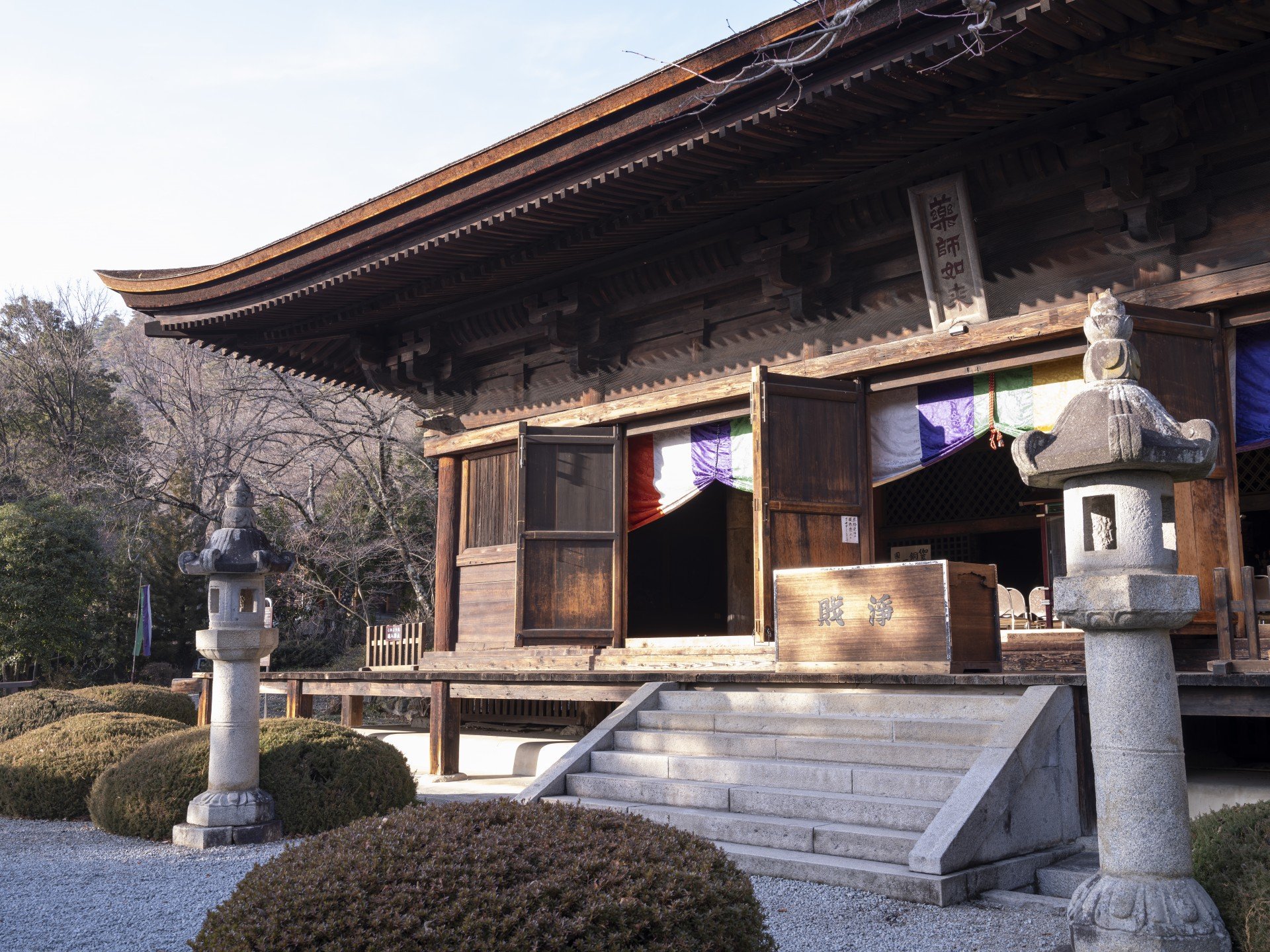
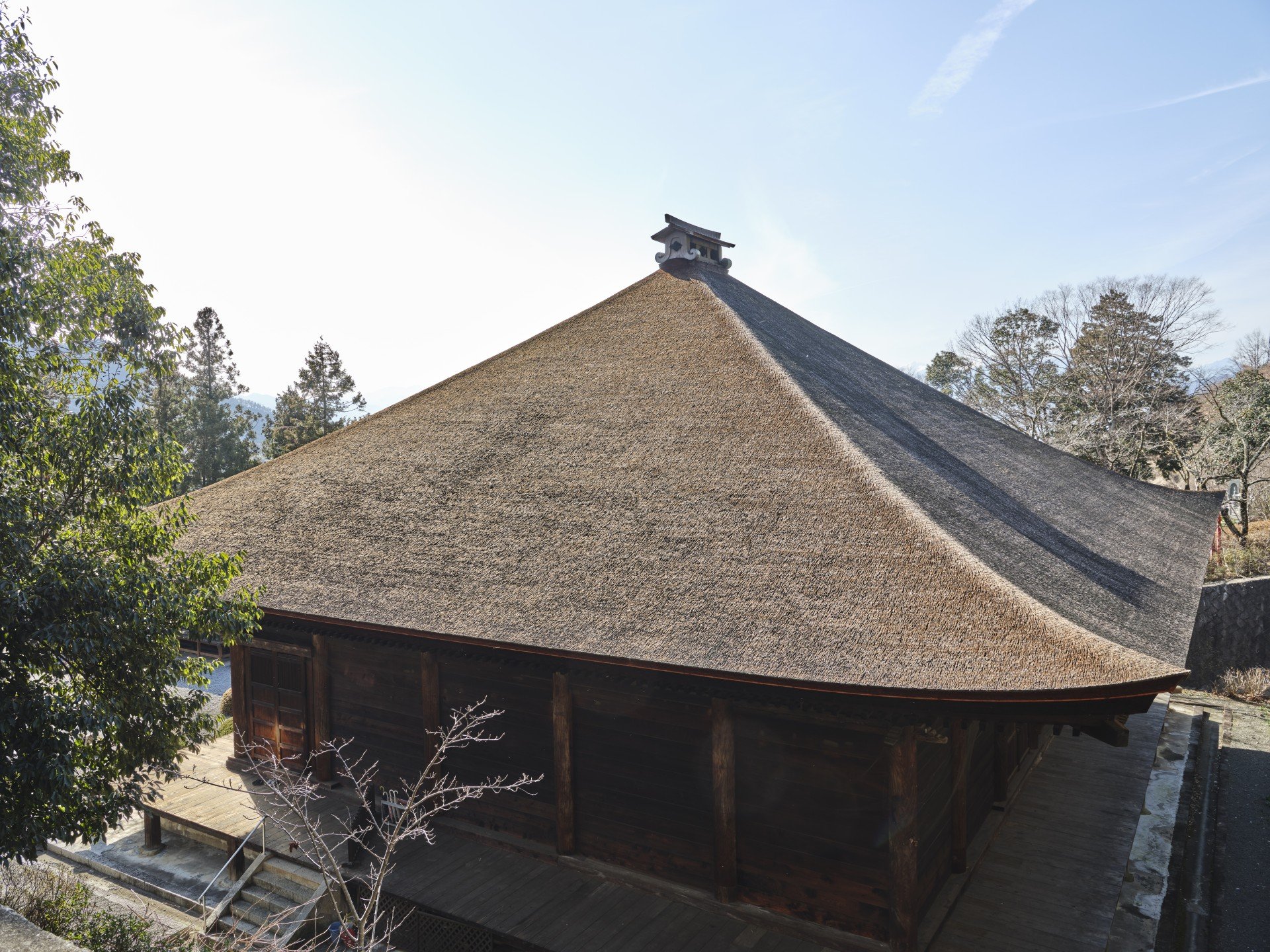
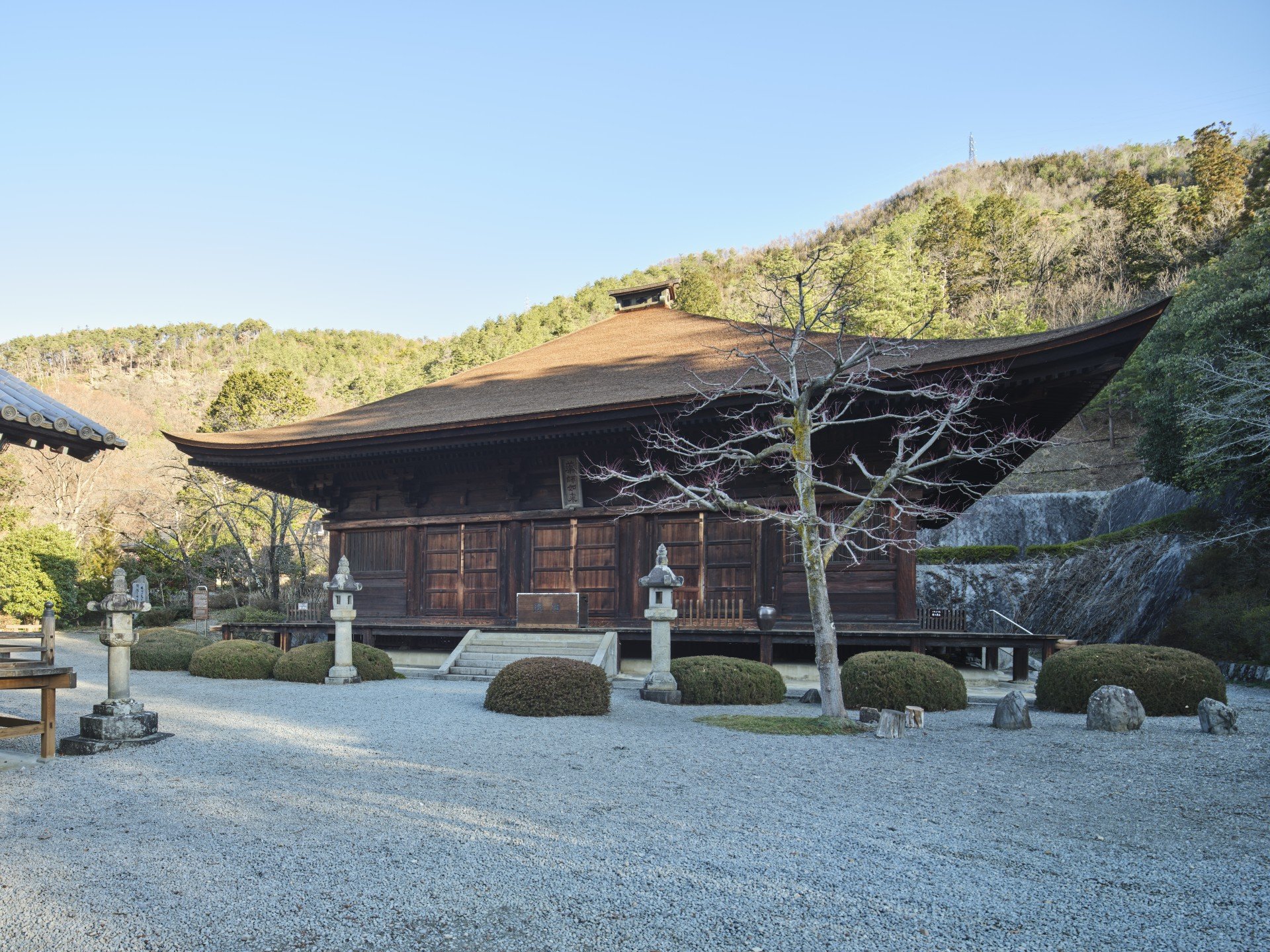
Daizenji Main Hall: Japan's National Treasure "Grape Temple" — Where Buddhism Meets Wine Country
Nestled on a vineyard-covered hillside in Katsunuma, the heart of Japan's premier wine-producing region, Daizenji Temple (大善寺) is one of the most remarkable cultural treasures in eastern Japan. Known affectionately as the "Grape Temple" (ぶどう寺), this ancient Shingon Buddhist temple is home to a National Treasure main hall dating back over 730 years — the oldest surviving wooden structure in the entire Kanto region. Here, centuries of spiritual devotion, architectural mastery, and the origins of Japanese grape cultivation converge in a single extraordinary place.
The Legend of the Grape-Bearing Buddha
The story of Daizenji begins in the year 718 (Yoro 2), during the Nara period. According to temple tradition, the renowned Buddhist monk Gyoki was practicing asceticism on a rock in the Hikawa Valley when Yakushi Nyorai (the Medicine Buddha) appeared to him in a dream, holding a cluster of grapes. Overjoyed by this vision, Gyoki carved a statue of the grape-bearing Buddha and enshrined it at the temple he founded on this spot. He then taught the local villagers how to cultivate grapes as medicinal plants — a tradition that would eventually give rise to the famous Koshu grape variety and transform the entire Katsunuma area into Japan's most celebrated wine region.
Emperor Shomu later bestowed upon the temple an imperial plaque declaring it a sanctuary for national protection, and during the Heian period, the complex flourished with 52 halls and 3,000 monks' quarters. Though the original structures were lost to fire over the centuries, the temple's deep connection to viticulture has endured for more than 1,300 years.
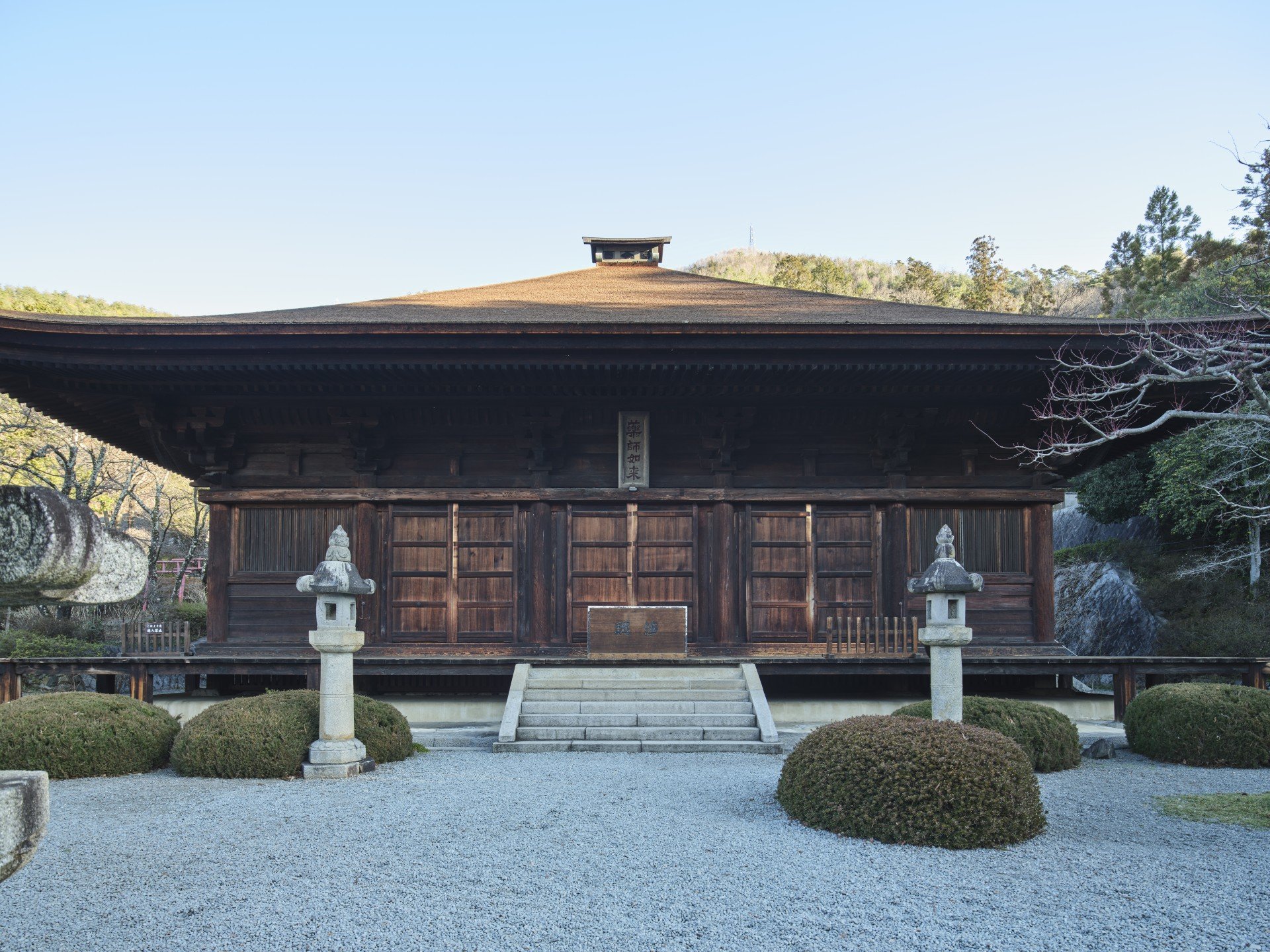
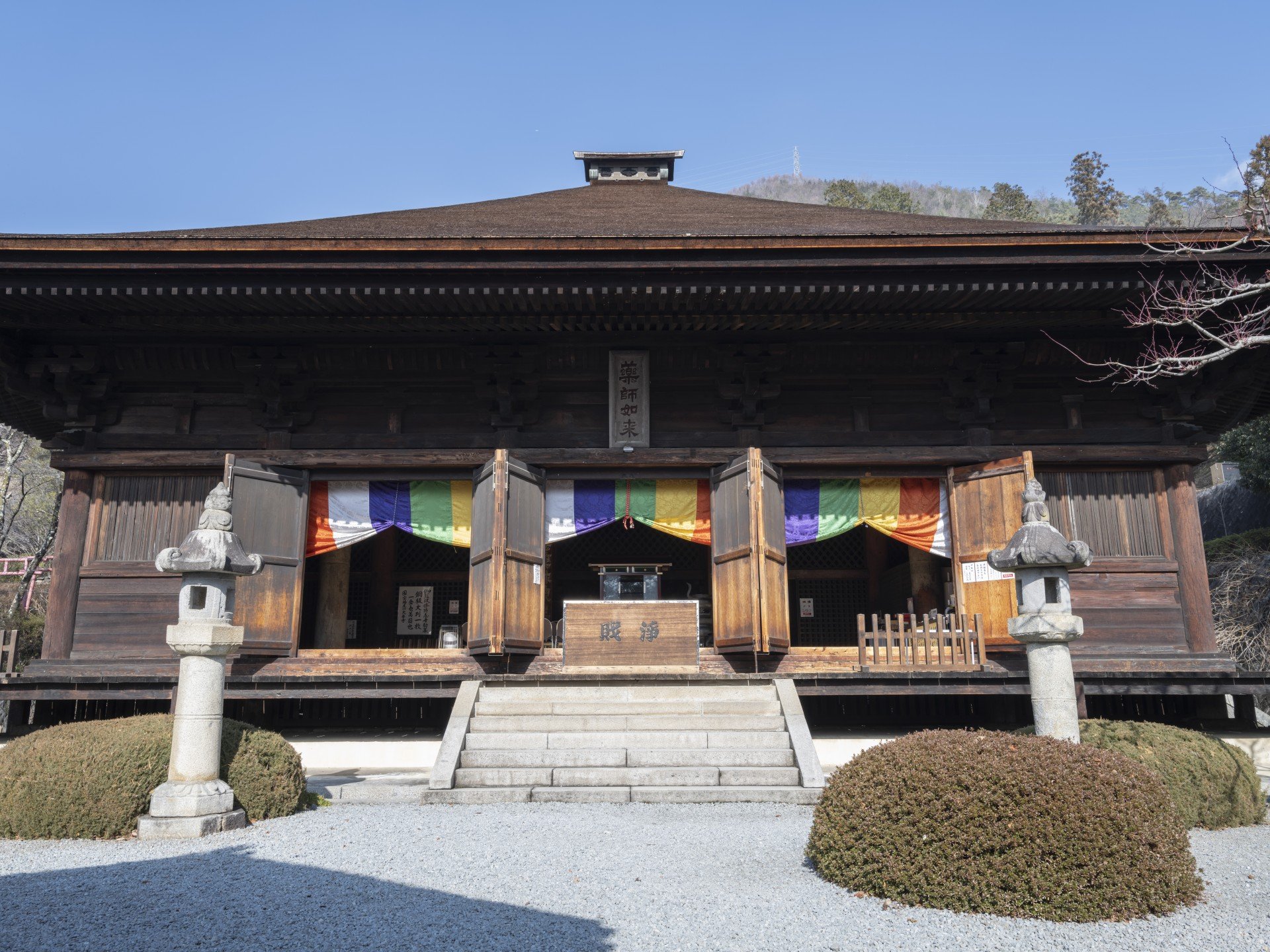
The National Treasure Main Hall (Yakushido)
The current main hall of Daizenji is the crown jewel of the temple complex. After a devastating fire in 1270, Hojo Sadatoki, the ninth regent (shikken) of the Kamakura shogunate, commissioned the rebuilding of the hall. Funds were raised by levying a per-household tax across the two provinces of Kai (Yamanashi) and Shinano (Nagano). Construction commenced in 1284, the pillars were erected in 1286, and the hall was completed in 1290 — a monumental six-year effort recorded in inscriptions carved into the rear corner pillars reading "Koan 9, March 16" (弘安九参月十六日).
This inscribed date is of enormous significance: it allows historians to precisely confirm the building's age, making it not only the oldest wooden structure in Yamanashi Prefecture but also the oldest verified wooden building in the Kanto region. In 1954, a comprehensive dismantling restoration was carried out to return the hall to its original appearance, and the following year, in 1955, the main hall and its altar were designated as a National Treasure of Japan.
Why Was It Designated a National Treasure?
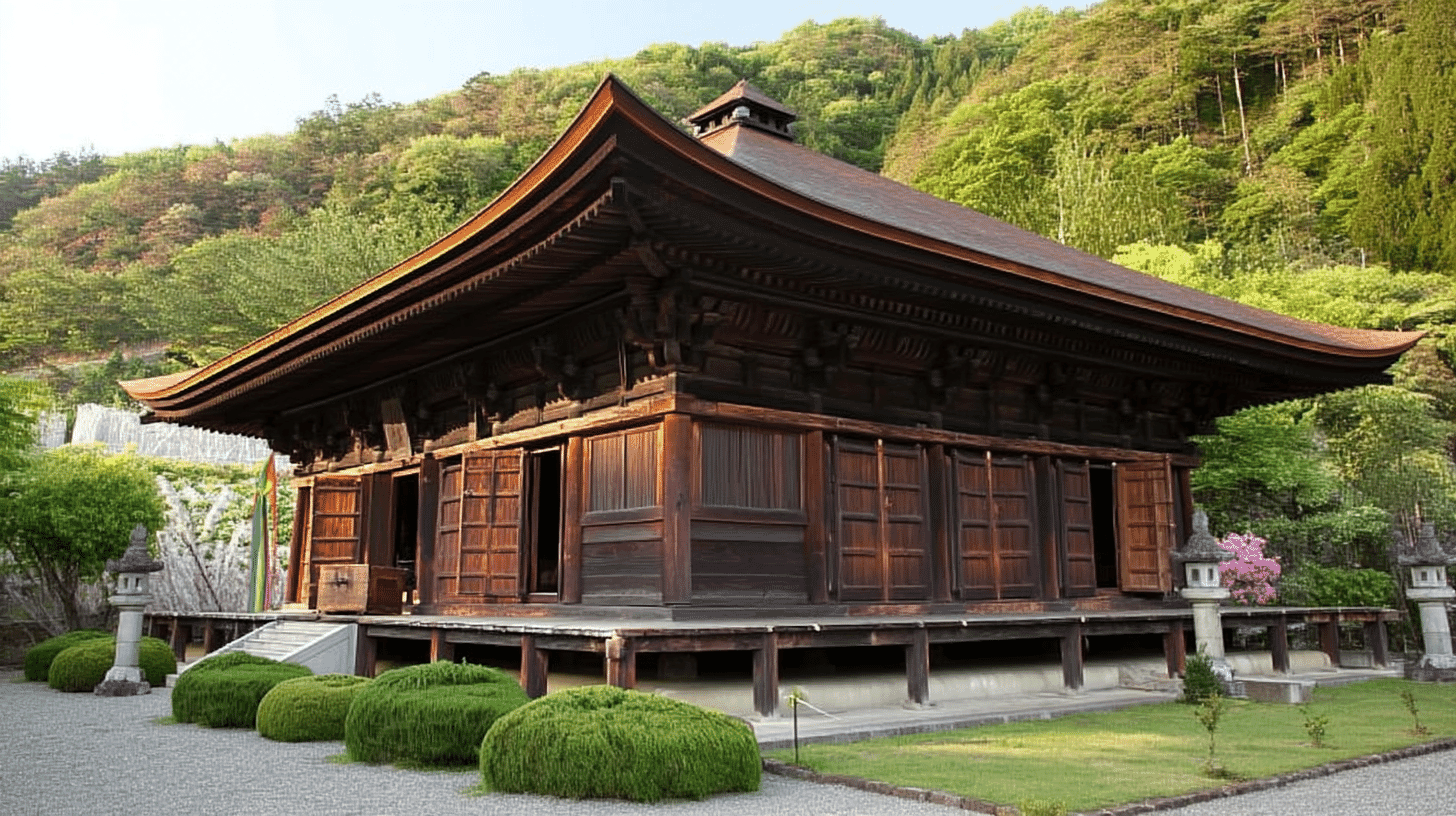
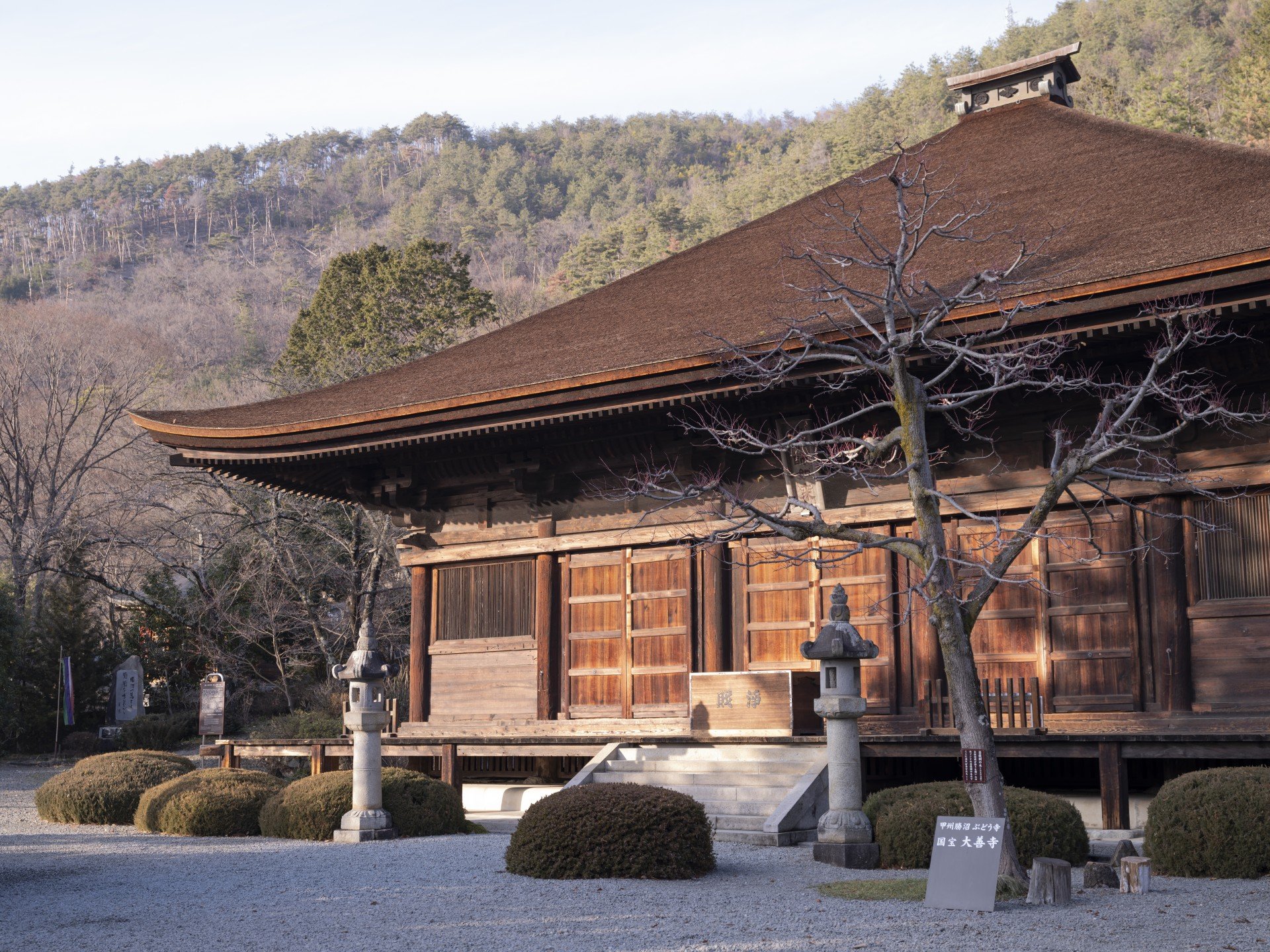
Daizenji Main Hall holds National Treasure status for several compelling reasons. First, it is a representative masterpiece of Kamakura-period esoteric Buddhist architecture. The hall exemplifies the traditional Japanese architectural style known as Wayo, characterized by its massive hipped roof covered in cypress bark (hinoki-buki), thick round pillars, and powerful double-layered bracket complexes that support deeply projecting eaves. Yet the hall is not purely conservative — the nose-shaped carvings (kibana) on the penetrating tie beams incorporate curving profiles from the newer Daibutsuyo (Great Buddha) style imported from China, making this one of the earliest examples of such stylistic blending in eastern Japan.
Second, the interior layout is a textbook demonstration of esoteric Buddhist temple design. The hall is divided into an outer sanctuary (gaijin) for worshippers, an inner sanctuary (naijin) for the sacred altar, and rear and side chambers. The boundary between outer and inner sanctuaries is strictly demarcated by sliding lattice doors and elegant diamond-pattern transoms — a hallmark of Mikkyo (esoteric) temple architecture. Large rainbow beams span the central bays to eliminate intermediate pillars, creating a sense of spaciousness and grandeur within the hall.
Third, the exact construction date is verifiable through the pillar inscriptions, providing invaluable documentary evidence for the study of medieval Japanese architecture. This combination of architectural excellence, historical significance, and documentary certainty makes the Daizenji Main Hall an irreplaceable cultural asset.
The Sacred Statues: Important Cultural Properties
Within the main hall, an extraordinary collection of Buddhist statuary awaits visitors. The principal image is a seated Yakushi Nyorai (Medicine Buddha) dating to the early Heian period. Remarkably, this Buddha holds a cluster of grapes in its left hand — a highly unusual iconographic feature found almost nowhere else in Japan. The statue is enshrined as a secret Buddha (hibutsu) within an altar that was reconstructed in 1473, and is revealed to the public only once every five years during a special unveiling ceremony. Between these rare occasions, visitors can view a beautifully carved standing replica placed in front of the altar.
Flanking the central altar are towering standing statues of Nikko Bosatsu (Sunlight Bodhisattva, 248 cm) and Gakko Bosatsu (Moonlight Bodhisattva, 247 cm), both from the Kamakura period and designated as Important Cultural Properties. Surrounding the main triad are the Twelve Divine Generals (Juni Shinsho), a set of armor-clad guardian figures carved by the Nara sculptor Renkei in 1227–1228. Standing between 138 and 145 centimeters tall, these dynamic figures represent some of the finest work by Kei-school Buddhist sculptors active in the Kai Province. In total, 17 individual statues within the hall hold Important Cultural Property designation — an astonishing concentration of medieval Buddhist art in a single space.
A Witness to Japanese History
Beyond its religious and architectural significance, Daizenji has been a silent witness to pivotal moments in Japanese history. In March 1582, as the once-mighty Takeda clan faced annihilation by the combined forces of Oda Nobunaga and Tokugawa Ieyasu, Takeda Katsuyori — the last head of the clan — sought refuge at the temple. Together with his wife (Lady Hojo) and son Nobukatsu, Katsuyori spent his final night within the very walls of this National Treasure hall. The nun Rikeini, who resided at the temple, chronicled their desperate last hours in the "Rikeini-ki" (also known as the "Record of the Fall of the Takeda"), a poignant primary historical document still preserved at the temple.
Nearly three centuries later, in March 1868, the temple's surroundings became a battlefield once more during the Boshin War. The forces of the new Meiji government, led by Itagaki Taisuke, clashed with the Koyo Chinbutai — a unit led by Shinsengumi commander Kondo Isami — in what became known as the Battle of Koshu Katsunuma. The temple's abbot at the time refused to allow the shogunate forces to use the hall as a military position, a courageous decision that protected the National Treasure from the ravages of war.
Highlights and Things to See
A visit to Daizenji Temple is a rich multi-sensory experience that goes well beyond the main hall alone. After purchasing your admission ticket at the reception building below, you ascend 147 stone steps through a canopy of greenery to reach the main hall at the summit. The climb itself is part of the experience — along the way you pass through the atmospheric Sanmon gate and enjoy views over the Kofu Basin and the distant peaks of the Southern Alps.
Inside the main hall, a temple guide offers a brief explanation (approximately two minutes) of the hall's history and the significance of its treasures. Even when the secret Buddha is not on display, the standing replica, the magnificent Nikko and Gakko Bosatsu, and the Twelve Divine Generals create an overwhelming impression of medieval Buddhist artistry.
After your visit to the main hall, descend to the guest quarters to enjoy the temple's celebrated Japanese garden — a pond-viewing garden from the early Edo period designated as a Yamanashi Prefectural Scenic Site. Here you can sit on tatami mats and savor a glass of the temple's own handcrafted wine or grape juice (available for an additional 300 yen), produced from grapes grown in the temple's own vineyard by the head priest himself. The temple produces two varieties: a white from the Koshu grape and a red from Muscat Bailey A.
Seasonal highlights include cherry blossoms in early April, the dramatic Wisteria Cutting Festival (Fujikiri Matsuri) on May 8 — a 1,300-year-old ritual designated as a Yamanashi Prefectural Intangible Folk Cultural Property — bodhi tree blossoms in late May, and spectacular autumn foliage from mid to late November.
Temple Stay Experience (Shukubo)
For those seeking an even deeper immersion, Daizenji offers temple lodging (shukubo) within the temple grounds. Both Japanese-style tatami rooms and Western-style rooms with beds are available. Guests are served generous home-cooked meals featuring Yamanashi's local specialties — not austere vegetarian temple cuisine, but hearty regional fare accompanied by the temple's own wine. The experience of practicing zazen meditation within a National Treasure building, then retiring to a room overlooking the historic Edo-period garden, is truly unforgettable.
Surrounding Area: Japan's Wine Country
Daizenji sits at the gateway to Katsunuma, Japan's most prestigious wine-producing district. The area surrounding the temple is home to dozens of boutique wineries, many within walking or cycling distance. Visitors can combine a temple visit with wine tasting at renowned establishments such as Chateau Mercian Katsunuma Winery, one of Japan's oldest and most respected wine producers, which also features a wine museum. Nearby Katsunuma Budou-no-Oka (Grape Hill) offers panoramic views, an underground wine cellar with tastings of approximately 180 local wines, a restaurant, hot spring baths, and souvenir shops. The temple is also a component of the Japan Heritage site "Landscape Interwoven with Vineyards — Kyotoh Yamanashi Wine County," linking it with other cultural properties across the region.
For grape enthusiasts, visiting during the harvest season from late August through October allows you to experience grape picking firsthand at local farms. The area is also accessible as a day trip from Tokyo, making it an ideal destination for travelers seeking culture, nature, and gastronomy in a single outing.
- 📍 Plan Your Visit to Yamanashi
- Find tours, activities & transport passes near Daizenji Temple Main Hall
- [ Mt. Fuji & Lake Kawaguchiko Day Tours ]
Q&A
- When can I see the secret principal Buddha statue (Yakushi Nyorai with grapes)?
- The secret Buddha (hibutsu) is unveiled to the public only once every five years during a special ceremony. Between these occasions, a beautifully carved standing replica (maedachi Yakushi Nyorai) is displayed in front of the altar for visitors to view at any time during regular visiting hours.
- Is English-language information available at the temple?
- Yes. The temple provides signage and written explanations in English, Korean, and Chinese. Inside the main hall, a temple guide offers a short spoken explanation about the history and cultural properties (primarily in Japanese). Bringing a translation app can enhance your experience.
- Can I try the temple-made wine even if I am driving?
- Drivers and children can enjoy the temple's grape juice or matcha tea instead of wine. All beverage options are available for an additional 300 yen on top of the regular admission fee, and can be enjoyed in the guest quarters while viewing the Edo-period garden.
- How do I get to Daizenji Temple from Tokyo?
- From Shinjuku Station, take the JR Chuo Line limited express to Otsuki (about 70 minutes), then transfer to a local train to Katsunuma-Budokyo Station (about 30 minutes). From the station, the temple is a 5-minute taxi ride or about a 35-minute walk. If driving, the temple is just 2 minutes from the Katsunuma Interchange on the Chuo Expressway. Parking is included in the admission fee.
- Is photography allowed inside the main hall?
- Photography is not permitted inside the National Treasure main hall (Yakushido) to protect the cultural properties. However, you are free to photograph the exterior of the hall, the temple grounds, the garden, and the surrounding scenery.
Basic Information
| Official Name | Kashiosan Daizenji (柏尾山 大善寺) |
|---|---|
| Common Name | Grape Temple (ぶどう寺 / Budoji) |
| Sect | Shingon-shu Chisan-ha (真言宗智山派) |
| Cultural Designation | National Treasure (Structure) — designated June 22, 1955 |
| Founded | 718 (Yoro 2) by the monk Gyoki |
| Main Hall Construction | Pillar erection in 1286 (Koan 9), completed 1290 (Shoo 3); major restoration in 1954 |
| Architectural Style | Wayo (Japanese style), hipped roof (yosemune-zukuri), cypress bark roofing (hiwada-buki); five-bay square plan (approx. 18.02m × 17.40m) |
| Principal Image | Wooden Yakushi Nyorai with grape (secret Buddha, early Heian period; Important Cultural Property) |
| Address | 3559 Katsunuma, Katsunuma-cho, Koshu City, Yamanashi 409-1316, Japan |
| Phone | 0553-44-0027 |
| Visiting Hours | March–November: 9:00–16:30 (last entry 16:00); December–February: 9:00–16:00 (last entry 15:30) |
| Admission Fee | Adults ¥500 (with glass of wine or matcha: ¥800); parking included |
| Access | JR Katsunuma-Budokyo Station: 5 min by taxi or 35 min on foot; Chuo Expressway Katsunuma IC: 2 min by car |
| Website | https://daizenji.org |
References
- 大善寺(だいぜんじ) — 富士の国やまなし観光ネット 山梨県公式観光情報
- https://www.yamanashi-kankou.jp/kankou/spot/p1_4260.html
- 山梨県の国宝 — 山梨県公式サイト
- https://www.pref.yamanashi.jp/bunka/bunkazaihogo/kokuhou.html
- 真言宗智山派 ぶどう寺 柏尾山 大善寺(公式サイト)
- https://daizenji.org
- 大善寺 (甲州市) — Wikipedia
- https://ja.wikipedia.org/wiki/大善寺_(甲州市)
- Daizenji Temple (Grape Temple) — Japan Guide
- https://www.japan-guide.com/e/e6956.html
- Daizenji Temple — Official Travel Guide Yamanashi
- https://www.yamanashi-kankou.jp/english/recover/daizenji-temple.html
- Daizenji Temple — Kyotoh Japan Heritage
- https://global.kyoto-japan-heritage.jp/cultural/assets03/
- 大善寺本堂 — たびマガ
- https://tabi-mag.jp/yn0401/
- 柏尾山 大善寺 — ふじのーと(山梨中央銀行)
- https://www.yamanashibank.co.jp/fuji_note/sightseeing/daizenji.html
- Daizenji Temple Stay — Templestay Japan
- https://templestay-japan.com/daizenji
Last verified: 2026.02.17
Nearby heritages
- Katsunuma Dam
- Yamanashi Prefecture, Koshu City, Katsunuma Town, Katsunuma, Kamiiwasaki, Katsunuma Town to Hatsukano, Yamato Town
- Katsunuma Clan Residence Ruins
- Koshu City
- Iwai Bridge
- Katsunuma to Kamiiwasaki, Katsunuma-cho, Koshu City, Yamanashi Prefecture
- Hagiwara Family Residence East Storehouse
- 3150 Nakamachi, Katsunumacho, Koshu City, Yamanashi Prefecture, and other locations
- Hagiwara Family Residence East Store and Main House
- 3150 Nakamachi, Katsunumacho, Koshu City, Yamanashi Prefecture, and other locations
- Hagiwara Family Residence West Room
- 3150 Nakamachi, Katsunumacho, Koshu City, Yamanashi Prefecture, and other locations
- Hagiwara Family Residence West Storehouse
- 3150 Nakamachi, Katsunumacho, Koshu City, Yamanashi Prefecture, and other locations
- Hagiwara Family Residence West Store
- 3150 Nakamachi, Katsunumacho, Koshu City, Yamanashi Prefecture, and other locations
- Former Tanaka Bank Main Building
- 3130-1 Katsunuma, Katsunuma-cho, Koshu City, Yamanashi Prefecture
- Former Tanaka Bank Storehouse
- 3130-1 Katsunuma, Katsunuma-cho, Koshu City, Yamanashi Prefecture