
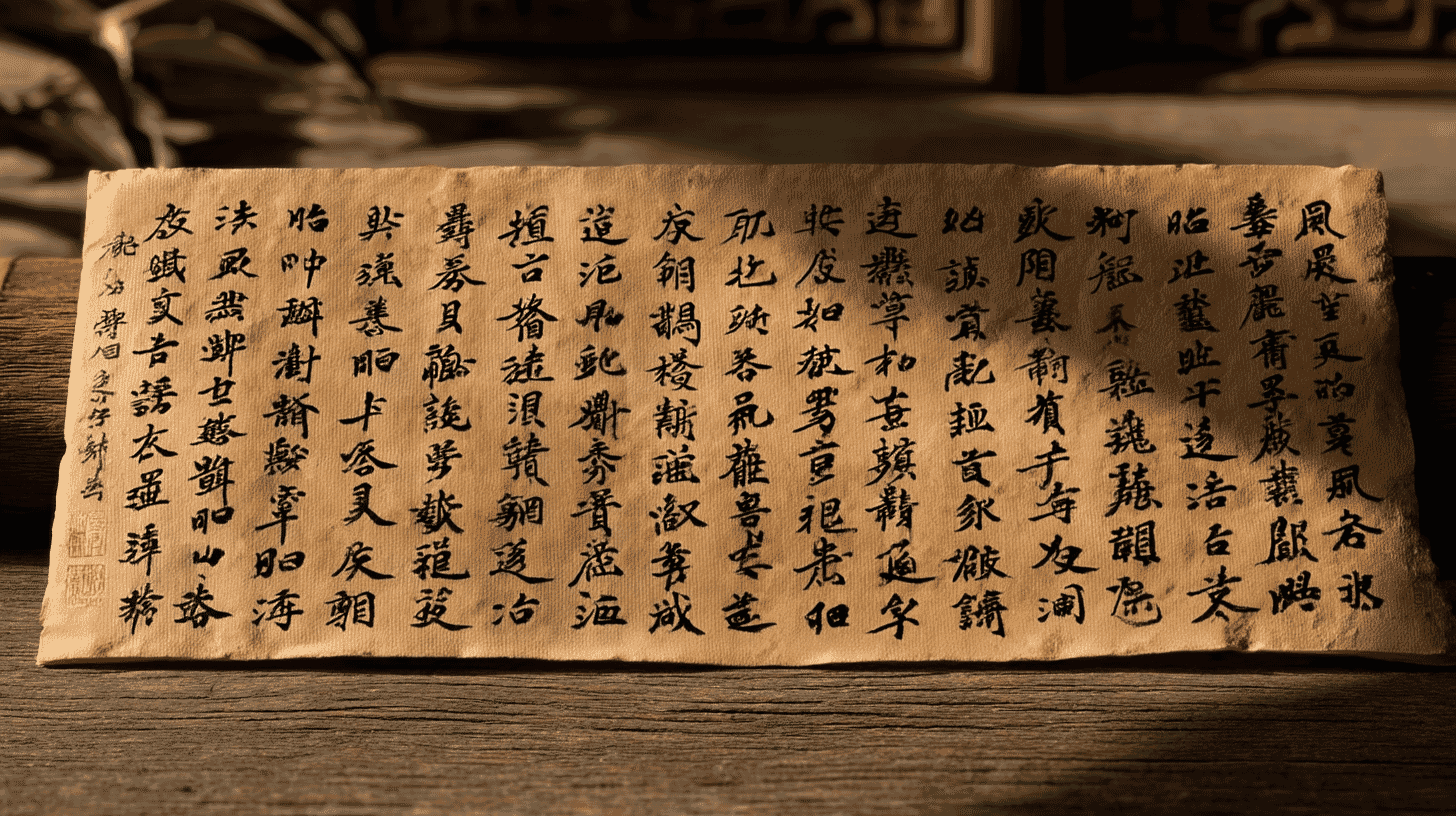
Shinso Senjimon: A Masterpiece Bridging Ancient China and Japan
Hidden within Japan's private collections lies one of East Asia's most extraordinary calligraphic treasures—the Shinso Senjimon (真草千字文). This National Treasure represents the living heritage of Wang Xizhi, China's revered "Sage of Calligraphy," preserved through the brushwork of his seventh-generation descendant, the monk Zhiyong. For lovers of Asian art, calligraphy enthusiasts, and cultural travelers seeking authentic experiences beyond typical tourist destinations, this masterpiece offers a profound connection to over 1,400 years of artistic tradition.
What is the Shinso Senjimon?
The Shinso Senjimon, meaning "Thousand Character Classic in Regular and Cursive Scripts," is a calligraphic work featuring exactly 1,000 Chinese characters with no repetitions. The characters are arranged line by line, with each row displaying the same character twice: once in kaisho (regular script/楷書) and once in sosho (cursive script/草書). This dual presentation makes it an invaluable educational tool for studying classical Chinese calligraphy.
The original Thousand Character Classic was created during China's Liang Dynasty under the command of Emperor Wu. The emperor commissioned Zhou Xingsi, a talented scholar, to compose a rhymed text using 1,000 different characters selected from the works of Wang Xizhi. The result was a four-character verse of 250 lines that became one of the most important texts for teaching Chinese literacy and calligraphy throughout East Asia—comparable to the Japanese "Iroha" poem in its educational significance.
The Calligrapher: Zhiyong, Keeper of Wang Xizhi's Legacy
Zhiyong (智永) was a Buddhist monk who lived during the transitional period between the Southern Dynasties (Chen) and the Sui Dynasty of China, approximately during the 6th century. As a seventh-generation descendant of Wang Xizhi through his fifth son Wang Huizhi, Zhiyong inherited not only his ancestor's bloodline but also his extraordinary calligraphic traditions.
According to historical records, Zhiyong secluded himself in the upper floor of Yongxin Temple in Shaoxing for thirty years, dedicating his life entirely to the art of calligraphy. During this remarkable period of focused practice, he is said to have copied the Thousand Character Classic over 800 times, distributing one copy to each temple in the Jiangdong region. His used brushes accumulated to fill five large bamboo baskets, which he buried in a mound called the "Brush Tomb."
Zhiyong's fame became so great that visitors seeking his calligraphy wore down the threshold of his door, leading the monks to reinforce it with iron plates—giving rise to the legendary expression "Iron Threshold" (鉄門限). He is also credited with transmitting the Wang family's calligraphic techniques to Yu Shinan, one of the Four Great Calligraphers of the Early Tang Dynasty.
Why Was It Designated a National Treasure?
The Shinso Senjimon held in Japan, known as the "Ogawa-bon" (小川本) after the Ogawa family who have owned it, was designated a National Treasure on November 14, 1953. Several factors contribute to its exceptional status:
- It is considered the only authentic handwritten manuscript (shinseki-bon) by Zhiyong in existence. While stone rubbings and later copies survive, this work preserves the actual brushstrokes of the master calligrapher.
- The manuscript is believed to have been among the treasured possessions of Emperor Shomu and Empress Komyo during the Nara period, recorded in the Todaiji献物帳 (献物帳/Donation Record).
- It represents the most complete surviving example from Zhiyong's 800 copies, maintaining its form remarkably well after approximately 1,400 years.
- The work demonstrates the pure transmission of Wang Xizhi's calligraphic style, serving as an irreplaceable primary source for understanding classical Chinese brushwork.
Artistic Highlights and Viewing Points
When viewing the Shinso Senjimon, several artistic elements deserve particular attention. The regular script (kaisho) sections display characteristics of the Liang-Chen period style, with characters that are dignified yet graceful. The brush pressure is controlled and even, producing lines of consistent thickness that convey stability and clarity. Each stroke demonstrates the mastery of fundamental techniques passed down through the Wang family.
The cursive script (sosho) sections, in contrast, reveal Zhiyong's exceptional skill in this more expressive form. The characters flow with natural rhythm, demonstrating what ancient critics described as "refined and substantial brushwork with elegant vitality." Unlike more dramatic cursive styles, Zhiyong's approach maintains readability while achieving artistic beauty—making this work an ideal model for students of grass script.
The juxtaposition of both scripts on each line creates a unique learning opportunity. Viewers can observe how the same character transforms between the structured regularity of kaisho and the flowing abbreviation of sosho, understanding the logical connections between these writing systems.
The paper itself—hemp paper (麻紙) with its characteristic texture and durability—has survived remarkably well, allowing modern viewers to appreciate not only the calligraphy but also the material culture of Tang Dynasty manuscript production.
How to View This National Treasure
As a privately owned National Treasure, the Shinso Senjimon is not permanently displayed. However, it is exhibited relatively frequently at major museums during special exhibitions. The work has been shown at prestigious venues including the Tokyo National Museum, Kyoto National Museum, and Kyushu National Museum.
Recent exhibition history includes appearances at the "Masterpieces of Chinese and Japanese Calligraphy" exhibition at Kyoto National Museum in 2023, the special exhibition commemorating the 1,300th anniversary of the Nihon Shoki at Kyoto National Museum in 2021, the "Yan Zhenqing" special exhibition at Tokyo National Museum in 2019, and the "Wang Xizhi and Japanese Calligraphy" exhibition at Kyushu National Museum in 2018.
Cultural travelers interested in viewing this masterpiece should monitor announcements from Japan's national museums, particularly exhibitions focusing on calligraphy, Chinese art, or classical manuscripts. The work typically appears during exhibitions exploring the relationship between Chinese and Japanese artistic traditions.
Surrounding Cultural Attractions
When the Shinso Senjimon is exhibited in Kyoto, visitors can explore the remarkable cultural landscape surrounding the Kyoto National Museum. The museum itself features the historic Meiji-era brick building (Important Cultural Property) alongside the modern Heisei Chishinkan wing, offering a visual dialogue between past and present architecture.
Nearby attractions include Sanjusangen-do Temple with its breathtaking 1,001 statues of Kannon, Chishakuin Temple with its National Treasure screen paintings, and the historic Gion district. The museum's location in eastern Kyoto provides easy access to the temple-rich areas of Higashiyama.
For exhibitions at Tokyo National Museum in Ueno Park, visitors can combine their viewing with explorations of the museum's vast collection of Japanese art, as well as neighboring institutions like the National Museum of Western Art and the Tokyo Metropolitan Art Museum. The park itself offers seasonal beauty throughout the year.
- 📍 Plan Your Visit to Kyoto
- Find tours, activities & transport passes near Makusa Senjimon
- [ Kinkakuji Fushimi Inari & Kimono Rental ]
Q&A
- What makes the Shinso Senjimon different from other versions of the Thousand Character Classic?
- The Ogawa-bon Shinso Senjimon is the only surviving authentic handwritten manuscript by Zhiyong. Other versions, such as the Kanchū-bon (關中本) carved in 1109 during the Northern Song Dynasty, are stone rubbings. The original brushstrokes preserved in the Japanese manuscript allow viewers to experience the actual movement and pressure of Zhiyong's brush—information lost in carved reproductions.
- How did this Chinese calligraphy masterpiece come to Japan?
- The manuscript is believed to have arrived in Japan during the Nara period (710-794), likely as part of cultural exchanges with Tang Dynasty China. Historical records suggest it may have been among the treasured items of Emperor Shomu and Empress Komyo. The work's presence in Japan from such an early date contributed to its remarkable preservation, as many Chinese originals were lost during subsequent centuries of political upheaval in China.
- Why is Zhiyong's calligraphy particularly significant for studying Wang Xizhi's style?
- No original works by Wang Xizhi himself survive today; all are known through copies or stone rubbings. As a direct descendant who inherited family techniques through seven generations, Zhiyong provides the closest link to the authentic Wang style. His work demonstrates the "bone structure deep and stable, combining all excellences" praised by Song Dynasty poet Su Shi.
- Can I practice calligraphy using this masterpiece as a model?
- Absolutely! The Shinso Senjimon has been used as a calligraphy textbook for over a millennium and remains popular today. High-quality reproductions are available from Japanese publishers such as Tenrai Shoin, which offers original-size facsimiles. The work is particularly recommended for those beginning to study cursive script (sosho), as Zhiyong's style emphasizes clarity and elegance over dramatic expression.
- Is this the same work as the Thousand Character Classic at the Palace Museum in Beijing?
- No. The Palace Museum in Beijing holds Song Dynasty rubbings of the Kanchū-bon (關中本), which was carved in stone during 1109. The Japanese Ogawa-bon is an entirely different object—an original ink manuscript rather than a stone rubbing. Both preserve Zhiyong's calligraphy but through different media, with the Japanese version offering direct evidence of the artist's brushwork.
Basic Information
| Name | Shinso Senjimon (真草千字文) / Zhiyong's Thousand Character Classic in Regular and Cursive Scripts |
|---|---|
| Calligrapher | Zhiyong (智永), Buddhist monk and 7th-generation descendant of Wang Xizhi |
| Period | Tang Dynasty, China (approximately 6th century) |
| Material | Ink on hemp paper (麻紙) |
| Format | Album (帖装) - 1 volume |
| Designation | National Treasure of Japan (designated November 14, 1953) |
| Category | Written Works and Classical Books (書跡・典籍) |
| Registration Number | 201-699 |
| Owner | Private collection (Ogawa family) |
| Exhibition Venues | Kyoto National Museum, Tokyo National Museum, Kyushu National Museum (during special exhibitions) |
References
- 国宝-書跡典籍|真草千字文(智永筆)[個人蔵] | WANDER 国宝
- https://wanderkokuho.com/201-00699/
- 真草千字文(智永)とは | 書道専門店 大阪教材社
- https://www.osakakyouzai.com/osaka_kyouzai/?p=2872
- 国宝 小川本 真草千字文 | 株式会社勉誠社
- https://bensei.jp/index.php?main_page=product_book_info&products_id=100910
- 智永 - Wikipedia
- https://ja.wikipedia.org/wiki/智永
- 宋拓智永真草千字文 - 京都国立博物館 館蔵品データベース
- https://knmdb.kyohaku.go.jp/3182.html
- 宋拓隋智永真草千字文册 - 故宮博物院
- https://www.dpm.org.cn/collection/impres/228599.html
Last verified: 2026.01.27