Kojimaya Dozo: Discover Saijo's Oldest Storehouse and the Birthplace of Kamotsuru Sake

Explore Kojimaya Dozo, an 1836 Edo-period earthen storehouse in Higashihiroshima's sake brewing district. This registered cultural property features ingenious fire-resistant architecture and connects to the origins of Kamotsuru Sake Brewery. Learn about its history, architectural features, and how to visit this hidden gem in Japan's famous Saijo sake town.

Kojimaya Dozo: Discovering Saijo's Oldest Storehouse

In the heart of Higashihiroshima City's renowned sake brewing district lies a remarkable witness to history—Kojimaya Dozo. Built in 1836 during the late Edo period, this unassuming earthen storehouse represents the oldest surviving structure of its kind in the Saijo region. While many visitors flock to Saijo for its famous sake breweries, this historic storehouse offers a rare glimpse into the architectural ingenuity and brewing heritage that helped transform a humble post town into one of Japan's three premier sake-producing regions.

A Journey Through Time: The History of Kojimaya Dozo

Kojimaya Dozo derives its name from the Kimura family's trade name, "Kojimaya" (小島屋). According to historical records preserved in the Kimura family genealogy, this prominent family had been engaged in brewing activities in the Kamo district since the early Edo period. The storehouse was constructed in 1836 (Tenpo 7), as evidenced by inscriptions found on the iron window gratings—a detail that has proven invaluable in establishing its precise age.

The Kimura family would later establish what is now known as Kamotsuru Sake Brewery, one of Japan's most celebrated sake producers. In 1873, the fourth-generation head of the family, Kimura Wahei, officially named their sake brand "Kamotsuru"—a name combining "Kamo" (the region's name and a word meaning "to brew") with "Tsuru" (crane, a symbol of longevity and good fortune). This storehouse served as part of the original Kimura sake brewing operation, making it an integral piece of Saijo's transformation from a Sanyo Highway post town to a brewing powerhouse.

Architectural Excellence: The Fire-Resistant Design

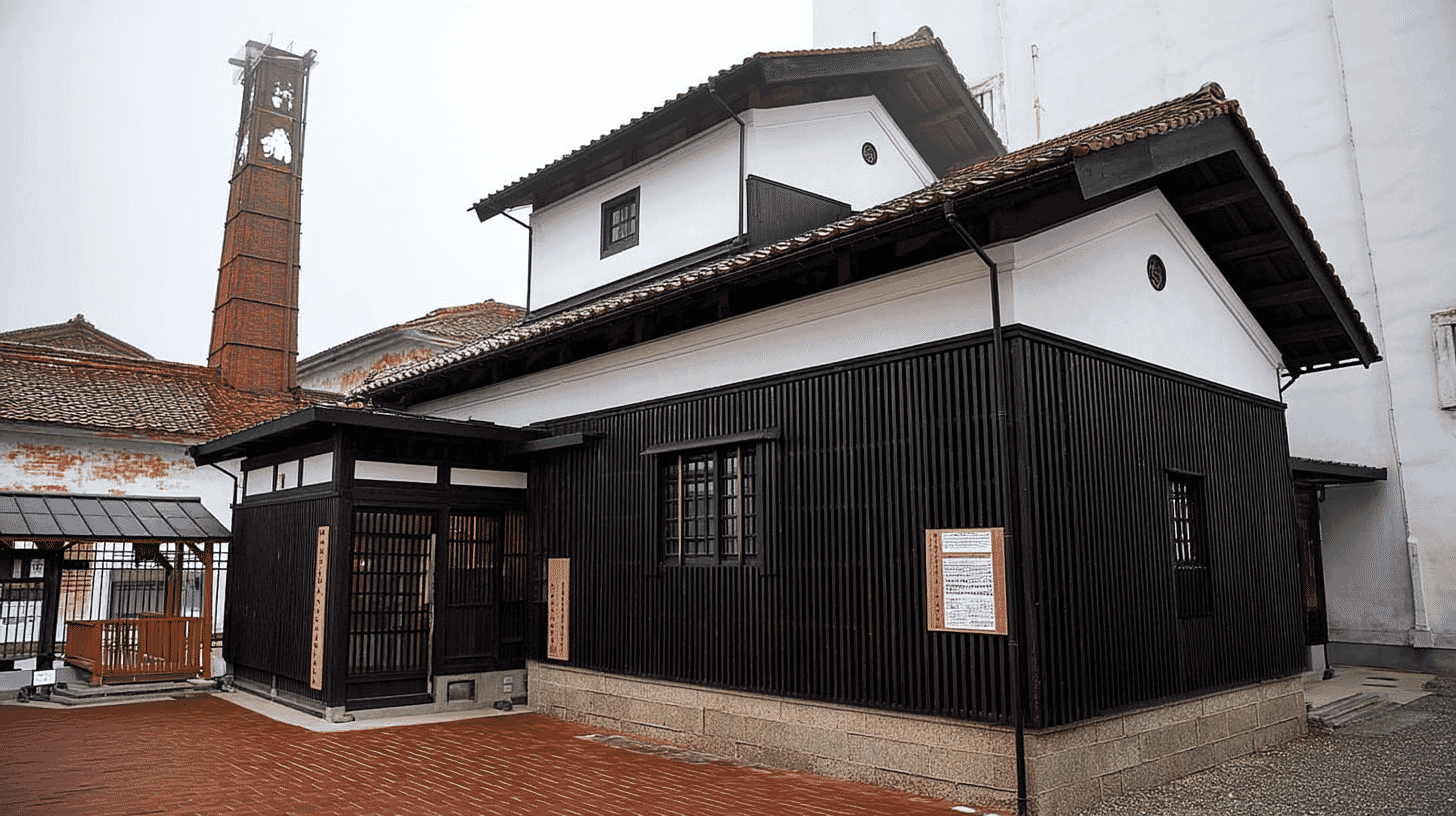
What makes Kojimaya Dozo truly exceptional is its sophisticated fire-resistant construction. The building exemplifies the traditional "dozo" (earthen storehouse) architectural style that was essential for protecting valuable goods in pre-modern Japan. Standing as a two-story structure with a modest footprint of 28 square meters, the storehouse employs several ingenious defensive techniques.

The most remarkable feature is its "okiyane" (置屋根) roof construction—a design where the tiled roof sits independently atop the thick earthen walls. In the event of a fire, the roof could burn and collapse without allowing flames to penetrate into the storehouse's interior. This clever separation of roof and walls created an effective firebreak, ensuring that even if surrounding buildings were consumed by flames, the contents within the storehouse would remain protected.

The exterior walls showcase another traditional technique: the lower portion features tall vertical wooden boards mounted on foundation stones, while the upper section is finished with white plaster. This combination provided both moisture protection from the ground and fire resistance from the plastered walls above. The thick earthen walls also offered excellent temperature and humidity regulation—crucial conditions for storing sake and other valuable goods.

Why Kojimaya Dozo Became a Registered Cultural Property

On October 27, 2017, Kojimaya Dozo was officially registered as a Tangible Cultural Property of Japan. This designation recognizes several key factors that contribute to its cultural significance.

First and foremost, the storehouse is the oldest surviving dozo in the Saijo region. While many storehouses have been lost to fires, earthquakes, or modernization over the centuries, Kojimaya Dozo has endured for nearly 190 years, maintaining its original character and structural integrity.

Second, the dated iron window gratings provide rare documentary evidence of the building's construction period. Such precise dating is uncommon for vernacular architecture from this era, making the storehouse an important chronological reference point for understanding regional building traditions.

Third, Kojimaya Dozo plays a vital role in defining the distinctive landscape of Saijo's sake brewing district. The building contributes to the atmospheric streetscape that has earned Saijo recognition as one of Japan's "20th Century Heritage Sites" by ICOMOS (International Council on Monuments and Sites) and designation as a Modernization Industrial Heritage by the Ministry of Economy, Trade and Industry.

In February 2024, the storehouse received additional recognition as part of the nationally designated "Saijo Sake Brewery Group" historic site, which encompasses the Kamotsuru Brewery Ichigo-gura (No. 1 Storehouse) complex where Kojimaya Dozo is located.

Highlights and What to See

Visitors to Kojimaya Dozo can appreciate several distinctive features that make this storehouse special. The harmonious contrast between the weathered wooden boards at the base and the white plastered walls above creates an elegant aesthetic that speaks to both practicality and craftsmanship. Take time to observe the iron gratings on the windows—these functional elements bear the inscriptions that helped historians determine the building's age.

The storehouse is situated within the Saijo Honmachi Historical Plaza, a public space developed by Higashihiroshima City to help visitors understand the area's cultural heritage. The plaza occupies the former site of the Kimura family's main residence, creating a meaningful connection between the historic storehouse and its original domestic context.

From this vantage point, you can observe the broader landscape of Saijo's sake brewing district: the distinctive red brick chimneys rising above white-walled storehouses, the characteristic "namako-kabe" (fish-scale pattern) plastered walls, and the traditional tile roofs that create Saijo's iconic skyline.

Exploring the Surrounding Saijo Sake Brewing District

Kojimaya Dozo is ideally located for exploring Saijo's broader sake heritage. Within walking distance, seven active sake breweries continue the tradition that began centuries ago. Each brewery offers its own character, from tasting rooms and direct sales outlets to historic exhibition spaces.

The adjacent Kamotsuru Sake Brewery operates the Ichigo-gura (No. 1 Storehouse) as an exhibition and retail facility where visitors can learn about sake production, sample various offerings, and explore displays of brewing equipment and historical artifacts. The brewery's history directly connects to Kojimaya Dozo through the Kimura family lineage.

Other nearby attractions include Hakubotan Sake Brewery, Saijo's oldest active brewery founded in 1675, and Kamerekizen Sake Brewery, known for its stately Meiji-era architecture. The Saijo Sakagura-dori Tourism Information Center provides maps, guidance, and a rest area for visitors exploring the district.

For those interested in deeper historical exploration, the Aki Kokubunji Temple—established during the Nara period as one of Japan's provincial Buddhist temples—lies within a 10-minute walk from the station. This creates a remarkable contrast between Saijo's ancient religious heritage and its more recent brewing traditions.

Best Time to Visit and Practical Tips

Saijo's sake brewing district can be enjoyed year-round, but certain seasons offer special experiences. During the winter brewing season (roughly October through March), the subtle fragrance of fermenting sake wafts through the streets, creating an atmospheric experience unique to brewing towns. The annual Saijo Sake Festival, typically held in October, transforms the district into a celebration of sake culture with tastings, food vendors, and cultural performances.

Spring brings pleasant weather for walking tours, while autumn offers comfortable temperatures and the anticipation of the new brewing season. Even summer visits reward the curious traveler, as the thick-walled storehouses and narrow streets provide welcome shade and cooler temperatures.

Photography enthusiasts will find the early morning and late afternoon light particularly flattering for capturing the interplay of white walls, red brick, and dark wooden elements that define Saijo's architectural character.

📍 Plan Your Visit to Hiroshima
Find tours, activities & transport passes near Kojimaya Storehouse
[ Itsukushima Shrine & Hiroshima Peace Memorial ]

Q&A

QCan I enter and tour the inside of Kojimaya Dozo?
AKojimaya Dozo is primarily appreciated from the exterior within the Saijo Honmachi Historical Plaza. While the interior is not regularly open to the public, the adjacent Kamotsuru Ichigo-gura (No. 1 Storehouse) operates as an exhibition and retail facility where visitors can experience the interior atmosphere of traditional sake storehouses.
QIs there an admission fee to see Kojimaya Dozo?
AViewing Kojimaya Dozo from the Saijo Honmachi Historical Plaza is free of charge. The plaza is a public space maintained by Higashihiroshima City for visitors to learn about the area's cultural heritage.
QHow do I get to Kojimaya Dozo from Hiroshima City?
ATake the JR Sanyo Main Line from Hiroshima Station to Saijo Station (approximately 35-40 minutes). From Saijo Station, Kojimaya Dozo is about a 5-minute walk. Head south from the station toward the sake brewing district; the storehouse is located within the Kamotsuru Brewery complex area.
QWhat is the connection between Kojimaya Dozo and Kamotsuru Sake?
AKojimaya Dozo was built by the Kimura family, whose trade name was "Kojimaya." This same family later established Kamotsuru Sake Brewery, naming their sake brand "Kamotsuru" in 1873. The storehouse represents the earliest surviving structure from the family's brewing operations, making it a direct physical link to one of Japan's most prestigious sake brands.
QAre there English-language resources available for visitors?
AThe Saijo Sakagura-dori Tourism Information Center near Saijo Station provides English-language maps and materials. Additionally, guided tours in English can be arranged through the Higashihiroshima Tourism Association. The Kamotsuru Ichigo-gura exhibition includes English subtitles on video displays.

Basic Information

Name Kojimaya Dozo (小島屋土蔵)
Cultural Property Designation Registered Tangible Cultural Property of Japan (Registered October 27, 2017); Component of National Historic Site "Saijo Sake Brewery Group" (Designated February 21, 2024)
Construction Year 1836 (Tenpo 7, Edo Period)
Architectural Style Two-story earthen storehouse (Dozo-zukuri) with okiyane-style tiled roof
Building Area 28 square meters
Address 708-2 Saijo Honmachi, Higashihiroshima City, Hiroshima Prefecture, Japan
Access Approximately 5 minutes on foot from JR Saijo Station (JR Sanyo Main Line)
Admission Free (exterior viewing from public plaza)

References

Kojimaya Dozo - Cultural Heritage Online (Agency for Cultural Affairs)
https://bunka.nii.ac.jp/heritages/detail/275302
Kamotsuru Brewery Ichigo-gura (Saijo Sake Brewery Group Historic Site) - Higashihiroshima City Official Website
https://www.city.higashihiroshima.lg.jp/soshiki/kyoikuiinkaishogaigakushu/3/11/bunkazai/town/saijo/sakaguragun/39657.html
Registered Tangible Cultural Property: Kojimaya Dozo - Kudaime Shichirouemon's Blog
https://ameblo.jp/9daime/entry-12773909734.html
Kamotsuru Sake Brewery - Wikipedia
https://ja.wikipedia.org/wiki/賀茂鶴酒造
150 Years of History - Kamotsuru Sake Brewery Official Website
https://www.kamotsuru.jp/history/
Saijo Honmachi Historical Plaza - Higashihiroshima Tourism Association
https://hh-kanko.ne.jp/sightseeing/146/
Saijo Sakagura-dori (Sake Brewery Street) - DIVE! Hiroshima
https://dive-hiroshima.com/explore/1199/

Last verified: 2026.01.27

Nearby heritages