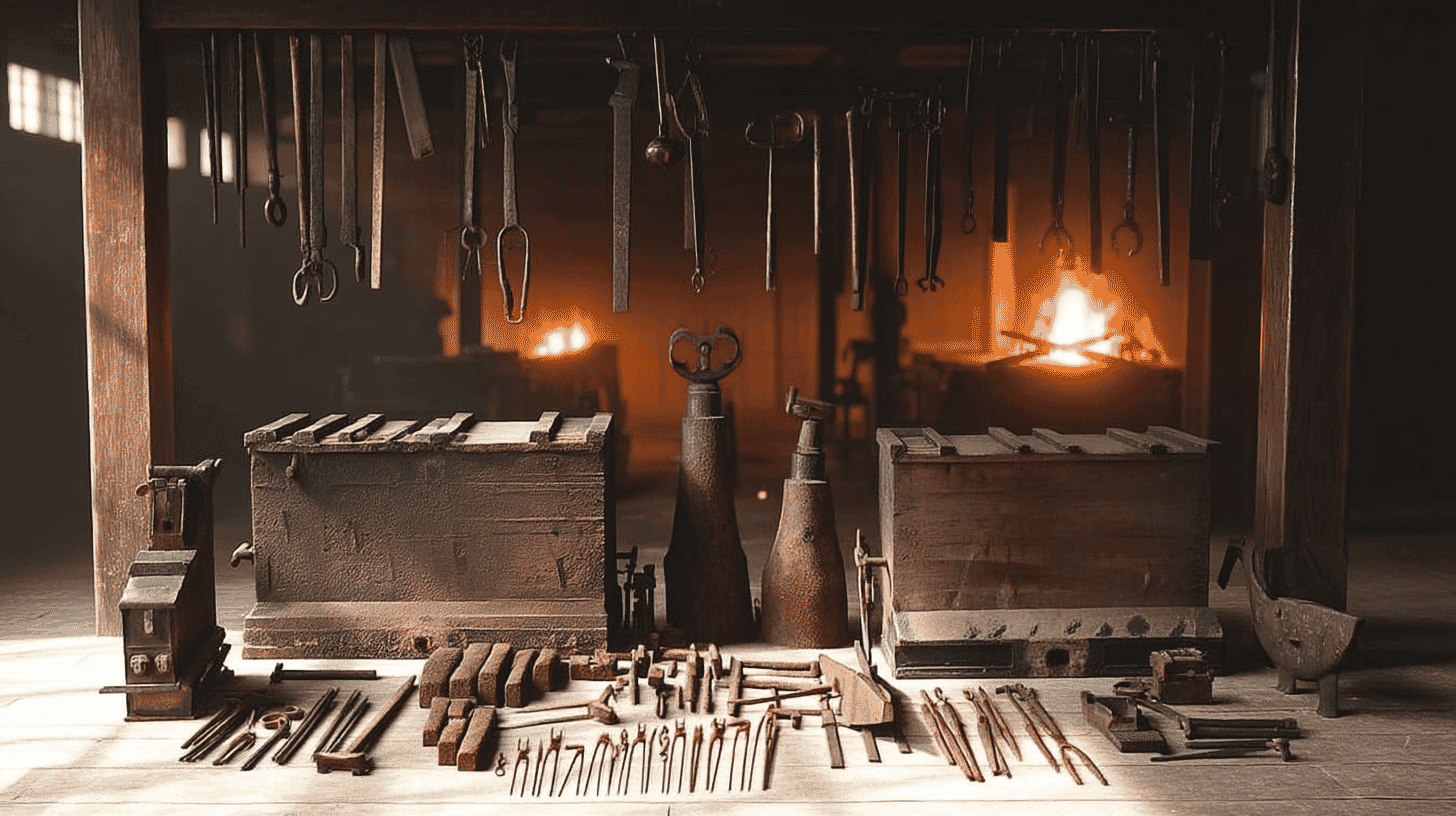
Tomo Blacksmithing Tools & Products: A Legacy of Maritime Craftsmanship
In the historic port town of Tomonoura, nestled along the shores of Hiroshima Prefecture's Seto Inland Sea, lies a remarkable collection of 567 artifacts that tell the story of Japan's maritime heritage. The Tomo Blacksmithing Tools and Products (鞆の鍛冶用具及び製品) were registered as a Tangible Folk Cultural Property in March 2021, becoming the first such designation in Hiroshima Prefecture. This collection represents centuries of metalworking expertise that once supported Japan's wooden shipbuilding industry and coastal trade networks.
The Historic Port of Tomonoura: Where Tides Meet
Tomonoura has been known as a "tide-waiting port" since ancient times. Located at the center of the Seto Inland Sea, where tidal currents from the east and west converge, ships historically had to wait here for favorable tides before continuing their journeys. This unique geographical position transformed Tomonoura into a thriving hub of maritime commerce, where goods, people, and craftsmanship intersected for over a thousand years.
The town's prosperity gave rise to a specialized blacksmithing industry. Local craftsmen, known as Tomo-kaji (鞆鍛冶), developed exceptional skills in forging ship equipment. Their anchors and nails became renowned throughout Japan, earning the reputation as essential components for wooden vessels sailing the nation's coastal waters.
Why This Collection Earned Cultural Property Status
The Tomo Blacksmithing Tools and Products collection holds significant value for several reasons. First, it provides a comprehensive record of pre-mechanization forging techniques. The collection includes tools used until the mid-Showa period (around the 1950s), before modern machinery transformed the metalworking industry. These hand-operated implements represent the final generation of traditional Japanese blacksmithing methods.
Second, the collection demonstrates the complete workflow of ship equipment production. From the bellows (fuigo) that fed air to the forge, to the anvils, hammers, tongs, files, and scrapers used in shaping and finishing, every stage of the forging process is represented. This completeness allows researchers and visitors to understand the full scope of maritime metalworking traditions.
Third, the products themselves showcase the diversity of items created by Tomo blacksmiths. The famous Tomo anchors (Tomo-ikari) were shipped to ports throughout Japan, while the ship nails came in specialized varieties designed for different purposes in wooden boat construction.
Highlights of the Collection
Forging Tools (193 pieces)
The tool collection includes the essential equipment of a traditional blacksmith workshop. The fuigo (bellows) pumped air into the fire bed to achieve the high temperatures needed for metalworking. Various sizes of anvils served as work surfaces, while an array of tongs allowed smiths to grip and manipulate heated iron. Hammers of different weights and shapes enabled precise shaping, and finishing tools like files and scrapers brought products to their final form. Additionally, the collection includes casting molds for fishing net weights and agricultural implements, revealing the diverse production activities of Tomo blacksmiths beyond maritime equipment.
Products (374 pieces)
The anchor collection features several distinct styles. The four-claw anchor (yotsume-ikari) was the most common design, while the two-claw "Chinese-style anchor" (tojin-ikari) served specific purposes. These Tomo anchors were shipped throughout Japan and became synonymous with quality maritime equipment.
The ship nail collection is equally impressive, featuring specialized types designed for wooden boat construction. These include nuikugi (sewing nails), toshikugi (through nails), tsutsumikugi (wrapping nails), and kaiorikugi (shell-folding nails). Each type served a specific function in joining the planks and components of traditional wooden vessels.
The History of Tomo Blacksmithing
The origins of blacksmithing in Tomo remain unclear, but the tradition likely emerged during the medieval period. The nearby Bingo region (present-day eastern Hiroshima Prefecture) was known for sword-making from the Nara period, and Tomo blacksmithing is believed to have developed as a branch of this tradition. Swords bearing the "Tomo" inscription from the early Muromachi period (14th-15th century) confirm that skilled metalworkers were active in the area during medieval times.
The industry flourished under the strategic vision of Fukushima Masanori, the feudal lord who controlled the region in the early Edo period. He gathered craftsmen in the "Kogarasu no Mori" area (present-day Kajimachi or Blacksmith Town), creating a concentrated center of metalworking expertise. As Japan entered a peaceful era under Tokugawa rule, the focus of Tomo blacksmithing shifted from weapons to ship equipment, responding to the expansion of maritime trade.
During the Meiji and Taisho periods, records show that Tomo was Japan's leading port for shipping anchors and ship nails. The hand-forging tradition continued until the mid-Showa period, when mechanization gradually replaced traditional techniques. In 1968, the remaining iron and steel businesses relocated to a new industrial complex on the outskirts of town, marking the end of traditional blacksmithing in Tomonoura's historic center.
Where to See the Collection
The Tomo Blacksmithing Tools and Products are housed at the Fukuyama City Tomonoura Museum of History and Folklore. Built on the ruins of Tomo Castle, the museum offers panoramic views of the harbor and surrounding islands while presenting the rich cultural heritage of this historic port town. The collection is part of the permanent exhibition, where visitors can see the actual tools and products that shaped Japan's maritime history.
The museum also features dioramas of traditional sea bream fishing, exhibits on local festivals and customs, and artifacts related to the Korean diplomatic missions that visited Tomonoura during the Edo period. The combination of blacksmithing heritage and broader historical context provides visitors with a comprehensive understanding of why Tomonoura became such an important center of maritime culture.
Exploring Tomonoura: A Japan Heritage Site
Tomonoura itself was designated as a Japan Heritage site in 2018, with the story "Wrapped in the Evening Calm of the Seto—Japan's Premier Early Modern Port Town." The town preserves an remarkable collection of Edo-period port facilities, including Japan's tallest historic lighthouse (joyato), stone wharves, and ship-building ramps. Walking through the narrow streets lined with traditional merchant houses, visitors can experience the atmosphere of a thriving port town frozen in time.
The Kogarasu Shrine (小烏神社), located nearby, holds special significance for the blacksmithing community. This shrine served as the tutelary deity for Tomo's metalworkers, and every December it hosts the Fuigo Matsuri (Bellows Festival), celebrating the tools and traditions of the forge. This festival continues to honor the legacy of the craftsmen whose work is now preserved in the museum collection.
Nearby Attractions
Visitors to Tomonoura can explore numerous historic sites and natural attractions. The Taichoro Hall at Fukuzenji Temple offers breathtaking views of the Seto Inland Sea, famously described by a Korean diplomat as "the most beautiful scenery in the East." Sensuijima Island, accessible by a five-minute ferry ride, provides hiking trails and pristine beaches. The Ota Family Residence, a National Important Cultural Property, showcases the prosperity of merchants who traded in the local specialty liqueur called Homeishu.
For those interested in the intersection of craft and commerce, the Okamoto Kametaro Honten offers tours and tastings of Homeishu, produced in buildings that incorporate architectural elements from Fukuyama Castle. The narrow streets of the preservation district reveal traditional townhouses with distinctive sliding shutters (bucho) that continue to be used by local residents and businesses.
- 📍 Plan Your Visit to Hiroshima
- Find tours, activities & transport passes near Tomono Blacksmith Tools and Products
- [ Itsukushima Shrine & Hiroshima Peace Memorial ]
Q&A
- What makes the Tomo Blacksmithing collection special?
- This collection of 567 items represents the complete toolkit and product range of traditional Japanese ship-equipment blacksmiths. It is Hiroshima Prefecture's first Registered Tangible Folk Cultural Property and provides invaluable documentation of pre-mechanization forging techniques that disappeared in the mid-20th century.
- What were the main products made by Tomo blacksmiths?
- Tomo blacksmiths were famous for producing anchors (ikari) and ship nails (funakugi). The anchors came in various styles including four-claw and two-claw designs, while the ship nails were specialized for different construction purposes in wooden boat building.
- Where can I see the collection?
- The collection is displayed at the Fukuyama City Tomonoura Museum of History and Folklore, located on the site of historic Tomo Castle. The museum is open from 9:00 to 17:00 (last entry 16:30), closed on Mondays and year-end holidays.
- How do I get to Tomonoura?
- From JR Fukuyama Station, take the Tomotetsu bus bound for "Tomo-no-ura" or "Tomo-ko." The journey takes approximately 30 minutes, with buses departing every 20 minutes. From the bus stop, the museum is about a 5-minute walk uphill.
- Is Tomonoura worth visiting for international tourists?
- Absolutely. Tomonoura is a Japan Heritage site that uniquely combines Important Traditional Building Preservation Area status with UNESCO Memory of the World recognition. It offers well-preserved Edo-period streetscapes, stunning Seto Inland Sea views, historic temples and shrines, and authentic local cuisine featuring fresh sea bream.
Basic Information
| Official Name | Tomo no Kaji Yogu oyobi Seihin (Tomo Blacksmithing Tools and Products) |
|---|---|
| Designation | Registered Tangible Folk Cultural Property (National) |
| Registration Date | March 11, 2021 |
| Number of Items | 567 pieces (193 tools, 374 products) |
| Category | Production and livelihood implements |
| Location | Fukuyama City Tomonoura Museum of History and Folklore, 536-1 Tomo-cho, Fukuyama City, Hiroshima Prefecture |
| Museum Hours | 9:00–17:00 (Last entry 16:30) |
| Closed | Mondays (or following day if Monday is a holiday), December 28–January 3 |
| Admission | 150 yen (adults); Free for high school students and younger |
| Access | 30 minutes by Tomotetsu bus from JR Fukuyama Station |
| Contact | 084-982-1121 |
References
- 鞆の鍛冶用具及び製品 - 福山市ホームページ
- https://www.city.fukuyama.hiroshima.jp/soshiki/bunka/280739.html
- 鞆の鍛冶用具及び製品 - 文化遺産オンライン
- https://bunka.nii.ac.jp/heritages/detail/517437
- 広報ふくやま2021年10月号特集「知られざる鞆の鉄の歴史 鞆鍛冶」
- https://www.city.fukuyama.hiroshima.jp/site/koho-202110/237841.html
- 鞆の歴史を凝縮した学びの館「歴史民俗資料館」 - VISIT鞆の浦
- https://visittomonoura.com/2020/01/979/
- ご利用・交通のご案内 - 鞆の浦歴史民俗資料館
- https://tomo-rekimin.org/site/access/
- 鞆の浦 - Wikipedia
- https://ja.wikipedia.org/wiki/鞆の浦
- 鞆の浦(とものうら) - 福山市ホームページ
- https://www.city.fukuyama.hiroshima.jp/site/miryoku2023/289472.html
Last verified: 2026.01.02
Nearby heritages
- Tomocho, Fukuyama City
- Fukuyama City, Hiroshima Prefecture
- Fukuyama Castle
- 1-1 Marunouchi, Fukuyama City, Hiroshima Prefecture
- Fukuyama Castle
- 1-1 Marunouchi, Fukuyama City, Hiroshima Prefecture
- Artifacts Excavated from the Kusado Sengencho Ruins in
- 2-4-1 Nishimachi, Fukuyama City
- Fukuyama Castle Ruins
- Marunouchi, Fukuyama City
- Materials Related to Suga Chazan
- 2-4-1 Nishimachi, Fukuyama City
- Fukuyama City Fukuju Hall South Tea Room
- 1-1-1 Marunouchi, Fukuyama City, Hiroshima Prefecture, and other locations
- Tachi〈Signed Bizen Kunishi Osafune Morikage〉
- Fukuyama Museum of Art, 2-4-3 Nishimachi, Fukuyama City, Hiroshima Prefecture
- Short Sword (Meikoubou)
- Fukuyama Museum of Art, 2-4-3 Nishimachi, Fukuyama City, Hiroshima Prefecture
- Short Sword (signed Kunimitsu (famous Aizu Shintogo))
- Fukuyama Museum of Art, 2-4-3 Nishimachi, Fukuyama City, Hiroshima Prefecture