Koshikawa Bridge: The Unfinished Railway Monument of Hokkaido | Former JNR Konpoku Line

Discover the Koshikawa Bridge, Hokkaido's largest unreinforced concrete railway bridge. A Registered Tangible Cultural Property that stands as a testament to wartime engineering and a poignant memorial to those who built it.

Koshikawa Bridge: Hokkaido's Magnificent Unfinished Railway Monument

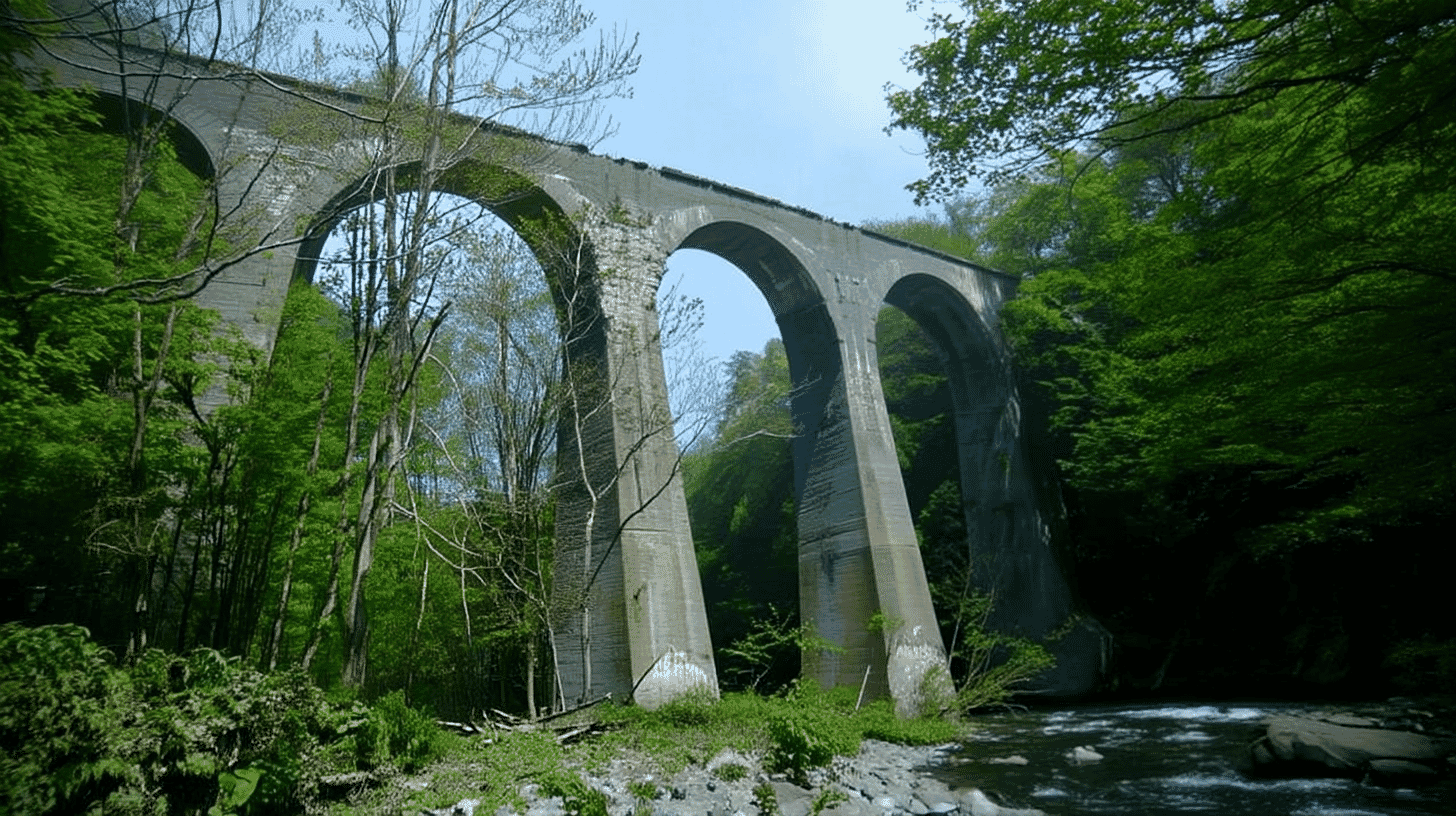
Deep within the mountainous terrain of Shari Town, near the base of the legendary Shiretoko Peninsula, stands a remarkable structure that never carried a single train. The Koshikawa Bridge (越川橋梁), officially known as the First Ikushinagawa Bridge (第一幾品川橋梁), rises majestically from the forested valley, its elegant concrete arches a haunting reminder of ambitions interrupted by war and a silent memorial to those who sacrificed everything to build it.

This ten-arch concrete viaduct, completed in 1940 during one of Japan's most turbulent periods, represents the pinnacle of wartime civil engineering in Hokkaido. At 147 meters long and 21.7 meters high, it remains the largest concrete railway bridge in all of Hokkaido—a distinction that makes its status as an unused structure all the more poignant.

A Bridge Born from Wartime Necessity

The story of the Koshikawa Bridge begins with Japan's ambitious plans to connect the Kitami and Nemuro regions across the rugged Shiretoko Peninsula. The Konpoku Line (根北線), as this railway was known, was conceived as a vital transportation link that would serve both civilian and military purposes during an era of increasing tensions in Northeast Asia.

Construction began in 1938 (Showa 13), with workers facing the daunting challenge of building through some of Hokkaido's most remote and unforgiving terrain. The bridge site lay in an area where the nearest settlement was kilometers away, surrounded by dense primeval forest and subject to Hokkaido's notoriously harsh winters.

The project faced an immediate technical challenge: wartime Japan suffered severe shortages of steel, making traditional reinforced concrete construction impossible. Engineers devised an innovative solution—constructing the entire bridge using unreinforced concrete. Some historical accounts suggest that bamboo may have been used as a substitute for steel reinforcement (a technique known as takesujin concrete or 竹筋コンクリート), though this remains a subject of scholarly debate.

Why It Became a Cultural Property

The Koshikawa Bridge was officially registered as a National Tangible Cultural Property in 1998 (Registration Number 01-0006), recognizing its exceptional historical and technical significance. Several factors contributed to this designation:

First, the bridge represents a unique example of wartime civil engineering ingenuity. The decision to construct such an ambitious structure without steel reinforcement—whether due to material shortages or as a deliberate engineering choice—resulted in a technically remarkable achievement that demonstrates the capabilities of early 20th-century Japanese civil engineering.

Second, the bridge stands as the largest concrete railway bridge in Hokkaido, a record it has maintained for over eight decades. Its ten elegant arches, despite the removal of two bridge piers during 1973 road construction, continue to demonstrate the sophisticated understanding of arch mechanics that Japanese engineers possessed during this period.

Third, the bridge serves as a living document of a significant chapter in Hokkaido's development history. Unlike many historical structures that were either completed and used or subsequently demolished, the Koshikawa Bridge occupies a unique position as a monument to plans that were never fulfilled—a physical reminder of how world events can alter the course of regional development.

A Memorial to Those Who Built It

The Koshikawa Bridge carries a solemn significance that extends beyond its engineering achievements. Historical records indicate that the construction relied heavily on what was known as "tako" (タコ) labor—a system of indentured work that subjected laborers to extremely difficult conditions. The name derives from the octopus (tako), referencing how workers, like the creature consuming its own limbs under stress, were trapped in a cycle of debt and labor from which escape was nearly impossible.

Eleven workers are recorded to have lost their lives during the construction of this bridge. The memorial to these laborers, along with the bridge itself, serves as a witness to this dark chapter of Hokkaido's development—a reminder that the infrastructure we inherit often came at tremendous human cost. Local communities have preserved these memories through oral histories and records maintained at institutions like the Shiretoko Museum, ensuring that the sacrifices of these workers are not forgotten.

The Incomplete Railway Dream

The Koshikawa Bridge was completed in 1940, but it would never serve its intended purpose. That same year, as World War II intensified, construction on the Konpoku Line was halted due to material shortages and the diversion of resources to the war effort. The bridge stood complete but disconnected—tracks never reached it from either direction.

After the war, a portion of the Konpoku Line was eventually completed. In 1957, service began between Shari Station (now Shiretoko-Shari Station) and Koshikawa Station, covering just 12.8 kilometers. However, this section did not include the grand bridge. The mountainous portion beyond Koshikawa, where the bridge awaited, remained forever unbuilt.

The completed portion of the line operated as a local service until 1970, when it was discontinued due to low ridership and the improvement of National Route 244, which made the railway economically unviable. The Koshikawa Bridge thus stands today as it has for over eight decades—a complete structure that never fulfilled its purpose, gradually being reclaimed by the forest that surrounds it.

Visiting the Bridge: What to Expect

Today, the Koshikawa Bridge has been embraced by nature, its concrete arches rising from amid the riverside forest like the ruins of some ancient civilization. The structure blends harmoniously with its natural surroundings, creating a scene of haunting beauty that attracts photographers, railway enthusiasts, and history buffs from across Japan and beyond.

The best time to visit depends on what you hope to experience. In late spring and summer, the bridge is framed by lush green foliage, with the river flowing beneath its arches. Autumn brings spectacular foliage colors that contrast dramatically with the gray concrete. Winter transforms the scene entirely, with snow covering the bridge and surrounding forest, though access may be challenging during this season.

While the bridge cannot be accessed directly for safety reasons, excellent viewing points allow visitors to appreciate its scale and beauty. The structure's position spanning the valley creates natural vantage points from both ends, each offering a different perspective on this remarkable monument to ambition and circumstance.

Nearby Attractions

The Koshikawa Bridge is located in Shari Town, which serves as the gateway to the Shiretoko Peninsula—a UNESCO World Heritage Site renowned for its pristine wilderness and diverse wildlife. Visitors to the bridge can easily combine their trip with other attractions in this remarkable region.

The Shiretoko Museum in central Shari offers comprehensive exhibits on the natural history and cultural heritage of the region, including information about the railway history that led to the bridge's construction. The museum provides valuable context for understanding the broader significance of the Koshikawa Bridge within Hokkaido's development story.

For nature enthusiasts, the Shiretoko Five Lakes offer stunning views of the peninsula's volcanic landscapes, while Oshinkoshin Falls—one of Japan's top 100 waterfalls—cascades dramatically along the coast road. The Utoro area provides access to boat cruises that explore the peninsula's spectacular coastal cliffs and offer opportunities to spot brown bears, Steller's sea eagles, and other wildlife.

The region is also known for its excellent seafood, particularly salmon and sea urchin. Local restaurants in both Shari town center and the Utoro hot spring resort area serve fresh catches from the Sea of Okhotsk, making culinary exploration an integral part of any visit to the area.

📍 Plan Your Visit to Hokkaido
Find tours, activities & transport passes near Former Japan National Railways Nekita Line Koshikawa Bridge
[ Explore Sapporo Snow Festivals & Lavender Fields ]

Q&A

QWhy was the Koshikawa Bridge never used for trains?
AAlthough the bridge was completed in 1940, the intensification of World War II caused construction on the Konpoku Line to be halted that same year due to material shortages and the diversion of resources to the war effort. The railway tracks never reached the bridge from either direction. After the war, only a small portion of the planned line was eventually completed (from Shari to Koshikawa Station), but it did not extend to where the bridge stands. This section was discontinued in 1970, and the bridge has remained unused since its completion.
QIs it safe to walk on the bridge?
ANo, direct access to the bridge structure is not permitted for safety reasons. The bridge is over 80 years old and was designed for railway traffic, not pedestrian use. Additionally, two of the original ten bridge piers were removed in 1973 during road construction. Visitors should view the bridge from designated observation points in the surrounding area, which offer excellent perspectives of the structure while ensuring safety.
QWhat makes the Koshikawa Bridge architecturally significant?
AThe Koshikawa Bridge is the largest concrete railway bridge in Hokkaido, measuring 147 meters in length and 21.7 meters in height with ten arches. Its most distinctive feature is that it was constructed without steel reinforcement—an unusual approach necessitated by wartime steel shortages. The bridge demonstrates sophisticated understanding of arch engineering and concrete construction techniques of the 1930s-40s era. These factors, combined with its unique status as an unused railway structure, led to its designation as a National Registered Tangible Cultural Property in 1998.
QHow do I get to the Koshikawa Bridge?
AThe bridge is located in the Koshikawa district of Shari Town, Hokkaido. From JR Shiretoko-Shari Station, it is approximately a 15-minute drive by car. There is no public bus service directly to the bridge, so a rental car or taxi is recommended. The nearest airport is Memanbetsu Airport, from which Shari Town can be reached in about 1.5 to 2 hours by car.
QWhat is the best season to visit?
AEach season offers a different experience. Late spring through early autumn (May-October) provides the easiest access and comfortable weather, with the bridge framed by lush greenery. Autumn (late September-October) is particularly scenic, with the fall foliage creating a stunning contrast against the concrete structure. Winter visits offer dramatic snow-covered landscapes but may be challenging due to heavy snowfall and road conditions typical of the Hokkaido interior.

Basic Information

Name Former JNR Konpoku Line Koshikawa Bridge (旧国鉄根北線越川橋梁)
Official Name: First Ikushinagawa Bridge (第一幾品川橋梁)
Location 245-8 Koshikawa, Shari Town, Shari District, Hokkaido, Japan
Structure Unreinforced concrete, 10-arch viaduct
Dimensions Length: 147 meters / Height: 21.7 meters
Construction Year 1940 (Showa 15)
Cultural Property Registration Registered Tangible Cultural Property (1998)
Registration Number: 01-0006
Owner Shari Town
Access Approximately 15 minutes by car from JR Shiretoko-Shari Station
Admission Free (external viewing only)

References

Former JNR Konpoku Line Koshikawa Bridge | Shiretoko Museum
https://shiretoko-museum.jpn.org/shizen_rekishi/bunkazai/kompokusen/
Former JNR Konpoku Line Koshikawa Bridge | Cultural Heritage Online (Agency for Cultural Affairs)
https://bunka.nii.ac.jp/heritages/detail/113637
Koshikawa Bridge | Wikipedia (Japanese)
https://ja.wikipedia.org/wiki/越川橋梁
Koshikawa Bridge | Hokkaido Style
https://hokkaido-travel.com/spot/visiting/ho0530/

Last verified: 2026.01.28

Nearby heritages