
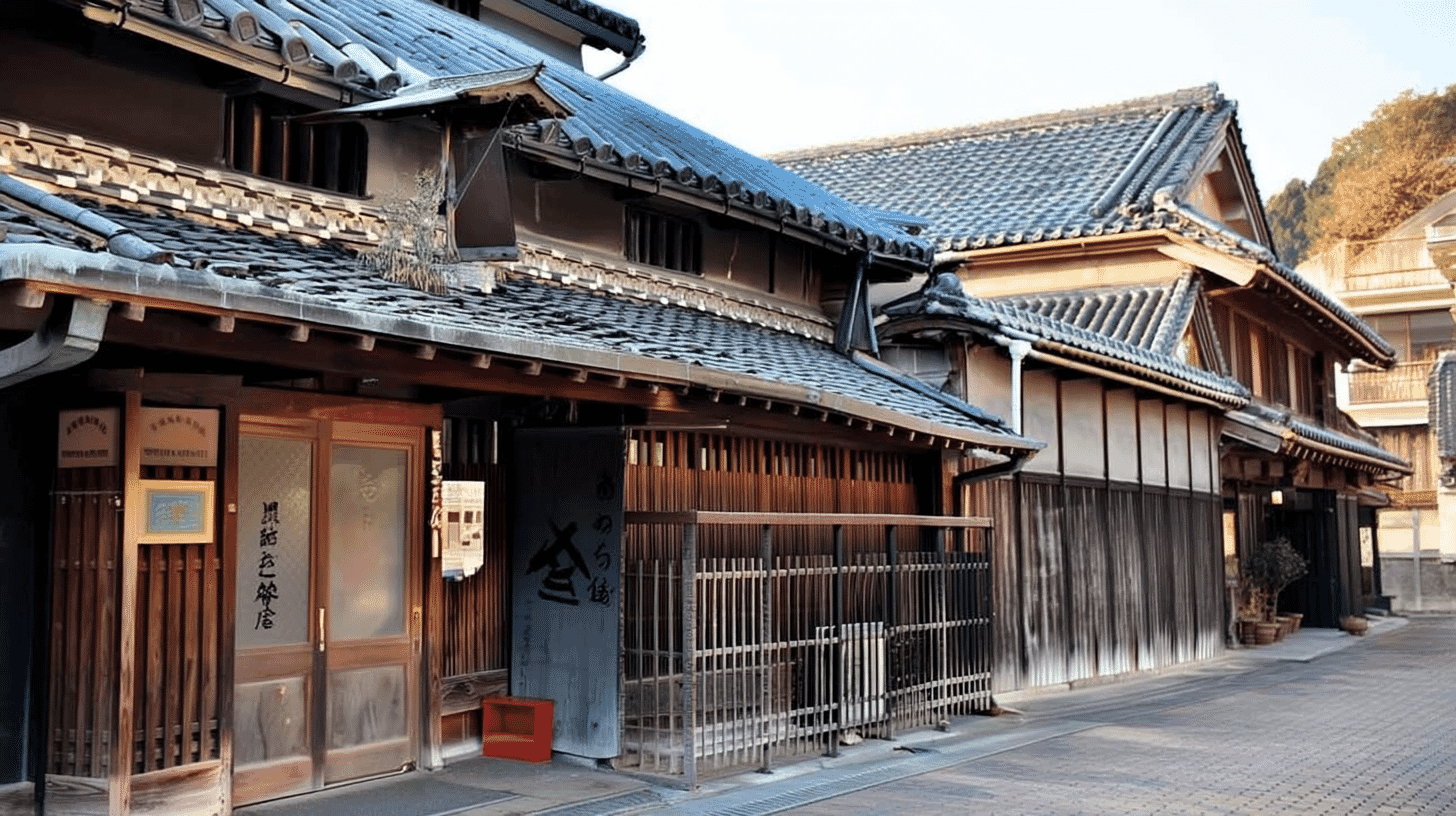
One Outer Wall, a Registered Tangible Cultural Property since 2019
Kuroda Seiemon Shoten Outer Wall (黒田清右衛門商店外塀, Kuroda Seiemon Shoten Sotobei) stands at lots 980 and 1121, 2-chome Honmachi, Miki City, Hyogo Prefecture, a wall of a hardware wholesaler's premises entered on the register of tangible cultural properties on 5 December 2019. It is a registered property rather than a designated one.
The quantity is one building. The owner is the company Kuroda Seiemon Shoten.
The city records it as an earthen wall on the north edge of the plot, closing the gap between the shop and the inner storehouse. An earthen wall is built of clay packed and plastered hard.
A Wall That Closes the Gap Between Shop and Store
Its role is stated as filling the space between two buildings.
The city records the outer wall on the north edge of the plot, closing the gap between the shop and the inner storehouse.
The shop and main house faces the street to the north, and the inner storehouse stands at the north-west corner of the plot. Between them, along the north edge, the outer wall fills the space.
The wall at Ohashi Saryo runs 53 metres round three sides and serves as the outer wall of buildings too.
This one does not enclose the plot but closes the gap between two buildings facing the street.
With the wall in place, the north edge toward the street runs unbroken from the shop to the inner storehouse.
One Wall Among the Three That Form the Street Front
The wall shares with house and store the task of being the face of the property.
The city records that the outer wall, with the shop and main house and the inner storehouse, sets in order the street front of the property. The street front is the face a house turns to the road.
On the shop roof a great saw is set as a sign and the eaves stand in three tiers. Beside it stands the inner storehouse, and the outer wall joins the two.
At the Akagi residence, the front gate and the guard's hut are said to form the front of the house.
Here shop, store and wall together form the street front. A wall, not a building, is counted as one of the three.
Of the 11, only these three stand on the street side; the other stores and the reception wing lie at the back.
The Outer Wall and the Inner Store Side by Side
The words outer and inner in the names stand together on the same north edge.
Outer in the wall's name marks it as facing out from the property; inner in the neighbouring store's name marks it as kept within.
The city records the inner storehouse at the north-west corner of the plot, north of the annex, an earthen store built for goods and now holding household effects and documents.
At Araso, the inner store and the shopfront store are named for whether they are shown or not.
Here the two named outer and inner stand side by side on the same edge facing the street. The outer wall, as its name says, faces out, placed where it screens the inner store from the street.
Built for goods, the inner store now keeps household effects and documents, and the outer wall closes the space in front of it.
Visiting
The wall stands at lots 980 and 1121, 2-chome Honmachi, Miki City, Hyogo Prefecture, owned by the company.
The city gives the dates of the group as the end of the Edo period, the Meiji period, the late Taisho period and 1927, but the date and dimensions of the outer wall alone are not given in the primary sources to hand.
The national online heritage database has no entry for these buildings. This article rests on the record of the city's history museum.
The shop and main house, reception wing, annex, inner storehouse and six other stores on the same property were registered on the same day.
These are the buildings of a working company, so opening and terms follow the owner's arrangements. Check before travelling.
- 📍 Plan Your Visit to Hyogo
- Find tours, activities & transport passes near Kuroda Seiemon Shoten Outer Wall
- [ Himeji Castle & Kobe Night View Cruise ]
Q&A
- When was the wall registered?
- On 5 December 2019, as a registered tangible cultural property. It is registered rather than designated, and the quantity is one building.
- Where is the wall?
- On the north edge of the plot, closing the gap between the shop and the inner storehouse.
- What part does it play?
- With the shop and main house and the inner storehouse, it sets in order the street front of the property.
- When was it built?
- The group dates from the end of the Edo period to 1927, but the date of the wall alone is not given in the primary sources to hand.
- What is Kuroda Seiemon Shoten?
- A merchant house in central Miki that has run a hardware wholesale business for generations; 11 of its buildings were registered on the same day.
Basic Information
| Name | Kuroda Seiemon Shoten Outer Wall (黒田清右衛門商店外塀, Kuroda Seiemon Shoten Sotobei) |
|---|---|
| Location | Lots 980 and 1121, 2-chome Honmachi, Miki City, Hyogo Prefecture |
| Designation | Registered tangible cultural property (structure); registered rather than designated; 11 buildings of the same property were registered on the same day |
| Year Designated | 2019 (5 December), registered |
| Quantity | 1 building |
| Dimensions | An earthen wall on the north edge of the plot, closing the gap between the shop and the inner storehouse. Its own dimensions and date are not given in the primary sources to hand |
| Owner | The company Kuroda Seiemon Shoten |
| Public Access | Opening and terms follow the owner's arrangements |
References
- Miki City History Museum: Kuroda Seiemon Shoten
- https://www.city.miki.lg.jp/site/mikirekishishiryokan/19137.html
- Agency for Cultural Affairs, National Cultural Properties Database
- https://kunishitei.bunka.go.jp/
- Miki City
- https://www.city.miki.lg.jp/
- Hyogo Prefecture: cultural properties
- https://web.pref.hyogo.lg.jp/
Last verified: 2026.09.22
