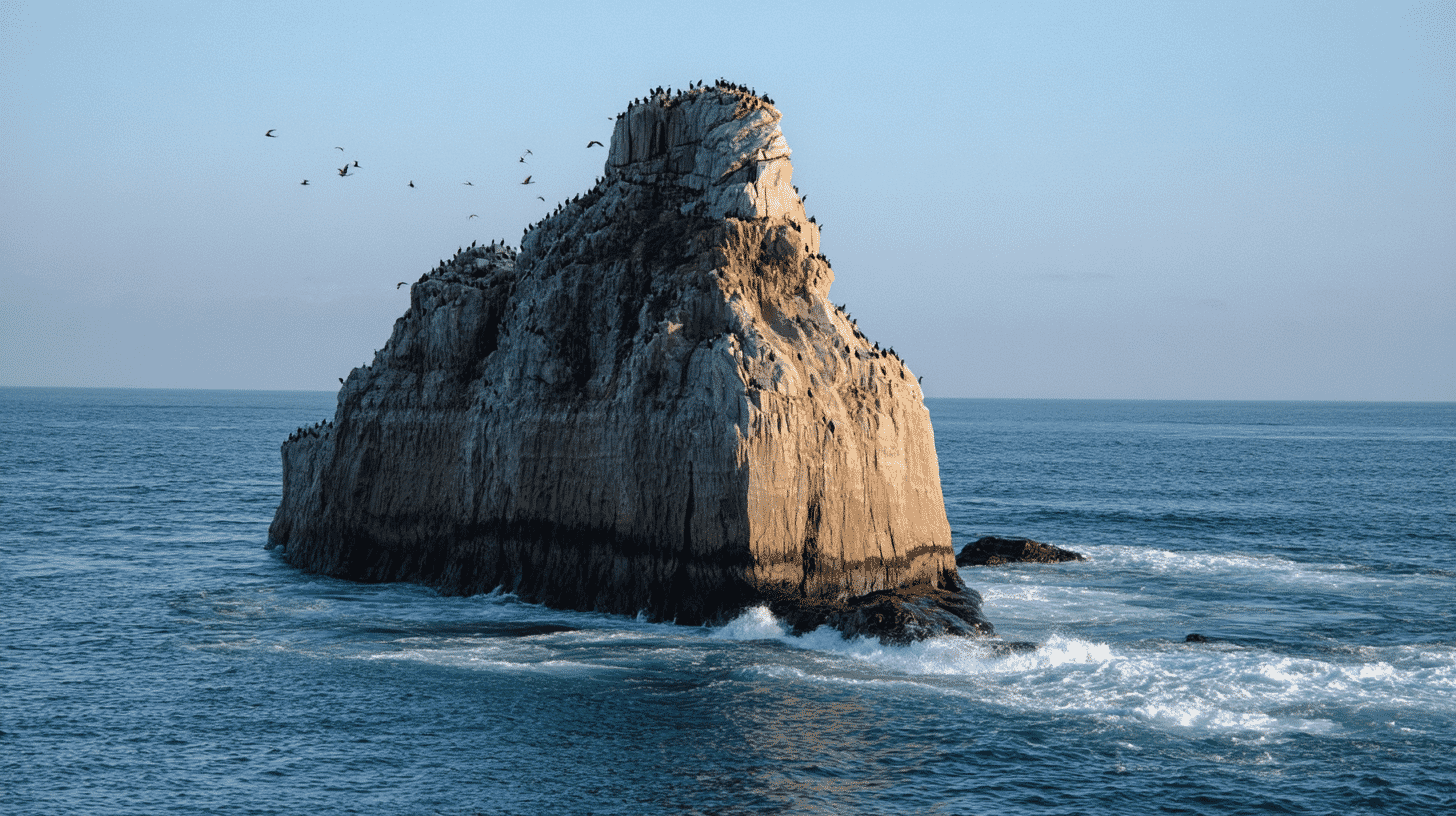
Terushima Cormorant Habitat: Japan's National Natural Monument Where Pacific Seabirds Winter in Fukushima

Discover Terushima Cormorant Habitat, a National Natural Monument in Iwaki, Fukushima Prefecture. This dramatic 31-meter sea cliff hosts Japanese cormorants from October to April, marking the southern limit of Pacific coast breeding. A hidden gem near Onahama's coastal resorts.

Terushima Cormorant Habitat: A National Natural Monument on Japan's Pacific Coast

Rising dramatically from the Pacific Ocean approximately 250 meters off the coast of Iwaki City, Fukushima Prefecture, Terushima (照島) is a solitary sea stack that has served as a winter sanctuary for Japanese cormorants for centuries. This remarkable 31-meter-tall island of tuffaceous sandstone was designated as a National Natural Monument of Japan on February 22, 1945, recognizing its significance as one of the country's most important cormorant habitats along the Pacific coastline.

For travelers seeking authentic encounters with Japan's natural heritage beyond the well-trodden paths, Terushima offers a rare glimpse into the intersection of geological wonder and wildlife conservation. The island represents the southernmost limit of the Pacific coast breeding grounds for Japanese cormorants, making it a site of exceptional ecological importance.

The Japanese Cormorant: A Bird of Cultural Significance

The Japanese cormorant (Phalacrocorax capillatus), known in Japanese as "Umi-u" (ウミウ or 海鵜), is a magnificent seabird belonging to the family Phalacrocoracidae. These birds hold a special place in Japanese culture, as they have been used for centuries in the traditional fishing practice of "Ukai" (cormorant fishing), which remains a celebrated cultural tradition in regions such as Gifu along the Nagara River.

At Terushima, cormorants arrive from northern breeding grounds each year around October to November, seeking the island's sheltered cliffs as their winter residence. They remain until March to April before migrating north again. Historically, the island hosted up to 300 cormorants during peak winter months, though these numbers have declined in recent decades due to natural erosion of the island.

The island also welcomes other seabird species including the Pelagic Cormorant (Hime-u), Red-throated Loon (Abi), and Ancient Murrelet (Umi-suzume), creating a diverse avian community during the winter season. Some cormorants remain year-round as resident birds, with a small number even breeding on the island—an unusual occurrence at this latitude.

Why Terushima Was Designated a Natural Monument

Terushima's designation as a National Natural Monument stems from several factors of scientific and conservation importance. The island qualifies under Category 3 of Japan's Natural Monument criteria: "Animals or animal communities endemic to natural environments."

The surrounding waters are exceptionally rich in marine life. The arrival of cormorants coincides precisely with the migration of Japanese anchovies (Katakuchi-iwashi), their primary food source. The island's cliff faces and rocky ledges provide ideal roosting and nesting sites, while the sheer 31-meter vertical walls protect the birds from terrestrial predators.

Only three locations in Japan have been designated as National Natural Monuments specifically for cormorant habitation or migration, making Terushima part of an exclusive group of protected sites. It represents the Pacific coast's southernmost wintering ground for these remarkable seabirds, serving as a critical rest stop in their annual migration patterns.

Geological Formation and Natural History

Terushima's dramatic silhouette tells a story of geological transformation spanning millions of years. The island is composed of Tertiary-period tuffaceous sandstone, a relatively soft sedimentary rock that has been continuously shaped by the relentless action of Pacific waves.

Originally, Terushima was connected to the mainland as part of the coastal cliffs. Over time, wave erosion carved away the connecting rock, isolating the island and creating the sea stack we observe today. The mainland cliffs nearby share the same geological composition and approximate height, providing visual evidence of this separation process.

A sea cave once existed on the island's southern face, running east to west through the rock. However, this natural tunnel has since collapsed due to ongoing erosion. The island continues to change shape, with significant events including a major western cliff collapse in June 2009 during a high tide event, and dramatic structural changes following the 2011 Great East Japan Earthquake and its aftershocks.

These seismic events transformed the island's profile from its traditional cylindrical shape to a more triangular appearance. Experts estimate the island has shrunk to less than half its original size since the Natural Monument designation in 1945, a sobering reminder of the dynamic nature of coastal geology.

Highlights and Best Viewing Experiences

The optimal season to observe cormorants at Terushima extends from late October through early April, with peak populations typically visible in December. Early morning and late afternoon offer the best viewing opportunities, as cormorants depart at sunrise to feed within a 2-6 kilometer radius of the island and return at dusk to roost.

The most accessible viewing point is from the grounds of Onahama Ocean Hotel & Golf Club, which overlooks the island from its elevated coastal position. Visitors should contact the hotel's front desk before accessing viewing areas on the property. The golf course itself offers spectacular views of Terushima, with several holes providing panoramic perspectives of the island against the Pacific backdrop.

Terushima is also designated as one of the "Onahama Eight Scenic Views," a collection of celebrated landscapes in the region recognized for their natural beauty. The combination of the rugged island, dynamic seabird activity, and expansive ocean vistas creates a memorable experience for nature enthusiasts and photographers alike.

Larger cormorants (Umi-u) typically occupy the island's upper reaches, while the smaller Pelagic Cormorants (Hime-u) prefer the vertical cliff faces, creating an interesting spatial hierarchy among the avian residents.

Conservation Challenges and Preservation Efforts

The ongoing erosion of Terushima presents a significant conservation challenge. As the island's surface area diminishes, so does the available habitat for wintering cormorants. Annual bird counts conducted by the Wild Bird Society of Japan's Iwaki chapter have documented this decline: from 150 birds in 1996 to 102 in 2002, dropping to just 35 in 2009.

Following the 2011 earthquake, morning counts showed as few as 5 cormorants, though evening observations revealed between 30-70 birds using the island. This suggests changing behavioral patterns as birds adapt to the reduced habitat.

The Agency for Cultural Affairs and local authorities have discussed potential protective measures, including the installation of wave-breaking tetrapods around the island's base to slow erosion. However, any intervention must carefully balance conservation goals with the preservation of the natural processes that define this protected site.

Exploring the Surrounding Area

Terushima's location in the Onahama district of Iwaki City places it within easy reach of numerous attractions that can enrich your visit to this region of Fukushima Prefecture.

The Onahama Ocean Hotel & Golf Club offers comprehensive resort amenities including the Terushima Onsen (hot spring), where guests can soak in natural mineral waters while gazing out at the Pacific Ocean. The hotel's seaside golf course has been recognized by Golf Digest's "Best Golf Resorts in Asia" rankings.

Approximately 15 minutes by car, Aquamarine Fukushima stands as one of Japan's premier aquariums, featuring over 800 marine species in innovative exhibits themed around the "meeting point of currents" where the warm Kuroshio and cold Oyashio currents converge off the Fukushima coast. The facility offers hands-on experiences including fishing activities and behind-the-scenes tours.

The Iwaki La La Mew tourist center at Onahama Port provides fresh seafood dining, local souvenir shopping, and harbor cruise departures. Misaki Park, perched on a 46-meter seaside cliff, offers panoramic ocean views from the Iwaki Marine Tower and features walking trails, barbecue facilities, and the Shiomidai observation platform.

For those interested in extending their exploration, the region offers the historic Shioyazaki Lighthouse, Iwaki Yumoto Onsen (one of Japan's oldest hot spring towns), and the iconic Shiramizu Amidado Temple, a National Treasure representing late Heian period Buddhist architecture.

📍 Plan Your Visit to Fukushima
Find tours, activities & transport passes near Terushima Cormorant Habitat
[ Aizu-Wakamatsu Castle & Ouchi-juku Village Tours ]

Q&A

QWhen is the best time to visit Terushima Cormorant Habitat?
AThe optimal viewing period is from late October through early April, with December typically offering the highest cormorant populations. Early morning (around sunrise) and late afternoon (before sunset) provide the best opportunities to observe the birds departing and returning to the island.
QCan visitors land on Terushima Island?
ANo, landing on Terushima is not permitted. The entire island is designated as a National Natural Monument, and access is restricted to protect the cormorant habitat and nesting sites. Visitors can observe the island from the mainland, particularly from the Onahama Ocean Hotel & Golf Club grounds.
QHow do I get to Terushima Cormorant Habitat?
ABy car: Approximately 20 minutes from Iwaki-Nakoso Interchange on the Joban Expressway. By train: Take the JR Joban Line to Izumi Station, then approximately 15 minutes by taxi. Contact Onahama Ocean Hotel & Golf Club before visiting to arrange access to viewing areas.
QWhat other bird species can be observed at Terushima?
AIn addition to the Japanese Cormorant (Umi-u), visitors may spot the Pelagic Cormorant (Hime-u), Red-throated Loon (Abi), and Ancient Murrelet (Umi-suzume). The larger Japanese Cormorants typically occupy the upper portions of the island, while smaller Pelagic Cormorants prefer the vertical cliff faces.
QIs there an admission fee to view the Terushima Cormorant Habitat?
AThere is no admission fee to view Terushima from public areas. However, if you wish to access the best viewing points at Onahama Ocean Hotel & Golf Club, please contact the hotel beforehand. Day visitors may also enjoy the hotel's onsen facilities for a fee, which offers ocean views.

Basic Information

Official Name Terushima Cormorant Habitat (照島ウ生息地)
Designation National Natural Monument of Japan
Date of Designation February 22, 1945 (Showa 20)
Location 260 Ohata, Shimokawa, Izumimachi, Iwaki City, Fukushima Prefecture
Island Height Approximately 31 meters above sea level
Distance from Shore Approximately 250 meters offshore
Geological Composition Tertiary-period tuffaceous sandstone
Primary Species Japanese Cormorant (Phalacrocorax capillatus)
Cormorant Season October/November to March/April
Access by Car Approximately 20 minutes from Iwaki-Nakoso IC (Joban Expressway)
Access by Train JR Joban Line to Izumi Station, then 15 minutes by taxi
Contact Iwaki City Cultural Promotion Division
TEL: 0246-22-7546
Viewing Access Contact Onahama Ocean Hotel & Golf Club before visiting

References

照島ウ生息地 - ふくしまの旅 (Fukushima Tourism Official Site)
https://www.tif.ne.jp/jp/entry/article.html?spot=1236
照島ウ生息地 - Wikipedia
https://ja.wikipedia.org/wiki/照島ウ生息地
いわきの『今むがし』Vol.74『照島』 - いわき市役所
https://www.city.iwaki.lg.jp/www/contents/1499739530823/index.html
福島遺産百選(15)照島とウの生息地 - 福島民友新聞
https://www.minyu-net.com/tourist/f-isan/130115/hyakusen.html
照島温泉 - 小名浜オーシャンホテル&ゴルフクラブ
https://www.accordiahotel.com/onahama/hot-spring/
環境水族館アクアマリンふくしま
https://www.aquamarine.or.jp/

Last verified: 2026.01.29

Nearby heritages