
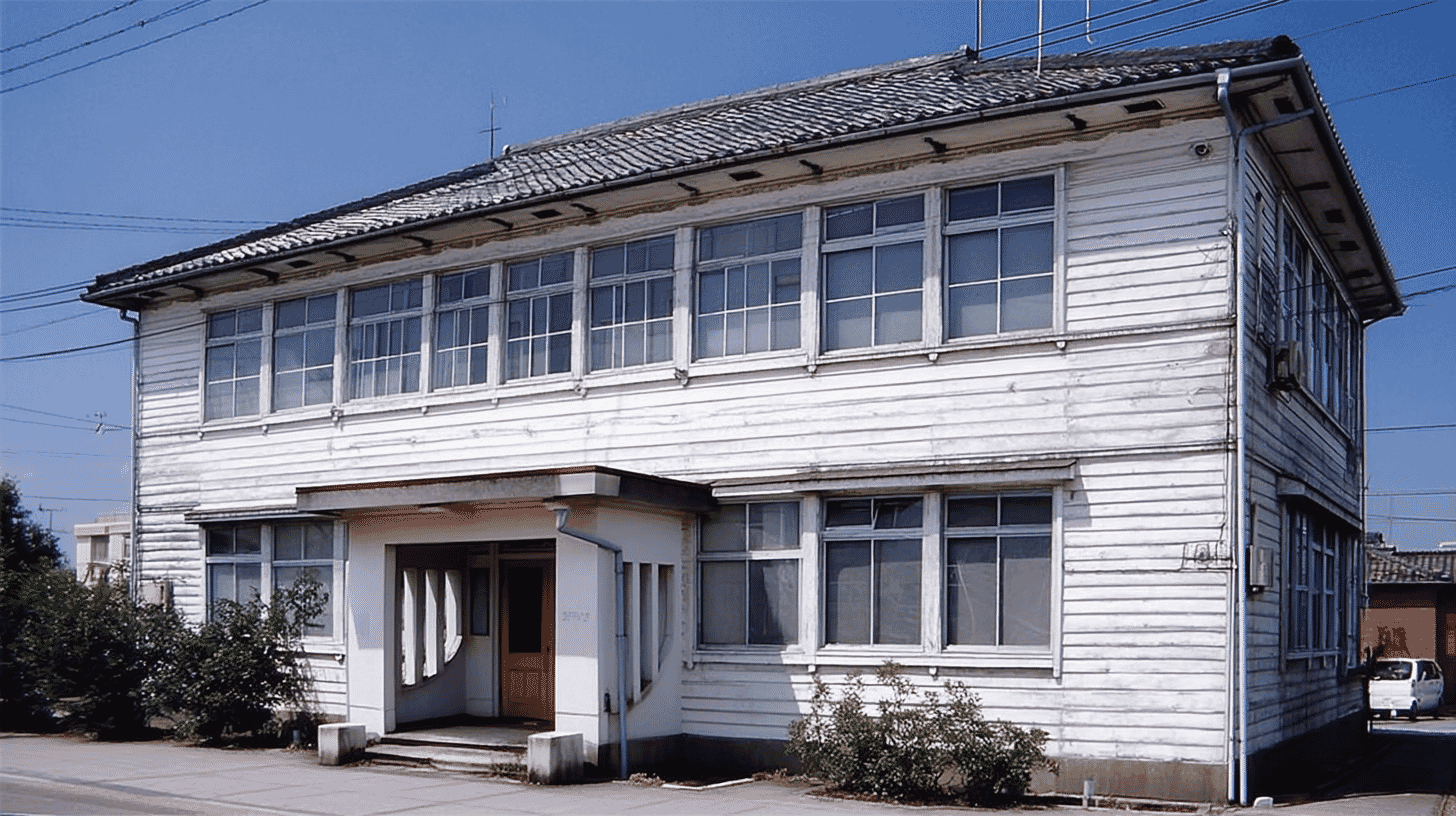
Toita Hall: Where Local History Meets Early Showa Architecture
Nestled along the historic Kanaishi Road in Kanazawa City, Toita Hall (戸板ホール) stands as a remarkable testament to Japan's early Showa period municipal architecture. Originally constructed in 1940 as the Toita Village Office, this charming two-story wooden building has been lovingly preserved and is now designated as a Registered Tangible Cultural Property of Japan.
While Kanazawa is renowned for its Kenrokuen Garden and samurai districts, Toita Hall offers visitors a unique opportunity to experience an often-overlooked aspect of Japanese heritage—the dignified yet unpretentious architecture of rural local government buildings from the pre-war era.
Historical Background of Toita Village
Toita Village was established in 1889 during the Meiji era's municipal reorganization, formed from the merger of 18 smaller settlements in what is now northwestern Kanazawa. The village occupied a strategic position along the Kanaishi Kaido, the vital road connecting Kanazawa Castle with the port town of Kanaishi (now known as Kanaiwa).
This road, also historically called Miyanokoshi Oukan, was constructed in 1616 by Maeda Toshitsune, the third lord of the powerful Kaga Domain. Legend has it that Lord Toshitsune had the road laid out in a perfectly straight line by using bonfires as alignment markers visible from Kanazawa Castle. The road served as a crucial artery for transporting goods from the port to the castle town during the Edo period.
In October 1943, during World War II, Toita Village was incorporated into Kanazawa City. The village office building continued to serve the community, functioning as the Toita Community Center from 1952 until 1985, maintaining its role as a gathering place for local residents.
Architectural Features and Design
Toita Hall exemplifies the distinctive architectural style of Japanese local government buildings from the late Taisho to early Showa periods. The building showcases a thoughtful blend of traditional Japanese construction techniques with Western-influenced design elements.
The structure features a two-story wooden frame with a traditional hipped roof (寄棟造) covered in Japanese kawara tiles. The building has a floor area of 212 square meters and demonstrates the practical yet dignified aesthetic expected of public buildings during this era.
Several architectural elements make Toita Hall particularly noteworthy:
- White Weatherboard Siding (鎧下見板張): The exterior walls are clad in traditional horizontal overlapping boards, providing both weather protection and a clean, formal appearance.
- Mortar Entrance Porch: The front entrance features a distinctive porch with columns and walls finished in white mortar, creating an elegant Western-influenced focal point that contrasts beautifully with the wooden siding.
- Rectangular Windows: Numerous rectangular windows punctuate the facade, providing ample natural light to the interior spaces.
- Rear Lean-to Extension: A traditional Japanese-style lean-to (下屋) extends from the rear of the building, accommodating additional functional spaces.
Why Toita Hall Was Designated a Cultural Property
On April 18, 2008, Toita Hall was officially registered as a Tangible Cultural Property of Japan. This designation recognized the building's significance as a representative example of regional municipal architecture from the pre-war Showa period.
Several factors contributed to this designation:
- Historical Value: As a rare surviving example of a rural village office building, Toita Hall provides tangible evidence of how local government functioned in pre-war Japan.
- Architectural Integrity: Despite serving various purposes over the decades, the building has retained its essential architectural character.
- Cultural Significance: The building represents an important chapter in the history of the Toita district and Kanazawa's westward expansion.
- Successful Preservation: Renovations in 1961 and 2007 were conducted sensitively, with the 2007 restoration notably replacing aluminum window frames with traditional wooden fittings to restore the building's original appearance.
Toita Hall holds the distinction of being the first building in the Toita district to receive cultural property designation, highlighting its importance to local heritage.
Visiting Toita Hall Today
Today, Toita Hall has been adaptively reused as a furniture and interior design shop, demonstrating how historic buildings can find new life while maintaining their architectural heritage. This contemporary use allows visitors to experience the interior spaces while appreciating the building's historical character.
The building faces north onto what is now Ishikawa Prefectural Route 17, the modern successor to the historic Kanaishi Kaido. While the road has been significantly widened since the building's construction, the area still evokes the atmosphere of a bygone era when this route connected Kanazawa's castle town with its vital seaport.
Nearby Attractions and Surrounding Area
Visitors to Toita Hall can combine their trip with exploration of several nearby attractions that illuminate the region's rich history:
- Kanaishi District: The historic port town of Kanaishi (金石) lies to the northwest, where you can explore traditional streetscapes and learn about the area's maritime heritage as a former base for Kitamaebune trading ships.
- Zeniya Gohei Memorial Museum: Located in Kanaishi, this museum commemorates the legendary merchant who operated from this port during the Edo period.
- Ono District: Adjacent to Kanaishi, Ono is famous for its historic soy sauce breweries and offers charming old townscapes with renovated warehouses converted into cafes and shops.
- Kanazawa Port Cruise Terminal: The modern cruise terminal opened in 2020, contrasting with the historic port heritage of the area.
- Kanazawa Station: Just a short distance to the east, the station provides easy access to all of Kanazawa's famous attractions.
- 📍 Plan Your Visit to Ishikawa
- Find tours, activities & transport passes near Toita Hall (former Toita Village Hall)
- [ Kenrokuen Garden & Kanazawa Craft Experiences ]
Q&A
- When was Toita Hall built and what was its original purpose?
- Toita Hall was built in 1940 (Showa 15) and originally served as the Toita Village Office. After Toita Village was incorporated into Kanazawa City in 1943, the building was used as a community center from 1952 to 1985 before being converted for commercial use.
- Can visitors enter Toita Hall?
- Yes, Toita Hall is currently used as a furniture and interior shop, allowing visitors to enter during business hours. This offers a wonderful opportunity to appreciate both the building's historic interior and its new purpose.
- What makes the architecture of Toita Hall special?
- Toita Hall showcases a charming blend of Japanese and Western architectural elements. The white weatherboard siding (yoroishitami) represents traditional Japanese construction, while the mortar-finished entrance porch with columns shows Western influence. This combination was typical of municipal buildings from the late Taisho to early Showa period.
- How do I get to Toita Hall from Kanazawa Station?
- Toita Hall is located along the Kanaishi Kaido (Prefectural Route 17) in Futakuchi-machi, approximately 2-3 kilometers northwest of Kanazawa Station. You can reach it by local bus heading toward Kanaishi or by taxi in about 10 minutes.
- What is the significance of the Kanaishi Road where Toita Hall is located?
- The Kanaishi Kaido (also known as Miyanokoshi Oukan) is a historic road built in 1616 by the third lord of Kaga Domain, Maeda Toshitsune. It connected Kanazawa Castle with the port of Kanaishi and served as a vital trade route during the Edo period. The road was famously laid out in a straight line using bonfire alignment visible from the castle.
Basic Information
| Official Name | Toita Hall (Former Toita Village Office Building) / 戸板ホール(旧戸板村役場庁舎) |
|---|---|
| Cultural Property Status | Registered Tangible Cultural Property of Japan (Registered: April 18, 2008) |
| Year Built | 1940 (Showa 15) |
| Renovations | 1961, 2007 |
| Structure | Two-story wooden building with tiled hip roof |
| Building Area | 212 square meters |
| Location | Futakuchi-machi Ro-17, Kanazawa City, Ishikawa Prefecture, Japan |
| Access | Approximately 2-3 km northwest of JR Kanazawa Station via Prefectural Route 17 (Kanaishi Kaido) |
References
- Cultural Heritage Online - Toita Hall (Agency for Cultural Affairs)
- https://bunka.nii.ac.jp/heritages/detail/183236
- Kanazawa City Toita Community Center Blog
- https://toitakoumi.exblog.jp/8449468
- Wikipedia - Toita Village
- https://ja.wikipedia.org/wiki/%E6%88%B8%E6%9D%BF%E6%9D%91
- Wikipedia - Ishikawa Prefectural Route 17 Kanazawa Port Line
- https://ja.wikipedia.org/wiki/%E7%9F%B3%E5%B7%9D%E7%9C%8C%E9%81%9317%E5%8F%B7%E9%87%91%E6%B2%A2%E6%B8%AF%E7%B7%9A
- Kanazawa City - Municipal Mergers History
- https://www.city.kanazawa.ishikawa.jp/reiki/reiki_honbun/a400RG00000002.html
Last verified: 2026.01.02