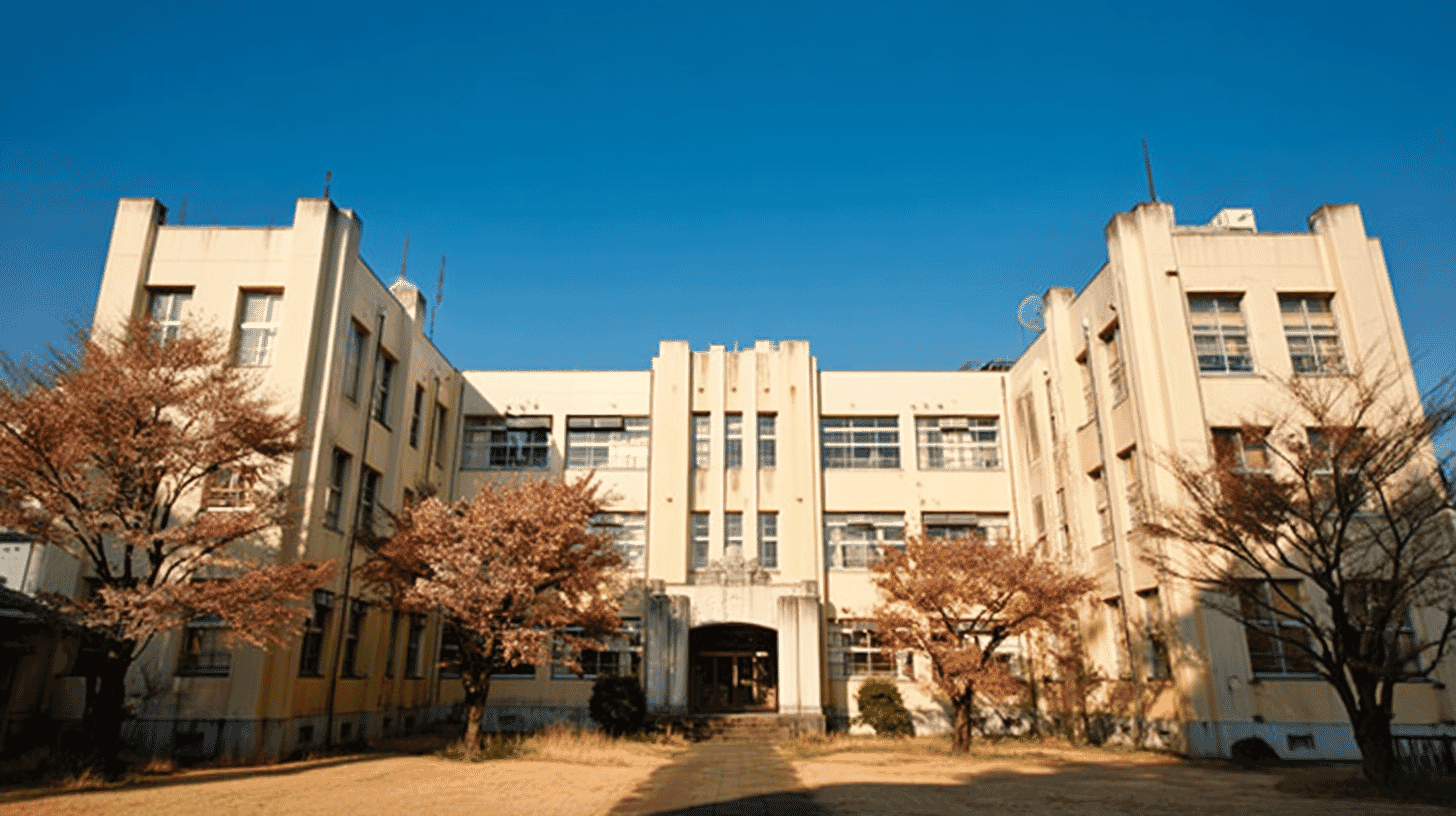
Former Yokohama Technical College Main Building: A Prewar Modernist Gem
Standing quietly in the Gumyoji district of Yokohama, a remarkable three-story building tells the story of Japan's educational ambitions and architectural innovation during the early Showa period. The former Yokohama Technical College Main Building, now serving as the Yokohama National University Faculty of Education Attached Yokohama Junior High School, represents one of the last reinforced concrete school buildings constructed by the Ministry of Education before World War II. Designated as a Registered Tangible Cultural Property in December 2000, this architectural treasure offers visitors a glimpse into Japan's prewar modernist heritage.
A Brief History of Yokohama Technical College
Yokohama Technical College (Yokohama Koto Kogyo Gakko) was established in January 1920 as part of the government's initiative to expand higher education institutions following World War I. The school was founded to nurture engineering talent, initially offering programs in mechanical engineering, applied chemistry, and electrochemistry.
The original campus was devastated by the Great Kanto Earthquake of 1923, which destroyed nearly all of its buildings. Despite pressure from the Ministry of Education to relocate to Nagoya, the school persevered and remained in Yokohama. The reconstruction process spanned several phases, with the main building finally completed in September 1936, with interior work finished in July 1938.
The school was known for its progressive educational philosophy, particularly the "Three Nothings" principle (no examinations, no grading, no punishment) advocated by its first principal, Suzuki Tatsuji. This liberal approach to education created a unique academic environment that fostered creativity and independent thinking.
Following World War II, Yokohama Technical College became the foundation for Yokohama National University's Faculty of Engineering. The main building continued to serve as an engineering faculty campus until 1979, when operations moved to the current Tokiwadai campus. In 1981, the building was repurposed as the Yokohama Junior High School attached to Yokohama National University, where it continues to serve students today.
Why This Building Is a Registered Tangible Cultural Property
The Former Yokohama Technical College Main Building holds significant cultural value for several compelling reasons that led to its designation as a Registered Tangible Cultural Property.
First, it represents the final generation of reinforced concrete school buildings constructed under the direct jurisdiction of the Ministry of Education before the war. This makes it an irreplaceable document of Japan's prewar educational infrastructure and construction standards.
Second, the building demonstrates a masterful fusion of architectural styles. While adopting the Renaissance-style symmetrical form with wings projecting forward on both sides, the exterior design firmly embraces modernist principles. The continuous window sills and lintels create strong horizontal lines that emphasize the building's modern character, while tall vertical windows arranged at the center of the facade add visual interest and rhythm.
Third, the building showcases the high level of construction quality achieved by Japanese architects and engineers during this period. The three-story reinforced concrete structure covers an impressive building area of 1,800 square meters, demonstrating both ambition and technical capability.
Architectural Highlights and Features
The architectural design of the Former Yokohama Technical College Main Building reveals the sophisticated aesthetic sensibilities of early Showa-period institutional architecture. Several key features deserve special attention.
The building's symmetrical plan follows the Renaissance tradition, with two wings extending forward to create a U-shaped courtyard-like entrance. This arrangement conveys both dignity and welcome, appropriate for an institution of higher learning.
The exterior walls are finished with tiles, providing both durability and aesthetic appeal. The continuous bands formed by the window sills and lintels create a distinctive horizontal emphasis that was characteristic of modernist architecture emerging during this period. These elements work together to give the building a streamlined, progressive appearance while maintaining classical proportions.
At the center of the main facade, a series of tall vertical windows creates a dramatic focal point. This arrangement not only provides excellent natural lighting for the interior but also breaks up the horizontal emphasis with elegant vertical counterpoint. The interplay between horizontal and vertical elements demonstrates the designer's sophisticated understanding of architectural composition.
In 2008, the exterior tiles were renewed to preserve the building's appearance, ensuring that future generations can continue to appreciate this architectural heritage.
Visiting the Building
While the building currently serves as an active junior high school, visitors can appreciate its impressive exterior architecture from the surrounding streets. The building is particularly photogenic in the morning light when the tile-clad facade catches the sun's rays.
Please note that as this is an operating educational institution, visitors should be respectful of the students and staff. The interior is generally not accessible to the public, but the exterior can be freely viewed and photographed from public areas.
The best times to visit for photography are early morning or late afternoon when the light creates interesting shadows on the building's textured facade. Spring brings cherry blossoms to the surrounding area, adding natural beauty to complement the architectural elegance.
Nearby Attractions: Gumyoji Temple and Shopping Street
A visit to the Former Yokohama Technical College Main Building can be wonderfully combined with exploration of the surrounding Gumyoji district, one of Yokohama's most historically significant neighborhoods.
Gumyoji Temple (弘明寺), located just a short walk away, is the oldest temple in Yokohama, with origins dating back to 721 CE. The temple's main hall, originally constructed in 1044, houses a magnificent Eleven-Faced Kannon statue (Important Cultural Property) carved from a single piece of Japanese elm wood. The Nio Gate (Niomon) and its guardian figures are designated Yokohama City Cultural Properties. The temple is the 14th station on the Bando Thirty-Three Kannon Pilgrimage, making it an important destination for Buddhist pilgrims.
The Gumyoji Kannon-dori Shopping Street extends from the temple to the subway station, offering a charming glimpse of traditional Japanese shopping culture. This covered arcade features a variety of local shops, restaurants, and confectioneries where visitors can sample local specialties and experience everyday Japanese life.
Gumyoji Park, located nearby, occupies a hillside that was once part of the temple grounds. The observation deck offers panoramic views of Yokohama, including the Landmark Tower and Bay Bridge. In spring, the park and the banks of the Ooka River are famous for their spectacular cherry blossoms.
Getting There
The Former Yokohama Technical College Main Building is conveniently located with excellent public transportation access.
By Yokohama Municipal Subway Blue Line: Take the train toward Shonandai from Yokohama Station (approximately 15 minutes). Exit at Gumyoji Station, and the building is just a 1-minute walk from the station exit.
By Keikyu Main Line: From Yokohama Station, take a local or Airport Express train toward Kurihama/Misakiguchi (approximately 10 minutes). Get off at Gumyoji Station and walk approximately 8 minutes. If coming from Yokosuka direction, transfer to a local train at Kamiooka Station.
The location offers easy connections to other Yokohama attractions, making it simple to combine this visit with other sightseeing activities in the city.
- 📍 Plan Your Visit to Kanagawa
- Find tours, activities & transport passes near Yokohama Junior High School Attached to the Faculty of
- [ Kamakura Buddha Hakone Onsen & Yokohama Tours ]
Q&A
- Can visitors enter the building?
- As the building currently serves as an active junior high school, the interior is generally not accessible to the public. However, visitors can freely view and photograph the impressive exterior architecture from public areas surrounding the building.
- What makes this building architecturally significant?
- The building represents one of the final reinforced concrete school buildings constructed by the Ministry of Education before World War II. It uniquely combines Renaissance-style symmetrical composition with modernist design elements, including horizontal window bands and vertical window arrangements that demonstrate sophisticated architectural thinking of the early Showa period.
- Is there an admission fee to see Gumyoji Temple?
- The temple grounds can be entered free of charge. However, if you wish to enter the main hall and view the Important Cultural Property Eleven-Faced Kannon statue up close, an admission fee of 500 yen is required.
- What is the best season to visit?
- The area is beautiful year-round, but spring (late March to early April) is particularly recommended when cherry blossoms bloom along the Ooka River and in Gumyoji Park. The combination of historic architecture and sakura creates wonderful photo opportunities.
- How much time should I plan for visiting this area?
- Allow approximately 2-3 hours to fully appreciate the former Technical College building, Gumyoji Temple, the shopping street, and Gumyoji Park. If you enjoy leisurely exploration and want to try local food, plan for half a day.
Basic Information
| Official Name | Yokohama National University Faculty of Education Attached Yokohama Junior High School Building (Former Yokohama Technical College Main Building) |
|---|---|
| Japanese Name | 横浜国立大学教育人間科学部附属横浜中学校校舎(旧横浜高等工業学校本館) |
| Cultural Property Status | Registered Tangible Cultural Property (Building), registered December 4, 2000 |
| Construction Period | Early Showa Period (completed 1936, interior finished 1938) |
| Structure | 3-story reinforced concrete building, building area 1,800㎡ |
| Architectural Style | Renaissance-influenced form with Modernist design elements |
| Owner | Yokohama National University |
| Address | 2-31-3 Ooka, Minami-ku, Yokohama, Kanagawa Prefecture |
| Access | 1-minute walk from Gumyoji Station (Yokohama Municipal Subway Blue Line); 8-minute walk from Gumyoji Station (Keikyu Main Line) |
References
- Cultural Heritage Online - Former Yokohama Technical College Main Building
- https://bunka.nii.ac.jp/heritages/detail/139291
- National Designated Cultural Properties Database (Agency for Cultural Affairs)
- https://kunishitei.bunka.go.jp/heritage/detail/101/00002021
- Yokohama Technical College - Wikipedia (Japanese)
- https://ja.wikipedia.org/wiki/横浜高等工業学校
- Yokohama National University Faculty of Education Attached Yokohama Junior High School - Wikipedia (Japanese)
- https://ja.wikipedia.org/wiki/横浜国立大学教育学部附属横浜中学校
- Gumyoji Temple Official Website
- https://www.gumyoji.jp/
- Yokohama National University Faculty of Education Attached Yokohama Junior High School Official Website
- https://yokochu.ynu.ac.jp/
Last verified: 2026.01.28
Nearby heritages
- Sandondai Ruins
- Okamuracho, Isogo Ward, Yokohama City
- Former Matsuno Family Residence Main Building
- 180 Takigashira 3-chome, Isogo Ward, Yokohama City, Kanagawa Prefecture
- Former Matsuno Family Residence Front Gate and Wall
- 180-1, Takigashira 3-chome, Isogo-ku, Yokohama City, Kanagawa Prefecture
- Komyo-Ji Temple Shoin
- 66 Kodai, Minami-ku, Yokohama City, Kanagawa Prefecture
- Miyashita Family Main House
- 481 Mori 2-chome, Isogo Ward, Yokohama City, Kanagawa Prefecture
- Former Kawamoto Family Residence Front Gate and Stone Wall
- 1-14-2 Nishitobecho, Nishi-ku, Yokohama City, Kanagawa Prefecture, and other locations
- Built into the Former Kawamoto Family Residence
- 1-13 Nishitobecho, Nishi-ku, Yokohama City, Kanagawa Prefecture
- Former Kawamoto Family Residence Main Building
- 1-13 Nishitobecho, Nishi-ku, Yokohama City, Kanagawa Prefecture
- Former Uchida Family Residence (formerly Located in
- 16 Yamate-cho, Naka-ku, Yokohama City, Kanagawa Prefecture
- Yokohama Park
- Yokohama Park, Naka Ward, Yokohama City