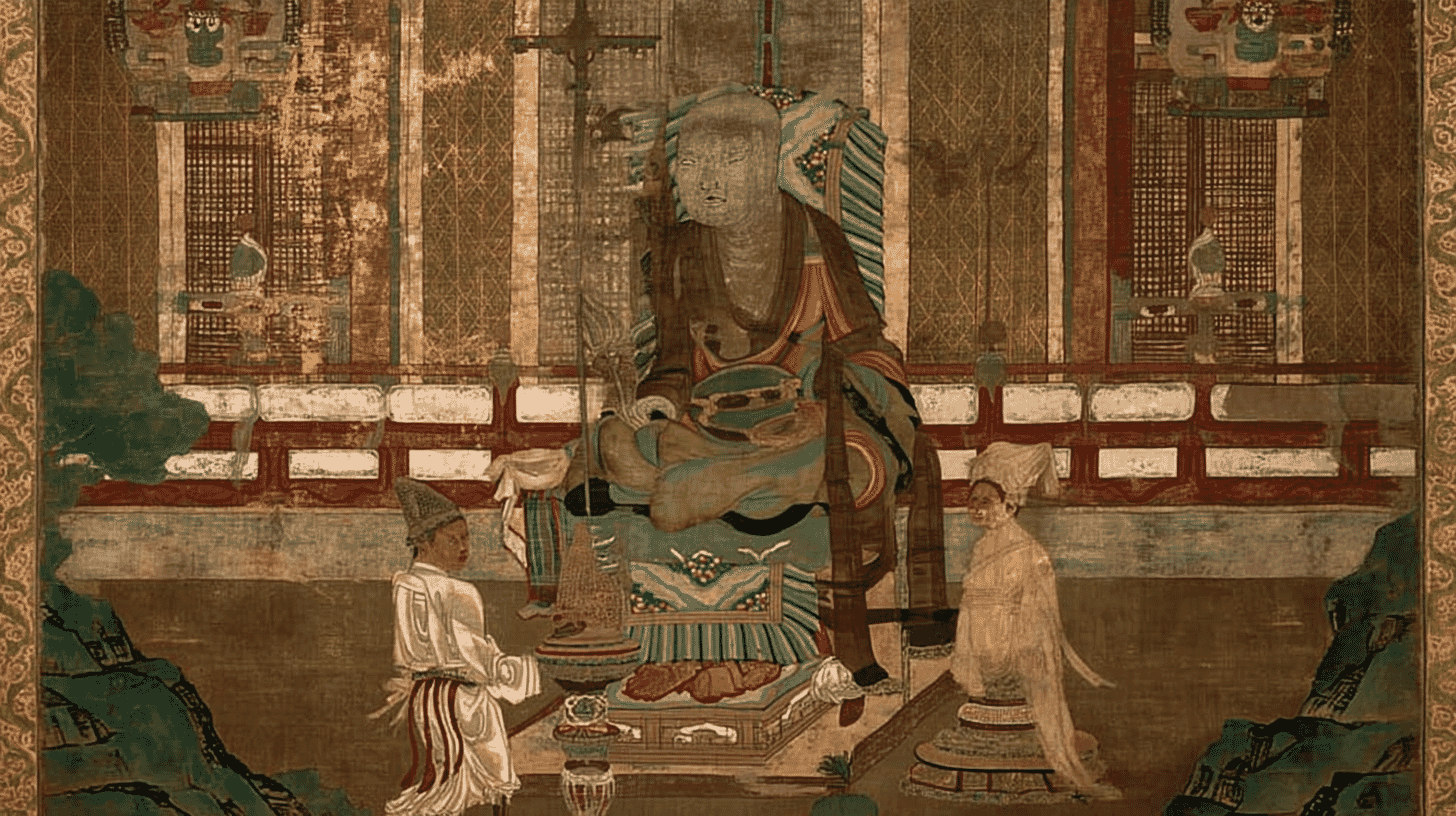
Sixteen Arhats Paintings at Seiryoji Temple: A Northern Song Masterpiece Designated as a National Treasure of Japan

Discover the National Treasure "Sixteen Arhats" paintings at Seiryoji Temple in Kyoto. These rare Northern Song Chinese Buddhist paintings are the only surviving Chinese examples in Japan and among the oldest arhat paintings in the world.

Sixteen Arhats Paintings at Seiryoji Temple: A Northern Song Masterpiece Designated as a National Treasure of Japan

Hidden within the vaults of Japan's most prestigious national museums lies a set of sixteen remarkable silk paintings that bridge the spiritual worlds of Song-dynasty China and Heian-period Japan. The Sixteen Arhats (絹本著色十六羅漢像, Kenpon Chakushoku Jūroku Rakan-zō), owned by Seiryoji Temple in Kyoto's scenic Saga-Arashiyama district, represent one of the most significant Buddhist art treasures in the world. Created during the Northern Song dynasty (960–1127), these paintings are the sole surviving Chinese examples of Sixteen Arhat paintings preserved in Japan, and they rank among the oldest such works in existence anywhere.

What Are the Sixteen Arhats?

The term "arhat" (羅漢, rakan) is an abbreviation of "arahan" (阿羅漢), derived from the Sanskrit word meaning "one worthy of respect." In Buddhist tradition, an arhat is a person who has attained enlightenment through rigorous spiritual practice. The Sixteen Arhats specifically refer to sixteen of Shakyamuni Buddha's most distinguished disciples, each revered for possessing a particular spiritual excellence. These sixteen holy figures were entrusted by the Buddha to remain in the world even after his passing, protecting the dharma (Buddhist teachings) and guiding sentient beings until the arrival of Maitreya, the future Buddha. Some of the Sixteen Arhats overlap with the famous Ten Great Disciples of the Buddha, making them central figures in Buddhist iconography across East Asia.

Arhat worship flourished particularly in China, where their images were depicted in paintings and sculptures from the Southern and Northern Dynasties period onward. Over the centuries, the iconographic tradition evolved: early depictions showed the arhats as dignified monks in serene settings, while later interpretations, especially those popular in medieval Japan, often emphasized fantastical and even grotesque features. The Seiryoji paintings stand out precisely because they preserve the earlier, more restrained and elegant style.

The Journey from Song China to Japan: The Legacy of the Monk Chōnen

The story of how these extraordinary paintings came to Japan is inseparable from the remarkable life of the monk Chōnen (奝然, 938–1016). A scholar-monk affiliated with Todaiji Temple in Nara, Chōnen traveled to Song-dynasty China in 983 with the burning ambition to bring the true image of the Buddha back to Japan. During his sojourn, he visited the sacred Buddhist sites of Mount Wutai (五台山) and the Song capital of Kaifeng, where he encountered the famed Udayana Buddha statue — a legendary image said to have been carved during the Buddha's own lifetime.

Deeply moved, Chōnen commissioned a faithful replica of this sacred statue in 985 at the Kaiyuan Temple in Taizhou, and in 987, he returned to Japan bearing not only this extraordinary sculpture — which would become the principal image (honzon) of Seiryoji Temple and itself a designated National Treasure — but also a collection of precious Buddhist texts, paintings, and artifacts. Among these treasures were the Sixteen Arhat paintings, along with a now-lost image of Mañjuśrī from Mount Wutai and the first block-printed edition of the complete Buddhist canon from Sichuan province.

The historical record of this momentous journey is documented in the Shōyūki (小右記), the diary of the Heian-period courtier Fujiwara no Sanesuke, confirming the arrival of these paintings in Japan over a thousand years ago.

Why Were These Paintings Designated a National Treasure?

The Sixteen Arhat paintings of Seiryoji were designated a National Treasure of Japan on February 2, 1955, in recognition of their exceptional historical, artistic, and cultural significance. Several factors contributed to this prestigious designation.

First, these are the only surviving Chinese-origin Sixteen Arhat paintings preserved in Japan. While numerous later copies and interpretations exist, no other original Chinese example from this period has survived the centuries of warfare, fire, and natural disaster that have claimed so many of East Asia's artistic treasures.

Second, they are among the oldest extant Sixteen Arhat paintings in the world. The set of sixteen hanging scrolls, each depicting a single arhat, provides an invaluable window into the artistic and religious sensibilities of the Northern Song period.

Third, their artistic qualities distinguish them from later arhat depictions. While medieval Japanese arhat paintings often emphasized dramatic, grotesque, or fantastical elements, these paintings present the holy figures with restrained dignity, employing a subdued palette dominated by darker tones that is characteristic of Northern Song aesthetic sensibility. This sober elegance marks them as masterpieces of their era.

Additionally, the provenance of these paintings — brought directly from Song China by the monk Chōnen alongside the celebrated Seiryoji Shakyamuni statue — connects them to one of the most significant episodes of cultural exchange between China and Japan, adding immense historical value to their already considerable artistic merit.

Artistic Features and Highlights

Each of the sixteen hanging scrolls depicts a single arhat, measuring approximately 95 to 97 centimeters in height and 51 to 52 centimeters in width. Painted on silk using mineral pigments, these works showcase the refined painting techniques of Northern Song Buddhist art. The figures are rendered with calm, graceful expressions, seated or standing amid scenes of temple architecture, natural landscapes, and ritual settings. Attendant monks and celestial beings accompany the arhats in compositions that suggest narratives from Buddhist scripture.

One of the most distinctive characteristics of these paintings is their color palette. In contrast to the bright, vivid colors found in many later Buddhist paintings, these works employ a deliberately restrained range of darker hues. This muted tonality creates an atmosphere of deep contemplation and spiritual gravity that is entirely in keeping with the Northern Song aesthetic ideal.

The depiction of the arhats themselves is notably dignified and human, free from the exaggerated or fantastical physiognomy that became popular in later Chinese and Japanese arhat painting traditions. The figures appear as wise, compassionate monks rather than supernatural beings, reflecting an earlier iconographic tradition rooted in reverence for the historical disciples of the Buddha.

Art historians have noted that the architectural elements, trees, and interior furnishings depicted in the paintings suggest the existence of even older prototypes from the Tang dynasty, indicating that the compositions may preserve visual traditions stretching back several centuries before the paintings themselves were created. This makes the set an invaluable resource for understanding the evolution of Buddhist pictorial art across multiple centuries of Chinese civilization.

Where and How to View the Paintings

Because of their extraordinary rarity and fragile condition, the Sixteen Arhat paintings are not displayed at Seiryoji Temple itself, even during the temple's spring and autumn Treasure Hall (Reihōkan) special exhibitions. Instead, the sixteen scrolls are divided between two of Japan's greatest national museums: eight scrolls are entrusted to the Tokyo National Museum, and eight to the Kyoto National Museum.

The paintings are periodically exhibited at these museums, typically a few scrolls at a time, during special exhibitions or as part of rotating displays of their Buddhist painting collections. It is rare for all sixteen scrolls to be displayed simultaneously, making each exhibition opportunity a special event for devotees of Buddhist art.

Recent and upcoming exhibition opportunities have included special shows at the Ryukoku Museum in Kyoto, the Nezu Museum in Tokyo, and the major exhibition "Song and Yuan Buddhist Paintings" (宋元仏画) scheduled at the Kyoto National Museum. Art enthusiasts are advised to check the exhibition schedules of both national museums regularly for opportunities to view these exceptional works.

Seiryoji Temple: Home of the Sixteen Arhats

Seiryoji Temple (清凉寺), affectionately known as Saga Shakadō (嵯峨釈迦堂), is a Jodo (Pure Land) Buddhist temple located in the Saga-Arashiyama area of Kyoto's Ukyō Ward. Its formal mountain name is Godaizan (五台山), chosen by the founder Chōnen in honor of Mount Wutai in China.

The temple's history intertwines with that of an earlier institution called Seikaji (棲霞寺), which was established on the site of a villa belonging to Minamoto no Tōru (源融, 822–895), a prince of the imperial blood and son of Emperor Saga. Minamoto no Tōru is widely believed to have been the model for the radiant protagonist Hikaru Genji in Murasaki Shikibu's masterpiece, The Tale of Genji. The Amida Trinity (National Treasure) preserved at the temple was created as a memorial to Minamoto no Tōru, adding another layer of literary and historical significance to this remarkable site.

When Chōnen brought his treasures back from Song China, he originally planned to build a grand temple called "Dai-Seiryōji" at the foot of Mount Atago, envisioning it as a Japanese counterpart to Mount Wutai. However, opposition from the powerful Enryakuji temple on Mount Hiei prevented this ambition from being realized. After Chōnen's death in 1016, his disciple Jōsan (盛算) enshrined the Shakyamuni statue in the existing Shakadō hall of Seikaji, transforming the site into what is now known as Seiryoji Temple.

The present main hall (hondō) was reconstructed in 1701 through the patronage of Keishōin, mother of the fifth Tokugawa shogun Tsunayoshi, with the financial support of the wealthy merchant Sumitomo Kichizaemon. The Niōmon (entrance gate) dates from the mid-Edo period and houses Muromachi-era guardian king statues on its lower level and arhat statues on its upper level.

Surrounding Area and Nearby Attractions

Seiryoji Temple sits in the heart of the Saga-Arashiyama district, one of Kyoto's most beloved scenic areas. Visitors can easily combine a visit to the temple with exploration of numerous nearby cultural sites and natural attractions.

The famous Arashiyama Bamboo Grove is a short walk away, as is the Togetsukyo Bridge spanning the Ōi River with its backdrop of forested mountains. Tenryuji Temple, a UNESCO World Heritage Site renowned for its magnificent Zen garden, is another close neighbor. Walking northward through the Sagano district, visitors encounter Jōjakkōji Temple, perched on a hillside with stunning autumn foliage views, and the moss-covered Giōji Temple, a small thatched-roof retreat steeped in poignant historical legend.

For those interested in further cultural exploration, nearby Daikakuji Temple (a former imperial villa with its expansive Osawa Pond) and the atmospheric Adashino Nenbutsuji Temple (with its thousands of stone Buddhist figures) offer deeply moving experiences of Japanese spiritual culture.

Within Seiryoji Temple itself, visitors should not miss the Treasure Hall (Reihōkan), open during spring (April–May) and autumn (October–November), which houses the magnificent Amida Trinity (National Treasure), the Ten Great Disciples statues (Important Cultural Properties), and other remarkable Buddhist art. The temple's garden, attributed to the great garden designer Kobori Enshū, is particularly beautiful during the autumn maple season.

📍 Plan Your Visit to Kyoto
Find tours, activities & transport passes near 16 Arhats in Color on Silk
[ Kinkakuji Fushimi Inari & Kimono Rental ]

Q&A

QCan I see the Sixteen Arhat paintings at Seiryoji Temple?
AThe paintings are not displayed at the temple itself. They are divided between the Tokyo National Museum (8 scrolls) and the Kyoto National Museum (8 scrolls), where they are shown periodically during special exhibitions. Check each museum's exhibition schedule for upcoming viewing opportunities.
QWhat makes these paintings different from other arhat paintings?
AThese Northern Song Chinese paintings are distinguished by their restrained, dignified depictions of the arhats and their use of darker, subdued tones. Unlike later arhat paintings that emphasized fantastical or grotesque features, these works present the holy figures with calm, human-like dignity. They are also the only surviving Chinese Sixteen Arhat paintings preserved in Japan.
QHow do I get to Seiryoji Temple?
AFrom Kyoto Station, take the JR Sagano Line to Saga-Arashiyama Station (about 16 minutes), then walk approximately 10–15 minutes. Alternatively, take the Keifuku (Randen) Line to Arashiyama Station and walk about 15 minutes, or take City Bus or Kyoto Bus to "Saga Shakadō-mae" stop and walk 2–3 minutes.
QWhen is the best time to visit Seiryoji Temple?
AThe temple's Treasure Hall (Reihōkan) holds special exhibitions in spring (April–May) and autumn (October–November), when National Treasure statues and Important Cultural Properties are on display. Autumn is particularly beautiful for enjoying the temple's maple garden. The main hall is open year-round, and the principal Shakyamuni Buddha statue is specially displayed on the 8th of each month and during April–May and October–November.
QWho was the monk Chōnen and why is he important?
AChōnen (938–1016) was a scholarly monk from Todaiji Temple in Nara who traveled to Song-dynasty China in 983. He brought back the famed Seiryoji Shakyamuni statue (National Treasure), the Sixteen Arhat paintings (National Treasure), and other precious Buddhist artifacts. His journey represents one of the most important cultural exchanges between China and Japan, and he is regarded as the founder of Seiryoji Temple.

Basic Information

Designated Name 絹本著色十六羅漢像 (Kenpon Chakushoku Jūroku Rakan-zō / Sixteen Arhats, Color on Silk)
Category Painting (National Treasure)
Number of Works 16 hanging scrolls
Origin China, Northern Song dynasty (960–1127)
Medium Color on silk (kenpon chakushoku)
Owner Seiryoji Temple (清凉寺), Kyoto
Current Location 8 scrolls at Tokyo National Museum; 8 scrolls at Kyoto National Museum (on deposit)
National Treasure Designation Date February 2, 1955
Designation Number 0114-00
Temple Name Seiryoji Temple (清凉寺 / Saga Shakadō)
Temple Sect Jodo (Pure Land) Buddhism
Temple Address 46 Saga Shakadō Fujinoki-chō, Ukyō-ku, Kyoto 616-8447, Japan
Temple Hours 9:00–16:00 (until 17:00 in April, May, October, November)
Admission Grounds: Free; Main Hall: 500 yen; Main Hall + Treasure Hall (during special exhibitions): 900 yen
Access 10–15 min walk from JR Saga-Arashiyama Station; 2–3 min walk from "Saga Shakadō-mae" bus stop
Official Website http://seiryoji.or.jp/

References

絹本著色十六羅漢像 - 文化遺産オンライン
https://bunka.nii.ac.jp/heritages/detail/125517
国宝-絵画|十六羅漢像[清凉寺/京都] - WANDER 国宝
https://wanderkokuho.com/201-00120/
e国宝 - 十六羅漢像 (National Institutes for Cultural Heritage)
https://emuseum.nich.go.jp/detail?&content_base_id=100157
清凉寺のご紹介 - 清凉寺(嵯峨釈迦堂)公式サイト
http://seiryoji.or.jp/introduce.html
清凉寺 - Wikipedia
https://ja.wikipedia.org/wiki/清凉寺
Seiryō-ji - Wikipedia (English)
https://en.wikipedia.org/wiki/Seiryō-ji
中国の羅漢図 - Kyoto National Museum
https://www.kyohaku.go.jp/old/jp/theme/floor2_5/f2_5_koremade/cyugoku_20150707.html
National Treasure Gallery: Sixteen Arhats - Tokyo National Museum
https://www.tnm.jp/modules/r_exhibition/index.php?controller=item&id=4685&lang=en
霊宝館の特別公開【清凉寺】- 京都観光Navi
https://ja.kyoto.travel/event/single.php?event_id=4594

Last verified: 2026.02.08