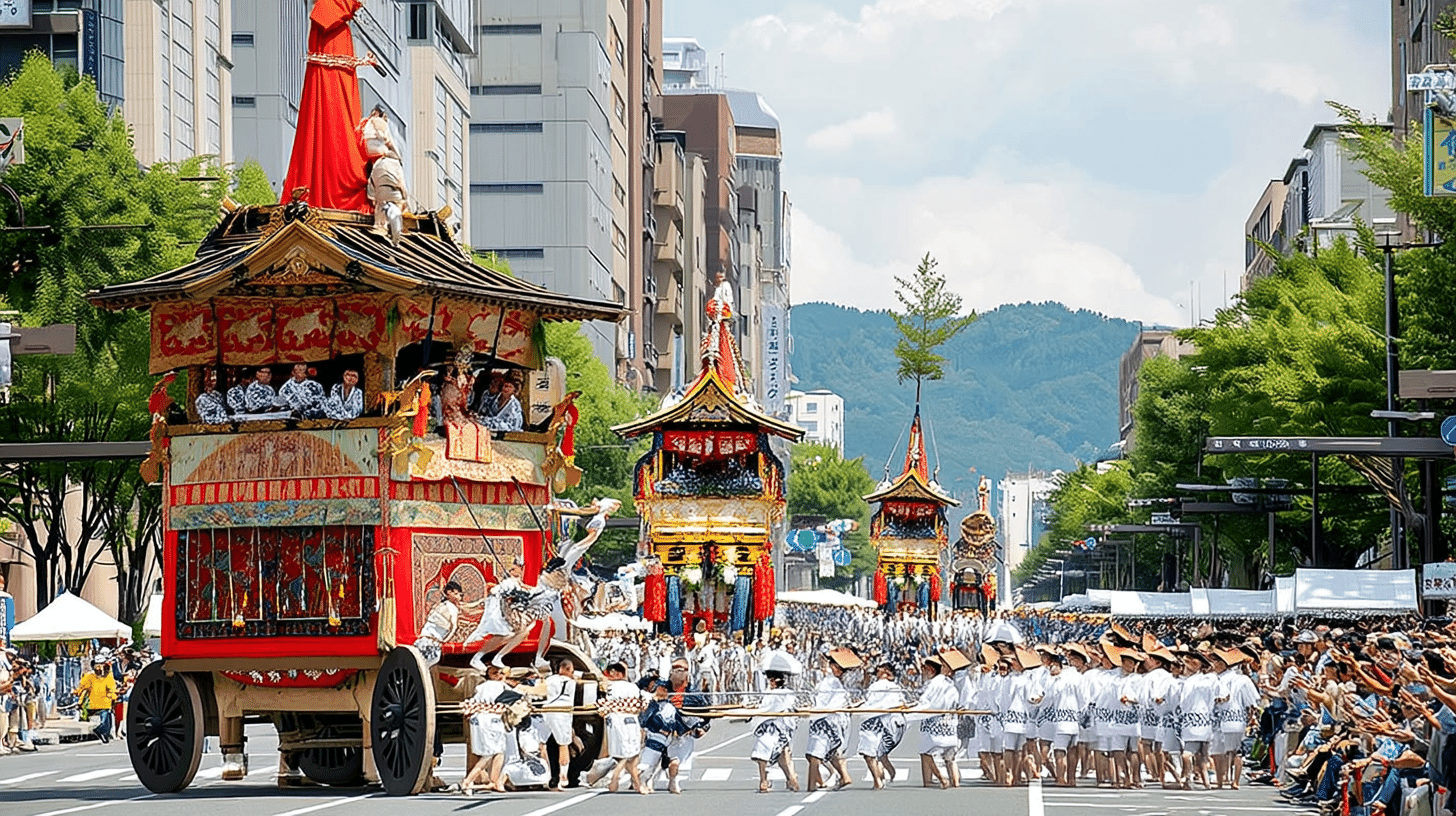
Gion Matsuri: Kyoto's Magnificent 1,100-Year-Old Festival at Yasaka Shrine
Every July, the ancient city of Kyoto transforms into a stage for one of the most extraordinary cultural celebrations on Earth. The Gion Matsuri (祇園祭), the grand festival of Yasaka Shrine, fills the entire month with sacred rituals, breathtaking processions of towering floats, enchanting traditional music, and an atmosphere that bridges over a millennium of unbroken tradition with the vibrant energy of modern Japan. Recognized as a UNESCO Intangible Cultural Heritage, this festival is not merely an event to watch—it is a living, breathing tradition that invites you to feel the very heartbeat of Kyoto.
What Is the Gion Matsuri?
The Gion Matsuri is the annual festival of Yasaka Shrine (八坂神社), situated in Kyoto's historic Gion district. Spanning the entire month of July—from the 1st through the 31st—it encompasses dozens of ceremonies, rituals, and public events. At its heart are the two grand Yamaboko Junkō (山鉾巡行) processions on July 17 and July 24, in which magnificent floats known as yamaboko parade through Kyoto's main avenues. These floats, some reaching heights of 25 meters and weighing up to 12 tons, are often called "moving museums" for the priceless tapestries, sculptures, and decorative arts they carry—many of which are centuries old and include textiles imported from as far as Persia, India, and Europe along the ancient Silk Road.
The Gion Matsuri is counted among Japan's Three Great Festivals (日本三大祭), alongside Tokyo's Kanda Matsuri and Osaka's Tenjin Matsuri. It attracts well over a million visitors each year, making it one of the most attended cultural events in all of Asia.
The Origins and History of the Gion Matsuri
The roots of the Gion Matsuri reach back to the year 869 CE, during the reign of Emperor Seiwa. At that time, a devastating plague swept through the capital, and the people believed it to be the work of vengeful spirits. To appease these spirits and purify the city, the Emperor ordered a grand ritual called a goryō-e (御霊会) at the imperial garden of Shinsen-en. Sixty-six decorated halberds (hoko)—one representing each province of Japan—were erected, and portable shrines (mikoshi) from what was then known as the Gion Shrine were carried through the streets in a solemn procession of purification.
This ritual was initially repeated only when epidemics occurred, but by the year 970, it had become an annual event. Over the following centuries, the halberds evolved into the elaborate floats we see today. During the Muromachi period (14th–16th century), the merchant communities of Kyoto began competing to create ever more splendid floats, adorning them with exquisite fabrics, metalwork, and wood carvings. Even the devastation of the Ōnin War (1467–1477), which laid waste to much of central Kyoto, could only temporarily halt the festival—it was revived by the townspeople within decades, a testament to its deep significance in the cultural life of the city.
In 2019, the Gion Matsuri celebrated its 1,150th anniversary, and in recent years the tradition has continued to evolve. The Ato-matsuri (rear festival) was restored in 2014 after a 49-year absence, and in 2022, the Taka-yama float returned to the procession after approximately 200 years of dormancy.
Why Is It Designated as a Cultural Property?
The Gion Matsuri holds multiple layers of cultural designation that reflect its extraordinary value. In 1962, the yamaboko floats themselves were designated as Important Tangible Folk Cultural Properties (重要有形民俗文化財) of Japan. In 1979, the Yamaboko Junkō rituals and ceremonies were further designated as Important Intangible Folk Cultural Properties (重要無形民俗文化財). Most significantly, in 2009, the Yamaboko float processions of the Kyoto Gion Festival were inscribed on UNESCO's Representative List of the Intangible Cultural Heritage of Humanity.
The festival earned these designations for several compelling reasons. First, it represents an unbroken tradition of over 1,100 years—a remarkable feat of cultural continuity in which each generation of Kyoto citizens has faithfully maintained and transmitted the knowledge, skills, and rituals required to sustain the festival. Second, the yamaboko floats constitute an unparalleled collection of decorative arts, with individual floats serving as repositories for centuries-old textiles, lacquerwork, metalwork, and carvings sourced from both Japan and abroad. Third, the construction techniques themselves—particularly the "nawa-garami" method of assembling massive structures using only rope without a single nail—represent a living tradition of extraordinary craftsmanship. Finally, the festival has profoundly influenced Gion and Tennō festivals throughout Japan, serving as a cultural wellspring for communities across the nation.
Highlights and Must-See Events
Yamaboko Junkō — The Grand Float Processions
The undisputed highlight of the Gion Matsuri is the Yamaboko Junkō, held on two separate days. The Saki-matsuri (前祭, "preceding festival") procession takes place on July 17, featuring 23 yamaboko floats. The Ato-matsuri (後祭, "following festival") procession occurs on July 24, with an additional 11 floats. The floats are broadly divided into two types: the towering hoko, which recall the original halberds of the purification ritual and can stand over 25 meters tall, and the smaller yama, which carry life-sized figures of deities, bodhisattvas, and historical personages. One of the most thrilling moments of the procession is the tsuji-mawashi, in which crews use bamboo strips laid under the massive wooden wheels to execute dramatic 90-degree turns at major intersections—a maneuver that requires extraordinary teamwork and precision.
Yoiyama — The Enchanting Eve Festivals
The three evenings preceding each procession day—known as yoiyoiyoiyama, yoiyoiyama, and yoiyama—are magical in their own right. As dusk falls, paper lanterns (komogata chōchin) are lit on the assembled floats, casting a warm, golden glow over the narrow streets. The haunting melodies of the Gion-bayashi (祇園囃子), played on flutes, drums, and gongs by musicians seated atop the floats, drift through the evening air. Streets in central Kyoto are closed to vehicular traffic, and food stalls line the avenues offering yakitori, takoyaki, and other festival delicacies. Some private residences in the float districts open their entrance halls to display family heirlooms—a custom known as the Byōbu Matsuri (屏風祭, Folding Screen Festival).
Shinko-sai and Kanko-sai — The Sacred Mikoshi Processions
While the yamaboko floats capture the imagination, the spiritual core of the festival lies in the mikoshi (portable shrine) processions. On the evening of July 17, three mikoshi bearing the divine spirits of Yasaka Shrine are carried by teams of 1,600 participants through the parish districts in a ritual called the Shinko-sai (神幸祭). On July 24, the Kanko-sai (還幸祭) returns the sacred spirits to the main shrine in a mystical midnight ceremony called mitama-utsushi, in which all lights in the shrine compound are extinguished as the divine spirits are transferred back to the main hall in complete darkness.
Yama-hoko Building and the Art of Nawa-garami
Beginning around July 10, the assembled float structures start to appear in the streets as construction begins. This is an event in itself: visitors can watch master craftsmen build the massive floats using only traditional rope-lashing techniques known as nawa-garami (縄絡み), entirely without nails. The skill and precision required to secure structures weighing many tons using rope alone is remarkable, and the building process offers a fascinating window into a craft tradition that has been refined over centuries.
Practical Information for Visitors
The Gion Matsuri takes place throughout July. For the best experience, plan your visit around the following key dates. July 14–16 offers the Saki-matsuri Yoiyama evenings, with lantern-lit floats and street festivals. July 17 features the grand Saki-matsuri Yamaboko Junkō procession, starting from the Shijō-Karasuma intersection at 9:00 AM. July 21–23 brings the Ato-matsuri Yoiyama evenings, which tend to be less crowded and more atmospheric. July 24 presents the Ato-matsuri Yamaboko Junkō procession, beginning at 9:30 AM from the Oike-Karasuma intersection.
As the festival falls immediately after Japan's rainy season, visitors should be prepared for intense summer heat and humidity. Bring water, a fan or portable cooling device, and wear light clothing. Reserved viewing seats for the processions are available for purchase—these provide shade and guaranteed sightlines and are highly recommended, especially for the Saki-matsuri procession on July 17, which draws the largest crowds. Accommodation in central Kyoto fills up months in advance during the festival, so early booking is strongly advised.
Surrounding Area and Nearby Attractions
Yasaka Shrine sits at the eastern end of Shijō-dōri, in the heart of Kyoto's famous Gion district. The surrounding area is one of the richest cultural landscapes in all of Japan, making it ideal for combining your Gion Matsuri experience with broader Kyoto exploration.
Directly east of the shrine lies Maruyama Park (円山公園), Kyoto's oldest public park, famous for its magnificent weeping cherry tree in spring and its tranquil garden paths year-round. To the north, the monumental Chion-in Temple boasts one of the largest wooden gates in Japan and a bell that weighs approximately 70 tons. The charming Hanamikoji-dōri (花見小路通), running south from Shijō-dōri, is lined with traditional teahouses and exclusive restaurants where you may catch a glimpse of maiko (apprentice geisha) walking between engagements. A 20-minute walk south along the picturesque Ninenzaka and Sannenzaka slopes leads to Kiyomizu-dera, the World Heritage temple famed for its wooden stage perched on a cliff with sweeping views over the city. Along the way, you will pass the iconic Yasaka Pagoda, the charming Nene-no-Michi path, and the photogenic Yasaka Kōshin-dō temple.
How to Get There
Yasaka Shrine and the Gion Matsuri venues are well-connected by public transportation. From Kyoto Station, take City Bus No. 206 to the "Gion" stop (approximately 20 minutes). Alternatively, take the Kyoto Municipal Subway Karasuma Line to Karasuma-Oike Station, transfer to the Tōzai Line, and alight at Higashiyama Station, from which the shrine is about a 10-minute walk south through the scenic Chion-in and Maruyama Park area. From Keihan Railway's Gion-Shijō Station, the shrine is a 5-minute walk east along Shijō-dōri. From Hankyū Railway's Kyoto-Kawaramachi Station, it is about an 8-minute walk east.
During the Yamaboko Junkō processions, traffic restrictions are in place on the major avenues used for the parade. The procession routes run along Shijō-dōri, Kawaramachi-dōri, and Oike-dōri, so plan your approach accordingly and allow extra time for navigation.
- 📍 Plan Your Visit to Kyoto
- Find tours, activities & transport passes near Gion Festival at Yasaka Shrine in Kyoto
- [ Kinkakuji Fushimi Inari & Kimono Rental ]
Q&A
- When is the best time to visit the Gion Matsuri?
- The two most spectacular days are the Yamaboko Junkō processions on July 17 (Saki-matsuri) and July 24 (Ato-matsuri). However, the Yoiyama evenings on July 14–16 and July 21–23 offer a wonderfully atmospheric experience with lantern-lit floats, traditional music, and street food. The Ato-matsuri period (July 21–24) tends to be less crowded while remaining equally beautiful, making it an excellent choice for those who prefer a more relaxed experience.
- Is the Gion Matsuri free to attend?
- Yes, most events of the Gion Matsuri are free and open to the public, including the Yoiyama evenings and the Yamaboko Junkō processions. However, reserved viewing seats for the processions are available for purchase and provide comfortable seating with shade—these are especially recommended for the busy July 17 procession. Some special events, such as climbing aboard certain yamaboko floats, may require the purchase of a chimaki (sacred charm).
- Is the festival accessible for visitors who don't speak Japanese?
- Absolutely. The visual spectacle of the Gion Matsuri transcends language barriers. Signage during the festival period is often available in English, and multilingual volunteer guides are sometimes present at key locations. The Kyoto City Tourism Association and Yasaka Shrine's official website provide English-language event information. The processions and Yoiyama evenings can be thoroughly enjoyed without any Japanese language ability.
- What should I bring or wear to the festival?
- July in Kyoto is hot and humid, so lightweight, breathable clothing is essential. Bring a portable fan, plenty of water, sunscreen, and a hat for sun protection during the daytime processions. Comfortable walking shoes are important as you will be standing and walking for extended periods. Many visitors, both Japanese and international, enjoy wearing yukata (lightweight summer kimono)—rental shops in the Gion area offer this option, and it greatly enhances the festive atmosphere.
- Can I photograph the yamaboko floats?
- Yes, photography of the processions and the floats during Yoiyama is generally welcome and encouraged. However, please be considerate of other spectators and follow the directions of event staff. During certain Shinto rituals at Yasaka Shrine, photography may be restricted—watch for signage and instructions from shrine personnel. Using tripods in crowded areas is generally discouraged for safety reasons.
Basic Information
| Official Name | Gion Matsuri of Yasaka Shrine (京都八坂神社の祇園祭) |
|---|---|
| Cultural Designation | Selected Record of Intangible Folk Cultural Properties (1959); Yamaboko floats: Important Tangible Folk Cultural Properties (1962); Yamaboko rituals: Important Intangible Folk Cultural Properties (1979); UNESCO Intangible Cultural Heritage (2009) |
| Festival Period | July 1–31 (annually) |
| Key Dates | July 17: Saki-matsuri Yamaboko Junkō (9:00 AM–); July 24: Ato-matsuri Yamaboko Junkō (9:30 AM–); July 14–16: Saki-matsuri Yoiyama; July 21–23: Ato-matsuri Yoiyama |
| Shrine | Yasaka Shrine (八坂神社) |
| Location | 625 Gionmachi Kitagawa, Higashiyama-ku, Kyoto City, Kyoto Prefecture |
| Number of Yamaboko Floats | 34 floats (23 in Saki-matsuri, 11 in Ato-matsuri) |
| Access | Keihan Railway "Gion-Shijō Station" – 5 min walk; Hankyū Railway "Kyoto-Kawaramachi Station" – 8 min walk; Kyoto City Bus No. 206 "Gion" stop – 1 min walk; Kyoto Subway Tōzai Line "Higashiyama Station" – 10 min walk |
| Contact | Yasaka Shrine: TEL 075-561-6155 |
| Official Website | https://www.yasaka-jinja.or.jp/ |
References
- Yasaka Shrine Official Website
- https://www.yasaka-jinja.or.jp/
- Cultural Heritage Online – Gion Matsuri of Yasaka Shrine, Kyoto (文化遺産オンライン)
- https://bunka.nii.ac.jp/heritages/detail/214869
- Agency for Cultural Affairs – National Designated Cultural Properties Database (国指定文化財等データベース)
- https://kunishitei.bunka.go.jp/heritage/detail/312/415
- UNESCO Silk Roads Programme – Yamahoko Float Ceremony of the Kyoto Gion Festival
- https://en.unesco.org/silkroad/silk-road-themes/intangible-cultural-heritage/yamahoko-float-ceremony-kyoto-gion-festival
- Kyoto City Official Tourism Guide – Gion Matsuri (京都観光Navi)
- https://ja.kyoto.travel/event/major/gion/
- Souda Kyoto, Ikou – Gion Matsuri Guide (そうだ 京都、行こう。)
- https://souda-kyoto.jp/guide/theme/gionmatsuri/index.html
- Gion Matsuri Float Processions Foundation Official Website (公益財団法人祇園祭山鉾連合会)
- http://www.gionmatsuri.or.jp/schedule/
- Yasaka Shrine – Mikoshi & Yamaboko Introduction, Procession Route
- https://www.yasaka-jinja.or.jp/event/gion_map/
- Yasaka Shrine – History
- https://www.yasaka-jinja.or.jp/about/history/
Last verified: 2026.02.08