
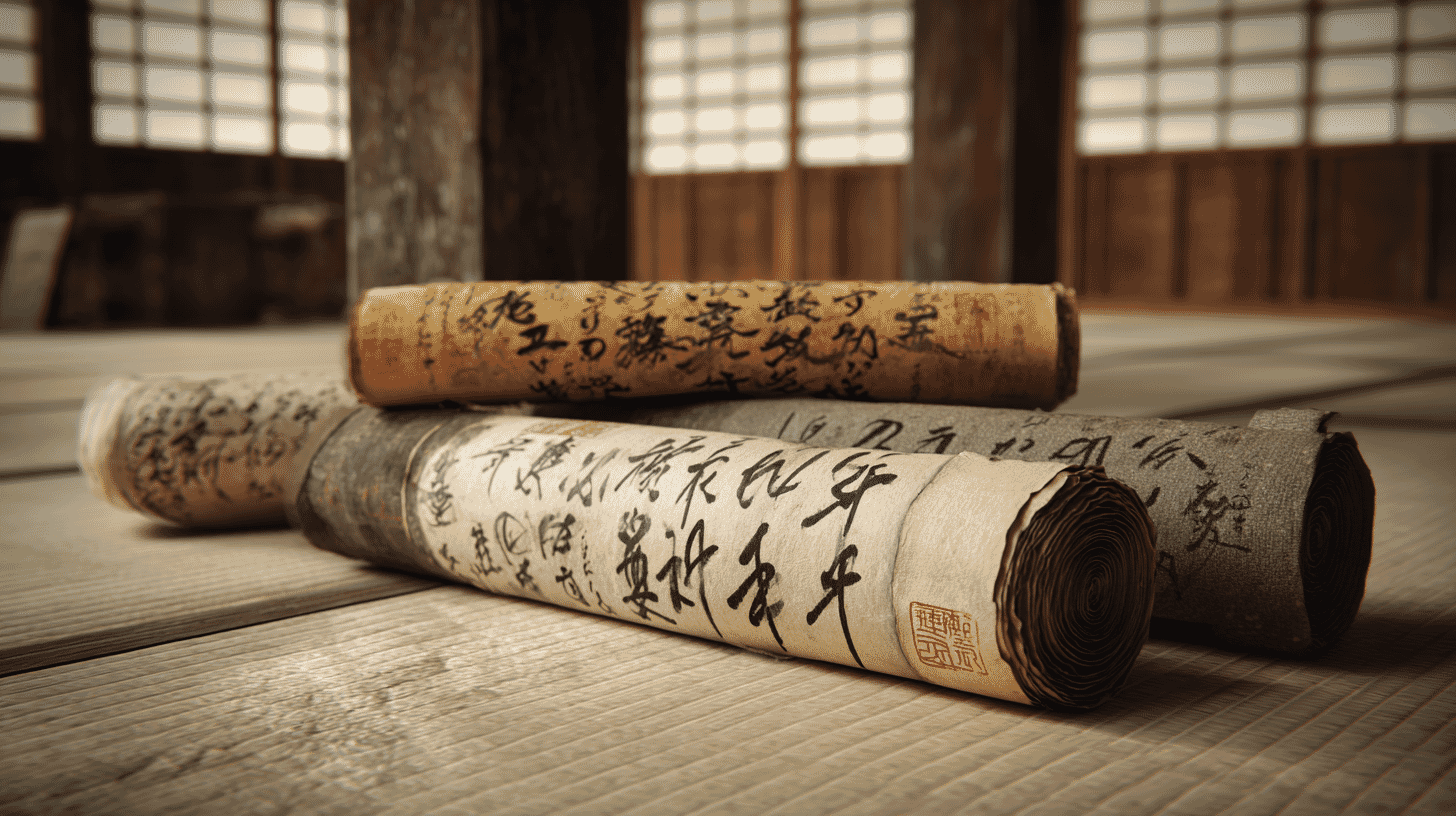
Seven Scrolls, Eighteen Volumes, Six Sheets, Listed in 2023
Sanmyakuinki, with the Proclamation of Regency as an Appendage (三藐院記, Sanmyakuinki) is a record held at 1-2 Utano Kaminotani-cho, Ukyo Ward, Kyoto City, Kyoto Prefecture, designated an Important Cultural Property on 27 June 2023. The owner is the Yomei Bunko, a public-interest foundation.
The quantity is seven scrolls, eighteen volumes and six sheets: three measure words side by side. The writer is recorded as Konoe Nobutada, who lived from 1565 to 1614, and the work is ink on paper.
A listing in 2023 is among the most recent encountered here, after Manpukuji in 2024, and the record is correspondingly full.
The Dimensions Field Says Omitted
The dimensions field carries a form of words not met before.
Measurements and the like omitted. Not blank, but expressly omitted.
Among the properties covered here the dimensions field has often stood empty. When it is empty, one cannot tell whether nothing was recorded or whether recording was judged unnecessary.
Here it is different. The word omitted shows that something was chosen not to be written. With seven scrolls, eighteen volumes and six sheets, each of a different size, a single figure would not serve.
The colophon note on the Vajrabhadrani Sutra ended with and so forth, marking text that could be read but was not copied in full. Omitted works the same way. The record distinguishes, by its wording, the reasons for not writing.
The Separate Entries Outweigh the Daily Record
How the record is put together is stated plainly.
It consists of a main record kept day by day and separate entries arranged by matter, and the separate entries are the fuller, exceeding the main record in bulk as well.
A daily record follows the calendar. Separate entries gather material by subject.
More was written by subject than by date. Where the writer's attention went shows in how the bulk is distributed.
The Agency goes further: the separate entries are records gathered according to the matters in which Nobutada took an interest, and so are records that can reveal where his interests lay.
What a person chose to write down shows what he cared about. Not the contents of a record but the way it was built becomes the historical evidence.
The Appendage Is the Original, the Body a Copy of It
The relation to the appendage has its own character.
Of one part of the body, an account of the proclamation of regency, the Agency writes that it copies a series of documents issued by the court on the occasion of that proclamation, the appended Proclamation of Regency, onto paper made to resemble the originals.
The appended Proclamation of Regency is the original series of court documents. The account within the body is a copy of them.
With the Taima Mandara Engi, the work was of the Kamakura period and the appended document of 1793, so the appendage was the later thing. Here it is reversed: the appendage is the original and the body the copy.
The phrase about paper made to resemble the originals repays attention. In copying, paper close to that of the originals was prepared. Not only the wording but the look of the documents was to be reproduced.
Consulting It
The Yomei Bunko, in Ukyo Ward, Kyoto City, owns the record. It is a library holding, not kept on permanent display.
Work on paper is vulnerable to light, so periods on view are limited, and with seven scrolls, eighteen volumes and six sheets it is hard to imagine all being viewable at once.
The Agency writes that it is a source of very high value, throwing light not only on political and cultural history from the Momoyama period into the early Edo period but also, through entries written during exile in Satsuma, on developments in the history of Kyushu.
Consultation and study follow procedures the library sets. Check before travelling.
Q&A
- When was the record designated?
- On 27 June 2023, as an Important Cultural Property. The quantity is seven scrolls, eighteen volumes and six sheets, and the owner is the Yomei Bunko. The writer is recorded as Konoe Nobutada.
- Are the dimensions known?
- The dimensions field reads measurements and the like omitted. It is not blank but expressly omitted, presumably because the seven scrolls, eighteen volumes and six sheets differ in size and no single figure would serve.
- How is it arranged?
- The Agency records a main record kept day by day and separate entries arranged by matter, with the separate entries the fuller and exceeding the main record in bulk. More was written by subject than by date.
- What is designated as an appendage?
- The Proclamation of Regency, a series of original court documents. The account of that proclamation within the body copies them onto paper made to resemble the originals, so the appendage is the original and the body the copy.
- What is valued in it?
- The Agency calls it a source of very high value, covering political and cultural history from the Momoyama period into the early Edo period and, through entries written during exile in Satsuma, developments in the history of Kyushu.
Basic Information
| Name | Sanmyakuinki, with the Proclamation of Regency as an appendage (三藐院記, Sanmyakuinki) |
|---|---|
| Location | 1-2 Utano Kaminotani-cho, Ukyo Ward, Kyoto City, Kyoto Prefecture |
| Designation | Important Cultural Property (historical material; calligraphy and books; old documents); the Proclamation of Regency is designated as an appendage |
| Year Designated | 2023 (27 June), Important Cultural Property |
| Quantity | 7 scrolls, 18 volumes and 6 sheets |
| Dimensions | The dimensions field reads measurements and the like omitted, expressly omitted rather than left blank. Ink on paper. The writer is Konoe Nobutada, 1565 to 1614. Momoyama to Edo periods |
| Owner | Yomei Bunko |
| Public Access | A library holding, not on permanent display; consultation follows procedures the library sets |
References
- Cultural Heritage Online: Sanmyakuinki with the Proclamation of Regency
- https://bunka.nii.ac.jp/db/heritages/detail/589776
- Agency for Cultural Affairs, National Cultural Properties Database: the same record
- https://kunishitei.bunka.go.jp/heritage/detail/201/00012008
- Yomei Bunko
- https://ymbk.sakura.ne.jp/
- Agency for Cultural Affairs, National Cultural Properties Database
- https://kunishitei.bunka.go.jp/
Last verified: 2026.09.05