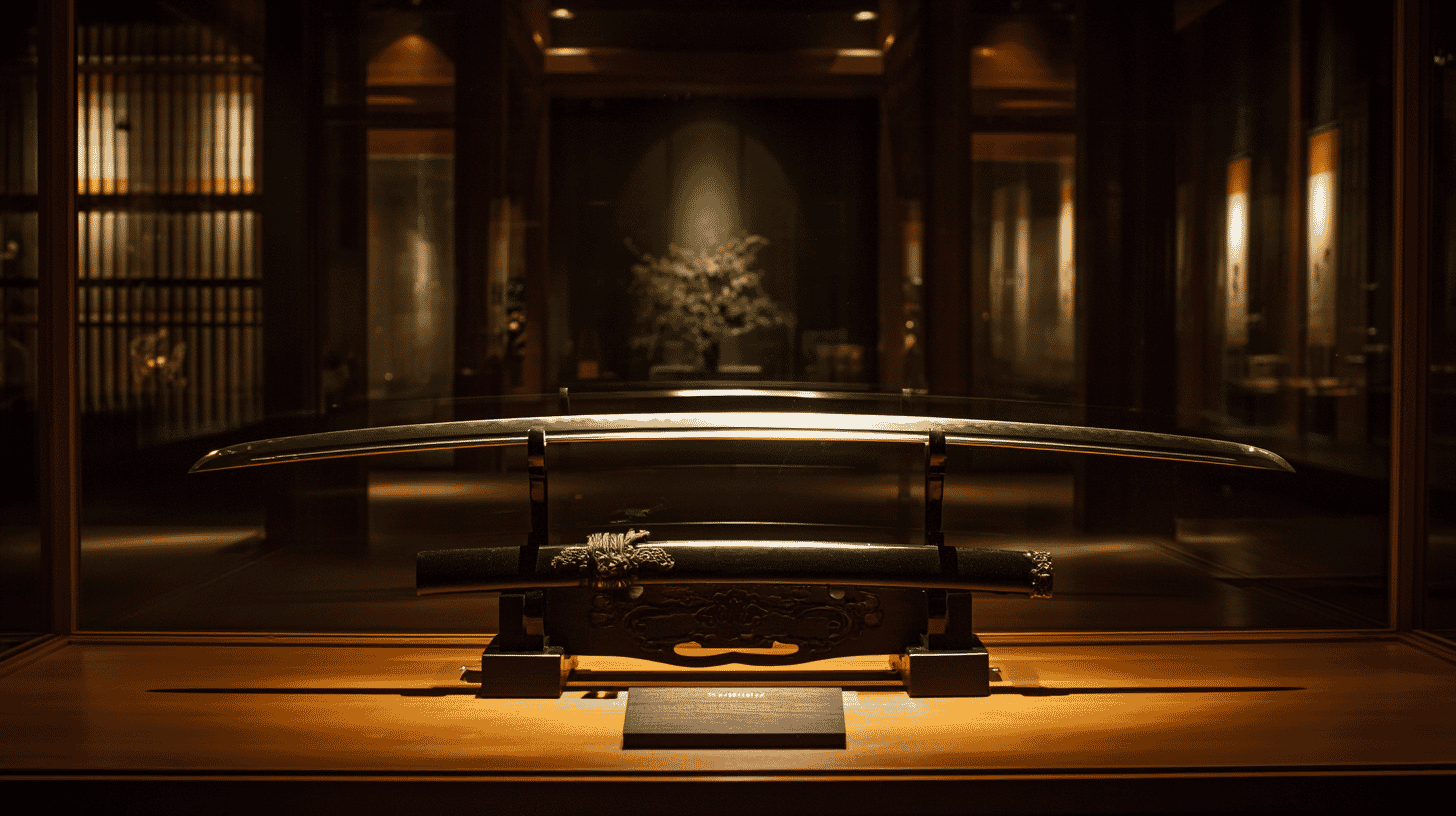
A Treasure of Early Muromachi Period Swordsmithing

In the treasure house of Kyoto's Kitano Tenmangu Shrine rests an extraordinary tachi sword that tells the story of Japan's golden age of sword making. Forged in the year 1402 (Oei 9) by the master swordsmith Moromitsu of Bizen Osafune, this Important Cultural Property represents the pinnacle of what became known as "Oei Bizen" craftsmanship.

The blade, measuring 68.3 centimeters with an elegant curve of 1.4 centimeters, exemplifies the refined aesthetic that made Bizen blades legendary throughout Japanese history. Its inscription reads "Bishu Osafune Moromitsu, Oei 9th year" followed by characters now lost to time, creating an intriguing mystery that adds to the sword's historical significance.

The Master Behind the Blade: Moromitsu of the "Three Lights"

Moromitsu belonged to an elite group known as the "Sanko" or "Three Lights" of Oei Bizen, alongside his contemporaries Morimatsu and Yasumatsu. These three master swordsmiths gained the patronage of Shogun Ashikaga Yoshimitsu during a pivotal era when Japan transitioned from the turbulent Nanbokucho period to the more peaceful early Muromachi period.

What distinguished the Oei Bizen smiths was their ability to combine technical excellence with practical accessibility. Drawing inspiration from the classical styles of earlier Bizen masters like Mitsutada, Nagamitsu, and Kagemitsu, they created blades with balanced proportions and refined aesthetics that appealed to warriors and nobles alike.

Moromitsu's work is characterized by the distinctive "bo-utsuri" vertical grain pattern in the steel and elegant gunome-midare hamon patterns along the blade's edge. These technical features, combined with exquisite craftsmanship, made Oei Bizen blades highly prized during their era and treasured as cultural heritage today.

Cultural Significance and Historical Value

This tachi sword was designated as an Important Cultural Property on August 29, 1950, recognizing its exceptional historical and artistic value. The designation acknowledges both the blade's technical mastery and its role as evidence of Japan's sophisticated sword-making traditions during the early 15th century.

The year 1402 marks a significant period in Japanese history. Shogun Ashikaga Yoshimitsu had successfully unified the Northern and Southern Courts, bringing relative peace to Japan. This stability allowed arts and crafts to flourish, and swordsmiths of Bizen Osafune responded by perfecting techniques that would influence Japanese sword making for centuries to come.

What makes Oei Bizen blades particularly significant is their role in international trade. In 1401, Yoshimitsu initiated formal trade relations with Ming China, and Bizen swords became one of Japan's primary exports. While mass-produced blades were created for export, masterworks like this Moromitsu tachi represented the highest artistic achievements of the era, created for domestic appreciation by Japan's elite warriors and nobles.

The Legendary Bizen Osafune Tradition

To understand this sword's significance, one must appreciate the extraordinary legacy of Bizen Osafune. Located in what is now Setouchi City, Okayama Prefecture, the Osafune district became Japan's premier sword-making center, blessed with exceptional iron sand resources from the Yoshii River basin and generations of accumulated technical knowledge.

The Osafune tradition traces back to the late Heian period, evolving through various master lineages. By the Kamakura period, Mitsutada established the foundations that his successors would build upon. His son Nagamitsu and grandson Kagemitsu further refined the Bizen style, creating the华丽 techniques that the Oei period masters would later perfect.

At its peak, Bizen province produced approximately 70 percent of all Japanese swords, an astounding testament to both the skill of its smiths and the quality of its resources. The blades were renowned for their beautiful grain patterns, elegant curves, and reliable cutting performance, making them favorites among samurai throughout Japan's history.

Kitano Tenmangu: A Shrine of Learning and Martial Heritage

The sword's home at Kitano Tenmangu Shrine adds another layer of cultural significance. While Kitano Tenmangu is famous worldwide as the head shrine dedicated to Sugawara no Michizane, the deity of learning and scholarship, fewer people know about its remarkable collection of approximately 100 swords.

This connection between scholarship and martial arts reflects the historical reality of Japanese culture, where the ideal of "bunbu ryodo" (the dual way of letters and arms) was highly valued. Sugawara no Michizane himself was skilled in archery, as depicted in the National Treasure scroll "Kitano Tenjin Engi Emaki."

Throughout history, powerful military families donated swords to Kitano Tenmangu as acts of devotion. The Maeda clan of Kaga province, who considered themselves descendants of the Sugawara family, were particularly generous patrons, donating a sword during each of the shrine's major festivals held every 50 years commemorating Michizane's death.

The sword collection at Kitano Tenmangu includes both blades that saw actual combat and those created specifically as sacred offerings. Together, they represent an invaluable archive of Japanese sword-making history spanning multiple centuries.

Experiencing the Sword and Shrine

Visitors to Kitano Tenmangu can view selected treasures, including important swords, in the shrine's treasure house (Homotsuden). Built in 1928 in a distinctive Japanese-Western architectural style, the treasure house features elegant exhibitions that allow visitors to appreciate these cultural properties up close.

The shrine itself is a magnificent complex featuring National Treasure architecture, beautiful plum gardens (with over 2,000 plum trees blooming in late February to March), and the historic Odoi earthwork covered in autumn maple foliage. The combination of cultural treasures, architectural splendor, and natural beauty makes Kitano Tenmangu an essential destination for those seeking to understand Japanese cultural heritage.

Special exhibitions occasionally feature specific sword collections, and the shrine has embraced modern appreciation of sword culture, including collaborations with popular culture that introduce younger generations to these traditional arts. The treasure house allows smartphone photography of sword displays, recognizing the importance of sharing cultural heritage with contemporary audiences.

The Artistry of Japanese Sword Aesthetics

What makes Japanese swords like this Moromitsu tachi so captivating is the combination of lethal functionality and profound aesthetic beauty. The blade is not merely a weapon but a work of art that embodies philosophical principles of beauty, harmony, and the transient nature of existence.

The hamon (temper pattern) along the blade's edge is created through differential hardening, where the smith applies clay in varying thicknesses before quenching the heated blade. This process creates both the cutting edge's hardness and the blade's distinctive visual patterns. Each smith's techniques produced characteristic patterns, making their work identifiable to experts.

The ji-hada (surface grain pattern) reveals the folded structure of the steel, where layers of metal were repeatedly forged together to create a blade of remarkable strength and flexibility. The "bo-utsuri" vertical reflection pattern characteristic of Bizen blades creates a luminous quality that seems to glow from within the steel.

Beyond technical features, the sword's overall form embodies aesthetic principles. The gentle curve (sori), the relationship between blade width and thickness, the shape of the point (kissaki), and the proportions of all elements combine to create a sense of elegant balance that Japanese connoisseurs have appreciated for centuries.

Visiting Information and Nearby Attractions

Kitano Tenmangu is located in northwestern Kyoto, easily accessible from major tourist areas. From Kyoto Station, visitors can take City Bus routes 50 or 101, arriving at Kitano Tenmangu-mae bus stop in approximately 30-40 minutes (230 yen). Alternatively, from Karasuma-Oike or Imadegawa stations, bus route 203 provides convenient access.

The shrine grounds are free to enter and open from 5:00 AM to 6:00 PM (April-September) or 5:30 AM to 5:30 PM (October-March). The treasure house has separate admission fees and varying hours depending on special exhibitions. The plum garden and autumn maple garden require separate admission during their respective viewing seasons.

Nearby attractions include Kinkaku-ji (Golden Pavilion), approximately 15 minutes by bus, and Ryoan-ji Temple with its famous rock garden. The area offers numerous traditional restaurants and tea houses where visitors can enjoy Kyoto's refined culinary culture. The local specialty "Chogo-mochi" rice cakes have been made near the shrine for centuries and make excellent souvenirs.

For international visitors, basic English information is available at the shrine office, and the treasure house provides some English descriptions. However, having a basic understanding of Japanese sword terminology enhances appreciation of the exhibits.

Q&A

QWhat makes this Moromitsu sword special compared to other Japanese swords?
AThis sword is special because it was created by Moromitsu, one of the "Three Lights" (Sanko) of Oei Bizen during the early Muromachi period. It represents the pinnacle of sword-making during a golden age of Japanese craftsmanship. As an Important Cultural Property with a dated inscription from 1402, it serves as definitive evidence of the technical sophistication achieved by Bizen smiths. The sword combines historical significance, technical mastery, and aesthetic beauty, making it valuable both as art and as historical documentation.
QCan visitors see this sword when visiting Kitano Tenmangu Shrine?
AThe sword is part of Kitano Tenmangu's treasure house collection, and viewing opportunities depend on the shrine's exhibition schedule. The treasure house hosts special exhibitions throughout the year, sometimes focusing on sword collections. It's recommended to check the shrine's official website or contact them in advance to confirm if the Moromitsu tachi is currently on display. The shrine also participates in collaborative exhibitions with museums, so the sword may occasionally be displayed at other venues.
QWhat is "Oei Bizen" and why was it significant?
AOei Bizen refers to swords made during the Oei era (1394-1428) in the Bizen province. This period marked a transition from wartime to peacetime under Shogun Ashikaga Yoshimitsu, allowing swordsmiths to focus on refinement rather than mass production for warfare. Oei Bizen smiths like the "Three Lights" created blades that balanced classical beauty with practical functionality. Their work also became Japan's premier export to Ming China, bringing significant economic benefits to the shogunate. The term represents both a historical period and a distinctive aesthetic style that influenced Japanese sword making for generations.
QWhy does Kitano Tenmangu, a shrine dedicated to learning, have so many swords?
AThis reflects the Japanese cultural ideal of "bunbu ryodo" (the dual way of letters and arms), where scholarly and martial accomplishments were both valued. Sugawara no Michizane, the deity enshrined at Kitano Tenmangu, was skilled in both scholarship and archery. Throughout history, powerful military families donated swords as acts of devotion, seeking the deity's blessings for martial success or offering gratitude after victories. Some swords were also dedicated to have their spiritual power sealed or to commemorate important events. The collection represents the intersection of spiritual devotion, martial culture, and artistic appreciation in Japanese history.
QWhat should I know before visiting to see Japanese swords at the treasure house?
AFirst, check the treasure house's exhibition schedule, as displays change throughout the year. Basic admission is typically around 800-1,000 yen for adults. Photography of swords is permitted with smartphones (no flash), allowing you to capture memories respectfully. Take time to observe the details: the hamon patterns along the blade's edge, the grain patterns in the steel, and the overall form and proportions. Reading basic information about sword terminology beforehand enhances appreciation. Most importantly, approach these pieces as both functional tools and works of art that embody centuries of technical refinement and aesthetic philosophy. The treasure house staff can provide additional information about specific pieces on display.

Basic Information

Name Tachi, Inscription: Bishu Osafune Moromitsu / Oei 9th Year (characters below unclear)
Swordsmith Moromitsu of Bizen Osafune
Creation Date 1402 (Oei 9th Year)
Period Early Muromachi (Room-achi)
Dimensions Total length: 86.4cm, Blade length: 68.3cm, Curvature: 1.4cm
Cultural Designation Important Cultural Property (Designated August 29, 1950)
Current Location Kitano Tenmangu Shrine, Kyoto
Address Bakuro-cho, Kamigyo-ku, Kyoto City, Kyoto Prefecture
Access From Kyoto Station: City Bus 50 or 101 to "Kitano Tenmangu-mae" (approx. 30-40 min)
Opening Hours Grounds: 5:00-18:00 (Apr-Sep), 5:30-17:30 (Oct-Mar)
Treasure House: Varies by exhibition
Admission Shrine grounds: Free
Treasure House: Typically 800-1,000 yen (varies by exhibition)

References

Cultural Heritage Online - Tachi Inscription Bishu Osafune Moromitsu
https://bunka.nii.ac.jp/db/heritages/detail/198443
National Cultural Property Database - Important Cultural Properties
https://kunishitei.bunka.go.jp/heritage/detail/201/6246
Tokyo National Research Institute for Cultural Properties - Chronological Database
https://www.tobunken.go.jp/materials/nenki/1028446.html
Kitano Tenmangu Official Website - Treasure House
https://kitanotenmangu.or.jp/guidance/houmotsuden/
Kitano Tenmangu - Swords and Treasures
https://kitanotenmangu.or.jp/story/北野天満宮と宝刀/
Touken World - History of Osafune Swordsmiths
https://www.touken-world.jp/tips/7827/
Bizen Osafune Sword Museum - Museum Visit Report
https://www.meihaku.jp/touken-visit/bizenosafune-toukenmuseum/
Kitano Tenmangu - Access Information
https://kitanotenmangu.or.jp/access/