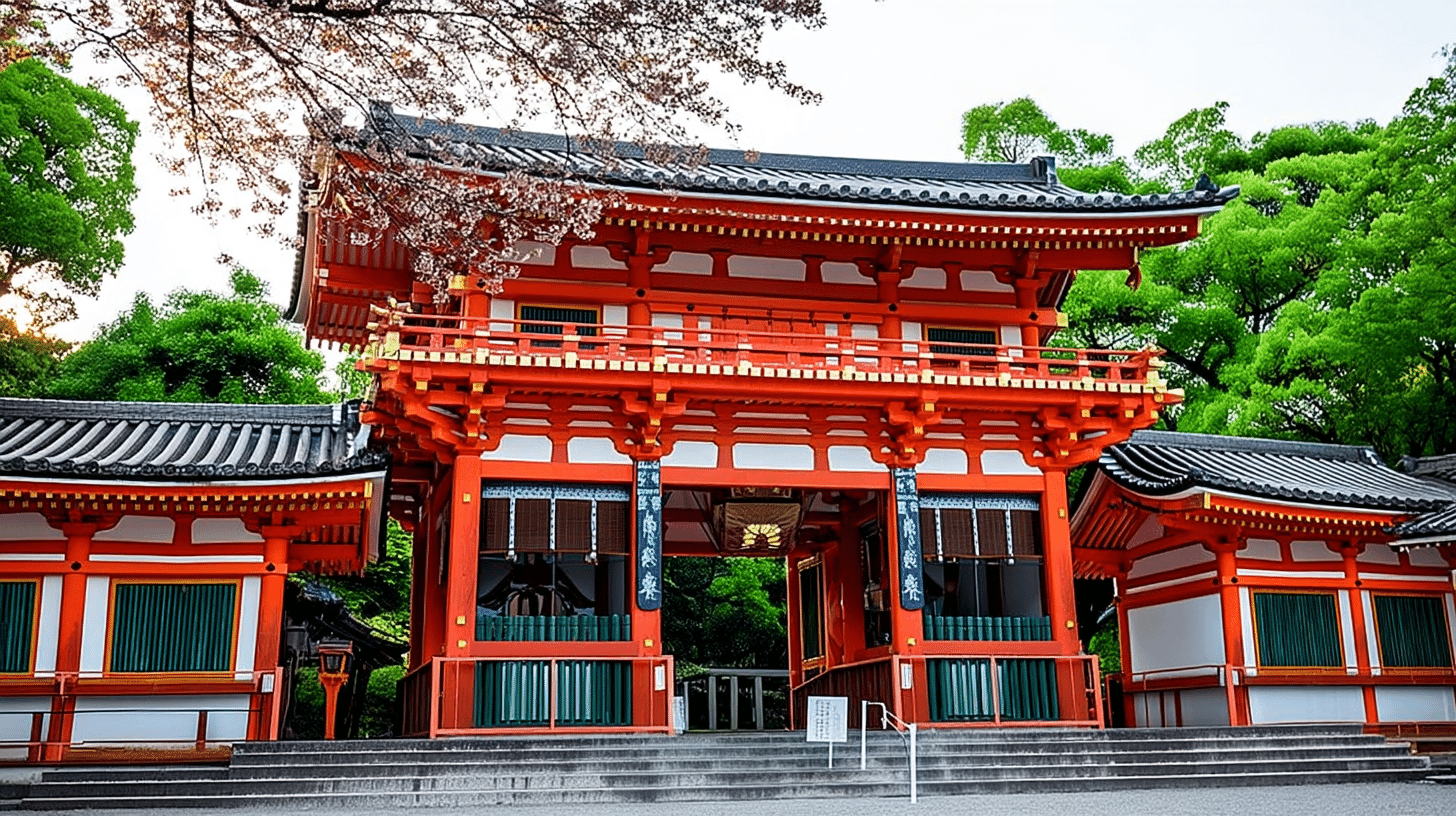
Yasaka Shrine, Kyoto: A National Treasure of Japan — Explore the Sacred Heart of the Gion Festival

Discover Yasaka Shrine in Kyoto, home to a National Treasure main hall and 29 Important Cultural Properties. Explore the unique Gion-zukuri architecture, sacred dragon legend, and the birthplace of Japan's iconic Gion Festival.

Yasaka Shrine: Kyoto's Sacred Guardian and Birthplace of the Gion Festival

Standing at the eastern end of Shijo Street in Kyoto's famed Gion district, Yasaka Shrine has watched over the ancient capital for well over a millennium. Affectionately known as "Gion-san" by the people of Kyoto, this venerable shrine is the head shrine of approximately 2,300 Yasaka shrines across Japan. In 2020, its extraordinary main hall was elevated to the status of National Treasure, while 29 surrounding buildings were designated as Important Cultural Properties — a testament to the shrine's unparalleled historical and architectural significance.

More than just a place of worship, Yasaka Shrine is the spiritual origin of the Gion Festival, one of Japan's Three Great Festivals and a UNESCO Intangible Cultural Heritage. From its unique "Gion-zukuri" architecture to a mystical dragon legend hidden beneath its foundations, every corner of this shrine tells a story spanning centuries. This guide will take you through its rich history, remarkable architecture, cultural treasures, and practical information for planning your visit.

A History Stretching Back Before Kyoto's Founding

The origins of Yasaka Shrine predate even Kyoto's establishment as the imperial capital in 794. According to shrine tradition, its founding can be traced as far back as 656, during the Asuka period. Multiple origin stories exist: one tells of an emissary from the Korean peninsula who enshrined the deity of Mt. Udu at this location, while another credits the Buddhist priest Ennyo with establishing a temple here in 876 and enshrining Susanoo-no-Mikoto, the deity of the region.

The shrine's pivotal moment came in 877, when a devastating epidemic swept through the capital. When prayers were offered at this shrine, the epidemic ceased — an event that propelled the shrine to prominence as a guardian against disease and calamity. This connection between faith and protection from plague would later give birth to the Gion Festival in 869, originally a grand purification ritual involving 66 halberds representing the provinces of Japan.

Throughout the centuries, Yasaka Shrine received patronage from emperors, shoguns, and commoners alike. During the Heian period, it was counted among the prestigious "Twenty-Two Shrines" that received imperial offerings. The great warlord Toyotomi Hideyoshi donated 10,000 koku of rice and rebuilt the shrine's great pagoda in gratitude for his mother's recovery from illness. The fourth Tokugawa shogun, Ietsuna, constructed the present main hall in 1654. Until the Meiji era, the shrine was known as "Gion-sha" or "Gion Kanshin-in," reflecting centuries of Buddhist-Shinto syncretism. With the government's separation of Shinto and Buddhism in 1868, it received its current name: Yasaka Shrine.

The National Treasure Main Hall: A Masterpiece of Gion-zukuri Architecture

In December 2020, the main hall of Yasaka Shrine was designated a National Treasure of Japan — the highest level of cultural property protection in the country. This recognition was awarded for several remarkable reasons that make this building truly exceptional in the history of Japanese architecture.

The Largest Shrine Main Hall in Japan

The main hall is the largest shrine main hall (honden) in all of Japan, with a floor area of approximately 662 square meters, an eave area of about 1,050 square meters, and a total roof area of roughly 1,320 square meters. Rising to a height of 15.5 meters, it dominates the shrine precinct with an imposing yet graceful presence. Its massive cypress-bark (hinoki) roof is one of the most stunning features, sweeping elegantly over the entire complex.

A Unique Architectural Style: "Gion-zukuri"

What makes this building truly extraordinary is its "Gion-zukuri" style — a form of architecture found nowhere else in Japan. In most Shinto shrines, the main hall (honden) where the deity resides and the worship hall (haiden) where visitors offer prayers are separate structures. At Yasaka Shrine, however, these two spaces are unified beneath a single enormous roof. This innovative design originated during the Heian period, and by the Kamakura period (13th century), the building had already achieved essentially its current form.

The present structure was built in 1654 by the Tokugawa shogunate, but it faithfully preserves the spatial arrangement that dates back to the Heian era. This continuity of architectural tradition over many centuries is precisely what makes it so valuable to Japan's architectural heritage.

Complex Interior Spaces

The interior of the main hall is divided into numerous chambers, each serving a different ritual purpose. At the center lies the innermost sanctum (nai-naijin), surrounded by the inner sanctum (naijin), the outer sanctum (gejin), and the worship hall (raidō). A distinctive feature is the presence of offering shelves (mitana) at two locations — before the nai-naijin and before the naijin — a configuration found at no other shrine in Japan. The building can be circumnavigated internally, making it a uniquely complex and spatially rich sacred structure.

The Distinctive "Matebisashi" Eaves

One of the most visually striking features of the main hall is its "matebisashi" — auxiliary eaves that extend outward from three sides (north, east, and west) of the building. This design element is entirely unique to Yasaka Shrine and creates a layered, expansive silhouette that distinguishes the shrine from any other in Japan. Beneath these eaves, small chambers were added for various purposes, further expanding the functional space of the hall. This distinctive matebisashi design also influenced the construction of several subsidiary shrines within the precincts.

The Legend of the Dragon Cave

Beneath the innermost sanctum of the main hall lies a sacred pool said to be a "ryūketsu" — a dragon cave where the Azure Dragon (Seiryū) dwells. According to a medieval chronicle, when an attempt was made to measure the pool's depth during a fire in 1070, the measuring line reached 50 jō (approximately 151 meters) without touching the bottom. The pool is now sealed beneath plaster, but a craftsman who worked on repairs in 1905 testified that he witnessed clear, pure water filling the space beneath the nai-naijin, describing an atmosphere of profound mystical presence.

The Azure Dragon is one of the four mythical guardians that protect Kyoto from each cardinal direction, assigned to guard the eastern quarter. You can find a vivid depiction of the Azure Dragon carved on the pedestal of the lion-dog (komainu) statue just inside the West Gate — a tangible reminder of this living legend.

29 Important Cultural Properties: A Treasury of Sacred Architecture

In addition to the National Treasure main hall, Yasaka Shrine boasts 29 buildings designated as Important Cultural Properties. These structures span from the medieval period to the early 20th century, creating a remarkable open-air museum of Japanese architectural history.

The West Gate (Nishi-rōmon) — The Iconic Symbol of Yasaka

The vermilion West Gate, facing Shijo Street, is the oldest structure within the shrine grounds, rebuilt in 1497 after being destroyed during the devastating Ōnin War. Though many visitors assume it to be the main entrance, it is actually a secondary gate. In 1913, when Shijo Street was widened, the gate was moved 6 meters east and 3 meters north. Wing corridors were added in 1925, giving it the grand appearance it has today. It remains one of Kyoto's most photographed landmarks.

The South Gate (Minami-rōmon) — The True Main Entrance

The South Gate, built in 1879, is the actual main entrance to Yasaka Shrine, aligned directly with the main hall along the central axis of the shrine complex. During the Gion Festival, the sacred mikoshi (portable shrines) always depart through this gate, and wedding processions also follow this traditional route. At 14 meters tall and 9 meters wide, it presents an imposing and dignified approach to the shrine.

The Stone Torii Gate

Marking the entrance to the main approach, the stone torii gate was erected in 1646. Originally wooden, it was rebuilt in stone after the wooden version was lost to fire and then earthquake damage. The inscription "Yasaka Shrine" on the gate tablet was written by Imperial Prince Arisugawa Taruhito. During the Gion Festival, the mikoshi procession begins its journey through this gate.

The Dance Stage (Butai-den)

Built in 1903, the dance stage is one of the most atmospheric structures in the shrine. Adorned with hundreds of lanterns donated by local businesses and teahouses of the Gion district, it is illuminated every evening, creating an enchanting scene that has become synonymous with Yasaka Shrine. During the Gion Festival, the three sacred mikoshi are enshrined here. Throughout the year, it hosts traditional dance performances, including elegant dances by maiko (apprentice geisha) from Kyoto's hanamachi (geisha districts).

The Mikoshi Storehouse (Mikoshi-gura)

Built in 1928, the mikoshi storehouse is a fascinating example of early 20th-century ingenuity. It houses the three sacred portable shrines used during the Gion Festival. While its exterior and interior appear to be constructed of wood in the traditional style, nearly the entire structure — except for the roof tiles and sliding doors — is actually made of reinforced concrete. The elaborate formwork required for this construction demonstrates the remarkable craftsmanship of the era.

Subsidiary Shrines Influenced by the Main Hall

Several subsidiary shrines within the precincts display the distinctive "matebisashi" eaves of the main hall, demonstrating how the main hall's unique design influenced the construction of surrounding structures. Notable examples include Utsukushi-gozen-sha (the Beauty Shrine, 1591), Kitamuki Ebisu-sha (1646), Hiyoshi-sha (mid-19th century), and Eki-jinja (c. 1823). Together with the main hall, these buildings create a distinctive architectural landscape that is unique to Yasaka Shrine.

Other Designated Buildings

The Important Cultural Properties also include: Akuōji-sha (dedicated to the fierce spirit of Susanoo), Ōkuni-nushi-sha (the popular matchmaking shrine), Tamahikari Inari-sha, Ōta-sha, Jissha (Ten Shrines Hall), Gosha (Five Shrines Hall), Kanja-dono-sha, the Shijō Tabisho halls (East and West, temporary resting places for the mikoshi during the Gion Festival), Ōmandokoro-sha, Ōtoshi-sha, Matatabi-sha, the Shinsen-jo (sacred food preparation hall), the Sukibei (lattice fence), the Shinme-sha (sacred horse stable), the Ema-dō (votive tablet hall), and the West and South purification fountains (temizu-sha). Each of these structures tells part of Yasaka Shrine's rich story of faith and tradition.

Why Yasaka Shrine Was Designated a National Treasure

The designation of Yasaka Shrine's main hall as a National Treasure in 2020 was based on several key factors recognized by Japan's Council for Cultural Affairs. The building preserves the spatial composition of Heian-period architecture and vividly demonstrates the relationship between medieval religious rituals and architectural design. The fact that this tradition was faithfully maintained when the building was reconstructed in the early Edo period gives it exceptional value in Japan's architectural history.

Furthermore, the fact that this main hall has been maintained and preserved to the present day by the people who carry on the Gion Festival — the local townspeople and parishioners — was recognized as having profound cultural and historical significance. The simultaneous designation of 26 additional subsidiary buildings as Important Cultural Properties acknowledged that the entire shrine complex, spanning centuries of construction from medieval times to the modern era, forms an irreplaceable cultural landscape.

Highlights and Must-See Attractions

The Gion Festival — Japan's Greatest Summer Celebration

Held throughout the entire month of July, the Gion Festival is inseparable from Yasaka Shrine. Originating in 869 as a prayer to end an epidemic, it has evolved into one of the world's most spectacular cultural celebrations, recognized as a UNESCO Intangible Cultural Heritage. The festival's highlights include the grand processions of towering yamaboko floats on July 17 and July 24, and the mikoshi procession where three sacred portable shrines from Yasaka Shrine are paraded through the streets of Kyoto. During the evenings before the main processions, the streets come alive with the enchanting melodies of Gion-bayashi (festival music), food stalls, and brilliantly lit float displays.

Utsukushi-gozen-sha — The Beauty Shrine

Dedicated to three goddesses of beauty, this charming subsidiary shrine is beloved by visitors seeking blessings for beauty and wellness. In front of the shrine flows "beauty water" (bijin-sui) from a sacred spring — visitors are welcome to gently pat a few drops on their face. The shrine also offers beauty-themed amulets and holds special beauty blessings in November.

Ōkuni-nushi-sha — The Matchmaking Shrine

Dedicated to Ōkuninushi-no-Kami, the deity of love and good relationships, this shrine is popular with visitors wishing for romantic connections. In front of the shrine stands a charming stone sculpture depicting Ōkuninushi and the famous White Rabbit of Inaba, a beloved scene from Japanese mythology.

Nighttime Illumination

As one of the few shrines in Kyoto that is open 24 hours, Yasaka Shrine offers an entirely different experience after dark. The hundreds of lanterns on the dance stage are lit every evening, casting a warm golden glow across the grounds. The vermilion West Gate, dramatically illuminated against the night sky, creates one of Kyoto's most unforgettable scenes. During the Higashiyama Hanatōro lantern festival in March, the shrine and surrounding streets are beautifully lit with gentle lantern light.

Seasonal Beauty

Yasaka Shrine is spectacular in every season. In spring, the adjacent Maruyama Park bursts into bloom with its famous weeping cherry tree — one of Kyoto's most iconic cherry blossom viewing spots. Autumn brings brilliant foliage along the approach paths, especially beautiful when framed by the vermilion gates and lantern-lit grounds. New Year sees millions of visitors for hatsumōde (the first shrine visit of the year), and the shrine's Okera-mairi ceremony on New Year's Eve is a beloved Kyoto tradition.

Surrounding Area and Nearby Attractions

Yasaka Shrine's location at the intersection of the Gion and Higashiyama districts places it at the heart of some of Kyoto's finest cultural experiences.

Maruyama Park

Directly adjacent to the shrine's eastern boundary, Maruyama Park is Kyoto's most famous cherry blossom spot. The park was originally part of the shrine grounds and features a magnificent weeping cherry tree that is illuminated at night during the bloom season. It is also a lovely place for a peaceful stroll in any season.

The Gion District

Stretching westward from the shrine along Shijo Street, the Gion district is Kyoto's most celebrated geisha quarter. Hanami-koji Street, with its traditional machiya townhouses, teahouses, and the occasional glimpse of geiko and maiko in full regalia, offers an unparalleled glimpse into Kyoto's living cultural traditions.

Kiyomizu-dera Temple

A 20-minute walk south through the charming lanes of Ninenzaka and Sannenzaka leads to the UNESCO World Heritage Site of Kiyomizu-dera, with its iconic wooden stage offering panoramic views over the city. The walk between these two landmarks is one of Kyoto's most beloved strolling routes.

Chion-in and Shōren-in Temples

Just north of the shrine, the massive gate of Chion-in Temple — headquarters of the Jōdo (Pure Land) Buddhist sect — and the serene gardens of Shōren-in Temple offer further cultural depth to your Higashiyama exploration.

📍 Plan Your Visit to Kyoto
Find tours, activities & transport passes near Yasaka Shrine
[ Kinkakuji Fushimi Inari & Kimono Rental ]

Q&A

QWhat are the opening hours and admission fees for Yasaka Shrine?
AYasaka Shrine grounds are open 24 hours a day, 365 days a year, and admission is completely free. The shrine office (for amulets, goshuin stamps, and prayer services) is open from approximately 9:00 AM to 5:00 PM. Early mornings and evenings are especially recommended for a serene experience, and the lantern-lit grounds at night are magical.
QHow can I get to Yasaka Shrine from Kyoto Station?
AThe most convenient option is Kyoto City Bus #100 or #206 from Kyoto Station to the "Gion" bus stop (approximately 20 minutes), which is right in front of the shrine's West Gate. Alternatively, take the JR Nara Line to Tofukuji Station, transfer to the Keihan Line, and get off at Gion-Shijo Station (about a 5-minute walk to the shrine). The Hankyu Line's Kyoto-Kawaramachi Station is also nearby, about an 8–10 minute walk.
QWhen is the best time to visit Yasaka Shrine?
AEach season offers a unique experience. Spring (late March to mid-April) brings stunning cherry blossoms in adjacent Maruyama Park. July features the spectacular Gion Festival. Autumn (mid-November to early December) paints the grounds in red and gold foliage. New Year is a deeply traditional time to visit but is extremely crowded. For a quieter visit, early mornings on weekdays in any season are ideal.
QIs photography allowed inside Yasaka Shrine?
APhotography is generally permitted in the outdoor areas of the shrine grounds, including the gates, dance stage, and subsidiary shrines. However, photography may be restricted inside certain sacred areas and during specific rituals. Please be mindful of signs indicating restricted zones and always show respect to worshippers and shrine staff.
QWhat is Gion-zukuri, and why is it significant?
AGion-zukuri is an architectural style unique to Yasaka Shrine in which the main sanctuary (honden) and worship hall (haiden) are unified under a single grand roof. This is extremely rare in Shinto shrine architecture, where these two elements are typically separate buildings. The style originated during the Heian period (794–1185) and has been faithfully preserved through successive reconstructions for over 800 years, making it invaluable to Japan's architectural heritage.

Basic Information

Official Name Yasaka Shrine (八坂神社)
Also Known As Gion Shrine (Gion-san), Gion-sha
Cultural Property Designation Main Hall: National Treasure (designated December 2020); 29 buildings: Important Cultural Properties
Main Hall Construction 1654 (Jōō 3), by order of the 4th Tokugawa Shogun, Ietsuna
Architectural Style Gion-zukuri (unique to Yasaka Shrine); Irimoya-zukuri with cypress-bark (hinoki) thatched roof
Main Hall Dimensions Floor area: approx. 662 m²; Height: approx. 15.5 m; Roof area: approx. 1,320 m²
Principal Deities Susanoo-no-Mikoto, Kushiinadahime-no-Mikoto, Yahashira-no-Mikogami
Traditional Founding 656 (Saimei 2), Asuka period
Address 625 Gionmachi Kitagawa, Higashiyama-ku, Kyoto 605-0073, Japan
Visiting Hours Grounds: 24 hours (open year-round); Shrine office: approx. 9:00–17:00
Admission Free
Access Keihan Line "Gion-Shijo" Station (5-min walk); Hankyu Line "Kyoto-Kawaramachi" Station (8-min walk); Kyoto City Bus #100/#206 "Gion" stop
Telephone 075-561-6155
Official Website https://www.yasaka-jinja.or.jp/en/

References

八坂神社の建造物|八坂神社について|八坂神社
https://www.yasaka-jinja.or.jp/about/architecture/
八坂神社の歴史|八坂神社について|八坂神社
https://www.yasaka-jinja.or.jp/about/history/
八坂神社について|八坂神社
https://www.yasaka-jinja.or.jp/about/
八坂神社本殿 — 文化遺産オンライン
https://bunka.nii.ac.jp/heritages/detail/194450
八坂神社 — Wikipedia
https://ja.wikipedia.org/wiki/%E5%85%AB%E5%9D%82%E7%A5%9E%E7%A4%BE
八坂神社 — 京都市観光ガイド
https://ja.kyoto.travel/tourism/single01.php?category_id=7&tourism_id=474
Yasaka Shrine — Kyoto Travel (japan-guide.com)
https://www.japan-guide.com/e/e3903.html
Yasaka Shrine — Japan Experience
https://www.japan-experience.com/all-about-japan/kyoto/temples-shrines/yasaka-jinja-shrine

Last verified: 2026.02.08

Nearby heritages