Yasaka Shrine Documents: 2,205 Medieval Scrolls That Reveal the Soul of Kyoto's Gion Festival
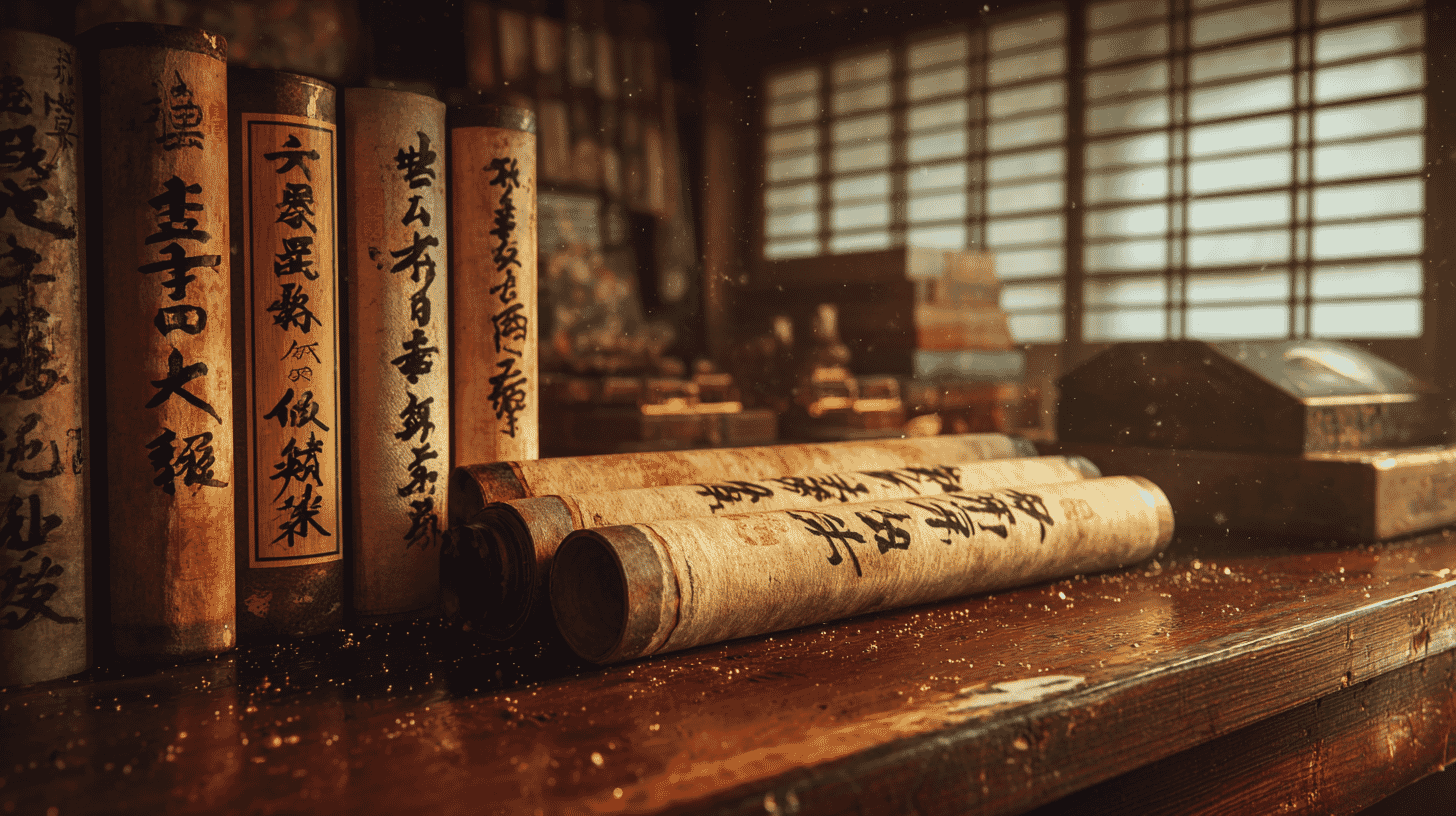
Deep within the precincts of Yasaka Shrine—known affectionately as "Gion-san" to the people of Kyoto—lies a treasure that cannot be seen on any altar or within any hall. It is not carved in wood or cast in bronze, yet it may be the most revealing witness to the shrine's thousand-year story. The Yasaka Shrine Documents (八坂神社文書), a collection of 2,205 historical manuscripts, form one of the most important archives of medieval Japanese religious, urban, and commercial life ever assembled. Designated as an Important Cultural Property of Japan in 1990, these fragile scrolls, bound volumes, and letters span roughly nine centuries—from the Heian period of the eleventh century through the Edo period—and together they compose a written portrait of the Gion Shrine that no building alone could tell.
What Are the Yasaka Shrine Documents?
The collection comprises 89 scrolls, 40 bound volumes, 1 album, and 1 individual letter, totaling 2,205 separate documents. They were transmitted through the Hōjuin (宝寿院), the hereditary priestly house that served as the chief administrators—known as "shūgyō" (執行)—of Gion Shrine from the Heian period until the Meiji Restoration. When the Meiji government mandated the separation of Shinto and Buddhism in 1868, the last head of the Hōjuin secularized and adopted the surname Takeuchi (建内). The documents subsequently split into two groups: nine scrolls became the property of the shrine itself, while the larger body of over 2,100 documents remained with the Takeuchi family before eventually being recognized as a unified collection of national importance.
The Shrine Documents portion contains 95 individual items centered on the Kamakura and Muromachi periods, beginning with a pivotal government decree (太政官符, Daijōkanpu) dated to the second year of Enkyū (1070). The Takeuchi Documents portion spans from 1172 through the Edo period and encompasses an extraordinarily wide range of subjects—from shrine land administration to festival finances, from guild activities to the duties of the enigmatic "inujinin" attendants who served the shrine.
Why Were They Designated an Important Cultural Property?
The Yasaka Shrine Documents were designated an Important Cultural Property (重要文化財) on June 29, 1990, under the category of ancient documents (古文書). Their value rests on several pillars.
First, the 1070 Daijōkanpu is considered the foundational document of Gion Shrine. This imperial decree established the shrine's territorial boundaries (四至, shishi) and formally reconfirmed its right to hold its domain along the eastern bank of the Kamo River. It is essentially the birth certificate of the shrine's medieval power, and without it, much of the institutional history of Gion would remain in shadow.
Second, the collection includes orders bearing the personal seal of Ashikaga Takauji and other directives of the early Muromachi shogunate, dated from the Genkō era (1331) through the Kōan era (1362). These documents carry annotations identifying the calligraphers and magistrates who drafted them, making them uniquely valuable for the scholarly study of early Muromachi governmental procedure.
Third, the Takeuchi Documents preserve an unparalleled record of the Gion Festival's evolution. They include the "Genealogy of the Twelve Horseback Lances" (馬上十二鉾相伝系図)—a document tracing the hereditary transmission of ceremonial lance-bearing roles in the festival procession—as well as receipts and expense records for the Gion Festival. Together these materials illuminate how the festival transformed over the centuries from a plague-warding ritual into the magnificent procession the world knows today.
Finally, the documents shed light on medieval commerce and urban society in Kyoto. They record the activities of the various merchant and artisan guilds (座) that operated under the shrine's patronage, as well as the social role of the inujinin—lower-ranking shrine servants who maintained the sacred precinct, guarded the festival procession, and held exclusive rights over funerary services in the capital. The collection thus serves not only shrine history but also the broader fields of medieval urban studies and economic history.
Highlights and Points of Interest
Although the documents themselves are fragile manuscripts not on permanent public display, their significance permeates every corner of Yasaka Shrine and its famous festival. Visiting the shrine with an awareness of this documentary heritage transforms the experience from a casual stroll into a walk through living history.
The Enkyū Daijōkanpu (1070)
This single government decree is the oldest and most important item in the collection. Issued during the reign of Emperor Go-Sanjō, it confirmed the shrine's control over the land stretching from the eastern bank of the Kamo River in the area between Sanjō and Gojō—territory that would become the economic foundation of Gion Shrine's medieval power. Standing at the shrine today, visitors can appreciate that the very ground beneath their feet was first legally defined as shrine territory by this document nearly a millennium ago.
Ashikaga Shogunate Documents
The collection includes orders from Ashikaga Takauji himself, as well as decrees from the Muromachi shogunate. These are annotated with the names of the scribes and officials who prepared them—a rare feature that has made the Yasaka Shrine Documents an essential reference for understanding how the early Muromachi government actually functioned on a day-to-day basis.
Gion Festival Records
Among the most evocative items are the documents related to the Gion Festival (祇園祭), now recognized as a UNESCO Intangible Cultural Heritage. The "Genealogy of the Twelve Horseback Lances" traces how specific ceremonial roles were inherited across generations, while expense receipts reveal the practical economics behind the spectacular procession. The "Gion-e Yamaboko-goto" (祇園会山鉾事), a record compiled in 1500 after the festival's revival following the devastating Ōnin War, is the sole historical source identifying all 60 festival floats that existed before the war destroyed much of Kyoto.
Records of the Shrine's Medieval Estates
The Takeuchi Documents detail the administration of the shrine's four major landholdings (四箇保), which were scattered across provinces including Tanba and Bingo (present-day Hyōgo/Kyoto and Hiroshima prefectures). These records reveal the scale and complexity of a major medieval shrine's economic operations, from tax collection to land disputes.
The Inujinin and Shrine Guild Records
Perhaps the most fascinating materials for social historians are those documenting the inujinin (犬神人)—low-ranking shrine attendants who performed purification duties, guarded the festival mikoshi procession, and held exclusive funerary rights within the capital. The documents also reference the various commercial guilds that operated under the shrine's auspices, providing a window into the vibrant merchant culture of medieval Kyoto.
Experiencing the Legacy: Visiting Yasaka Shrine
While the documents themselves are preserved under controlled conditions and are not part of a regular exhibition, visiting Yasaka Shrine allows you to walk through the physical spaces these manuscripts describe. The National Treasure main hall, the vermilion West Gate, the lantern-hung dance stage, and the lively atmosphere of the surrounding Gion district are all direct descendants of the world recorded in these scrolls.
The Gion Festival, held throughout July, is the living embodiment of the traditions documented in these manuscripts. When the magnificent yamaboko floats parade through central Kyoto on July 17 and July 24, they are carrying forward a tradition whose written record survives in the Yasaka Shrine Documents. Special exhibitions featuring items from the shrine's documentary collections are occasionally mounted at institutions such as the Kyoto National Museum and the Museum of Kyoto, so visitors with a particular interest in historical manuscripts are encouraged to check current exhibition schedules.
Surrounding Area
Yasaka Shrine sits at a crossroads of Kyoto's most celebrated districts. Immediately to the east lies Maruyama Park, one of the city's most beloved cherry blossom viewing spots, particularly enchanting in early April when the iconic weeping cherry tree is illuminated at night. Walking south along the atmospheric lanes of Ninenzaka and Sannenzaka leads to Kiyomizudera Temple, a UNESCO World Heritage Site. The Gion district to the west is the heart of Kyoto's traditional geisha culture, where you may catch a glimpse of maiko in their colorful kimono walking between engagements. Nearby, the Kennin-ji Temple—Kyoto's oldest Zen temple—offers peaceful gardens, while Kodai-ji Temple rewards evening visitors with seasonal illuminations. The Kyoto National Museum, which occasionally exhibits shrine-related documents and art, is a short walk to the south.
- 📍 Plan Your Visit to Kyoto
- Find tours, activities & transport passes near Yasaka Shrine Documents (2,205 Documents)
- [ Kinkakuji Fushimi Inari & Kimono Rental ]
Q&A
- Can I see the actual Yasaka Shrine Documents in person?
- The documents are preserved under controlled conditions and are not on permanent public display. However, selected items are occasionally exhibited at institutions such as the Kyoto National Museum, the Museum of Kyoto, or during special shrine events. Scholars may apply to view specific documents through academic channels. Check with the shrine office or local museum exhibition schedules during your visit.
- When is the best time to visit Yasaka Shrine to experience the heritage described in these documents?
- July is ideal, as the entire month is devoted to the Gion Festival—the very tradition most extensively documented in these manuscripts. The yamaboko float processions on July 17 and July 24 are the highlights. Cherry blossom season in early April and New Year's (Hatsumode) are also atmospheric times to visit. The shrine is open 24 hours year-round with free admission.
- What is the difference between the Yasaka Shrine Documents (Important Cultural Property) and the shrine's National Treasure main hall?
- They are separate cultural property designations. The Yasaka Shrine Documents (designated 1990) are a collection of 2,205 ancient manuscripts classified as Important Cultural Property in the category of ancient documents. The main hall (designated as National Treasure in 2020) is an architectural designation for the shrine's distinctive "Gion-zukuri" building. Together, they represent complementary aspects of the shrine's heritage—one in writing, the other in wood and cypress bark.
- How do I get to Yasaka Shrine?
- From Kyoto Station, take City Bus No. 206 to "Gion" bus stop (about 20 minutes); the shrine is right at the stop. Alternatively, take the Keihan Line to Gion-Shijo Station (5-minute walk) or the Hankyu Line to Kyoto-Kawaramachi Station (8-minute walk). The shrine is open 24 hours with free admission.
- Are there English-language resources available at Yasaka Shrine?
- The shrine grounds feature some English signage, and the official Yasaka Shrine website offers limited English content. For deeper understanding of the documentary heritage, the Kyoto National Museum and Museum of Kyoto provide English-language exhibition materials when relevant collections are on display. English-speaking guides are available through various Kyoto tour companies.
Basic Information
| Name | Yasaka Shrine Documents (八坂神社文書(二千二百五通)) |
|---|---|
| Designation | Important Cultural Property (重要文化財) — Ancient Documents (古文書) |
| Designation Date | June 29, 1990 (Heisei 2) |
| Quantity | 2,205 documents (89 scrolls, 40 bound volumes, 1 album, 1 letter) |
| Period | Heian to Edo period (11th–19th century) |
| Owner | Yasaka Shrine (八坂神社) |
| Location | 625 Gionmachi Kitagawa, Higashiyama-ku, Kyoto 605-0073, Japan |
| Shrine Hours | Open 24 hours, year-round |
| Admission | Free |
| Access | City Bus 206 to "Gion" stop; Keihan Line "Gion-Shijo" Station (5-min walk); Hankyu Line "Kyoto-Kawaramachi" Station (8-min walk) |
References
- 文化遺産データベース — 八坂神社文書(二千二百五通)
- https://bunka.nii.ac.jp/db/heritages/detail/134447
- 国指定文化財等データベース — 八坂神社文書(二千二百五通)
- https://kunishitei.bunka.go.jp/bsys/maindetails/201/9118
- 八坂神社公式サイト — 八坂神社について
- https://www.yasaka-jinja.or.jp/about/
- 八坂神社公式サイト — 八坂神社の歴史
- https://www.yasaka-jinja.or.jp/about/history/
- 八坂神社公式サイト — 八坂神社の建造物
- https://www.yasaka-jinja.or.jp/about/architecture/
- Wikipedia — 宝寿院 (祇園社の社家)
- https://ja.wikipedia.org/wiki/宝寿院_(祇園社の社家)
- Wikipedia — 祇園祭
- https://ja.wikipedia.org/wiki/祇園祭
- 新編 八坂神社記録(臨川書店)
- https://www.hanmoto.com/bd/isbn/9784653043096
- Yasaka Shrine — japan-guide.com
- https://www.japan-guide.com/e/e3903.html
- Yasaka-jinja Shrine — Japan National Tourism Organization
- https://www.japan.travel/en/spot/78/
Last verified: 2026.02.17