
Introduction: A Hidden Gem of Japan's Educational Heritage
Nestled in the historic heart of Shingu City, Wakayama Prefecture, stands a remarkable building that has quietly witnessed nearly nine decades of Japanese history. The Former Hane Gakuen Kumano Higher Commercial School Building (旧羽根学園熊野高等経理学校校舎), newly registered as a Tangible Cultural Property in December 2024, offers visitors a rare glimpse into Japan's pre-war commercial education system. While crowds flock to Kyoto's famous temples and Tokyo's bustling districts, this charming Western-style schoolhouse presents an authentic, off-the-beaten-path experience for travelers seeking to understand Japan's fascinating educational and architectural heritage.
What is the Former Hane Gakuen Kumano Higher Commercial School?
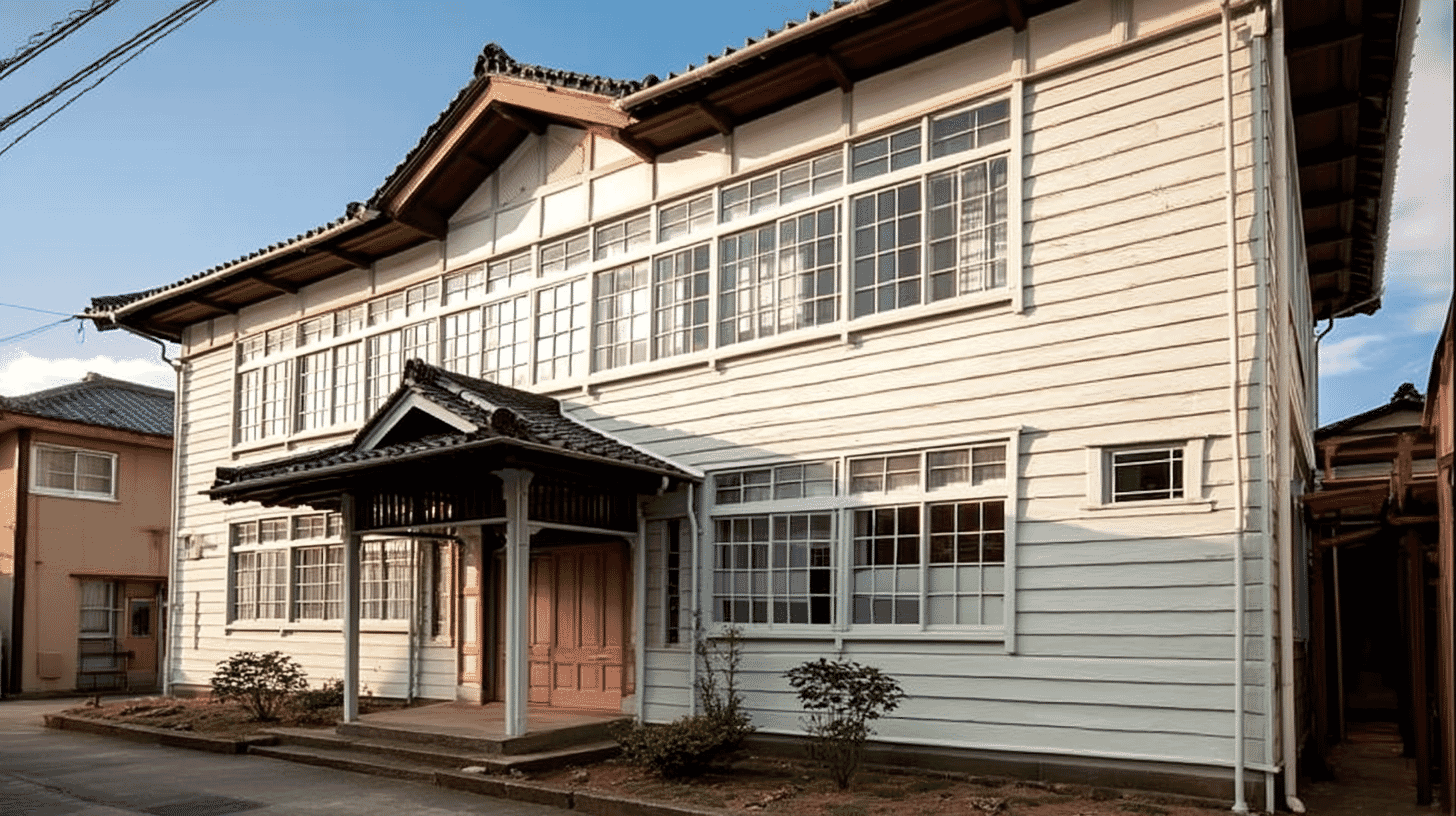
The Former Hane Gakuen Kumano Higher Commercial School Building is a two-story wooden structure built in 1937 (Showa 12), with an additional wing constructed in 1965 (Showa 40). Originally established as a commercial education institution, this school played a vital role in training young people in accounting, bookkeeping, and the essential skill of soroban (Japanese abacus) calculation that was fundamental to business operations in pre-war and post-war Japan.
The building is located just south of the historic Shingu Castle ruins (also known as Tankaku Castle), facing west onto the street. Its strategic location reflects the importance of commercial education in this regional center, which had long prospered as a gateway to the sacred Kumano region and a hub for timber trade along the Kumano River.
Why Was It Registered as a Tangible Cultural Property?
On December 3, 2024, this building was officially registered as a National Registered Tangible Cultural Property (登録有形文化財) under the criterion of "contributing to the historical landscape of the nation." This recognition acknowledges the building's significance as a rare surviving example of pre-war commercial school architecture.
The registration highlights several important values. The building represents a distinctive Western-influenced architectural style that was commonly adopted for educational institutions during the early Showa period. Its original design and layout remain largely intact, providing valuable insight into how commercial education was conducted during this era. Furthermore, the building serves as tangible evidence of the importance placed on practical business skills and abacus proficiency in pre-war Japanese society.
Architectural Highlights and Features
The building showcases a harmonious blend of Japanese and Western architectural elements that characterized institutional buildings of the early Showa period.
The structure features a traditional irimoya-zukuri (hip-and-gable) roof covered with Japanese san-gawara tiles, while the exterior walls are finished with shitami-ita (weatherboard) siding, creating an elegant Western appearance. The total building area measures 215 square meters, accommodating its educational functions within a compact but well-designed space.
The original wooden structure is complemented by a steel-framed extension on the east side, added in 1965 to meet growing demands. The first floor follows a central corridor layout (naka-rōka style), which was typical for schools of this period, while the second floor houses a single large classroom designed for group instruction.
The Abacus Transom: Symbol of Commercial Education
Perhaps the most distinctive and charming feature of this building is the decorative transom (ranma) above the entrance porch, which depicts a four-bead abacus (yotsudama soroban). This unique ornamental element immediately communicates the building's purpose as a commercial school and serves as a beautiful reminder of the era when soroban proficiency was essential for any career in business or finance.
The four-bead abacus design is particularly significant historically. While traditional Chinese-style abacuses used five beads on the lower deck, Japanese abacuses were standardized to four beads (plus one upper bead) in 1935, just two years before this school was built. This transom decoration thus represents the cutting edge of commercial education methodology at the time of the school's founding.
The Cultural Heritage Online database specifically notes that this abacus transom "conveys the spirit of the school's founding era," making it a treasured architectural detail that speaks directly to the educational mission this building once served.
Historical Context: Commercial Education in Pre-War Japan
To fully appreciate this building, it helps to understand the crucial role that commercial education played in early Showa Japan. During this period, soroban (abacus) calculation was not merely a useful skill but an absolute requirement for anyone seeking employment in banking, accounting, or general office work.
The 1935 national curriculum revision made soroban instruction mandatory in elementary schools, and specialized commercial schools like the Hane Gakuen Kumano Higher Commercial School provided advanced training for students seeking careers in business. Students at such institutions would practice calculations for hours daily, developing the speed and accuracy needed to handle complex commercial transactions in an era before electronic calculators.
Shingu City, with its historic role as a timber trading center serving the Kumano region, had a natural demand for such commercially-trained workers. The school's location near the castle ruins, in the heart of the city's commercial district, reflects its integration into the local business community.
Surrounding Area and Nearby Attractions
The building's location offers excellent opportunities to explore Shingu's rich cultural heritage.
Shingu Castle Ruins (Tankaku Castle) is located immediately north of the school building. This castle site, designated as a National Historic Site, offers panoramic views of the Kumano River and Pacific Ocean. The castle was completed in 1633 and served as the residence of the Mizuno clan, who governed this area as retainers of the Tokugawa clan. Today, the remaining stone walls and the beautiful hilltop park make it a perfect spot for history enthusiasts and cherry blossom viewers in spring.
Kumano Hayatama Taisha Grand Shrine, one of the three grand shrines of the Kumano Sanzan and a UNESCO World Heritage Site, is located approximately 10 minutes' walk from the area. This ancient shrine has been a center of Kumano faith for over a thousand years.
Kamikura Shrine, also a World Heritage Site, features a dramatic stone staircase of 538 steps leading to a sacred rock where the Kumano deities are said to have first descended. The challenging climb rewards visitors with breathtaking views and a profound spiritual atmosphere.
The Shingu City Historical Folk Museum, located within the Asuka Shrine grounds, houses artifacts spanning from the Yayoi period to the Edo era, providing deeper context for understanding the region's rich history.
Planning Your Visit
Shingu City is accessible by JR Kisei Line from major cities. From Osaka, take the limited express "Kuroshio" to Shingu Station (approximately 4 hours). From Nagoya, take the limited express "Nanki" (approximately 3.5 hours). The Former Hane Gakuen building is located approximately 10 minutes' walk from JR Shingu Station.
The building is located in the Tankaku area (丹鶴), historically significant as the location of both the castle and important civic institutions. When visiting, please be respectful as this is a privately-owned property now under the stewardship of HANE Heritage Co., Ltd., which has taken responsibility for preserving this cultural asset. While exterior viewing is possible, interior access may be limited.
Combine your visit with a half-day exploration of Shingu's World Heritage sites for a comprehensive cultural experience. The city is also famous for its connection to literary figures like Sato Haruo and Nakagami Kenji, adding literary tourism opportunities to your itinerary.
Why Visit This Cultural Property?
For international visitors interested in Japan beyond the typical tourist destinations, the Former Hane Gakuen Kumano Higher Commercial School Building offers several unique appeals.
First, it represents authentic local heritage rather than a reconstructed or heavily restored attraction. The building has been continuously preserved since 1937, retaining its original character and atmosphere.
Second, it tells a story rarely explored in typical travel itineraries, showcasing Japan's educational history and the once-essential skill of soroban calculation that shaped generations of Japanese business people.
Third, its recent cultural property registration in December 2024 means you will be among the first international visitors to discover this newly recognized heritage site.
Finally, its location in the heart of the Kumano region allows you to combine this unique cultural experience with visits to World Heritage pilgrimage routes and sacred shrines, creating a truly comprehensive understanding of traditional Japan.
- 📍 Plan Your Visit to Wakayama
- Find tours, activities & transport passes near Former Hane Gakuen Kumano High School of Accounting
- [ Koyasan & Kumano Kodo World Heritage Trails ]
Q&A
- What is the significance of the abacus decoration on the building?
- The four-bead abacus (yotsudama soroban) transom above the entrance porch symbolizes the building's original purpose as a commercial school. It represents the standardized Japanese abacus adopted in 1935, just two years before the school was built, and serves as a beautiful reminder of when abacus proficiency was essential for business careers in Japan.
- Can visitors enter the building?
- The building is privately owned by HANE Heritage Co., Ltd. While exterior viewing is generally possible, interior access may be restricted. It is recommended to check with the Shingu City Tourism Association for current visiting conditions and any special opening events before planning your visit.
- How do I get to the building from JR Shingu Station?
- The Former Hane Gakuen building is located approximately 10 minutes' walk from JR Shingu Station. Head north toward Shingu Castle ruins (Tankaku Castle Park), and the building is situated in the Tankaku 2-chome area, just south of the castle grounds.
- What other attractions are nearby?
- Several important sites are within walking distance, including Shingu Castle ruins (immediately adjacent), Kumano Hayatama Taisha Grand Shrine (UNESCO World Heritage, 10 min walk), and Kamikura Shrine (15 min walk). The area also features museums dedicated to local literary figures and the Shingu City Historical Folk Museum.
- Why was the building registered as a cultural property in 2024?
- The building was registered on December 3, 2024, as a National Registered Tangible Cultural Property under the criterion of "contributing to the historical landscape of the nation." It is recognized as a rare surviving example of pre-war commercial school architecture that preserves the spirit of early Showa-era education in its original form.
Basic Information
| Official Name | Former Hane Gakuen Kumano Higher Commercial School Building (旧羽根学園熊野高等経理学校校舎) |
|---|---|
| Cultural Property Type | National Registered Tangible Cultural Property (Building) |
| Registration Number | 30-0376 |
| Registration Date | December 3, 2024 |
| Year Built | 1937 (Showa 12), with 1965 (Showa 40) addition |
| Structure | Wooden with partial steel frame, 2 stories, tile and iron plate roof |
| Building Area | 215 m² |
| Address | 7683-51 Tankaku 2-chome, Shingu City, Wakayama Prefecture |
| Owner | HANE Heritage Co., Ltd. |
| Access | Approximately 10 minutes' walk from JR Shingu Station |
References
- Cultural Heritage Online - Former Hane Gakuen Kumano Higher Commercial School Building
- https://bunka.nii.ac.jp/heritages/detail/620649
- National Designated Cultural Properties Database (Agency for Cultural Affairs)
- https://kunishitei.bunka.go.jp/bsys/maindetails/101/00015215
- Shingu City Tourism Association - Shingu Castle Ruins
- https://www.shinguu.jp/spots/detail/A0004
- Shingu City Tourism Association - About Shingu
- https://www.shinguu.jp/shinguu
- Wakayama Tourism Official Site - Shingu Castle Ruins
- https://www.wakayama-kanko.or.jp/spots/detail_1035.html
- Wikipedia - Soroban (Japanese Abacus)
- https://ja.wikipedia.org/wiki/%E3%81%9D%E3%82%8D%E3%81%B0%E3%82%93
Last verified: 2026.01.28