
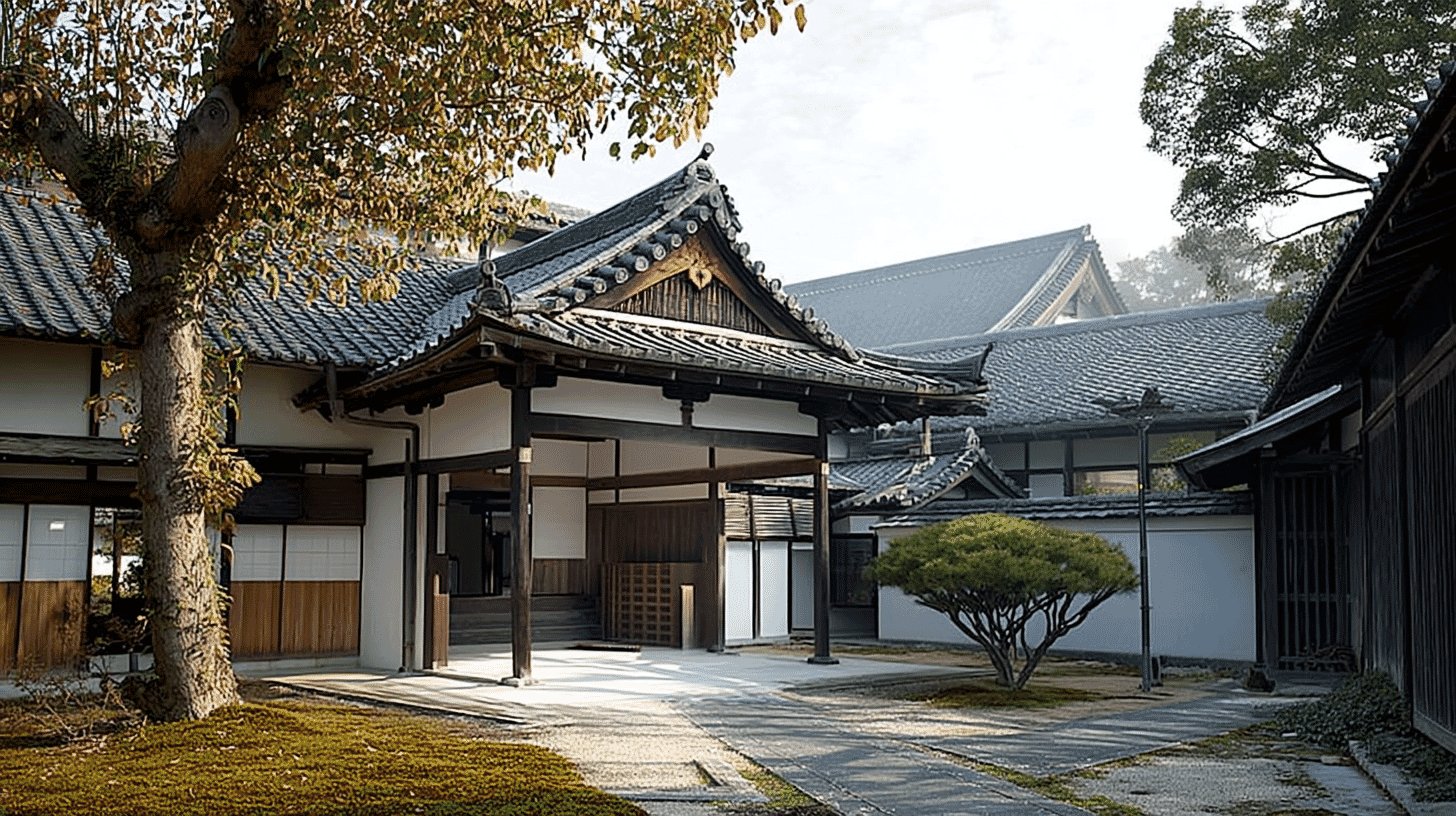
Kyū Sūkōdō: Where Samurai Education Lives On
Tucked away in the castle town of Iga-Ueno, in the heart of Japan's legendary ninja homeland, stands a remarkable survivor of Edo-period education: Kyū Sūkōdō. This unassuming complex of wooden buildings, designated a National Historic Site, offers visitors a rare and intimate glimpse into how the sons of samurai warriors were educated over two centuries ago. While tourists flock to nearby attractions, Kyū Sūkōdō remains a peaceful sanctuary where history whispers through every weathered timber and tatami mat.
A School Born from Wisdom: The Origins of Sūkōdō
In 1821, during the Bunsei era, Tōdō Takasawa, the tenth lord of the Tsu Domain, established Sūkōdō as a branch campus of Yūzōkan, the main domain school located in the city of Tsu. The school served an important regional purpose: educating the children of samurai families living in the far-flung territories of Iga, Yamato, and Yamashiro provinces who could not easily travel to the main campus.
The name "Sūkōdō" carries profound meaning, drawn from the ancient Chinese classic, the Book of Documents (Shujing). The phrase "功崇惟志、業廣惟勤" translates roughly to "Achievement comes from lofty aspirations; great works are accomplished through diligence." This philosophical foundation guided generations of young scholars who passed through its halls until the dissolution of the feudal domain system in 1871.
Why Kyū Sūkōdō Matters: National Historic Site Designation
On November 19, 1930, the Japanese government designated Kyū Sūkōdō as a National Historic Site, recognizing its exceptional historical and cultural value. Domain schools (hanko) were once common throughout Japan, but remarkably few have survived with their original structures intact. Kyū Sūkōdō stands as one of the nation's rarest examples of Edo-period educational architecture.
The site received additional designation in 1994, acknowledging the broader significance of the remaining structures. What makes Kyū Sūkōdō particularly valuable is not just its physical preservation, but the completeness of its educational complex: the lecture hall, gates, dormitory, and auxiliary buildings together paint a comprehensive picture of how samurai education functioned in practice.
In Mie Prefecture, Kyū Sūkōdō holds the distinction of being the only surviving domain school architecture, making it an irreplaceable window into the region's educational heritage.
Architectural Highlights and Treasures
The heart of Kyū Sūkōdō is its magnificent lecture hall (kōdō), a vast 72-tatami-mat room that has remained essentially unchanged since its construction. Standing within this space, visitors can easily imagine the solemn atmosphere as young samurai gathered to study Confucian classics, practice calligraphy, and absorb the moral teachings expected of the warrior class.
Among the complex's surviving structures are the Onari-mon (ceremonial gate for dignitaries), the front gate, Yūkō-ryō (a student dormitory), a small entrance, and kitchen buildings. Historical records also indicate that martial arts training halls for swordsmanship and spear techniques once occupied the grounds, including dojos for the prestigious Shinkage-ryū sword style taught by the Tsuda family, hereditary sword instructors to the Tōdō clan.
Perhaps the most treasured artifact is the wooden plaque bearing the name "Sūkōdō" in elegant calligraphy. The brushwork is attributed to none other than Uesugi Yozan (Uesugi Harunori), the legendary daimyo of Yonezawa Domain, celebrated as one of Edo Japan's greatest reformers and most enlightened rulers. His inscription lends an air of profound significance to the school, connecting it to the broader network of educational reform that swept through late Edo-period Japan.
The Legacy of Uesugi Yozan
The connection to Uesugi Yozan adds a remarkable layer to Kyū Sūkōdō's significance. Yozan became lord of the impoverished Yonezawa Domain at age 17 and dedicated his life to rescuing it from the brink of bankruptcy. His famous words, "If you try, you can succeed; if you don't try, you cannot," became a motto for perseverance and reform throughout Japan.
Yozan championed education, establishing schools and encouraging practical learning alongside classical studies. That his calligraphy adorns the entrance of Sūkōdō speaks to the shared commitment to education among progressive daimyo of the era. U.S. President John F. Kennedy reportedly once named Yozan as the Japanese leader he most admired, bringing international attention to this remarkable historical figure.
Visiting Kyū Sūkōdō: What to Expect
Approaching Kyū Sūkōdō, visitors are greeted by what locals affectionately call "Akamon" (the Red Gate), the vermillion-lacquered entrance that has welcomed students and scholars for two centuries. Passing through, the atmosphere shifts perceptibly—the bustle of the modern town gives way to tranquil gardens and the aged beauty of traditional wooden architecture.
The complex invites contemplative exploration. Walk the wooden corridors, pause in the lecture hall where the weight of history hangs in the air, and examine the careful craftsmanship of the post-and-beam construction. The gardens, while modest, provide moments of seasonal beauty throughout the year.
Today, Kyū Sūkōdō also serves as a cultural venue, hosting traditional lectures, concerts, and art exhibitions that continue its educational mission in contemporary form. Special events like the Stained Glass Exhibition and rakugo storytelling performances bring new life to these ancient spaces.
Exploring the Surroundings: Iga-Ueno's Cultural Riches
Kyū Sūkōdō is situated within the larger cultural landscape of Iga-Ueno, a town that richly rewards exploration. Just steps away rises the magnificent Iga-Ueno Castle, rebuilt in its current form in 1935 and famous for its soaring stone walls—among the highest in Japan at approximately 30 meters. The castle grounds and the surrounding Ueno Park offer pleasant strolling any time of year.
For visitors fascinated by Japan's ninja heritage, the Iga-ryū Ninja Museum provides hands-on experiences including demonstrations of secret techniques in an authentic ninja house, shuriken (throwing star) practice, and thrilling live ninja shows. Iga is one of the two legendary birthplaces of the ninja tradition, making it an essential destination for anyone interested in this mysterious aspect of Japanese history.
Iga-Ueno also claims fame as the birthplace of Matsuo Bashō, Japan's most celebrated haiku poet. The octagonal Haiseidan hall, designed to resemble Bashō in his traveling attire, stands as a tribute to his legacy. Visitors can explore his birthplace, the Bashō-ō Memorial Museum, and several sites associated with his life and poetry scattered throughout the town.
The historic castle town itself retains its Edo-period street grid, earning comparisons to a "Little Kyoto." Stroll through streets lined with traditional townhouses, sample the renowned Iga beef at local restaurants, and perhaps try the famous "katayaki" crackers—a rock-hard traveling food once carried by ninjas.
Practical Tips for Your Visit
Kyū Sūkōdō is easily accessible on foot from central Iga-Ueno. From Ueno-shi Station on the Iga Railway, the walk takes approximately 10 minutes. The site is also accessible from Nishi-Ōte Station, located even closer to the entrance.
The tranquil atmosphere makes it ideal for photography enthusiasts and those seeking a contemplative break from more crowded attractions. Combine your visit with exploration of nearby Ueno Park, and consider allocating a full day to thoroughly enjoy Iga-Ueno's many historical sites.
Note that the site has no dedicated parking; visitors arriving by car should use the paid parking facilities at Ueno Park or other nearby public parking areas.
- 📍 Plan Your Visit to Mie
- Find tours, activities & transport passes near Former Soukodo
- [ Ise Grand Shrine & Shima Bay Cruise Tours ]
Q&A
- What exactly is Kyū Sūkōdō?
- Kyū Sūkōdō is a former domain school (hanko) built in 1821 during the Edo period to educate the sons of samurai families. Designated a National Historic Site, it preserves original buildings including a 72-tatami lecture hall and gates. It is one of the rarest surviving examples of Edo-period educational architecture in Japan.
- Why is the calligraphy by Uesugi Yozan significant?
- Uesugi Yozan (1751-1822) is revered as one of Japan's greatest domain lords, famous for rescuing his bankrupt domain through brilliant reforms and his commitment to education. His calligraphy on the school's plaque connects Kyū Sūkōdō to the broader educational reform movement of late Edo Japan and adds exceptional historical prestige.
- Is Kyū Sūkōdō suitable for visitors who don't speak Japanese?
- While detailed English signage may be limited, the architectural beauty and historical atmosphere can be appreciated by all visitors. The site's tranquil gardens and well-preserved buildings speak a universal language. Consider visiting alongside nearby Iga-Ueno Castle and the Ninja Museum, which offer more multilingual support.
- What is the connection between Kyū Sūkōdō and the ninja?
- While not directly related to ninja training, Kyū Sūkōdō is located in Iga, one of Japan's two legendary ninja homelands. The school educated samurai youth in the same region where ninja clans developed their secretive arts. Visiting Kyū Sūkōdō alongside the nearby Ninja Museum provides a comprehensive view of Iga's warrior traditions.
- When is the best time to visit?
- Kyū Sūkōdō can be enjoyed year-round. Spring brings cherry blossoms to the nearby castle grounds, while autumn offers colorful foliage. Summer evenings occasionally feature special illumination events. The site tends to be less crowded than major tourist destinations, offering a peaceful experience any time of year.
Basic Information
| Official Name | Kyū Sūkōdō (史跡旧崇広堂) |
|---|---|
| Cultural Designation | National Historic Site (designated November 19, 1930; expanded 1994) |
| Year Built | 1821 (Bunsei 4) |
| Founder | Tōdō Takasawa (藤堂高兌), 10th Lord of Tsu Domain |
| Original Purpose | Branch school of Yūzōkan domain school for samurai education |
| Name Origin | From the Book of Documents: "功崇惟志、業廣惟勤" |
| Notable Artifact | Calligraphy plaque by Uesugi Yozan |
| Address | 78-1 Ueno Marunouchi, Iga City, Mie Prefecture 518-0873, Japan |
| Hours | 9:00 AM – 4:30 PM |
| Closed | Tuesdays (except holidays), December 29 – January 3 |
| Admission | Adults: ¥300 (¥200 for groups of 20+); Elementary–High School: ¥100 (¥60 for groups) |
| Accessibility | Free admission for visitors with disability certificates |
| Access | 10-minute walk from Ueno-shi Station (Iga Railway); 5 minutes by car from Ueno IC or Ueno-Higashi IC (Meihan Expressway) |
| Parking | No on-site parking; use Ueno Park parking (paid) or nearby public lots |
| Contact | TEL: 0595-24-6090 |
| Management | Iga City Cultural City Promotion Association (公益財団法人伊賀市文化都市協会) |
References
- 史跡旧崇広堂 | 伊賀上野観光協会
- https://www.igaueno.net/?p=102
- 史跡旧崇広堂 – 施設案内 | 伊賀市文化都市協会
- https://www.bunto.com/shisetsu/?p=411
- 史跡旧崇広堂 | 観光三重
- https://www.kankomie.or.jp/spot/3161
- 崇広堂 | Wikipedia
- https://ja.wikipedia.org/wiki/崇広堂
- 旧崇広堂 | 文化遺産オンライン
- https://bunka.nii.ac.jp/heritages/detail/162951
- 国史跡 旧崇広堂 | 伊賀ポータル
- https://www.igaportal.co.jp/store/20814
- 旧崇広堂庭園 | おにわさん
- https://oniwa.garden/sukodo-iga-mie/
- 上杉鷹山 | 米沢観光NAVI
- https://www.yonezawa-kankou-navi.com/person/yozan.html
Last verified: 2025.12.05