Kadoya Family Trade-Related Documents: A Window into Japan's Age of Maritime Exploration
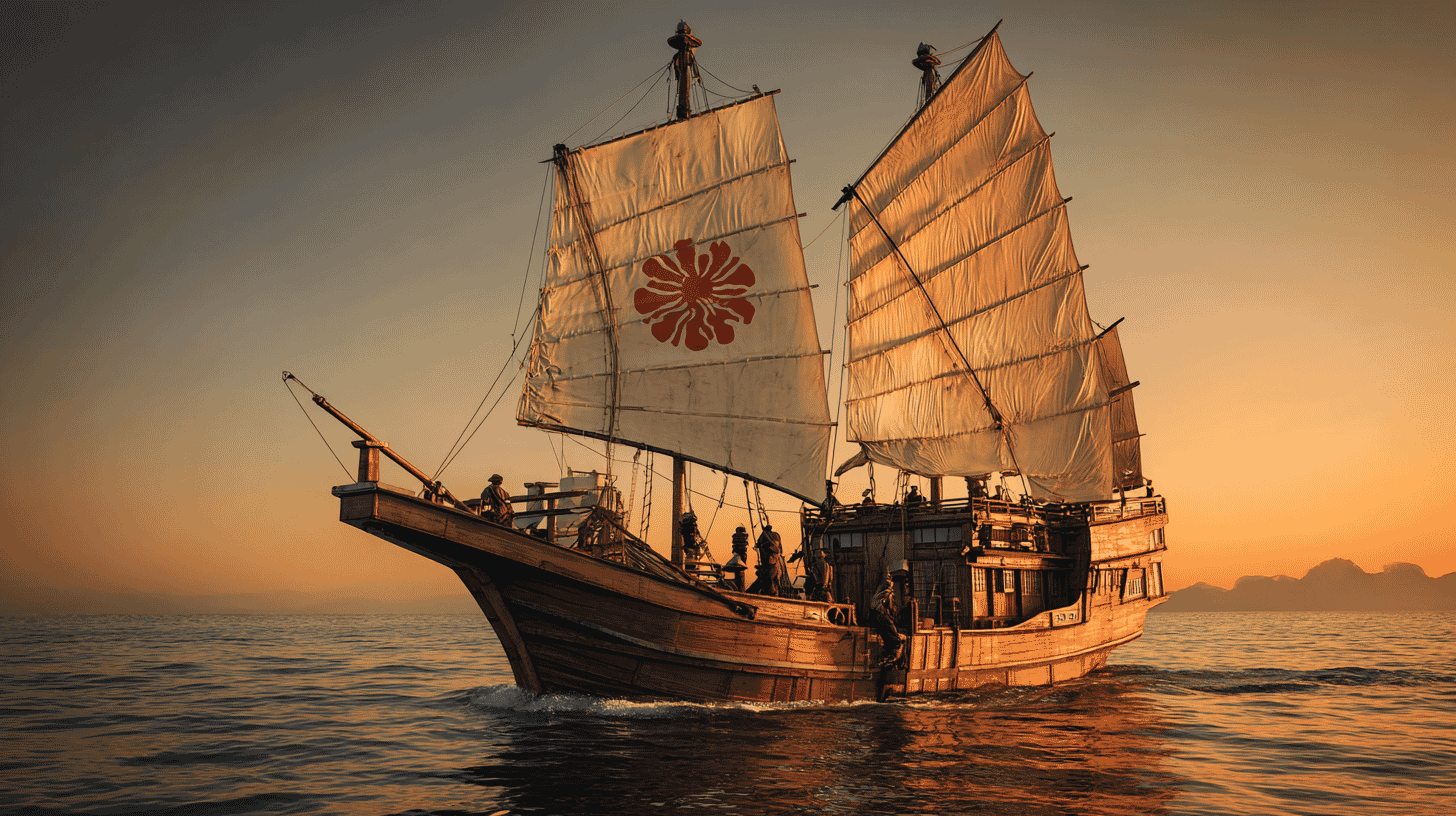
In the early 17th century, when Japan's vermilion seal ships sailed across the South China Sea to Southeast Asian ports, a merchant family from the small port town of Ōminato in Ise Province played a pivotal role in this golden age of overseas trade. The Kadoya family, whose trade-related documents are now designated as Important Cultural Properties of Japan, left behind an extraordinary collection of artifacts that illuminate this fascinating chapter of Japanese history when merchants and adventurers connected Japan with the wider world.
The Kadoya Family: From Local Merchants to International Traders
The Kadoya family's origins trace back to Matsumoto in Shinano Province, but they established themselves as successful shipping merchants in Ōminato, a historic port town in Ise Province (present-day Ise City, Mie Prefecture). This port had served as the outer harbor for Ise Grand Shrine since ancient times, making it a natural hub for maritime commerce.
The family's fortunes changed dramatically during the tumultuous final years of the Warring States period. In 1582, during the chaos following the Honnō-ji Incident when Oda Nobunaga was assassinated, Tokugawa Ieyasu found himself stranded far from his home territory. The Kadoya family's founder, Shichirōjirō Hidemochi, helped Ieyasu escape from Sakai to Mikawa Province by ship—an act of loyalty that earned the family tremendous privileges.
Grateful for this assistance, Ieyasu granted the Kadoya family special trading rights including exemption from various port taxes throughout his domains. These privileges allowed the family to expand their operations from domestic coastal shipping to international vermilion seal ship trade.
The Collection: Four Types of Precious Historical Materials
The Kadoya Family Trade-Related Documents comprise four distinct categories of materials, each offering unique insights into early modern Japanese maritime activities. These eleven items were purchased together by Ise Jingu (Ise Grand Shrine) in 1957 and are now preserved at the Jingu Chokokan Museum.
The Asian Navigation Chart: A Parchment Map of Trade Routes
Perhaps the most visually striking item in the collection is the Asian Navigation Chart (Ajia Kōkaizu), a remarkable portolan-style sea chart painted on parchment. The entire surface is coated with gofun (shell white powder) and then meticulously drawn with ink and other pigments to create a detailed maritime chart of Asian waters.
This chart was created in the early Edo period, drawing upon European portolan chart traditions. Portuguese and Spanish navigators had developed sophisticated maritime mapping techniques, and Japanese merchants adapted these methods for their own voyages to Southeast Asia. The chart would have guided Kadoya ships through the treacherous waters between Japan and trading ports in places like Vietnam, Thailand, and the Philippines.
The Vermilion Seal Flag: Symbol of Shogunal Authority
The Goshuin-ki (Vermilion Seal Flag) is a single piece of plain-woven cloth that bears witness to the Kadoya family's official trading privileges. At its center is the Kadoya family crest—three rice cakes arranged in a circle—with the characters for "Go," "Shu," and "In" (meaning "Vermilion Seal") inscribed within each cake.
This flag was actually flown aboard Kadoya vermilion seal ships during their voyages, serving as visible proof of their authorization from the Tokugawa shogunate. Vermilion seal ships carrying such flags were entitled to protection and preferential treatment at foreign ports, as the seal represented the authority of Japan's ruling government.
The Ōminato Kadoya Family Banner
The Ōminato Kadoyake Hata (Ōminato Kadoya Family Banner) is made from two widths of plain-woven cotton sewn together. The upper portion bears the indigo-dyed characters "Ōminato / Kadoya," while below them appears the family crest in black with three vermilion-colored rice cakes.
This banner was used to identify Kadoya ships during their voyages, serving as the family's commercial identity across the seas. It represents the pride and reputation the Kadoya family had built as one of Japan's prominent maritime trading houses.
The Kadoya Family Documents: Chronicles of Trade and Family History
The Kadoyake Monjo (Kadoya Family Documents) consist of seven scrolls and one booklet containing correspondence and records spanning multiple generations. These documents include correspondence exchanged between the Kadoya family and officials in Annam (present-day Vietnam), as well as detailed records of maritime practices, ship regulations, and family precepts passed down through the generations.
Of particular historical significance are letters that describe conditions in the Japanese quarter at Hội An (known as Faifo to Japanese traders), providing invaluable firsthand accounts of Japanese expatriate communities in Southeast Asia before the sakoku (national isolation) policy took full effect.
Why These Documents Are Designated Important Cultural Properties
The Kadoya Family Trade-Related Documents were designated as Important Cultural Properties of Japan on June 5, 1982. This designation recognizes several aspects of their exceptional value.
First, the collection provides concrete physical evidence of Japanese vermilion seal ship trade, a relatively brief but influential period in Japanese history. While many records were lost during the subsequent era of national isolation, these documents survived intact, offering researchers direct access to primary sources from this period.
Second, the items demonstrate the sophisticated navigation technology and commercial practices of early 17th century Japanese merchants. The parchment navigation chart, in particular, shows how Japanese traders adopted and adapted European cartographic techniques.
Third, the collection documents Japan's connections with Southeast Asian trading networks before sakoku, including the formation of Japanese expatriate communities abroad. These materials help historians understand the international character of early modern Japan and the cultural exchanges that occurred through maritime commerce.
The Story of Kadoya Shichirōbei: A Life Between Two Worlds
Among the most poignant stories connected to these documents is that of Kadoya Shichirōbei Eikichi, born in 1610 as the second son of the second-generation family head. Embracing the opportunities created by his family's trading privileges, Shichirōbei traveled to Annam in 1631 at just 22 years old, establishing himself in the Japanese quarter of Hội An.
Shichirōbei married a local Vietnamese woman and built a successful life there. However, just two years after his arrival, Japan began implementing sakoku policies that would eventually prohibit Japanese nationals from returning home. Faced with an impossible choice, Shichirōbei decided to remain with his family in Vietnam, never to return to Japan.
Despite the distance, he maintained connections with his homeland, sending letters to family members and making donations to temples in Matsusaka and even to Ise Grand Shrine. In his later years, he became the leader of the Japanese quarter at Hội An and established Shōhon-ji Temple there, where he was eventually buried after passing away in 1672 at the age of 63.
His wife Myōtai continued to send beautifully written letters to Japan after his death, describing how she honored his memory with daily offerings—a touching testament to a cross-cultural marriage that bridged two nations over 350 years ago.
Visiting the Collection at Jingu Chokokan Museum
The Kadoya Family Trade-Related Documents are preserved and displayed at the Jingu Chokokan Museum, located within the sacred grounds of Ise Grand Shrine. This Renaissance-style building, designed by the renowned imperial architect Katayama Tōkuma (who also designed the Akasaka Palace), was established in 1909 as Japan's first private museum.
The museum houses an impressive collection of over 13,000 artifacts related to the history and culture of Ise Grand Shrine, including eleven Important Cultural Properties. Beyond the Kadoya materials, visitors can see treasures from the shrine's periodic reconstruction ceremonies and astronomical instruments created by the famous Edo-period astronomer Shibukawa Harumi.
Connections to Hội An: A Living Heritage
Visitors inspired by the Kadoya family's story might consider extending their cultural exploration to Hội An, Vietnam, a UNESCO World Heritage Site that preserves memories of the Japanese trading era. The famous Japanese Covered Bridge (Lai Viễn Kiều), originally built by Japanese merchants in 1593, still stands as a symbol of the historical connection between Japan and Vietnam.
Today, Hội An and its Japanese heritage are experiencing renewed attention. A major restoration project for the Japanese Covered Bridge, supported by JICA and Japanese expertise, was completed in 2024, reinforcing the continuing bonds between Japan and this historic Vietnamese city.
Nearby Attractions and Suggested Itineraries
The Jingu Chokokan Museum is conveniently located between the Inner and Outer Shrines of Ise Grand Shrine, making it easy to incorporate into a visit to Japan's most sacred Shinto site. Nearby, the Jingu Agricultural Museum (Nōgyōkan) and the Jingu Museum of Art offer additional cultural experiences.
For those interested in the Kadoya family's regional roots, consider visiting Matsusaka City, about 30 minutes by train from Ise. The Raikō-ji Temple in Matsusaka preserves memorial monuments for Shichirōbei and his family, offering a quiet place to reflect on this remarkable story of international trade and human connection.
- 📍 Plan Your Visit to Mie
- Find tours, activities & transport passes near Materials Related to the Trade of the Kadoya Family
- [ Ise Grand Shrine & Shima Bay Cruise Tours ]
Q&A
- What is the significance of the Asian Navigation Chart in the collection?
- The Asian Navigation Chart is a rare example of a Japanese portolan-style maritime map from the early Edo period. Created on parchment using techniques adapted from European navigators, it demonstrates how Japanese merchants incorporated Western cartographic knowledge into their own trading voyages. Such navigation tools were essential for the dangerous voyages between Japan and Southeast Asian ports.
- Why couldn't Kadoya Shichirōbei return to Japan?
- After Shichirōbei traveled to Vietnam in 1631, Japan implemented sakoku (national isolation) policies beginning in 1633. These laws eventually prohibited Japanese nationals abroad from returning home, forcing those overseas to choose between abandoning their lives abroad or remaining in exile permanently. Shichirōbei chose to stay with his Vietnamese family in Hội An.
- Can I see all items in the collection when visiting the museum?
- The Jingu Chokokan Museum displays items from its collection on a rotating basis, so not all Kadoya family items may be on display at any given time. It is recommended to check with the museum before your visit if you specifically wish to see particular items. The museum regularly features special exhibitions highlighting different aspects of its collections.
- What was a vermilion seal ship?
- Vermilion seal ships (shuinsen) were Japanese trading vessels that carried official permits issued by the Tokugawa shogunate from 1604 to 1635. These permits, marked with a red seal, authorized overseas trade and entitled ships to protection at foreign ports. Over 350 such permits were issued during this period, with about one quarter going to ships trading with Hội An in Vietnam.
- Is the Jingu Chokokan Museum accessible for visitors with mobility challenges?
- Yes, the Jingu Chokokan Museum has wheelchair-accessible ramps and facilities. The museum building, while historic, has been adapted to accommodate visitors with mobility challenges. It is advisable to contact the museum in advance if you have specific accessibility needs.
Basic Information
| Official Name | Kadoya Family Trade-Related Documents (角屋家貿易関係資料) |
|---|---|
| Designation | Important Cultural Property of Japan (Historical Materials) |
| Designation Date | June 5, 1982 |
| Collection Contents | 4 categories, 11 items total: Asian Navigation Chart (parchment, 1 piece), Vermilion Seal Flag (1 banner), Ōminato Kadoya Family Banner (1 banner), Kadoya Family Documents (7 scrolls, 1 booklet) |
| Period | Early Edo Period (early 17th century) |
| Owner/Manager | Ise Jingu (Ise Grand Shrine) |
| Location | Jingu Chokokan Museum, 1754-1 Kōdakujiimoto-chō, Ise City, Mie Prefecture 516-0016 |
| Admission Fee | 500 yen (adults), 100 yen (children); 700 yen for combined ticket with Jingu Museum of Art |
| Opening Hours | 9:00 AM - 4:30 PM (last entry 4:00 PM) |
| Closed | Thursdays (or following weekday if Thursday is a holiday), December 29-31 |
| Access | Take the Chokokan-mae bus from JR/Kintetsu Ise-shi Station (approx. 10 minutes), then walk 3 minutes |
References
- Kadoya Family Trade-Related Documents - Ise City Official Website
- https://www.city.ise.mie.jp/cul_spo_edu/culture/bunkazai_shiseki/bunkazai/rekishi_shiryo/1009658.html
- Cultural Heritage Database - Agency for Cultural Affairs
- https://bunka.nii.ac.jp/db/heritages/detail/213399
- Kadoya Shichirōjirō - Wikipedia (Japanese)
- https://ja.wikipedia.org/wiki/角屋七郎次郎
- Kadoya Shichirōbei - Wikipedia (Japanese)
- https://ja.wikipedia.org/wiki/角屋七郎兵衛
- Matsusaka City Official Website - Local Merchants
- https://www.city.matsusaka.mie.jp/site/kanko/matsusakastory2.html
- Jingu Chokokan and Agricultural Museum
- https://museum.isejingu.or.jp/museum/index.html
- Ise-Shima Tourism Association - Jingu Chokokan
- https://www.iseshima-kanko.jp/spot/1184
Last verified: 2026.01.27
Nearby heritages
- Shibukawa Shunkai Astronomical Materials
- Jingu Chokokan and Agricultural Hall, 1754-1 Kanda Kushihonmachi, Ise City, Mie Prefecture
- Jingu Agricultural Museum
- 1754-1 Kanda Kushihonmachi, Ise City, Mie Prefecture
- Jingu Chokokan Museum
- 1754-1 Kanda Kushihonmachi, Ise City, Mie Prefecture
- Kogakkan University Memorial Hall (formerly the Main
- 1704 Kanda Kushihoncho, Ise City, Mie Prefecture
- Kintetsu Ujiyamada Station Bookstore
- 2-1-43 Iwabuchi, Ise City, Mie Prefecture
- Mayoshi Ryokan Juenro
- 111 Nakanocho, Ise City, Mie Prefecture
- Mayoshi Ryokan Main Building
- 109-3 Nakanocho, Ise City, Mie Prefecture
- Mayoshi Ryokan Meigetsu/Yukikanoma
- 109-3 Nakanocho, Ise City, Mie Prefecture
- Magichi Ryokan Storehouse
- 109-3 Nakanocho, Ise City, Mie Prefecture
- Maekichi Ryokan Maegura
- 108-2 Nakanocho, Ise City, Mie Prefecture