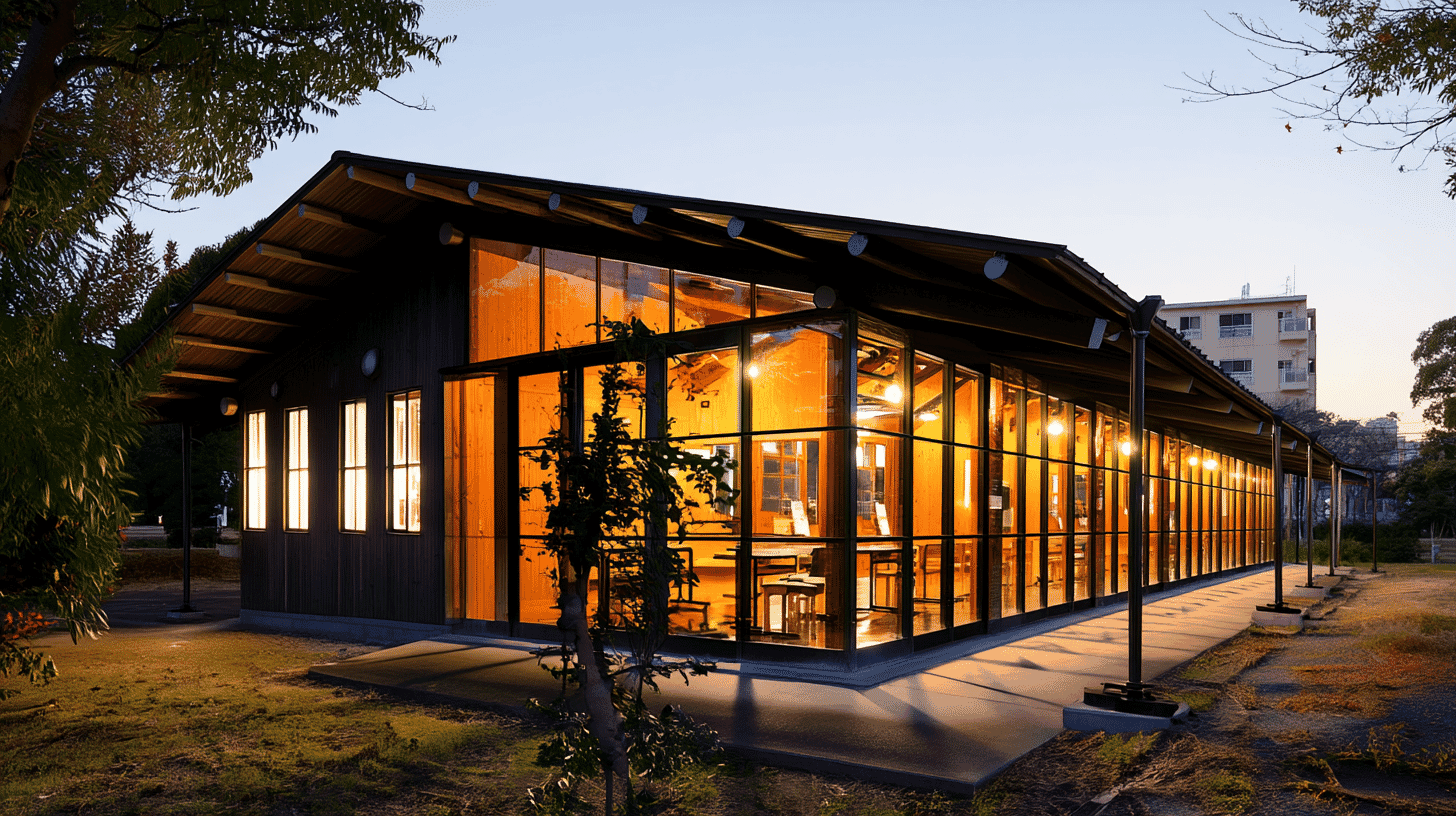
Raymond Hall at Mie University: Where Modernist Vision Meets Japanese Tradition
Tucked away on the campus of Mie University in Tsu City, Japan, stands a remarkable wooden structure that represents one of the finest examples of post-war modernist architecture in the country. Raymond Hall, designed by the legendary Czech-American architect Antonin Raymond in 1951, is a registered Tangible Cultural Property that offers visitors a rare glimpse into the pioneering spirit that shaped modern Japanese architecture.
This unassuming single-story building may appear modest at first glance, but it embodies revolutionary design principles that would influence generations of Japanese architects. For travelers interested in architectural heritage and those seeking off-the-beaten-path cultural experiences in Japan, Raymond Hall represents an exceptional destination that deserves far more attention than it typically receives.
The Genius Behind the Design: Antonin Raymond
To truly appreciate Raymond Hall, one must first understand the remarkable architect who created it. Antonin Raymond (1888-1976) was born in Bohemia, in what is now the Czech Republic, and studied architecture at the Prague Polytechnic. After emigrating to America, he joined the office of Frank Lloyd Wright and came to Japan in 1919 to assist with the construction of the iconic Imperial Hotel in Tokyo.
Raymond fell in love with Japan and chose to remain after the Imperial Hotel project concluded. He established his own practice in 1921 and spent 44 years of his professional life in Japan, becoming one of the most influential figures in the development of modern Japanese architecture. His office trained legendary architects including Kunio Maekawa, Junzo Yoshimura, and furniture designer George Nakashima.
Raymond developed five core principles that guided his architectural philosophy: buildings should be Natural, Simple, Direct, Economical, and Honest. These principles are beautifully manifested in Raymond Hall, which demonstrates his mastery in creating spaces that harmonize Western modernist ideals with traditional Japanese sensibilities.
A Building with a Remarkable Journey
Raymond Hall has a fascinating history that mirrors the development of higher education in Mie Prefecture. Originally constructed in 1951 as the library for Mie Prefectural University, the building was situated on the Otani Campus in Tsu City, where the current Mie Prefectural Art Museum now stands. The commission came through a personal connection—a professor at the university was a high school friend of an architect at Raymond's office.
When Raymond received the project, he visited the site and also made a pilgrimage to Ise Grand Shrine, one of Japan's most sacred Shinto sites. This encounter with the sublime simplicity of Ise's ancient architecture is believed to have profoundly influenced his design approach for the library.
In 1969, when Mie Prefectural University merged with the national Mie University, the decision was made to relocate Raymond Hall to the current campus rather than demolish it—a testament to the deep appreciation that the university community held for the building's architectural value. It was carefully dismantled and reconstructed near the South Gate of Mie University, where it stands today.
After serving as a cafeteria for the Faculty of Fisheries for many years, the building was renamed "Raymond Hall" in honor of its designer. In March 2003, it was officially registered as a Tangible Cultural Property of Japan, recognized as "exemplary in form and design."
Why Raymond Hall Was Designated a Cultural Property
Raymond Hall was registered as a Tangible Cultural Property under the criterion of being "exemplary in form" (造形の規範となっているもの). This designation recognizes the building's significance as an outstanding example of the "Raymond Style"—a distinctive approach to wooden architecture that the architect developed in post-war Japan.
The building demonstrates Raymond's innovative use of small-diameter log timber as structural elements, a technique that was both economical and aesthetically striking. During the post-war period when construction materials were scarce, Raymond ingeniously utilized round logs typically used for scaffolding, transforming humble materials into elegant architectural expressions.
Raymond Hall was constructed in the same year as Raymond's own residence in Azabu, Tokyo (1951), making it one of the earliest and most important examples of this mature phase of his wooden architecture. The building represents a pivotal moment in architectural history when Western modernist principles were being reinterpreted through Japanese craftsmanship and spatial sensibilities.
Architectural Highlights and What to Observe
Visitors to Raymond Hall will discover numerous architectural features that make this building exceptional. The structure is a single-story wooden building with a gently sloping gable roof covered in metal sheeting. The deep eaves create a sense of shelter and connection to the surrounding landscape.
The most striking feature is the exposed structural framework of round cedar logs. Inside the hall, columns, ridge beams, purlins, rafters, and diagonal braces are all visible, creating a powerful visual rhythm that gives the space its distinctive character. The minimal use of material—just what is structurally necessary—exemplifies Raymond's commitment to honesty and directness in architecture.
The south facade is remarkably open, featuring floor-to-ceiling sliding glass doors that blur the boundary between interior and exterior space. Originally, this side faced a pond, and students would gather on the lawn for outdoor reading—a feature specifically designed into the original plans. This openness reflects the Japanese architectural tradition of connecting buildings intimately with nature.
Today, Raymond Hall houses exhibits related to its history and architecture, including replica design drawings from the Antonin Raymond architectural office and a detailed scale model created by architecture students at Mie University. A reading corner allows visitors to browse architecture-related publications while appreciating the space.
Experiencing Raymond Hall Today
Raymond Hall is open to the public on weekdays (Monday through Friday, excluding holidays) from 9:00 AM to 4:00 PM. While reservations are not required for general visits, the hall is occasionally closed for private events, so checking the schedule in advance is recommended.
Take your time to appreciate the structural details and the quality of light within the space. The interplay between the warm tones of the cedar logs and the soft daylight filtering through the large windows creates an atmosphere of tranquil contemplation. For architecture enthusiasts, this is an opportunity to experience firsthand the work of an architect who helped define modern Japanese architecture.
Don't miss the architectural model displayed in the main lobby of the adjacent Mie University Library, which provides an excellent overview of the building's structural system and spatial organization.
Exploring the Surrounding Area
A visit to Raymond Hall can be combined with other cultural attractions in Tsu City and the broader Mie Prefecture region. On the Mie University campus itself, visitors can also see Sansui Kaikan, another registered cultural property—a distinctive wooden building from 1936 that served as the alumni hall for the former Mie Higher Agricultural and Forestry School.
Tsu City offers several other attractions worth exploring. The Mie Prefectural Art Museum, located on the former site of the original Raymond Hall, houses an excellent collection of modern Japanese art. The Mie Prefectural Museum (MieMu) provides comprehensive exhibits on the natural and cultural heritage of the region. The ruins of Tsu Castle offer pleasant grounds for a stroll with views over the city.
For those with more time, Mie Prefecture is the gateway to Ise Grand Shrine, one of Japan's most important spiritual sites. The connection is particularly meaningful given Raymond's own visit to Ise during the design of this building. The famous Sakakibara Onsen hot spring resort, praised by the Heian-era writer Sei Shonagon in her "Pillow Book," is also accessible from the area.
- 📍 Plan Your Visit to Mie
- Find tours, activities & transport passes near Mie University Raymond Hall
- [ Ise Grand Shrine & Shima Bay Cruise Tours ]
Q&A
- Is Raymond Hall related to Frank Lloyd Wright's architecture?
- While Raymond Hall was not designed by Wright, it was created by Antonin Raymond, who worked as Wright's assistant on the famous Imperial Hotel in Tokyo. Raymond developed his own distinctive style after establishing independence from Wright's strong influence, though traces of organic architecture principles can be seen in Raymond's deep respect for natural materials and harmonious spatial design.
- Can visitors enter Raymond Hall and take photographs?
- Yes, Raymond Hall is open to visitors during its operating hours (Monday-Friday, 9:00-16:00, excluding holidays). Photography for personal use is generally permitted. The hall occasionally hosts exhibitions and events, so checking the schedule beforehand is recommended.
- What makes the "Raymond Style" distinctive?
- The Raymond Style is characterized by the use of small-diameter round logs as exposed structural elements, creating minimal yet visually striking frameworks. Raymond used split logs fastened with bolts to create "scissor" or "embracing" beams. Combined with extensive glazing and deep eaves, this approach created spaces that were economical, honest in their expression of structure, and harmonious with Japanese spatial sensibilities.
- Are there other Raymond-designed buildings I can visit in Japan?
- Yes, several Raymond buildings remain in Japan. Notable examples include St. Paul's Catholic Church in Karuizawa, the Peynet Museum (formerly Raymond's Summer House) in Karuizawa, and Nanzan University campus buildings in Nagoya. In Takasaki, Gunma Prefecture, visitors can see a replica of Raymond's own residence at the Takasaki City Museum of Art.
- What is the best way to combine a visit to Raymond Hall with Ise Grand Shrine?
- From Mie University, you can take the Kintetsu Line from Edobashi Station toward Iseshi Station (approximately 40 minutes by limited express). This allows you to experience both Raymond's masterpiece and the ancient Shinto architecture that inspired him on the same trip. Consider visiting Raymond Hall in the morning and Ise Grand Shrine in the afternoon.
Basic Information
| Name | Mie University Raymond Hall (三重大学レーモンドホール) |
|---|---|
| Architect | Antonin Raymond (アントニン・レーモンド) |
| Year Built | 1951 (relocated to current site in 1969) |
| Cultural Property Designation | National Registered Tangible Cultural Property (registered March 18, 2003) |
| Registration Number | 24-0047 |
| Structure | Single-story wooden building with metal roof, total floor area approximately 337㎡ |
| Original Construction | Taisei Corporation / Relocation: Asanuma Corporation |
| Location | 1577 Kurimamachiya-cho, Tsu City, Mie Prefecture 514-8507 (Near South Gate of Mie University) |
| Opening Hours | Monday-Friday 9:00-16:00 (closed on holidays) |
| Admission | Free |
| Access | 15-minute walk from Kintetsu Edobashi Station; 10-minute bus ride from JR/Kintetsu Tsu Station |
| Contact | Mie University Facilities Department: 059-231-9966 |
References
- Mie University Library - Raymond Hall and Antonin Raymond
- https://www.lib.mie-u.ac.jp/about_library/gallery/gallery2.html
- Mie University - Raymond Hall Facility Information
- https://www.mie-u.ac.jp/shisetsu/facility/raymond/
- Mie University - Museum Cooperation Promotion Office
- https://www.mie-u.ac.jp/hakugaku/utilize/
- Cultural Heritage Online - Mie University Raymond Hall
- https://bunka.nii.ac.jp/heritages/detail/183153
- Agency for Cultural Affairs - National Database of Designated Cultural Properties
- https://kunishitei.bunka.go.jp/heritage/detail/101/00003243
- Antonin Raymond - Wikipedia
- https://ja.wikipedia.org/wiki/アントニン・レーモンド
Last verified: 2026.01.27
Nearby heritages
- Mie University Sansui Hall
- 1515 Kamihamacho, Tsu City, Mie Prefecture
- Wooden Standing Statue of Amida Buddha / Wooden Standing
- 3060 Isshinden Kamitsubeda, Tsu City, Mie Prefecture
- Former Yoshida Hospital Inpatient Wing
- 4998-2 Minamishinbata, Shirazuka-cho, Tsu City, Mie Prefecture
- Former Yoshida Clinic Main Building
- 4998-2 Minamishinbata, Shirazuka-cho, Tsu City, Mie Prefecture
- Former Yoshida Clinic Gate
- 4998-2 Minamishinbata, Shirazuka-cho, Tsu City, Mie Prefecture
- Wooden Standing Statue of Amida Buddha
- 3060 Isshinden Kamitsubeda, Tsu City, Mie Prefecture
- Black Lacquer Shrine
- 1041 Nakamura, Minomaki, Nabari City
- Documents Delivered Within the Statue
- 3060 Isshinden Kamitsubeda, Tsu City, Mie Prefecture
- Sliding Door Paintings from the Former Nagashima Family Home
- Mie Prefectural Art Museum, 11 Otanicho, Tsu City, Mie Prefecture
- Kannon Hall of Ebiyama Kannon Temple
- 447 Daimon, Tsu City, Mie Prefecture