Mutsu Kokubunji Yakushido: Sendai's Hidden Momoyama Treasure and Date Masamune's Spiritual Legacy

Discover Mutsu Kokubunji Yakushido, a nationally designated Important Cultural Property in Sendai. Built by Date Masamune in 1607, this Momoyama-era temple blends austere exteriors with dazzling interiors. Walk in the footsteps of Matsuo Basho on the Narrow Road to the Deep North.

Mutsu Kokubunji Yakushido: Where Date Masamune's Vision Meets Ancient Buddhist Heritage

In the heart of modern Sendai, just a short walk from the bustling Yakushido subway station, stands a remarkable survivor of Japanese history—the Mutsu Kokubunji Yakushido. This Important Cultural Property represents not merely a building, but a living connection to three distinct eras of Japanese civilization: the ancient Nara period provincial temple system, the magnificent Momoyama aesthetic, and the refined cultural sensibilities of the early Edo period.

Originally established in the 740s under Emperor Shōmu's nationwide temple-building initiative, the Mutsu Kokubunji was once the northernmost provincial temple in ancient Japan, serving as a spiritual bulwark for the fledgling imperial presence in the Tōhoku region. Though the original temple fell into ruin over the centuries, it was magnificently reborn in 1607 through the vision and patronage of Date Masamune, the legendary "One-Eyed Dragon" who transformed Sendai into one of Japan's great castle towns.

Why Mutsu Kokubunji Yakushido Became an Important Cultural Property

The Yakushido was designated as a Special Protected Structure (equivalent to today's Important Cultural Property) in 1903, making it one of the earliest buildings in the Tōhoku region to receive such recognition. This designation reflects several exceptional qualities that distinguish this temple from other religious structures of its era.

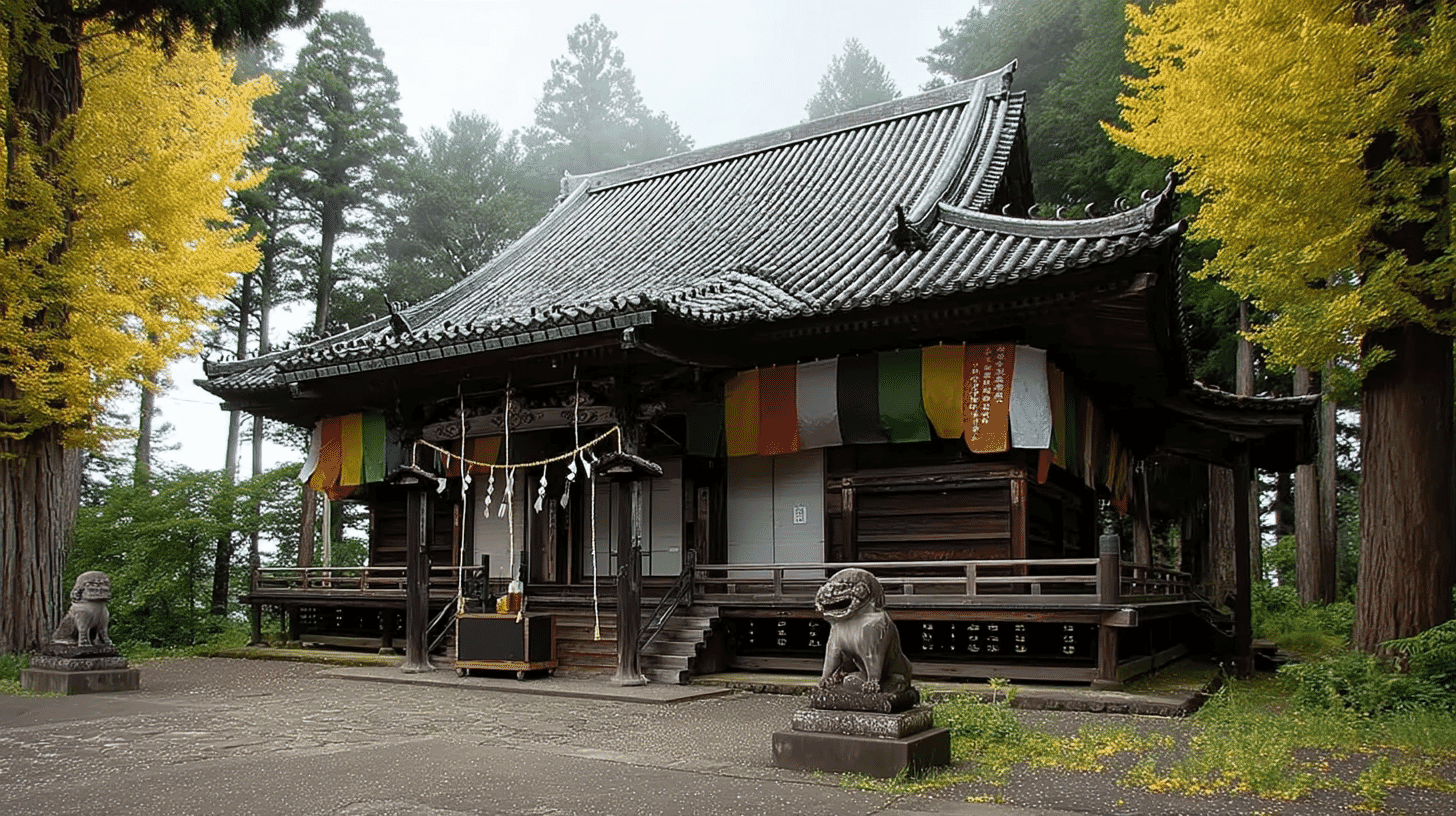
The building represents a masterpiece of Momoyama period architecture, yet deliberately departs from the ostentatious style typically associated with Date Masamune's constructions. While Masamune's other projects, such as the Zuihōden mausoleum and Ōsaki Hachimangū shrine, feature elaborate exterior decorations, the Yakushido presents a striking contrast—an austere, unpainted wooden exterior concealing an interior of breathtaking splendor. This sophisticated aesthetic choice demonstrates a mature understanding of Buddhist architectural philosophy, where outward simplicity gives way to inner radiance.

The temple's cultural significance extends beyond its architectural merit. It stands on the exact site of the original Nara period lecture hall (kōdō), maintaining a direct physical and spiritual connection to Japan's ancient temple-building tradition. The adjacent Niōmon gate occupies the precise location of the original South Gate, and together these structures preserve the memory of the vast temple complex that once dominated this landscape.

Architectural Splendor: The Art of Dramatic Contrast

The Yakushido measures approximately 15 meters square, built in the five-bay by five-bay format with an elegant irimoya-zukuri (hip-and-gable) roof covered in traditional ceramic tiles. A single-bay worship hall (kōhai) extends from the front, providing shelter for visitors approaching the altar. The building rests on stone foundations and features a wraparound veranda (engawa) with ornamental balustrades.

Step inside, however, and the experience transforms completely. The interior is divided between the outer sanctuary (gejin) and the inner sanctuary (naijin), which houses the main altar (shumidan). The columns of the inner sanctuary are covered in gold leaf, while elaborate carvings, decorative metalwork, and vividly painted transoms (ranma) create an atmosphere of overwhelming beauty. At the center of this sacred space sits an exquisite miniature shrine (zushi) of extraordinary craftsmanship, its walls and doors decorated with intricate carvings and brilliant colors.

This dramatic contrast between exterior simplicity and interior magnificence represents a defining characteristic of the "Date Culture" (Date-na bunka)—the distinctive aesthetic that Masamune cultivated by blending traditional Tōhoku sensibilities with the sophisticated Momoyama culture of the Kyoto-Osaka region.

The Sacred Treasures Within

The principal object of worship (honzon) is a gilded bronze statue of Yakushi Nyōrai, the Medicine Buddha, enshrined within the elaborate zushi cabinet. This image is maintained as a hibutsu (hidden Buddha), revealed to the public only once each year during the Nanukadō ceremony. The statue is flanked by wooden images of Nikkō Bosatsu and Gakkō Bosatsu, dated to 1645 and registered as Sendai City Cultural Properties.

The temple originally housed an impressive array of Kamakura period (1185-1333) Buddhist sculptures, including twelve Jūnishinshō (Twelve Divine Generals), Fudō Myōō, and Bishamonten statues. Created as a unified set by local sculptors in the early Kamakura period, these powerful warrior figures are now designated Miyagi Prefectural Cultural Properties and are displayed at the Sendai City Museum.

Walking in Matsuo Bashō's Footsteps

In the summer of 1689, the celebrated haiku poet Matsuo Bashō visited this very site during his legendary journey that would become "Oku no Hosomichi" (The Narrow Road to the Deep North). Bashō recorded visiting "Tsutsujigaoka Tenjin" (the present-day Tsutsujigaoka Tenmangū shrine) and then proceeding to the Yakushido at "Kinoshita"—the traditional name for this area, derived from the famous waka poem in the Kokin Wakashū anthology.

In recognition of this literary connection, the Yakushido and its surrounding landscape were designated as a National Scenic Beauty Site in 2015 under the category "Landscapes of Oku no Hosomichi." Within the temple grounds, you can discover a haiku monument erected in 1782 by the Suruga poet Yamanami Kanso, as well as a memorial stone for Ōyodo Michikazeaz, a haiku master whom Bashō visited during his stay in Sendai. These monuments testify to the enduring influence of Bashō's journey on later generations of poets who came to pay homage to this historic landscape.

Ancient Ruins: Echoes of the Nara Period Temple

Surrounding the Yakushido are the archaeological remains of the original Nara period Mutsu Kokubunji, designated as a National Historic Site in 1922. Excavations conducted from 1955 to 1959 revealed the layout of one of the largest provincial temples in ancient Japan, covering an area of approximately 240 meters square.

The original temple complex included a South Gate, Middle Gate, Golden Hall (kondō), Lecture Hall, cloisters, and a magnificent seven-story pagoda. Historical records tell us that this pagoda was struck by lightning and destroyed by fire in 934 CE—during excavations, archaeologists discovered a bronze finial from the pagoda's spire, still embedded in the earth at an angle, exactly where it had fallen and penetrated the ground over a thousand years ago.

Today, you can still observe the original foundation stones of the pagoda and other structures scattered across the tranquil temple grounds. A ginkgo tree estimated to be 390 years old—meaning it was likely planted around the time of Masamune's reconstruction—stands as a living witness to the centuries of history that have unfolded here.

Other Treasures of the Temple Grounds

Beyond the Yakushido itself, the temple complex contains several other structures of historical and artistic significance.

The Niōmon (Deva King Gate) was constructed simultaneously with the Yakushido in 1607 and is designated as a Miyagi Prefectural Cultural Property. This three-bay thatched-roof gate houses a pair of fierce guardian statues and stands on the exact location of the original Nara period South Gate, reusing some of the ancient foundation stones.

The Shōrō (Bell Tower) underwent extensive restoration work from 2019 to 2022, during which time researchers made a remarkable discovery: the structure actually dates to the late Muromachi period (15th-16th century), making it the oldest surviving building in Sendai City. It received major repairs during Masamune's reconstruction and is now designated as a Sendai City Cultural Property.

The Juntei Kannon-dō (Cundī Hall) was built in 1745 by Date Munemura, the fifth lord of Sendai Domain, at the request of his mother. This small vermilion-painted hall is the 25th site on the Sendai 33 Kannon Pilgrimage and opens annually on March 3rd. It is registered as a Sendai City Cultural Property.

Adjacent to the temple grounds stands Hakusan Shrine, which served as the guardian deity (chinju) of Mutsu Kokubunji throughout the Edo period. The shrine was rebuilt along with the temple complex in 1607 and is designated as a Miyagi Prefectural Cultural Property.

Experiencing Traditional Festivals and Events

The most significant annual event at Mutsu Kokubunji is the Nanukadō Shushōe ceremony, now held on February 11th (originally January 7th by the lunar calendar). This is the only day each year when the secret principal image of Yakushi Nyōrai is revealed to worshippers. Visitors gather in the hall, and at the climactic moment when the zushi doors open, they throw offerings toward the altar—a tradition dating back to the Edo period. The ceremony concludes with a dramatic fire-walking ritual (hiwatari) held in the temple courtyard.

On the 8th of every month, the temple holds a memorial service for Yakushi Nyōrai, featuring goma (fire ritual) prayers and dharma talks by the chief priest. On this same day, a popular artisan market called "Oyakushi-san no Tezukuri Ichi" (The Medicine Buddha's Handcraft Market) fills the temple grounds with vendors selling handmade crafts, foods, and other goods. This monthly event has become a beloved gathering place for locals and visitors alike.

Surrounding Area: Expanding Your Temple Visit

The Mutsu Kokubunji area offers numerous opportunities to extend your cultural exploration. Just steps from Yakushido Station, the Kokubunji Temple Site Guidance Facility provides detailed information about the archaeological discoveries and the history of provincial temples in ancient Japan.

For fans of Date Masamune, a visit to Mutsu Kokubunji pairs perfectly with other sites associated with the legendary warlord. Zuihōden, Masamune's elaborately decorated mausoleum, showcases the full splendor of Momoyama architecture and is located about 3 kilometers away. Ōsaki Hachimangū, a National Treasure shrine also built by Masamune in 1607, represents another must-see example of Date Culture architecture.

The nearby Rakuten Mobile Park Miyagi (home of the Tōhoku Rakuten Golden Eagles baseball team) offers a modern contrast to the area's ancient heritage. For those seeking natural beauty, the grounds of Tsutsujigaoka Park and Tenmangū shrine—where Bashō walked before visiting the Yakushido—provide a pleasant stroll, especially during plum and cherry blossom seasons.

Practical Tips for Visitors

The temple grounds are freely accessible year-round, allowing visitors to appreciate the exterior architecture and explore the archaeological ruins at their leisure. The interior of the Yakushido, with its magnificent golden altar, can be viewed during the monthly memorial services on the 8th, when visitors may enter the inner sanctuary to pray before the Medicine Buddha.

For photography enthusiasts, morning light beautifully illuminates the eastern façade of the Yakushido, while the ancient ginkgo tree creates a spectacular golden canopy during November. The quiet residential neighborhood surrounding the temple provides a peaceful atmosphere quite different from Sendai's busy downtown area.

The temple welcomes visitors of all faiths and backgrounds. For those wishing to participate in prayer rituals, goma prayer sticks (350 yen) are available for purchase, allowing you to write your wishes and have them offered in the sacred fire ceremony.

📍 Plan Your Visit to Miyagi
Find tours, activities & transport passes near Mutsu Kokubunji Yakushido Hall
[ Matsushima Bay Cruise & Sendai Food Tours ]

Q&A

QWhen can I see the secret Buddha statue (hibutsu)?
AThe principal image of Yakushi Nyōrai is revealed only once a year during the Nanukadō Shushōe ceremony, held on February 11th. On this day, worshippers gather in the hall, and the zushi cabinet doors are opened for a brief moment at the climax of the ceremony. This tradition dates back to the Edo period and attracts large crowds of faithful visitors.
QIs there an admission fee to visit Mutsu Kokubunji?
AThe temple grounds and exterior of the buildings can be visited free of charge at any time. During monthly memorial services on the 8th of each month, visitors can enter the Yakushido interior by purchasing a goma prayer stick (350 yen). There is no charge to explore the archaeological ruins of the ancient temple site.
QHow do I get to Mutsu Kokubunji Yakushido?
AThe most convenient access is via the Sendai Subway Tōzai Line. Exit at Yakushidō Station and the temple is just a 3-minute walk to the west. Alternatively, take a bus from Sendai Station (approximately 15 minutes) to the Kokubunji Yakushidō-mae bus stop. If driving, the temple is about 10 minutes from the Sendai-Nanbu Road Nagamachi IC.
QWhat is the connection between this temple and Matsuo Bashō?
AMatsuo Bashō visited the Yakushido in 1689 during his famous journey that became "Oku no Hosomichi" (The Narrow Road to the Deep North). The area called "Kinoshita" (Under the Trees) where the temple stands was a famous utamakura (poetic place-name) from the Kokin Wakashū poetry anthology. In 2015, the temple and its surroundings were designated a National Scenic Beauty Site as part of the "Landscapes of Oku no Hosomichi."
QWhat happened to the Kamakura period Buddhist statues?
AThe 14 Kamakura period statues (Twelve Divine Generals, Fudō Myōō, and Bishamonten) that once flanked the main altar are now preserved at the Sendai City Museum. These powerful wooden sculptures, designated as Miyagi Prefectural Cultural Properties, can be viewed during the museum's regular exhibition hours. The statues were moved for better preservation and to allow scholarly study of these important examples of medieval Buddhist sculpture.

Basic Information

Official Name Gokokuzan Iōin Kokubunji (護国山医王院国分寺) / commonly called Mutsu Kokubunji Yakushido
Buddhist Sect Shingon-shū Chizan-ha (真言宗智山派)
Principal Image Yakushi Nyōrai (Medicine Buddha) - gilt bronze statue, hibutsu
Original Foundation 740s CE (Nara period) under Emperor Shōmu's provincial temple initiative
Current Building 1607 (Keichō 12), reconstructed by Date Masamune
Architectural Style 5-bay × 5-bay hall, irimoya-zukuri (hip-and-gable roof), hon-gawarabuki (ceramic tile roof)
Dimensions Approximately 14.93m × 14.93m
Cultural Property Designations National Important Cultural Property (Yakushido, 1903); National Historic Site (temple ruins, 1922); National Scenic Beauty (2015)
Address 3-8-1 Kinoshita, Wakabayashi-ku, Sendai, Miyagi 980-0047
Phone 022-291-2840
Access 3-minute walk from Yakushidō Station (Sendai Subway Tōzai Line)
Monthly Events 8th of each month: Memorial service (9:30 AM) and Handcraft Market (10:00 AM)
Annual Events February 11: Nanukadō Shushōe (hibutsu unveiling); March 3: Juntei Kannon-dō opening

References

Mutsu Kokubun-ji - Wikipedia (English)
https://en.wikipedia.org/wiki/Mutsu_Kokubun-ji
陸奥国分寺 - Wikipedia (Japanese)
https://ja.wikipedia.org/wiki/陸奥国分寺
Mutsu Kokubunji Official Website
http://www.08943.com/
Sendai Tourism Official Site - Mutsu Kokubunji Yakushido
https://www.sentabi.jp/guidebook/attractions/89/
Yakushido Hall of Mutsukokubunji Temple - Japan Heritage "DATE Culture"
http://datebunka.jp/en/cp/11/
Cultural Heritage Online - Mutsu Kokubunji Yakushido
https://bunka.nii.ac.jp/heritages/detail/187963
Miyagi Prefecture - Oku no Hosomichi Scenic Sites
https://www.pref.miyagi.jp/soshiki/bunkazai/okunohosomichinofukeichi.html
Miyagi Prefecture - Important Cultural Property: Mutsu Kokubunji Yakushido
https://www.pref.miyagi.jp/soshiki/bunkazai/08kokubunji.html

Last verified: 2025.12.05

Nearby heritages