Tsuchikurogawa River Okichimozuku Habitat: Discovering Japan's Rarest Freshwater Algae

In the volcanic valleys of Shimabara Peninsula, where the Unzen mountain range meets the Ariake Sea, flows a modest river called Tsuchikurogawa. This unassuming waterway holds a remarkable secret—it is one of only three places in the world designated as a Natural Monument for harboring Okichimozuku (Nemalionopsis tortuosa), a critically endangered freshwater red algae found nowhere else on Earth.

The Tsuchikurogawa River Okichimozuku Habitat represents far more than a scientific curiosity. It embodies Japan's deep commitment to preserving even the smallest and most vulnerable forms of life, offering international visitors a unique glimpse into the nation's ecological heritage and the delicate balance between volcanic geology and aquatic ecosystems.

What is Okichimozuku? Understanding This Unique Organism

Okichimozuku is an extraordinary freshwater red algae endemic to Japan. First discovered in 1938 at Okichi Spring in Ehime Prefecture by botanist Yasuichi Yagi, this species was scientifically described in 1940 as a new species within the Batrachospermaceae family. Its distinctive characteristics make it one of the most fascinating organisms in Japanese freshwater ecosystems.

The algae grows in thread-like forms with extensive branching, reaching lengths of up to 40 centimeters when fully developed. Its coloration ranges from dark purplish-red to reddish-brown, creating a subtle but distinctive appearance underwater. Unlike many algae that float freely, Okichimozuku attaches firmly to small stones and rocks on riverbed surfaces, reproducing through spores rather than sexual reproduction.

What makes Okichimozuku particularly remarkable is its extremely limited distribution. Despite extensive surveys across Japan, natural populations have been confirmed in only about 20 locations throughout Shikoku, Kyushu, and Okinawa. However, many of these sites have experienced population decline or complete extinction. Currently, only three locations hold the distinguished status of National Natural Monument: Okichi Spring in Ehime Prefecture (the type locality), Tsuchikurogawa River in Nagasaki Prefecture, and Shizugawa River in Kumamoto Prefecture.

The Seasonal Life Cycle: A Winter Wonder

Okichimozuku exhibits a fascinating seasonal growth pattern that reflects its adaptation to specific environmental conditions. The algae begins its annual appearance each November, emerging as the water temperatures drop and winter approaches. Growth gradually intensifies, reaching its peak abundance from mid-January through late March, when the riverbed becomes adorned with its distinctive thread-like forms.

As spring transitions to early summer, between April and May, the algae gradually diminishes and eventually disappears completely. This ephemeral nature—appearing only during the cooler months—adds to both its mystique and vulnerability. The limited growing season means that any disturbance during these critical months can have severe consequences for the population.

The algae's sensitivity to environmental conditions makes it an excellent biological indicator of water quality and ecosystem health. It requires exceptionally clean, cool water with specific mineral content, consistent flow rates, and appropriate light conditions. Even minor changes in water chemistry, temperature, or clarity can prove fatal to the colonies.

Why Was Tsuchikurogawa Designated as a Natural Monument?

The Tsuchikurogawa River Okichimozuku Habitat received its designation as a National Natural Monument on May 1, 1961, recognizing its exceptional scientific and ecological value. This designation came with a fascinating historical twist—the site had previously been designated as a "Chisujinori Habitat" (a different algae species) in 1924. After scientists confirmed that the algae was actually the newly described Okichimozuku species, the original designation was rescinded and replaced with the current one.

The scientific importance of this site cannot be overstated. Okichimozuku represents a unique evolutionary lineage within freshwater red algae, offering insights into algal adaptation to specific freshwater environments. Its extreme rarity and limited distribution make every surviving population crucial for understanding the species' biology, ecology, and conservation needs.

Beyond its scientific value, the designation reflects broader principles in Japanese cultural heritage protection. Japan's Natural Monument system, inspired by German conservation concepts but uniquely adapted to Japanese philosophy, treats natural phenomena with the same reverence as cultural artifacts. Just as a temple or shrine might be protected for its historical significance, so too is Okichimozuku protected for its irreplaceable place in Japan's natural heritage.

The site exemplifies how volcanic landscapes create unique ecological niches. The Tsuchikurogawa River flows from the valleys of Mount Unzen, and its water chemistry is influenced by volcanic minerals. This specific combination of geology, hydrology, and climate creates the rare conditions necessary for Okichimozuku survival.

The Current Conservation Challenge

Despite its protected status, the Tsuchikurogawa population faces severe challenges. Since around 1985, Okichimozuku has not been observed in the river, raising concerns about local extinction. This mirrors a broader pattern across Japan, where many Okichimozuku populations have declined dramatically or disappeared entirely.

The species is currently listed as Endangered Class I (CR+EN) in Japan's Red Data Book, indicating it faces an extremely high risk of extinction in the wild. Multiple factors contribute to this precarious situation, including water quality degradation from urban and agricultural runoff, changes in water flow patterns due to river management, reduced shading from tree removal along riverbanks, and competition from more aggressive aquatic plants.

Conservation efforts for Okichimozuku face unique challenges. Unlike charismatic megafauna that easily capture public attention and support, a microscopic algae that most people will never see requires a different approach to conservation advocacy. Scientists and conservationists must balance public access for educational purposes against the need to protect these extremely fragile habitats.

However, there is hope. At Okichi Spring, the original discovery site where Okichimozuku disappeared in the 1970s, careful habitat restoration including light adjustment and stream course modification led to the species' reappearance after 2001. This success story demonstrates that with proper understanding and management, recovery is possible.

Exploring Tsuchikurogawa and Its Natural Environment

The Tsuchikurogawa River flows through the northern section of Shimabara Peninsula, originating in the valleys of the Unzen volcanic complex and eventually emptying into the Ariake Sea. At its lower reaches, the river measures approximately 10 meters wide, narrowing to about 8 meters in the middle sections. The relatively small scale creates an intimate setting for observing this unique ecosystem.

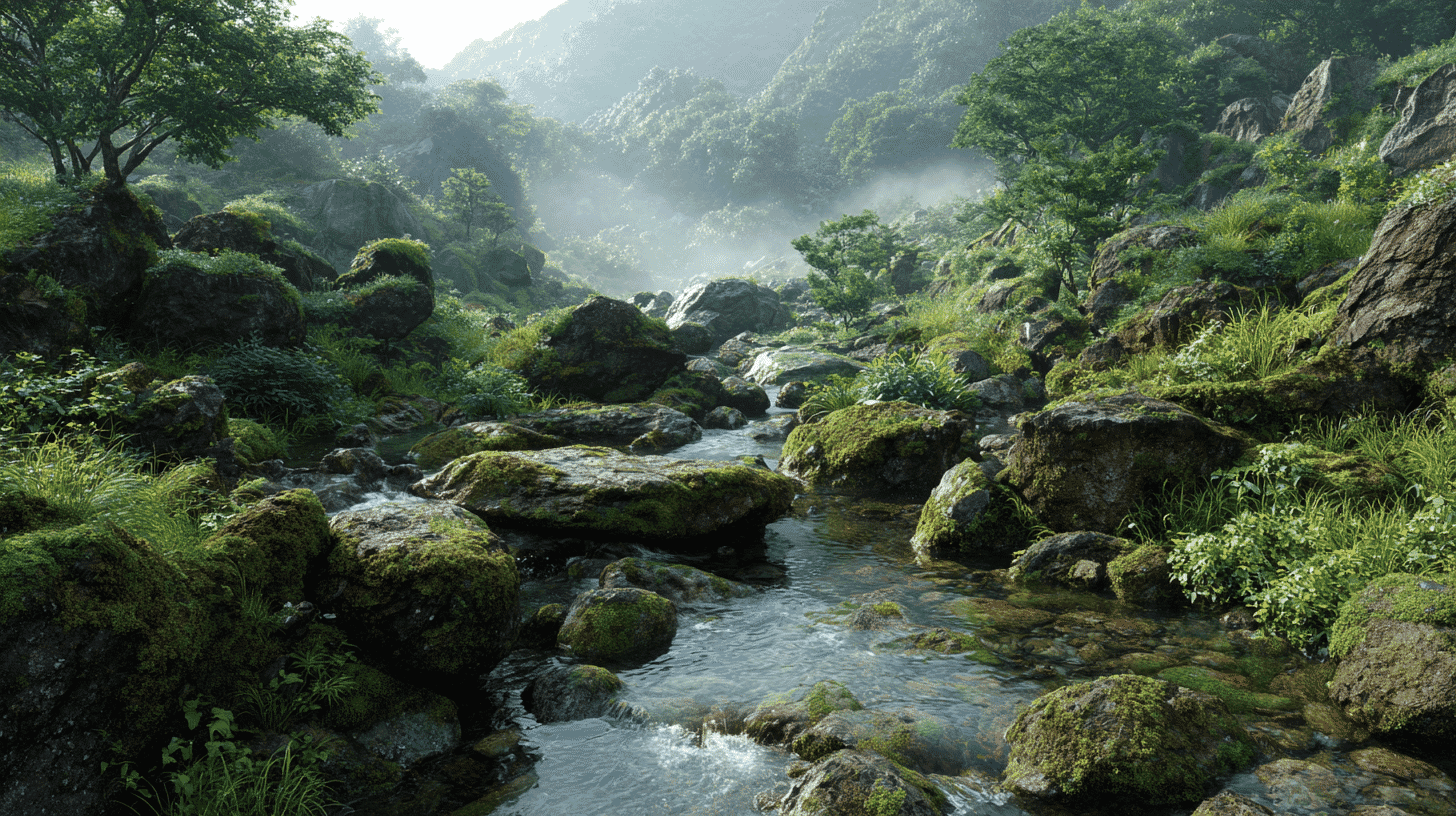
The river valley embodies the characteristic landscape of volcanic regions—clear, mineral-rich waters flowing over volcanic rock, surrounded by lush vegetation that thrives in the fertile volcanic soils. Even without the visible presence of Okichimozuku, the site offers visitors insight into the type of pristine freshwater environment that once supported these rare organisms.

Visiting the designated Natural Monument area allows for appreciation of several interconnected ecological elements. The water clarity that Okichimozuku requires means that the river maintains exceptional purity. The volcanic geology visible in rock formations along the riverbed tells the story of Unzen's geological history. The surrounding forest ecosystem demonstrates how upland vegetation helps maintain water quality through natural filtration.

While direct observation of Okichimozuku may not be possible during most visits, the site serves as an important reminder of invisible ecological relationships. The health of this small river system connects to broader watershed management, volcanic hydrology, and the delicate balance required to support specialized organisms.

Combining Your Visit: Unzen's Cultural and Natural Treasures

A visit to Tsuchikurogawa gains deeper meaning when combined with exploration of the broader Unzen and Shimabara Peninsula region, an area rich in both natural wonders and cultural heritage.

Unzen Onsen, located in the mountainous heart of the peninsula, has welcomed visitors for over 1,300 years. This historic hot spring resort area, designated as part of Japan's first national park in 1934, offers the dramatic spectacle of Unzen Jigoku (Hell Valley), where sulfurous steam vents and boiling mud pools demonstrate the ongoing volcanic activity that shapes the region. The therapeutic waters, influenced by the same volcanic forces that created habitats like Tsuchikurogawa, provide both relaxation and a tangible connection to the peninsula's geological character.

Just north of Tsuchikurogawa lies Kojiro-Koji, a beautifully preserved samurai district in Unzen City that was designated as an Important Preservation District for Groups of Traditional Buildings. The Nabe-shima Residence, with its long stone walls and nagaya-mon gate dating to the Genroku period, offers a glimpse into Edo-period life. Walking through these streets where time seems to have stood still provides historical context to the region's human heritage, complementing its natural heritage.

The broader Shimabara Peninsula offers numerous attractions. Shimabara City features an impressive castle and traditional water channels where koi swim through the streets, sustained by the abundant volcanic spring water. Obama Onsen, on the peninsula's west coast, boasts some of Japan's hottest spring waters and spectacular sunset views over Tachibana Bay. For Christian history enthusiasts, Hara Castle Ruins—a UNESCO World Heritage Site—tells the tragic story of the Shimabara Rebellion.

Practical Visitor Information for Nature Enthusiasts

For international visitors interested in Japanese conservation efforts and rare natural phenomena, Tsuchikurogawa offers a meaningful destination, though one that requires realistic expectations.

The site is accessible via the Shimabara Railway, a charming local line that runs along the eastern coast of Shimabara Peninsula. From Isahaya Station, the journey takes approximately 50 minutes to the nearest station. Local buses also connect the area to Unzen Onsen and other regional hubs, though schedules can be infrequent, making rental car the most flexible option for exploring multiple sites.

Visitors should be aware that as a Natural Monument, the site is protected and certain activities may be restricted. The primary value for most international visitors lies not in seeing Okichimozuku itself—which, even when present, requires careful observation to identify—but in understanding Japan's approach to environmental conservation and the interconnected relationship between volcanic geology and freshwater ecology.

The best time to visit the broader region is during spring (April-May) when nearby Unzen showcases spectacular displays of Miyama-kirishima azaleas, or autumn (October-November) when the mountainous areas are ablaze with fall foliage. Winter visits (December-February) coincide with Okichimozuku's growing season at other locations, though not currently at Tsuchikurogawa, and offer the chance to see stunning rime ice formations on Unzen's peaks.

Photography enthusiasts will find the river valley and surrounding volcanic landscape compelling subjects, though visitors should respect any posted conservation guidelines. The site works best as part of a broader Shimabara Peninsula itinerary that includes better-known attractions like Unzen Jigoku, Shimabara Castle, and Obama Onsen.

Educational Value: Lessons in Conservation Philosophy

The Tsuchikurogawa River Okichimozuku Habitat offers international visitors valuable insights into Japanese conservation philosophy. Unlike Western approaches that often focus on charismatic megafauna or dramatic landscapes, Japan's Natural Monument system demonstrates equal reverence for the small, the subtle, and the scientifically significant.

This perspective reflects deeper cultural values—the same aesthetic appreciation for subtle beauty that informs traditional arts like tea ceremony or ikebana extends to the natural world. Okichimozuku, barely visible even when present, receives protection not because it is showy or economically valuable, but because it represents an irreplaceable part of natural diversity.

The site also illustrates the challenges of freshwater conservation in volcanic landscapes. Japan's extensive volcanic activity creates unique but fragile aquatic ecosystems. Understanding how to balance human water needs, development pressures, and conservation requirements represents an ongoing challenge that Tsuchikurogawa exemplifies.

For students of ecology and conservation biology, the site offers lessons in indicator species, habitat specificity, and the domino effects of environmental change. The decline of Okichimozuku populations across Japan mirrors broader patterns of freshwater biodiversity loss globally, making these small algae significant far beyond their size.

Q&A

QCan I actually see Okichimozuku at Tsuchikurogawa River?
AUnfortunately, Okichimozuku has not been observed at Tsuchikurogawa since around 1985, despite its protected status. The site remains valuable for understanding the type of pristine freshwater environment required by this rare species. If you wish to see Okichimozuku, Okichi Spring in Ehime Prefecture has had successful recolonization after conservation efforts. However, even there, the algae is only present during winter months (November through March) and requires careful observation as it grows attached to rocks underwater.
QHow do I access Tsuchikurogawa from major cities?
AFrom Nagasaki, take the train to Isahaya Station (about 30 minutes), then either take the Shimabara Railway toward Shimabara or use local buses heading to Unzen. From Fukuoka, you can reach Isahaya in about 1.5 hours via express train. Rental cars offer the most flexibility for exploring Tsuchikurogawa and surrounding Shimabara Peninsula attractions. The area is located in Kunimi-cho, Unzen City, Nagasaki Prefecture, approximately 1,270 meters upstream from the Tsuchikurogawa river mouth.
QWhat other Natural Monuments or rare species can I see in the Shimabara Peninsula?
AThe Shimabara Peninsula and broader Unzen region offer several unique natural attractions. Mount Unzen itself is a Special Natural Monument, and the area was designated as Japan's first National Park in 1934. The peninsula is part of the Shimabara Peninsula UNESCO Global Geopark, showcasing volcanic geology and its influence on local ecosystems. While specific biological Natural Monuments are limited, the region's volcanic features, including Unzen Jigoku (Hell Valley) with its active fumaroles, demonstrate the geological forces that create unique habitats like those required by Okichimozuku.
QIs the Tsuchikurogawa site suitable for families with children?
ATsuchikurogawa works best as a brief educational stop rather than a primary destination, particularly for families. The site itself is a natural river environment without extensive facilities or interpretation. However, it can be meaningfully incorporated into a family-friendly Shimabara Peninsula itinerary. Nearby attractions better suited for families include Unzen Jigoku with its dramatic volcanic features and foot steam baths, the hands-on exhibits at Gamadasu Dome volcanic museum, the historic Kojiro-Koji samurai district, and the beaches and hot springs of Obama Onsen. These attractions provide engaging experiences while teaching about the volcanic landscape that creates habitats like Tsuchikurogawa.
QWhat makes Japan's approach to protecting organisms like Okichimozuku different from other countries?
AJapan's Natural Monument system, established in 1919, was among the world's earliest legal frameworks for nature conservation. It treats natural phenomena with the same cultural reverence as historic artifacts, reflecting Japanese aesthetic traditions that find profound beauty in subtle, fleeting, or small-scale natural phenomena. This contrasts with conservation approaches focused primarily on charismatic megafauna or economic value. The protection of Okichimozuku—a barely visible algae known to relatively few people—demonstrates this distinctive philosophy. It reflects the concept that every element of biodiversity, no matter how humble, has inherent value worthy of preservation for scientific understanding and future generations.

Basic Information

Official Name Tsuchikurogawa no Okichimozuku Hasseichi (土黒川のオキチモズク発生地)
Designation National Natural Monument
Designation Date May 1, 1961
Location Tsuchikurogawa, Kunimi-cho, Unzen City, Nagasaki Prefecture (approximately 1,270m upstream from river mouth)
Species Okichimozuku (Nemalionopsis tortuosa) - Freshwater red algae
Conservation Status Critically Endangered (Category I) - Ministry of Environment Red Data Book
Growing Season November to May (peak: mid-January to late March)
Current Status Not observed since approximately 1985
Access Shimabara Railway to nearest station, then local bus or taxi; Rental car recommended for flexibility
Admission Free (outdoor natural site)
Facilities Limited (natural river environment)
Nearby Attractions Unzen Onsen (20km), Kojiro-Koji Historical District (5km), Shimabara City (15km)

References

Nagasaki Prefecture Cultural Properties Database - Tsuchikurogawa Okichimozuku Habitat
https://www.pref.nagasaki.jp/bunkadb/index.php/view/202
Cultural Heritage Online - National Treasures and Important Cultural Properties Database
https://bunka.nii.ac.jp/db/heritages/detail/202966
Okichimozuku - Wikipedia (Japanese)
https://ja.wikipedia.org/wiki/オキチモズク
Shimabara Peninsula Official Tourism Site - Unzen Hot Springs
https://www.shimakanren.com/feature/onsen
Unzen City Official Website - Kunimi Town
https://www.city.unzen.nagasaki.jp/kiji0034433/index.html

Nearby heritages