Yoshikawa Family Residence Storehouse: A Living Witness to Murakami's Merchant Legacy
In the heart of Murakami City's historic merchant district, where traditional townhouses line atmospheric streets, stands an extraordinary architectural treasure that has witnessed nearly two centuries of Japanese commerce and craftsmanship. The Yoshikawa Family Residence Storehouse (吉川家住宅土蔵) is not merely a building—it is a tangible connection to the vibrant merchant culture that once defined this northern Niigata castle town.
A Storehouse Built for Sake, Preserved for History
Constructed in 1841 during the late Edo period, the Yoshikawa Family Residence Storehouse exemplifies the robust dozo (土蔵) architecture that was essential to Japanese commerce. The building's construction date is confirmed by a ridgepole inscription (棟札), providing rare documentary evidence of its origins during the Tenpō era. This two-story wooden structure, featuring a distinctive gable roof with traditional pantiles, was originally built to serve as a sake brewery storehouse when the Yoshikawa family operated their brewing business.
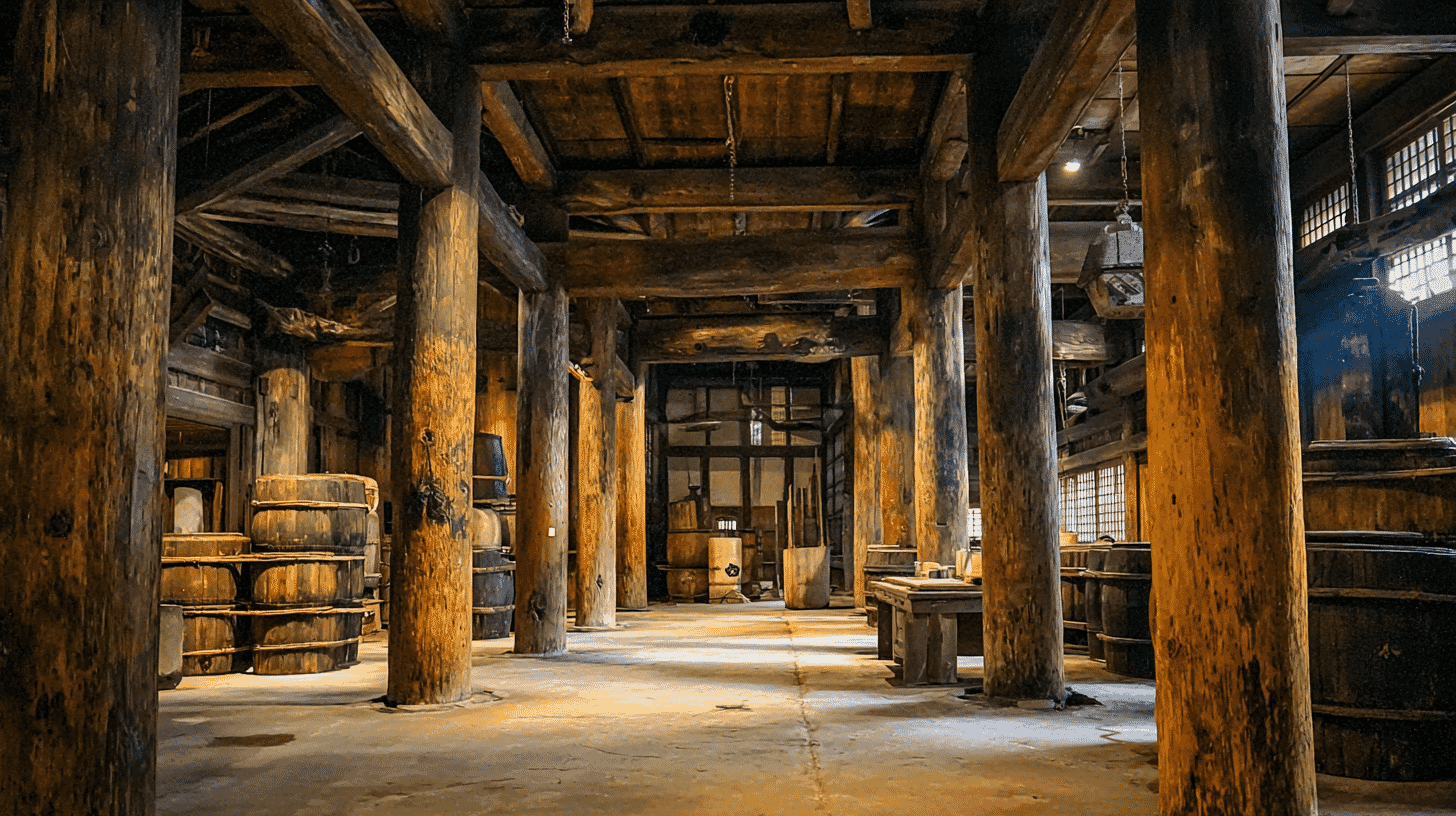
The storehouse's impressive scale—covering 161 square meters with an interior supported by two rows of four pillars—speaks to the prosperity and ambition of its original purpose. Such substantial construction was necessary to maintain the temperature-controlled environment essential for sake production, where the quality of Japan's beloved rice wine depended on carefully managed fermentation conditions.
Why This Storehouse Matters: Cultural Property Designation
The Yoshikawa Family Residence Storehouse was designated as a Registered Tangible Cultural Property (登録有形文化財) by the Japanese government on August 23, 1999. This recognition acknowledges several significant aspects of the structure.
As one of the few surviving pre-Meiji Restoration (before 1868) buildings in Murakami's historic townspeople's district, the storehouse represents irreplaceable architectural heritage. Many similar structures were lost to fires, earthquakes, or urban development over the past century and a half. That this building has endured makes it an exceptional witness to the commercial life of Edo-period Japan.
The structure also demonstrates the sophisticated building techniques employed by Edo-period craftsmen. The robust construction, designed to protect valuable goods from fire and theft while maintaining optimal storage conditions, reflects the accumulated wisdom of generations of Japanese builders.
The Yoshikawa Family: Four Centuries of Commerce
Understanding the storehouse requires knowing the remarkable history of its owners. The Yoshikawa family established their business in 1626 (Kan'ei 3) as rice merchants during the early Edo period. Over the following centuries, they adapted to changing times—transitioning to miso and soy sauce production, and later to sake brewing in the late Edo period.
The most dramatic transformation came in the postwar era when the 14th generation head, Yoshikawa Tesshō, made a fateful decision. Observing that Murakami's thousand-year tradition of salmon cuisine was disappearing amid modernization, he pivoted the family business to preserve and commercialize these endangered culinary traditions. Today, "Sennen-zake Kikkawa" (千年鮭きっかわ) is famous throughout Japan for its traditional salmon products, and the adjacent shop allows visitors to witness hundreds of salmon hanging from the ceiling, undergoing traditional fermentation.
Architectural Highlights and Details
The Yoshikawa Family Residence Storehouse showcases classic dozo construction techniques that made these buildings the safes of pre-modern Japan. The structure features thick earthen walls (typically 30 centimeters or more) that provided excellent fire resistance—crucial in an era when wooden buildings and open flames made urban fires devastatingly common.
The building's gable-side entrance (妻入り) design, where the entrance faces the gable end rather than the eaves side, was characteristic of storehouse architecture. This orientation maximized interior space while providing optimal protection from weather. The pantile roof (桟瓦葺) added another layer of fire protection while creating the dignified appearance expected of a prosperous merchant family's storehouse.
Inside, the two rows of four pillars create a spacious, cathedral-like interior that allowed for efficient storage of sake brewing equipment and the large wooden vats essential to the brewing process. The quality of the timber and the precision of the joinery speak to the care invested in this building's construction.
Exploring Murakami's Merchant District
The Yoshikawa Family Residence Storehouse sits within Murakami's historic Ōmachi district, along what is now known as the Machiya-dōri (Town House Street). This area preserves one of Japan's most authentic castle town merchant districts, where traditional machiya townhouses continue to serve as shops, restaurants, and residences.
The surrounding area offers numerous attractions that complement a visit to the storehouse. The Kikkawa shop itself welcomes visitors to view their famous salmon-drying operation, where hundreds of salt-cured salmon hang from centuries-old rafters. Nearby, the Kurobei-kōji (Black Fence Alley) features restored traditional fencing that evokes the atmosphere of Edo-period Murakami.
Seasonal events bring the district to life. The "Machiya no Ningyōsama Meguri" (Town House Doll Display Tour) in spring and the "Machiya no Byōbu Matsuri" (Town House Folding Screen Festival) in autumn invite visitors into private machiya to view treasured heirlooms, offering rare glimpses into the living heritage of these historic homes.
Nearby Attractions
Visitors to the Yoshikawa Family Residence Storehouse can easily explore numerous nearby cultural sites on foot. The Iyoboya Kaikan (Salmon Museum) offers comprehensive exhibits on Murakami's millennium-long relationship with salmon, including underwater viewing windows where you might witness salmon swimming upstream during autumn. Murakami Castle ruins, a nationally designated historic site atop Mount Gagyū, provides panoramic views of the town and surrounding landscape.
The Wakabayashi Family Residence, an Important Cultural Property featuring well-preserved samurai architecture, contrasts beautifully with the merchant-class Yoshikawa storehouse. Together, they illustrate the distinct worlds of warrior and merchant that coexisted in Edo-period castle towns.
For those seeking relaxation, Senami Onsen hot spring resort lies just a short drive away, offering seaside hot spring baths with views of the Sea of Japan. The combination of historical exploration and hot spring relaxation makes for an ideal day trip from Niigata City or a memorable overnight stay.
- 📍 Plan Your Visit to Niigata
- Find tours, activities & transport passes near Yoshikawa Family Residence Storehouse
- [ Sado Island & Echigo-Yuzawa Ski Resort Tours ]
Q&A
- Can I enter and tour the Yoshikawa Family Residence Storehouse?
- The storehouse itself is part of a private residence and business. However, visitors can view the adjacent Kikkawa shop, which features a spectacular display of traditional salmon drying inside a historic structure. The shop staff often provide explanations about the building's history and the salmon-making process.
- What is the best season to visit Murakami?
- Autumn (October through December) is particularly special, as this is when salmon return to the Miomote River and the traditional salmon preparation begins. Spring (March-April) brings the popular Doll Display Tour. However, the historic district is beautiful year-round, with each season offering unique charms.
- How do I get to Murakami from Tokyo or Niigata?
- From Tokyo, take the Jōetsu Shinkansen to Niigata Station (approximately 2 hours), then transfer to the JR Uetsu Main Line to Murakami Station (approximately 50 minutes by limited express or 80 minutes by local train). The historic district is about 2 kilometers from the station, accessible by foot (20-30 minutes), taxi, or local bus.
- What local specialties should I try while visiting?
- Murakami is famous for salmon dishes with over 100 traditional preparations. Try shiobiki-zake (salt-cured salmon), sake no sakebidashi (salmon soaked in sake for over a year), and fresh salmon sashimi in season. The area is also known for Murakami tea, one of Japan's northernmost tea-producing regions, and local sake breweries.
- Are there English language resources available?
- The Murakami Tourist Information Center near JR Murakami Station provides English maps and brochures. Some attractions have English signage, though detailed explanations may be primarily in Japanese. Consider using translation apps or hiring a local guide for deeper understanding of the historical sites.
Basic Information
| Name | Yoshikawa Family Residence Storehouse (吉川家住宅土蔵) |
|---|---|
| Cultural Property Status | Registered Tangible Cultural Property (Building) |
| Registration Date | August 23, 1999 |
| Construction Period | 1841 (Tenpō 12), Late Edo Period |
| Structure | Wood, 2-story, pantile roof, 161㎡ |
| Architectural Style | Gable roof (kirizuma-zukuri), gable-side entrance (tsumairi) |
| Original Purpose | Sake brewing storehouse (sakagura) |
| Address | 195 Ōmachi, Murakami City, Niigata Prefecture |
| Access | Approximately 20-minute walk from JR Murakami Station |
References
- 吉川家住宅土蔵 文化遺産オンライン
- https://bunka.nii.ac.jp/heritages/detail/166562
- きっかわの歴史 | 千年鮭 きっかわ
- https://www.murakamisake.com/about/history/
- 城下町・村上 | 村上市観光協会
- https://www.sake3.com/jyoukamachi/
- 村上の特産品-鮭 - 村上市公式ウェブサイト
- https://www.city.murakami.lg.jp/site/kanko/tokusan-sake.html
- 住民の手で再生された町屋をめぐる - ぐるたび
- https://gurutabi.gnavi.co.jp/a/a_253/
- 村上市へのアクセス - 村上市公式ウェブサイト
- https://www.city.murakami.lg.jp/soshiki/135/access-map.html
Last verified: 2026.01.02
Nearby heritages
- Yoshikawa Family Main Building
- 195 Omachi, Murakami City, Niigata Prefecture
- Masujin Sake Shop Owner's House and Sake Brewery
- 194 Omachi, Murakami City, Niigata Prefecture
- Masujin Liquor Storehouse
- 194 Omachi, Murakami City, Niigata Prefecture
- Yoshikawa Family Residence Store
- 195 Omachi, Murakami City, Niigata Prefecture
- Ekijin Liquor Store
- 194 Omachi, Murakami City, Niigata Prefecture
- Hayasendo Confectionery Shop Owner's House
- 1510 Omachi, Murakami City, Niigata Prefecture
- Hayasendo Confectionery Store West Storehouse
- 1510 Omachi, Murakami City, Niigata Prefecture
- Hayasendo Confectionery Store East Storehouse
- 1510 Omachi, Murakami City, Niigata Prefecture
- Former Daishi Bank Murakami Branch Manager's Residence
- 1358-2 Komachi, Murakami City, Niigata Prefecture
- Izutsuya Inn Main Building
- 221 Komachi, Murakami City, Niigata Prefecture
