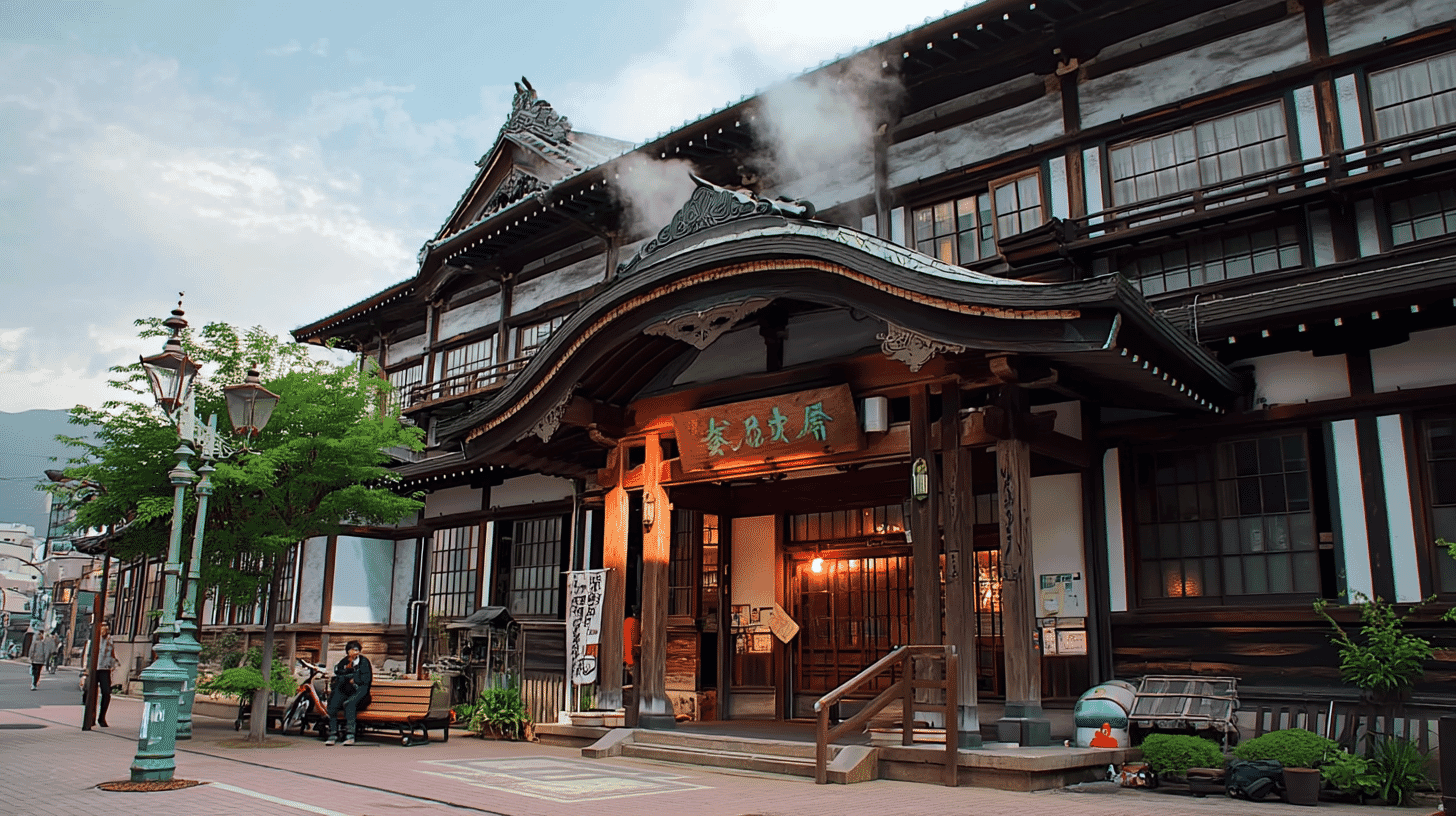
Takegawara Onsen: A Living Monument to Japan's Hot Spring Heritage
Standing majestically in the heart of Beppu's historic downtown, Takegawara Onsen represents far more than a place to bathe—it is a portal to Japan's rich hot spring culture spanning nearly 150 years. This magnificent wooden bathhouse, designated as a Registered Tangible Cultural Property and recognized as a Modern Industrial Heritage site, continues to welcome visitors seeking authentic Japanese wellness traditions in an atmosphere largely unchanged since the early Showa era.
For international travelers seeking genuine cultural immersion beyond typical tourist experiences, Takegawara Onsen offers a rare opportunity to participate in daily rituals that have sustained Japanese communities for generations. The building itself tells the story of Beppu's transformation from a small fishing village into one of Japan's most celebrated hot spring destinations.
The History: From Bamboo Roof to Cultural Treasure
The story of Takegawara Onsen begins in 1879 (Meiji 12) when local fishermen constructed a simple hut over a natural hot spring bubbling near the shoreline. The original structure featured a humble roof made of bamboo—hence the name "Takegawara," which combines "take" (bamboo) with "kawara" (roof tiles), commemorating that first rustic incarnation even after tile replaced bamboo in later renovations.
As word spread of the spring's therapeutic properties, visitors began arriving in greater numbers, particularly through the nearby Kusunoki Port. The facility underwent significant expansions in 1902 and 1913, evolving into a two-story structure to accommodate growing demand. The current building, completed in 1938, represents the culmination of this evolution—a grand statement of civic pride featuring sophisticated traditional architecture that has become synonymous with Beppu itself.
Remarkably, Takegawara Onsen survived World War II unscathed, as Beppu's established reputation as a tourist destination spared it from bombing raids. This fortunate circumstance means visitors today experience an authentic pre-war bathhouse, increasingly rare in modern Japan. The building received official recognition as a Registered Tangible Cultural Property in 2004 and was designated a Modern Industrial Heritage site in 2009 as part of the "Beppu Onsen Related Heritage" collection.
Architectural Magnificence: The Karahafu Entrance
The most striking feature of Takegawara Onsen is its elaborate karahafu—a distinctive curved gable unique to Japanese architecture traditionally reserved for temples, shrines, and buildings of high status. This ornamental entrance immediately signals to visitors that they are approaching something special, a bathhouse elevated to the level of sacred architecture.
The building combines multiple roof styles: the dramatic karahafu at the entrance, an irimoya-zukuri (hip-and-gable) roof over the two-story central section, and a yosemune-zukuri (hipped roof) covering the single-story wings. This complex arrangement creates a dynamic silhouette that appears to embrace visitors as they approach. The total floor area spans 712 square meters, housing changing rooms, bathing facilities, and a spacious second-floor hall.
Step inside, and the high-ceilinged lobby immediately transports you to early Showa-era Japan. An antique clock ticks steadily on the wall, vintage light bulbs cast warm amber light, and well-worn tatami mats in the rest area speak to decades of grateful bathers who have passed through these halls. This deliberate preservation of atmosphere—neither artificially restored nor neglected—represents Japanese aesthetic philosophy at its finest.
Why Takegawara Onsen Became a Cultural Property
Takegawara Onsen earned its designation as a Registered Tangible Cultural Property based on several significant criteria. The building exemplifies the sophisticated wooden architecture techniques of early Showa-era public buildings, particularly the masterful integration of multiple traditional roof styles and the luxurious karahafu entrance typically associated with religious architecture.
Beyond architectural merit, the facility represents an important chapter in Japan's modernization. As part of the "Beppu Onsen Related Heritage" recognized by the Ministry of Economy, Trade and Industry, Takegawara Onsen demonstrates how hot spring tourism developed into a major industry, driving infrastructure development and shaping Japanese leisure culture.
The bathhouse also embodies the democratic spirit of Japanese communal bathing. Despite its grand appearance, this remains a municipal facility serving everyday residents alongside tourists—a living institution rather than a museum piece. This continuous operation since 1879 represents an unbroken cultural tradition increasingly precious in rapidly changing modern Japan.
The Bathing Experience: Tradition Preserved
Takegawara Onsen offers two distinct bathing experiences: the regular hot spring baths and the famous sand bath. The regular baths are divided by gender and feature a distinctive semi-subterranean design. You descend stairs from the changing area directly into the bathing space—a traditional Beppu style that enhances the sense of immersion in the earth's thermal embrace.
Notably, there are no showers at Takegawara Onsen. Bathers clean themselves using the time-honored method of scooping hot spring water from the bath with wooden buckets. While this may seem unfamiliar to first-time visitors, it connects you to bathing practices unchanged for generations. Cold water taps are available to cool down if the approximately 43°C temperature proves challenging.
The mineral compositions differ between the men's and women's baths—an unusual feature reflecting the multiple natural springs feeding the facility. The men's bath draws from a sodium-calcium-magnesium chloride-bicarbonate spring, while the women's bath utilizes a sodium bicarbonate spring. Both offer therapeutic benefits for various conditions including muscle pain, joint stiffness, digestive issues, and general fatigue recovery.
The Sand Bath: Beppu's Signature Wellness Experience
While several locations in Beppu offer sand baths, Takegawara Onsen provides a unique indoor experience that operates year-round regardless of weather—making it accessible even during winter months or rainy days. The sunayu (sand bath) occupies its own wing of the building and can accommodate up to eight guests simultaneously.
The experience begins when you change into a provided yukata robe and lie down on warm sand. Skilled attendants called "sunakake-san" then carefully cover your body with sand heated by the thermal springs to approximately 52°C. Only your face remains exposed, allowing natural breathing while your body absorbs heat, moisture, and minerals.
The combination of weight, warmth, and mineral-rich steam creates a sensation unlike any conventional spa treatment. Many visitors describe a profound relaxation as the sand's pressure gently immobilizes the body while heat penetrates deeply into muscles and joints. Sessions typically last about 10-15 minutes, during which perspiration carries away impurities while minerals absorb through the skin.
Note that the sand bath is mixed-gender (you wear the yukata throughout), making it accessible to visitors who might feel uncomfortable with traditional nude bathing. Staff can take photographs of your sand-buried state upon request—a uniquely memorable souvenir of your Beppu visit.
Visitor Etiquette and Practical Tips
Takegawara Onsen welcomes visitors with tattoos, making it more accessible than many traditional Japanese bathhouses. However, understanding proper etiquette ensures a respectful and enjoyable experience for everyone.
For the regular baths, you must wash thoroughly before entering the communal bath—scoop water from the tub using the provided basins. Never put your small towel in the bath water; instead, place it on your head or on the side. Enter the bath slowly to acclimate to the high temperature, and avoid making loud noises or swimming.
For the sand bath, arrive early if visiting during busy periods, as capacity is limited and reservations cannot be made by phone or online—you must purchase tickets in person for a designated time slot. Remove all accessories and tie back long hair before the experience. The staff will guide you through each step, so simply follow their instructions.
Beyond the Bath: Takegawara Koji Arcade
Directly in front of Takegawara Onsen lies another remarkable heritage site: the Takegawara Koji Arcade, recognized as Japan's oldest surviving wooden arcade. Completed in December 1921, this 61-meter covered passage was originally built so visitors arriving at the nearby Kusunoki Port could reach Takegawara Onsen without getting wet during rainy weather.
Walking through this narrow arcade today feels like stepping through a time portal. The glass-roofed wooden structure features traditional bamboo-craft lanterns (a nod to Beppu's famous bamboo craft industry) that illuminate the passage with warm light after dark. Two-story row houses line both sides, now housing small bars, wine shops, and cafes that attract visitors seeking Beppu's most atmospheric nightlife.
The arcade received Modern Industrial Heritage designation alongside Takegawara Onsen in 2009. Local preservation groups actively maintain the structure, and the passage recently celebrated its 100th anniversary with community events highlighting its historical significance. For photographers and architecture enthusiasts, this remarkably preserved Taisho-era commercial structure offers exceptional atmospheric compositions, particularly in evening hours when neon signs mingle with heritage architecture.
Exploring the Surrounding Area
Takegawara Onsen sits within easy walking distance of several other worthwhile destinations. Beppu Station lies just 10 minutes on foot, making the bathhouse an excellent first or last stop for visitors traveling by train. The Nagarekawa entertainment district, one of Beppu's main nightlife areas, runs parallel to Takegawara Koji Arcade, offering numerous dining and drinking options.
For those interested in exploring more of Beppu's bathing culture, the city boasts eight distinct hot spring areas collectively known as "Beppu Hatto." The famous "Jigoku Meguri" (Hell Tour) visiting Beppu's spectacular geothermal features lies about 5-6 kilometers away in the Kannawa district. Many visitors combine a morning soak at Takegawara with an afternoon exploring the steaming, colorful hell ponds.
The Hirano Museum, a small private collection housed directly opposite the bathhouse, offers free admission and provides interesting local historical context. Hatoba Shrine, just steps away, served merchant vessels using the old port and maintains an intimate atmosphere amid the surrounding development.
Planning Your Visit
Takegawara Onsen operates throughout the year with minimal closures, making it easy to incorporate into any Beppu itinerary. The regular baths open from 6:30 AM, welcoming early risers for a morning soak, while the sand bath begins at 8:00 AM. Both facilities operate until 10:30 PM (last sand bath entry at 9:30 PM), accommodating those who prefer evening relaxation.
Given the historic nature of the facility and the experiential depth it offers, consider allowing at least 90 minutes for a visit including the sand bath. Combining both the sand bath and regular bath creates a complete traditional bathing journey. Many visitors return multiple times during their Beppu stay, perhaps starting with the regular bath to acclimate before experiencing the sand bath on a subsequent visit.
The area around Takegawara Onsen transforms beautifully at night, with the bathhouse's traditional architecture dramatically illuminated against the evening sky. Consider timing your visit to enjoy both the bathing experience and the atmospheric streetscape after dark.
- 📍 Plan Your Visit to Oita
- Find tours, activities & transport passes near Takegawara Onsen
- [ Beppu Hell Tour & Yufuin Onsen Hot Springs ]
Q&A
- Can visitors with tattoos use Takegawara Onsen?
- Yes, Takegawara Onsen welcomes visitors with tattoos in both the regular baths and sand bath, making it one of the more accessible traditional bathhouses in Japan for international visitors.
- Do I need to bring my own towel and toiletries?
- Towels, soap, shampoo, and other amenities can be purchased at the reception desk for a small fee. However, bringing your own towel reduces costs. Note that the regular baths have no showers—you'll use traditional basin washing with spring water.
- Can I make reservations for the sand bath in advance?
- No, reservations cannot be made by phone or internet. You must visit in person on the day of your intended use to purchase a ticket for a specific time slot. During busy periods, consider arriving early to secure your preferred time.
- Is the sand bath suitable for those uncomfortable with nude bathing?
- Yes, the sand bath is an excellent option for visitors hesitant about traditional nude bathing. You wear a provided yukata robe throughout the experience, and while it's a mixed-gender space, you remain clothed. The changing areas and shower facilities are gender-separated.
- Is English support available at Takegawara Onsen?
- While staff may have limited English ability, the facility is well-accustomed to international visitors. Posted instructions include English translations, and the bathing procedures are straightforward to follow through observation and staff gestures. The sand bath attendants will physically guide you through the experience.
Basic Information
| Name | Takegawara Onsen (竹瓦温泉) |
|---|---|
| Address | 16-23 Motomachi, Beppu City, Oita Prefecture 874-0944 |
| Phone | 0977-23-1585 |
| Hours | Regular Bath: 6:30 - 22:30 / Sand Bath: 8:00 - 22:30 (last entry 21:30) |
| Closed | 3rd Wednesday of each month (following day if national holiday) |
| Admission | Regular Bath: ¥300 (adults), ¥100 (children) / Sand Bath: ¥1,500 (includes regular bath access) |
| Access | 10-minute walk from JR Beppu Station / 15 minutes by car from Beppu IC (Oita Expressway) |
| Parking | No dedicated parking; use nearby coin parking lots |
| Original Construction | 1879 (Meiji 12) |
| Current Building | 1938 (Showa 13) |
| Cultural Designation | Registered Tangible Cultural Property (2004); Modern Industrial Heritage (2009) |
| Building Type | Wooden 2-story structure with karahafu entrance; Floor area 712㎡ |
| Spring Quality (Men's Bath) | Sodium-Calcium-Magnesium Chloride-Bicarbonate Spring |
| Spring Quality (Women's Bath) | Sodium Bicarbonate Spring |
| Spring Temperature | Approximately 52°C at source |
References
- Cultural Heritage Online - Takegawara Onsen
- https://bunka.nii.ac.jp/heritages/detail/184103
- Beppu City Official - Municipal Hot Springs
- https://www.city.beppu.oita.jp/sisetu/shieionsen/detail4.html
- Takegawara Onsen Official Website
- https://www.takegawara-onsen.com/
- Wikipedia - Takegawara Onsen (Japanese)
- https://ja.wikipedia.org/wiki/竹瓦温泉
- Wikipedia - Takegawara Koji Arcade (Japanese)
- https://ja.wikipedia.org/wiki/竹瓦小路アーケード
- Japan National Tourism Organization - Takegawara Onsen
- https://www.japan.travel/en/spot/389/
- Enjoy Onsen Beppu - Takegawara Onsen
- https://enjoyonsen.city.beppu-jp.com/onsen/takegawaraonsen/