
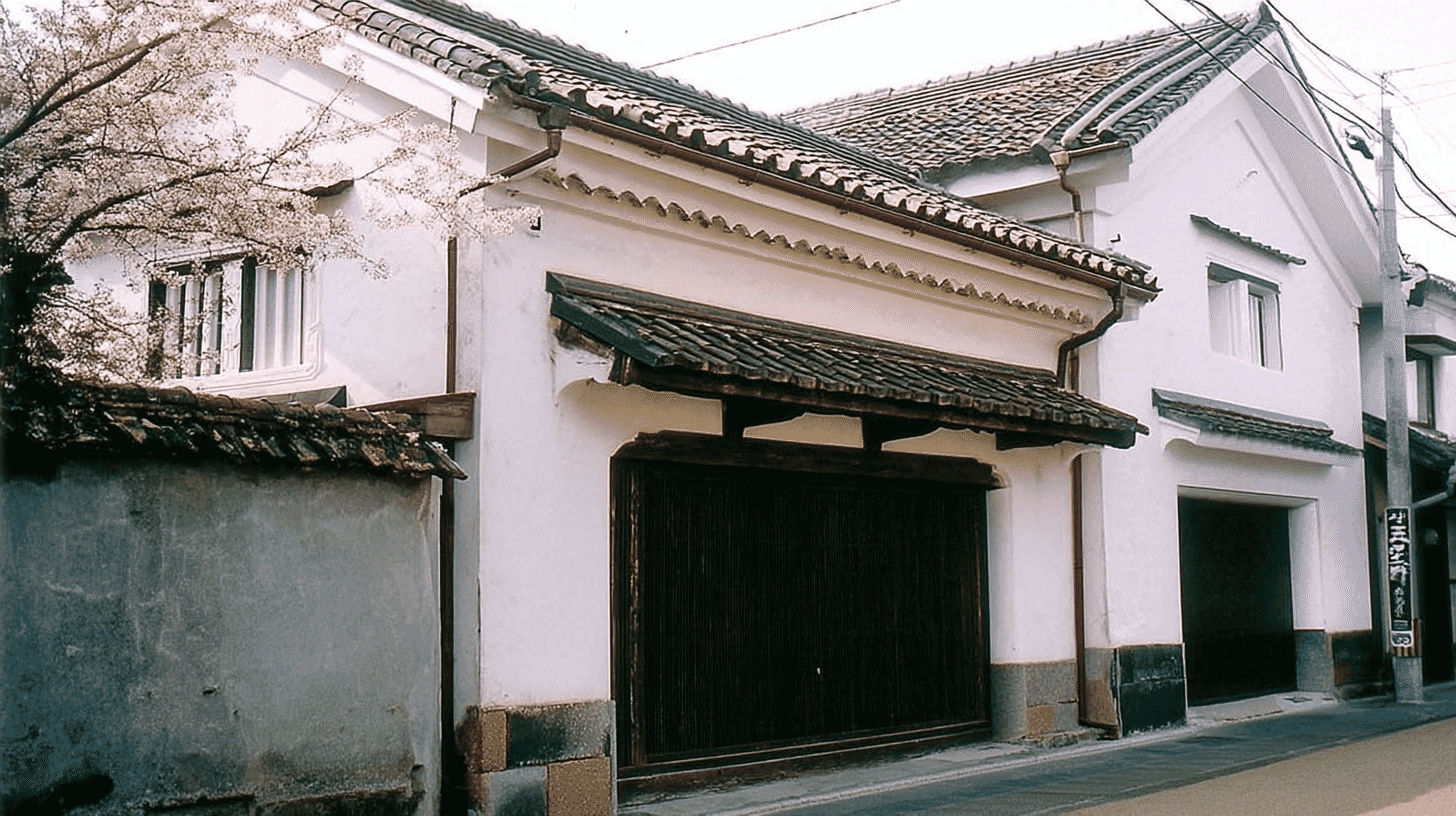
One Storehouse, a Registered Tangible Cultural Property since 2007
Yoshikawa Family Residence Storehouse (吉川家住宅土蔵, Yoshikawa-ke Jutaku Dozo) stands at 21 and adjoining lots, Taketa-machi, Taketa City, Oita Prefecture, a Meiji-period building entered on the register of tangible cultural properties on 2 October 2007. It is a registered property rather than a designated one.
The quantity is one building.
The structure is of earthen construction, two-storeyed, tiled, with a floor area of 41 square metres. The date field reads Meiji and the year field 1878.
Two Small Eaves and Careful Window Frames on the Street Gable
Care is given to the one face shown to the street.
The Agency records that on the gable wall facing the street, small tiled eaves are set above the doorway and above the upper window, and the window frames are carefully finished.
The gable wall is the face where the roof shows as a triangle. On it, the doorway below and the window above each have a small tiled eave.
The Araso shopfront storehouse has three windows in black plaster on its upper street face; the Tamaya main house carries a plaster relief of a crane and pine on its wall.
Here the care goes to the eaves that shed rain and the frames that edge the windows: not ornament for its own sake, but the working parts made well.
It is 3.5 bays by 3, of earthen construction in two storeys, gabled, entered at the gable end and pantiled.
Rice Below, Lumber Above
Within one store, each floor held something different.
The Agency records that the ground floor was once a rice store and the upper floor a lumber room.
A rice store holds rice; a lumber room holds tools and odds and ends. Rice below, tools above.
At Obaraya Harada Shoten, separate buildings were raised for oil, salt and documents.
Here what is held changes by floor within one building. Its name says only storehouse, and gives no sign of what was kept.
On the same grounds, warehouses one, two and three served for brewing, washing rice and raising mould. A store for rice stands at the beginning of the brewing.
With the Main House, a Prospect Fitting a Brewer
The assessment speaks not of one building alone but of it together with its neighbour.
The Agency closes that, with the main house, it makes a prospect fitting a brewer.
The storehouse stands south of the main house, which stands on the corner of the grounds at a crossroads. Corner house and storehouse stand in line toward the street.
At Kuroda Seiemon Shoten, the outer wall sets in order the street front together with the shop and main house and the inner storehouse.
Here too the building is valued on the side of the street prospect it makes with the main house. Warehouse one, likewise, continues from the main house in a long prospect of white walls.
At 41 square metres it is the smallest of the 5 buildings on the grounds.
Visiting
The storehouse stands at 21 and adjoining lots, Taketa-machi, Taketa City, Oita Prefecture.
The main house and warehouses one, two and three on the same grounds were registered on the same day. The main house dates from 1921, warehouse three from 1908, and the rest from 1878.
Other houses of the Yoshikawa name exist in Oita, and a former Yoshikawa residence stands in Asago, Hyogo. All are buildings of different households.
No owner is recorded, and opening and terms follow the owner's arrangements. Check before travelling.
Taketa-machi is the centre of Taketa City.
Q&A
- When was the storehouse registered?
- On 2 October 2007, as a registered tangible cultural property. It is registered rather than designated, and the quantity is one building.
- What does it look like?
- On the gable wall facing the street, small tiled eaves stand above the doorway and the upper window, and the window frames are carefully finished.
- What was kept in it?
- The ground floor was once a rice store and the upper floor a lumber room.
- What is valued in it?
- That, with the main house, it makes a prospect fitting a brewer.
- How large is it?
- 3.5 bays by 3, with a floor area of 41 square metres, the smallest of the five buildings on the grounds.
Basic Information
| Name | Yoshikawa Family Residence Storehouse (吉川家住宅土蔵, Yoshikawa-ke Jutaku Dozo); the one at Taketa |
|---|---|
| Location | 21 and adjoining lots, Taketa-machi, Taketa City, Oita Prefecture |
| Designation | Registered tangible cultural property (structure, domestic architecture); registered rather than designated; 5 buildings on the same grounds were registered on the same day |
| Year Designated | 2007 (2 October), registered |
| Quantity | 1 building |
| Dimensions | Earthen construction, 2-storeyed, tiled, with a floor area of 41 square metres; 3.5 bays by 3, gabled, entered at the gable end and pantiled. It stands south of the main house, with small tiled eaves above the doorway and the upper window on the street gable. The ground floor was a rice store and the upper floor a lumber room. The date field reads Meiji and the year field 1878 |
| Owner | Not stated in the record |
| Public Access | Opening and terms follow the owner's arrangements |
References
- Cultural Heritage Online: the storehouse at Taketa
- https://bunka.nii.ac.jp/heritages/detail/171672
- Cultural Heritage Online: the main house at Taketa
- https://bunka.nii.ac.jp/heritages/detail/143631
- Cultural Heritage Online: warehouse one at Taketa
- https://bunka.nii.ac.jp/heritages/detail/186273
- Agency for Cultural Affairs, National Cultural Properties Database
- https://kunishitei.bunka.go.jp/
Last verified: 2026.09.24
