
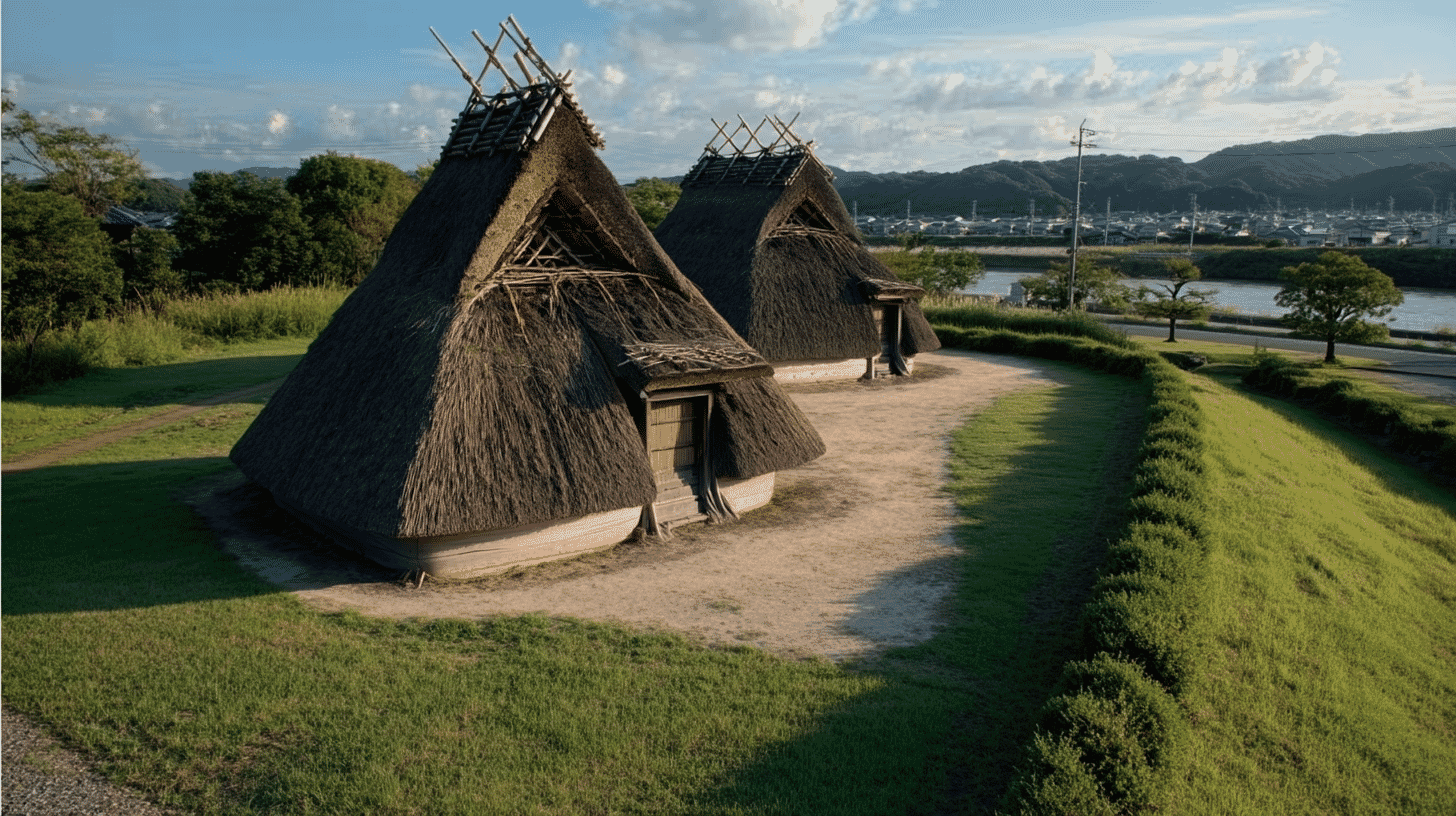
A Settlement from Early Yayoi to Kamakura, Historic Site since 1985
Kadota Shell Mound (門田貝塚, Kadota Kaizuka) is a site at Oku-cho, Setouchi City, Okayama Prefecture, designated a national Historic Site on 6 March 1985, within the class of monuments.
The Agency for Cultural Affairs carries no commentary. The field for a managing body is blank as well, so no words of assessment survive in the official record. What follows comes from Setouchi City.
The city records it as a settlement site running from the early Yayoi period to the Kamakura period, at the centre of which lies an early Yayoi shell mound, the accumulated remains of shells discarded after being eaten.
Long Occupied, but the Centre Lies at the Start
The span of this site is long, from the early Yayoi period to the Kamakura.
What is called the centre of the site, however, is the shell mound of the earliest phase. That people went on living here for a long time and that the site matters as heritage are two different things.
A shell mound is where shells discarded after eating built up over time. Everyday waste survives as a stratified deposit, which is what makes it evidence of how people ate.
Setouchi City records that animal bones were also recovered in numbers. Bone survives among shells because the shell keeps the soil neutral or alkaline, so that bone dissolves less readily.
The Site Gave Its Name to a Pottery Type
Of the finds, the city writes that Yayoi pottery called Kadota type, together with animal bones, was recovered in numbers from the shell mound.
Kadota type is a pottery classification named after this site. Pottery types generally take the name of the site where they were first found in quantity, so this mound became the reference point.
Being a type name means that when pottery of the same character turns up elsewhere, it is placed by reference to this site. The site itself functions as a measure.
The city describes the finds as valuable evidence for understanding how people lived at the time.
What Is Visible Has Been Reconstructed
Of the present condition, Setouchi City writes that the site is laid out as the Kadota Shell Mound Historic Park, with pit dwellings and the shell mound reconstructed.
A reconstruction is not the remains themselves. It is built anew on the evidence of excavation, while the buried remains are usually backfilled for their protection.
A reconstructed pit dwelling is worked out from post holes and hearth traces, which is to say from marks cut into the ground. Only those marks survive; everything above is inferred.
The same holds for the shell mound. What a visitor sees and what the designation covers, the remains beneath the ground, are not the same thing.
Visiting
The site is laid out as the Kadota Shell Mound Historic Park, an open-air park rather than a building with an entrance, so hours and any charge follow how the park is run.
Check the city's information for current details before travelling. The reconstructed pit dwellings and shell mound are what there is to see.
Pottery and bone recovered from the site may be kept and displayed elsewhere rather than at the park. Finds are not necessarily on view where they were found.
The site is at Oku-cho in Setouchi City, Okayama Prefecture.
Q&A
- When was the site designated?
- On 6 March 1985, as a national Historic Site within the class of monuments. It lies at Oku-cho, Setouchi City, Okayama Prefecture. The Agency for Cultural Affairs carries no commentary and leaves the managing body field blank.
- What kind of site is it?
- Setouchi City records a settlement site running from the early Yayoi period to the Kamakura period, at the centre of which lies an early Yayoi shell mound, the accumulated remains of shells discarded after eating. Animal bones were also recovered in numbers.
- What is Kadota type pottery?
- A classification of Yayoi pottery named after this site. Pottery types generally take the name of the site where they were first found in quantity, so pottery of the same character found elsewhere is placed by reference to this mound.
- Are the pit dwellings original?
- No, they are reconstructions. Setouchi City records that the site is laid out as a historic park with pit dwellings and the shell mound reconstructed. A reconstruction is built anew on the evidence of excavation and is not the remains themselves.
- Can the finds be seen at the site?
- Pottery and bone may be kept and displayed elsewhere rather than at the park. What there is to see on site is the reconstructed pit dwellings and shell mound. Check the city's information before travelling.
Basic Information
| Name | Kadota Shell Mound (門田貝塚, Kadota Kaizuka) |
|---|---|
| Location | Oku-cho, Setouchi City, Okayama Prefecture |
| Designation | Historic Site (monuments) |
| Year Designated | 1985 (6 March), Historic Site |
| Quantity | The Agency's quantity field is blank |
| Dimensions | A settlement site running from the early Yayoi period to the Kamakura period, centred on an early Yayoi shell mound. Yayoi pottery of the type named after the site, together with animal bones, was recovered in numbers |
| Owner | The Agency's managing body field is blank |
| Public Access | Laid out as the Kadota Shell Mound Historic Park, with pit dwellings and the shell mound reconstructed |
References
- Cultural Heritage Online: Kadota Shell Mound
- https://bunka.nii.ac.jp/heritages/detail/206273
- Setouchi City: Kadota Shell Mound
- https://www.city.setouchi.lg.jp/soshiki/23/3862.html
- Comprehensive Database of Archaeological Site Reports: reports relating to Kadota Shell Mound
- https://sitereports.nabunken.go.jp/ja/12733
- Agency for Cultural Affairs, National Cultural Properties Database
- https://kunishitei.bunka.go.jp/
Last verified: 2026.09.04