Gengahashi Onsen Bathhouse: Where East Meets West in Osaka's Architectural Heritage
In the heart of Osaka's Ikuno Ward stands a remarkable piece of architectural history that defies conventional categorization. Gengahashi Onsen Bathhouse, built in 1937, represents a unique fusion of Japanese tradition and Western influence during the Showa modernist period. This extraordinary public bathhouse holds the distinction of being Japan's first sento to receive national recognition as a Registered Tangible Cultural Property in 1998, marking a significant milestone in preserving Japan's bathing culture heritage.
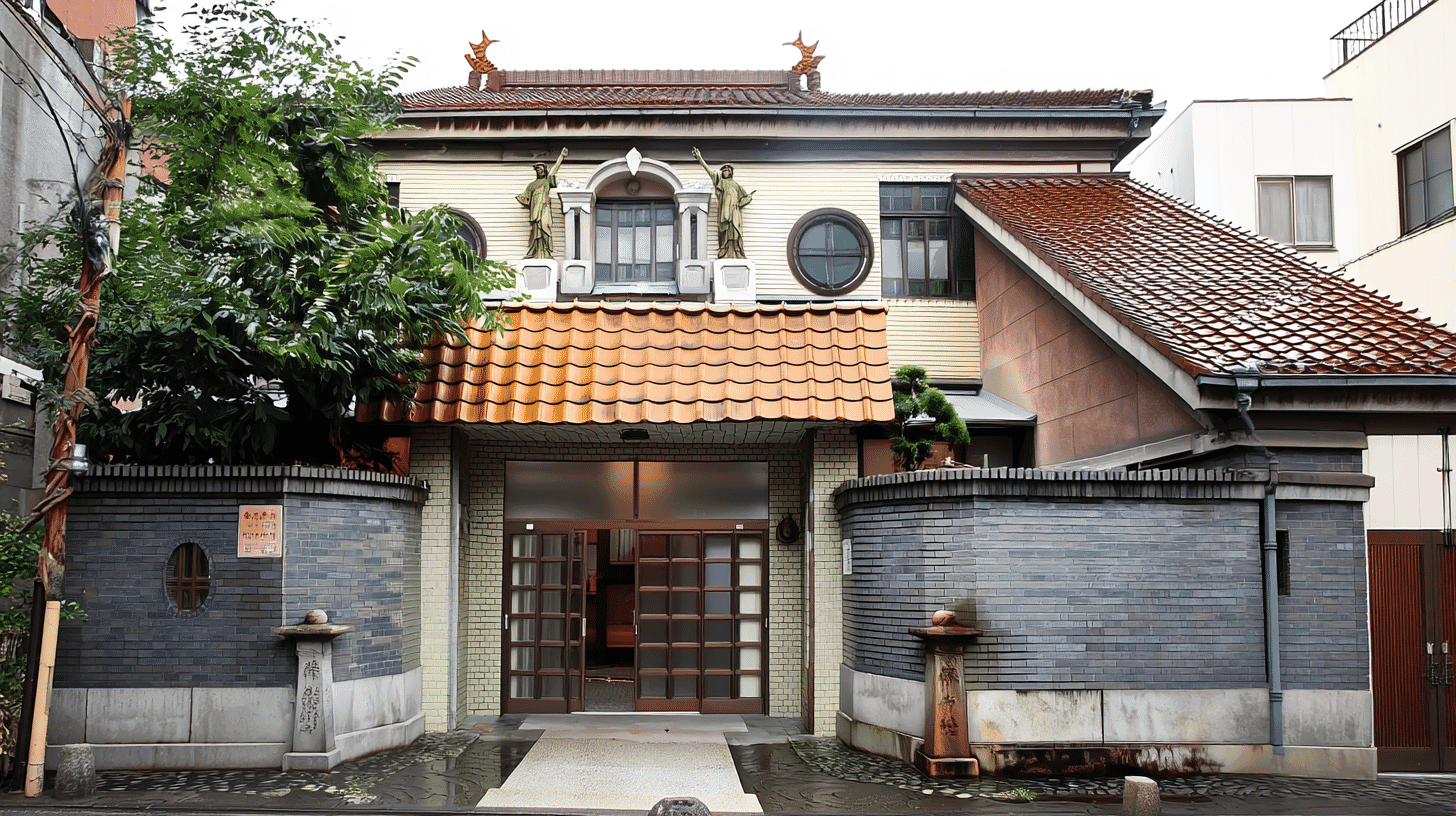
What makes this building truly unforgettable is its whimsical roofline: paired Statues of Liberty holding onsen symbols flank traditional Japanese shachihoko roof ornaments, creating a playful architectural dialogue between cultures. The building's creator ingeniously combined "New York" (入浴, nyūyoku) with "bathing," resulting in this charming visual pun that has captivated visitors for decades.
Architectural Significance: A Testament to Showa Modernism
Gengahashi Onsen Bathhouse exemplifies the experimental spirit of pre-war Japanese architecture. The two-story wooden structure showcases an eclectic blend of architectural elements that were revolutionary for its time. The façade features distinctive round Western-style windows on the second floor, adorned with sculptural details, while the brown kawara tile roof maintains traditional Japanese aesthetics.
The building's layout follows the classic Osaka bathhouse design, with a central bandai counter separating men's and women's sections. While the bathing areas have been updated over the years, the dressing rooms and bathing chamber frameworks remain remarkably well-preserved, offering authentic glimpses into 1930s public bath architecture. The interior originally featured elaborate tile work, spacious changing areas, and a second floor that once housed a dance hall, billiard room, and popular restaurant during the immediate post-war era.
According to the Cultural Heritage Online database, the building's architectural merit lies in its ability to preserve the original structure and atmosphere of a wooden public bathhouse in an urban setting. The designation as a Registered Tangible Cultural Property recognizes its contribution to Japan's historical landscape and its role in documenting the evolution of public bathing facilities.
Cultural and Historical Value
The bathhouse's designation as a Registered Tangible Cultural Property in December 1998 marked a watershed moment for recognizing the cultural significance of everyday architectural heritage. Before this designation, public bathhouses were rarely considered worthy of preservation, despite their central role in Japanese community life. Gengahashi Onsen's recognition paved the way for other historic sento to receive similar protection.
During its operational heyday from the 1940s through the 1960s, the bathhouse served up to 2,000 customers daily, with lines of patrons extending into the nearby Ikuno shopping street. It functioned as more than just a place to bathe; it was a crucial community gathering space where residents from all walks of life came together. The establishment represented the democratizing nature of Japanese public baths, where social hierarchies dissolved in the communal waters.
The building survived World War II bombings that destroyed much of surrounding Osaka, making its preservation all the more remarkable. The original landowner constructed the building but never operated it; the bathhouse business was established five years after construction by the Nakajima family, who maintained operations until 2020.
Architectural Highlights and Unique Features
The building's most iconic features include the paired Statue of Liberty sculptures, each holding an onsen symbol, positioned prominently on the roofline. These statues represent a playful wordplay combining "New York" with the Japanese word for bathing. Above these Western symbols sit traditional golden shachihoko ornaments, mythical creatures typically found on castle keeps, creating an extraordinary cultural juxtaposition.
The second-floor circular windows add a modernist European touch to the façade, while the ground floor maintains more traditional Japanese proportions and materials. The entrance features original commemorative stones and retains its vintage atmosphere with period-appropriate signage and architectural details.
Inside, visitors would have experienced the classic sento layout with wooden changing boxes, spacious bathing areas, and decorative tilework. During its operating years, the bathhouse offered various bath types including electric baths, opal stone baths, steam saunas, cold plunge pools, and jet-powered sitting baths, representing the evolution of public bathing facilities throughout the 20th century.
Current Status and Visitor Information
Gengahashi Onsen ceased operations in January 2019 due to concerns about structural integrity from nearby construction vibrations. After a period of temporary closure, the bathhouse permanently closed in 2020. However, the building remains standing and continues to hold its designation as a Registered Tangible Cultural Property.
While regular bathing operations have ended, the building has found new life as a cultural venue. It participates in the Ikitakenchiku (Living Architecture) Museum Festival Osaka, where the building is periodically opened for special tours and events. These occasions offer rare opportunities to explore the interior spaces and appreciate the architectural details up close.
The exterior remains visible to the public year-round and makes an excellent destination for architecture enthusiasts and photography lovers. The building stands as a testament to Osaka's rich architectural diversity and the importance of preserving everyday cultural heritage alongside grand monuments.
Exploring the Surrounding Ikuno Ward
Gengahashi Onsen is located in Ikuno Ward, historically known for having one of Japan's highest concentrations of public bathhouses. The neighborhood, centered around Teradacho Station on the JR Osaka Loop Line, offers a glimpse into authentic local Osaka life away from major tourist centers.
Nearby attractions include the vibrant Ikuno Shopping Street, traditional restaurants serving Osaka specialties, and numerous other historic bathhouses still in operation. The area is just one stop from Tennoji, one of Osaka's major hubs, making it easily accessible while maintaining its local character.
The Tsuruhashi Korean Town district, famous for its authentic Korean cuisine and cultural shops, is within walking distance. Visitors can also explore nearby temples, traditional markets, and experience the down-to-earth atmosphere of residential Osaka.
The Broader Context: Japanese Bathhouse Culture
Understanding Gengahashi Onsen requires appreciating the central role of public baths in Japanese society. Before widespread home bathing facilities became common in the 1960s and 1970s, sento served as essential community infrastructure. At the bathhouse's opening in 1937, approximately 38% of Japanese households regularly used public baths.
These establishments provided more than hygiene services; they functioned as social equalizers where company presidents and laborers bathed side by side. The post-bath socializing, with patrons lingering to enjoy tea or conversation, created neighborhood bonds that home bathing could never replicate.
The decline of sento culture reflects broader social changes in Japan. Today, only 5-8% of households regularly use public bathhouses. However, renovated and heritage bathhouses like Gengahashi Onsen remind us of this important aspect of Japanese social history and the architectural creativity that characterized these everyday spaces.
- 📍 Plan Your Visit to Osaka
- Find tours, activities & transport passes near Gengabashi Hot Spring Baths
- [ USJ Tickets Osaka Castle & Dotonbori Food Tours ]
Q&A
- Can visitors still bathe at Gengahashi Onsen Bathhouse?
- No, Gengahashi Onsen permanently ceased bathing operations in 2020. However, the building remains standing and occasionally opens for special architectural tours during events like the Living Architecture Museum Festival Osaka. The exterior can be viewed year-round from the street.
- Why does a Japanese bathhouse have Statues of Liberty on its roof?
- The statues represent a clever wordplay combining "New York" (pronounced similarly to "入浴" nyūyoku, meaning "bathing" in Japanese). This playful design choice reflects the eclectic creativity of Showa-era architecture and the fascination with Western culture during the 1930s.
- How do I get to Gengahashi Onsen from central Osaka?
- Take the JR Osaka Loop Line to Teradacho Station. From the station, walk southeast for approximately 6 minutes through the Ikuno Shopping Street area. The distinctive building with its Statue of Liberty ornaments is easily recognizable. It's just one stop from major Tennoji Station.
- Are there other historic bathhouses I can visit in the area?
- Yes, Ikuno Ward historically had the highest concentration of bathhouses in Japan. Several traditional sento continue operating in the neighborhood, including Tenryū-yu and others. These working bathhouses offer authentic experiences of Japanese bathing culture. Check current operating hours before visiting.
- What makes this bathhouse historically significant compared to others?
- Gengahashi Onsen was the first public bathhouse in Japan to receive designation as a Registered Tangible Cultural Property in 1998. This recognition established the precedent for preserving bathhouse architecture and acknowledging the cultural importance of these everyday buildings. Its unique architectural style combining Western and Japanese elements also makes it exceptional.
Basic Information
| Name | Gengahashi Onsen Bathhouse (源ケ橋温泉浴場) |
|---|---|
| Designation | Registered Tangible Cultural Property (No. 27-0055) |
| Registration Date | December 11, 1998 |
| Construction Year | 1937 (Showa 12) |
| Structure | Two-story wooden construction, kawara tile roof |
| Location | 1-5-33 Hayashidera, Ikuno-ku, Osaka City, Osaka |
| Access | 6-minute walk from JR Osaka Loop Line Teradacho Station |
| Current Status | Closed to bathing (as of 2020), building preserved, occasional special tours |
| Notable Features | Statue of Liberty sculptures with onsen symbols, shachihoko roof ornaments, Western-style circular windows, Showa modernist architecture |
References
- Cultural Heritage Online - Gengahashi Onsen Bathhouse
- https://bunka.nii.ac.jp/heritages/detail/136758
- Wikipedia - Gengahashi Onsen
- https://ja.wikipedia.org/wiki/%E6%BA%90%E3%83%B6%E6%A9%8B%E6%B8%A9%E6%B3%89
- Osaka City - Landscape Improvement Project Case Study: Gengahashi Onsen
- https://www.city.osaka.lg.jp/toshiseibi/page/0000563581.html
- Osaka Cultural Property Navigator - Gengahashi Onsen Bathhouse
- https://osaka-bunkazainavi.org/bunkazai/源ヶ橋温泉浴場
- LIFULL HOME'S PRESS - First Registered Cultural Property Bathhouse Interview
- https://www.homes.co.jp/cont/press/reform/reform_00702/