
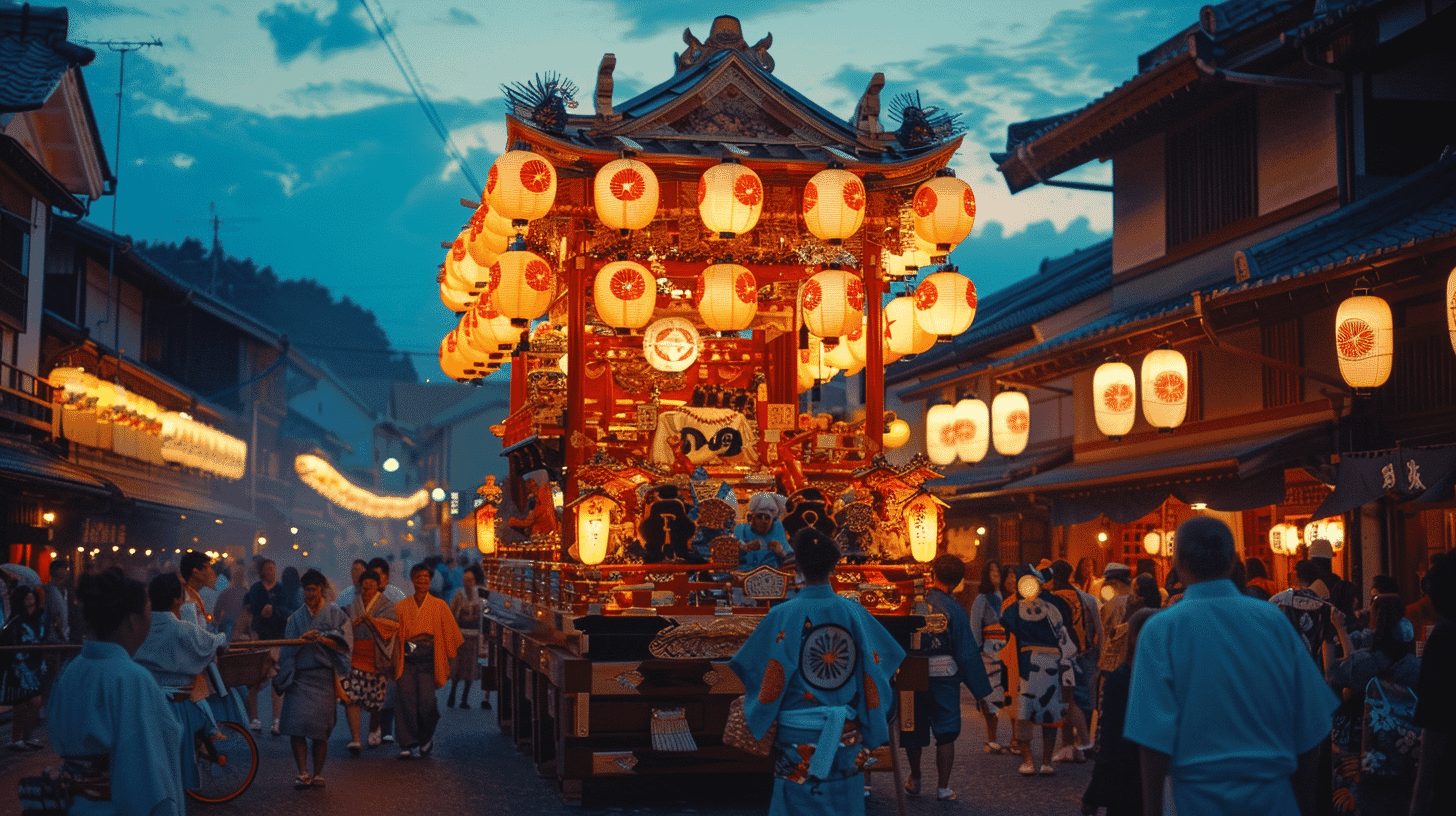
Experience Hokkaido's Summer Heritage: Esashi Ubagami Daijingu Togyosai Festival Guide
Hey there! Wasshoi Tonegawa here, your festival comedian-MC. Today I'm taking you to Esashi Town in Hokkaido for the Ubagami Daijingu Togyosai Festival—over 300 years of tradition that'll blow your mind. Wasshoi—for real!
What is Esashi Ubagami Daijingu Togyosai?
The Esashi Ubagami Daijingu Togyosai is one of Hokkaido's oldest festivals, held annually from August 9th to 11th in Esashi Town. Dating back to 1644 (Shoho era), this festival is designated as an Intangible Folk Cultural Property of Hokkaido.
Festival Basics:
- When: August 9-11 annually
- Where: Esashi Town, Hiyama District, Hokkaido
- Main Feature: Procession of 13 ornate festival floats (yama)
- Chant: "Ya-re, Ya-re!"
Main Highlight: The 13 Magnificent Floats
The stars of this festival are 13 spectacular floats representing different districts of the town. Each float features unique designs and decorations that showcase centuries of craftsmanship and tradition.
Float Features:
- Over 6 meters tall with elaborate decorations
- Adorned with warrior figures and historical characters
- Illuminated by lanterns at night for a mystical atmosphere
- Accompanied by live traditional music (ohayashi)
Viewing Tip: While the floats are beautiful, remember to never touch, lean on, or stand in front of them. Keep a respectful distance and don't obstruct the carriers' path.
Festival Schedule and Prime Viewing Times
August 9: Evening Festival (Yoimiya)
- Sacred rituals at the shrine followed by float gathering
- Night procession features lantern-lit floats creating magical scenery
August 10: Main Festival Day
- Daytime procession showcases float decorations in full detail
- Evening procession reaches peak excitement
August 11: Closing Day
- Floats parade through various neighborhoods
- Festival finale
Viewing Tip: Evenings are more crowded than daytime. Families with children may prefer daytime viewing. For photography, aim for twilight hours, but remember: no flash photography allowed.
How to Enjoy: Three Viewing Position Options
① Family-Friendly Position
- Plaza in front of Ubagami Daijingu Shrine: spacious viewing area
- Restrooms and rest areas nearby
- Ideal for visitors with small children
② Photography Position
- Nakauta-cho / Shinei-cho area: capture multiple floats in frame
- Best during twilight hours
- Use tripods only where they won't obstruct others
③ Crowd-Avoiding Position
- Rear sections of the parade route: escape the densest crowds
- Still enjoy the atmosphere after floats pass
Viewing Tip: Regardless of position, don't push forward, don't run, and avoid crowding in dense areas. Safety first while enjoying the festival spirit!
About the "Ya-re, Ya-re!" Chant
The iconic chant "Ya-re, Ya-re!" serves as a signal for carriers pulling the floats and creates a sense of unity throughout the festival.
How to Enjoy the Chant:
- Audience cheering is welcome
- However, keep loud group chanting moderate outside designated areas
- Always be mindful not to interfere with the carriers
Viewing Tip: The chant embodies the festival's energy, but don't let excitement in crowded areas compromise safety awareness.
Festival Viewing Guidelines: Keep the Heat, Keep it Safe!
Photography Rules
- Commercial filming or live streaming requires organizer permission
- Flash photography is prohibited
- Check beforehand for tripod or drone restrictions
- Avoid close-up shots of participants, especially children
Manners and Rules
- Never touch floats or sacred implements
- Don't obstruct carriers' paths
- Stay out of restricted areas
- Take all trash with you
- Smoke only in designated areas
Safety Considerations
- Don't push or run in crowded areas
- Keep close watch on small children
- Prevent heat exhaustion (stay hydrated, wear hats)
- Identify emergency evacuation routes beforehand
Access Information
By Public Transportation:
- Bus from Hakodate Station to Esashi: approximately 1 hour 40 minutes
By Car:
- From Hakodate City via Route 228: approximately 1 hour 30 minutes
- Traffic restrictions during festival period; public transport recommended
Accommodation:
- Book Esashi Town lodging well in advance
- Day trips from Hakodate City are also feasible
Wasshoi Tonegawa's Field Report
I actually covered this festival last year. The moment at twilight when all 13 lantern-lit floats began moving simultaneously was breathtaking. The ohayashi music blending with "Ya-re, Ya-re!" chants filled the entire port town with festival spirit.
What impressed me most was the synchronized movement of the carriers. Their pride in carrying on 300+ years of tradition and love for their community was palpable. Simply watching from an appropriate distance and offering encouragement—that alone lets you fully feel the festival's energy.
The contrast between the cool ocean breeze and the hot festival atmosphere is uniquely Hokkaido. Wasshoi—for real, this is worth experiencing at least once!
Nearby Attractions
Must-visit spots in Esashi Town before or after the festival:
Esashi Oiwake Hall:
- Learn about the history and culture of Esashi Oiwake (folk song)
- Live performances available
Former Hiyama Nishigori District Government Office:
- Western-style architecture from the Meiji era
- Historical exhibits
Kamome Island:
- Iconic symbol of Esashi
- Spectacular lighthouse views
Conclusion: Where Tradition Meets Modern Summer Nights
The Esashi Ubagami Daijingu Togyosai, with over 300 years of history, continues to be cherished by the local community. The magnificent floats, spirited chants, and above all, the passion of the people who support this festival—all come together to create unforgettable summer memories.
While observing safety and manners, experience the wonder of this traditional culture with all five senses. Don't hype unsafely, don't touch sacred items, and maintain proper distance—the festival's energy still reaches you powerfully.
Wasshoi—for real! See you in Esashi this summer in Hokkaido!
FAQ
Q1: Does the festival proceed in rainy weather?
A: Light rain usually doesn't stop the festival, but severe weather may cause cancellation or postponement. Check official information from the Esashi Town Tourism Association or Ubagami Daijingu Shrine's official website. If weather looks uncertain on the day, contact organizers beforehand.
Q2: Can I view the floats up close?
A: You can observe floats from designated viewing areas during the procession, but please maintain a safe distance and do not approach the floats. Never touch the floats or sacred implements. If display areas are set up by neighborhood associations, the same no-touching rule applies.
Q3: Can I take photos or videos?
A: Personal photography for private records is permitted, but flash photography is prohibited. Commercial filming or live streaming requires prior organizer permission. Tripod and drone use may also be restricted, so check in advance.
Q4: Is it enjoyable for families with children?
A: Yes, it's family-friendly. However, evening processions can get crowded, so keep close watch on small children. Daytime processions offer more relaxed viewing. Identify restroom and rest area locations beforehand for peace of mind.
Q5: Is parking available?
A: Temporary parking is provided during the festival period, but spaces are limited. Traffic restrictions also apply within town, so public transportation is strongly recommended. If driving, arrive early and check parking information in advance.
