
Why Is Ise Jingu Rebuilt Every 20 Years? — The Mystery of Shikinen Sengu at Japan's Most Ancient Shrine
Introduction: The World's Only Recurring Architectural Ritual
When I first stood before the Naiku (Inner Shrine) of Ise Jingu in Mie Prefecture, I was struck by something extraordinary. The wooden structures gleaming before me, despite appearing ancient, were actually built within the last two decades. This isn't due to recent restoration—it's by design. For over 1,300 years, Ise Jingu has been completely rebuilt every 20 years in a ceremony called Shikinen Sengu (式年遷宮).
This practice, which has been carried out 63 times since 690 CE, represents one of the most remarkable examples of cultural continuity in human history. But why would Japan's most sacred shrine intentionally tear down and rebuild its structures every generation?
Understanding Ise Jingu: Japan's Supreme Shrine
Before exploring the Shikinen Sengu, it's essential to understand the significance of Ise Jingu itself.
Ise Jingu is not a single shrine but a complex of 125 shrines centered around two main sanctuaries: the Naiku (Inner Shrine), dedicated to Amaterasu Omikami—the sun deity and ancestral goddess of the Imperial family—and the Geku (Outer Shrine), dedicated to Toyouke no Omikami, the deity of agriculture and industry.
According to the Nihon Shoki (Chronicles of Japan, completed in 720 CE), the Naiku was established around the 1st century BCE when Princess Yamato-hime-no-mikoto was divinely guided to Ise as the permanent dwelling place for Amaterasu. The Geku was added later in 478 CE. These dates place Ise Jingu among Japan's oldest continuously operating religious sites.
The architectural style is known as Shinmei-zukuri—characterized by elevated floor structures, thatched roofs, and unpainted cypress wood. This pure, unadorned aesthetic represents the oldest form of Japanese religious architecture, predating Buddhist influence.
The Shikinen Sengu: A 1,300-Year Cycle
The term "Shikinen Sengu" combines three concepts: "shiki" (式) meaning ceremony, "nen" (年) meaning year or years, and "sengu" (遷宮) meaning the transfer of the deity to a new dwelling.
Historical Records
The first documented Shikinen Sengu occurred in 690 CE during the reign of Emperor Jito. According to the Shoku Nihongi (Chronicle of Japan Continued, completed in 797 CE), this initial rebuilding established the 20-year cycle that continues to this day.
However, the practice was not without interruption. During the turbulent Warring States period (1467-1615), the ceremony was suspended for 123 years due to civil warfare and lack of resources. It wasn't until 1585 that the tradition was revived through the determined efforts of priest Senge Yoshitada, with support from warlord Oda Nobunaga and later Toyotomi Hideyoshi.
The most recent Sengu occurred in 2013 (the 62nd ceremony), and the 63rd rebuilding took place in 2025, with the next scheduled for 2045.
Why Every 20 Years? Multiple Layers of Meaning
The question "why 20 years?" has fascinated scholars for centuries. The answer involves practical, spiritual, and cultural dimensions.
Material Durability
The primary building material is Japanese cypress (hinoki), chosen for its resistance to moisture and insects. However, thatched roofs deteriorate significantly after 20-25 years, even with regular maintenance. Before modern preservation techniques, 20 years represented the practical limit for maintaining structural integrity while ensuring the buildings remained dignified and sacred.
Technological Transmission
Perhaps most importantly, the 20-year cycle ensures the transfer of specialized construction techniques across generations. Master carpenters (miyadaiku) who participated in one Sengu as apprentices can lead the next as experienced craftsmen, and then oversee the following one as masters. This creates an unbroken chain of knowledge transmission that has preserved ancient building methods for 1,300 years.
During my research visit to the shrine's archives, I learned that approximately 10,000 cypress trees are required for each rebuilding, and the carpentry work employs traditional joinery techniques without using any nails or modern fasteners. These skills would have been lost without the continuous practice provided by the 20-year cycle.
Spiritual Renewal
In Shinto philosophy, the concept of "kegare" (spiritual impurity) accumulates over time, even in sacred spaces. The complete rebuilding represents not just physical renewal but spiritual purification. The deity is ceremonially transferred to the new structures in a solemn nighttime procession, symbolizing eternal renewal and continuity.
Additionally, the number 20 may relate to traditional Japanese agricultural cycles and generational spans, though historical sources don't explicitly confirm this connection.
The Process: Eight Years of Preparation
The Shikinen Sengu is not a sudden event but an elaborate process spanning eight years, involving numerous ceremonies and preparations.
Tree Selection and Harvesting (Years 1-4)
The process begins with the Oyama-gisai ceremony, where priests ceremonially cut the first cypress trees from designated forests in Kiso, Nagano Prefecture. These forests have been managed for centuries specifically to supply timber for Ise Jingu. The trees must be at least 200 years old to meet the required dimensions.
Construction (Years 5-7)
Adjacent to each existing structure lies a vacant site, alternating between two prepared locations. During the Sengu, buildings are constructed on the previously empty site while the old structures remain in use. This allows for careful construction without disturbing the deity's current dwelling.
The construction employs traditional techniques documented in texts dating back to the Heian period (794-1185). Every joint, measurement, and ceremonial placement follows precise specifications passed down through generations.
The Transfer Ceremony (Year 8)
The climax occurs during the Sengu-sai, when the deity is transferred from the old shrine to the new one. This ceremony takes place at night, in complete darkness except for torches, with only senior priests and imperial representatives present. The sacred mirror (shintai)—representing Amaterasu—is carried in a silk-wrapped box, unseen by human eyes, to its new dwelling.
Following the transfer, the old structures are partially dismantled. Some timber is distributed to shrines throughout Japan as sacred materials for their own repairs, creating a material connection between Ise and the broader Shinto network.
Modern Challenges and Adaptations
Despite its ancient origins, the Shikinen Sengu has adapted to contemporary realities.
Environmental Sustainability
The demand for 10,000 mature cypress trees every 20 years has raised environmental concerns. In response, Ise Jingu established the "Jingu Forest" project in 2005, cultivating new forests to ensure sustainable timber supply for future centuries. These forests require 200-300 years to mature, representing planning across multiple Sengu cycles.
Financial Considerations
The 2013 Sengu cost approximately 55 billion yen (roughly $500 million USD). This enormous expense is funded through a combination of public donations, corporate sponsorship, and government support. The shrine has developed sophisticated fundraising campaigns that frame contributions as participation in preserving cultural heritage.
Technical Training
With declining numbers of traditional craftsmen in Japan, Ise Jingu has established training programs to ensure sufficient skilled workers for future Sengu. Young apprentices study not only carpentry but also metal crafting, textile production, and other specialized skills required for the ceremony.
What Visitors Can See Today
While the innermost sanctuaries remain off-limits to the public—a cloth barrier prevents even glimpsing the main halls—visitors can observe the distinctive architectural features from designated viewing areas.
Practical Information
Access: From Iseshi Station (on the Kintetsu line from Nagoya or Osaka), buses run regularly to both Geku and Naiku. Allow 3-4 hours to visit both shrines properly.
Fees: No admission fee, though donations are welcome.
Photography: Permitted in most areas, but flash photography and tripods are prohibited. The innermost sanctuaries cannot be photographed.
Etiquette: Bow at the torii gate upon entering, wash hands and rinse mouth at the temizuya (purification fountain), and maintain silence near the main sanctuaries. Remove hats when approaching sacred areas.
Best Times: Early morning (6:00-8:00 AM) offers the most serene atmosphere. Avoid major holidays when crowds are substantial.
Viewing Order
I recommend starting at the Geku, then traveling to the Naiku (approximately 15 minutes by bus). This follows the traditional pilgrimage route and allows you to appreciate the progression from the agricultural deity (Geku) to the supreme solar deity (Naiku).
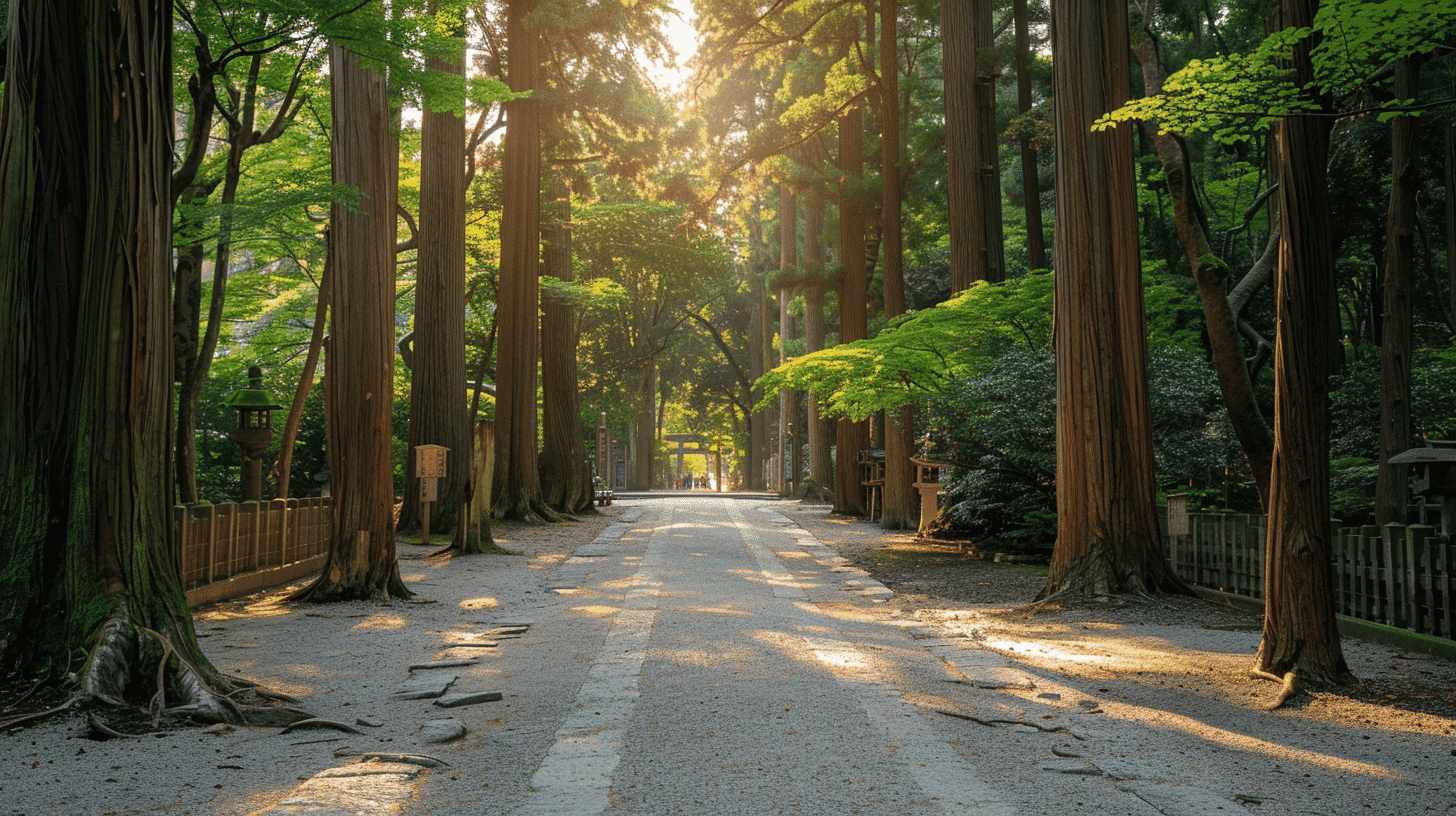
At each location, walk slowly along the approach path (sandō) and notice how the forest creates a natural transition from secular to sacred space. The density and age of the trees increase as you approach the sanctuaries, creating a palpable sense of entering another realm.
The Deeper Meaning: Impermanence and Continuity
What makes the Shikinen Sengu philosophically profound is its embodiment of two seemingly contradictory concepts: impermanence (mujo) and continuity (dentō).
By completely rebuilding every 20 years, Ise Jingu demonstrates that permanence doesn't require unchanging physical objects. Instead, true continuity exists in the faithful transmission of knowledge, techniques, and spiritual practices. The shrine is simultaneously ancient and new—1,300 years old and 12 years old at the same time.
This philosophy resonates deeply with Buddhist concepts of impermanence, yet it's distinctly Shinto in practice. Where Buddhism might counsel acceptance of decay, Shinto actively creates renewal. The Shikinen Sengu suggests that the way to preserve the ancient is not to freeze it in time but to continuously recreate it with fresh materials and living hands.
Conclusion: A Living Monument
Standing before Ise Jingu, you're not looking at history preserved under glass. You're witnessing a living tradition that has survived wars, famines, political upheavals, and technological revolutions. The buildings before you are both brand new and 1,300 years old—an architectural koan that challenges our assumptions about preservation and authenticity.
The Shikinen Sengu reminds us that cultural heritage isn't merely about preserving old things. It's about maintaining the knowledge, skills, and spiritual practices that give those things meaning. In an age of rapid change and disposable culture, Ise Jingu offers a different model: one where renewal and tradition aren't opposites but partners in the same dance.
When you visit—and I strongly encourage you to do so—take a moment to consider that the craftsmen who built what you're seeing learned from masters who learned from masters stretching back thirteen centuries in an unbroken chain. That continuity, more than any physical structure, is what makes Ise Jingu eternal.
FAQ
Q: Can I enter the main sanctuary buildings?
A: No. Only imperial family members and the highest-ranking priests may enter the innermost sanctuaries. Visitors can approach to the third torii gate but cannot pass beyond the cloth barrier. This restriction preserves the sanctity of the space and has been in place throughout the shrine's history.
Q: What happens to the old buildings after they're dismantled?
A: The timber from dismantled structures is distributed to Shinto shrines throughout Japan for their repairs and renovations, creating a material link between Ise and the broader shrine network. Some pieces are also crafted into amulets and sacred objects. The thatched roofing materials are returned to the earth as they are organic.
Q: How can the shrine afford to rebuild every 20 years?
A: Funding comes from three main sources: public donations (collected through a nationwide campaign), corporate sponsorships, and government cultural preservation grants. The 2013 Sengu raised funds from over 9 million donors. The shrine begins fundraising approximately 8 years before each ceremony.
Q: Are there other shrines that practice similar rebuilding ceremonies?
A: While several major shrines perform periodic reconstruction (such as Izumo Taisha, which rebuilds every 60 years), none maintain the scope, frequency, or historical continuity of Ise Jingu's 20-year cycle. The Shikinen Sengu is unique in Japanese religious practice.
Q: Can I witness the actual transfer ceremony during Sengu?
A: No. The Sengu-sai (transfer ceremony) is conducted at night in complete secrecy, attended only by senior priests and imperial representatives. However, many preparatory ceremonies throughout the 8-year process are open to public observation, including the tree-cutting ceremony and various purification rituals.
References
- Ise Jingu Official Website: https://www.isejingu.or.jp/en/
- "Shoku Nihongi" (Chronicle of Japan Continued), 797 CE - National Archives of Japan Digital Collection
- Breen, John and Mark Teeuwen. "A New History of Shinto." Wiley-Blackwell, 2010.
- Watanabe, Yasutada. "Shinto Art: Ise and Izumo Shrines." Weatherhill, 1974.
- Agency for Cultural Affairs, Japan - Cultural Properties Database
- "The Architectural Beauty of Japanese Shrines," Tokyo National Museum Exhibition Catalog, 2019