
The Iya Valley Setting: Geography and Historical Background
The Iya region in Miyoshi City, Tokushima Prefecture, sits deep within the Shikoku mountain range, characterized by steep gorges. Along the Iya River, cliffs rise several hundred meters, and the area was referred to as a "secluded frontier" until the Edo period. Fragments from the Awa no Kuni Fudoki (Records of Awa Province) document this region as a rugged mountainous territory since ancient times. During the medieval period, it was recognized as a place of retreat far from the imperial capital.
The geographical features of this terrain deeply influenced the establishment of Heike legends in Iya. In 1185 (Juei 4), following the Heike clan's defeat at the Battle of Dan-no-ura, remnants of the clan are said to have fled to various regions. Iya became known as one such refuge, as recorded in the Edo-period gazetteer Awa-shi (compiled during the Kyōhō era): "It is said that Heike fugitives lived in hiding in this land."
While modern historical scholarship cannot treat all fugitive legends as established fact, it is reasonable to infer from family names, place names (such as "Heike Yashiki" or "Heike Valley"), and oral traditions that the Iya region served as a resettlement area for those distancing themselves from political conflicts in the capital during and after the medieval period.
Structure and Historical Evolution of the Kazurabashi Bridge
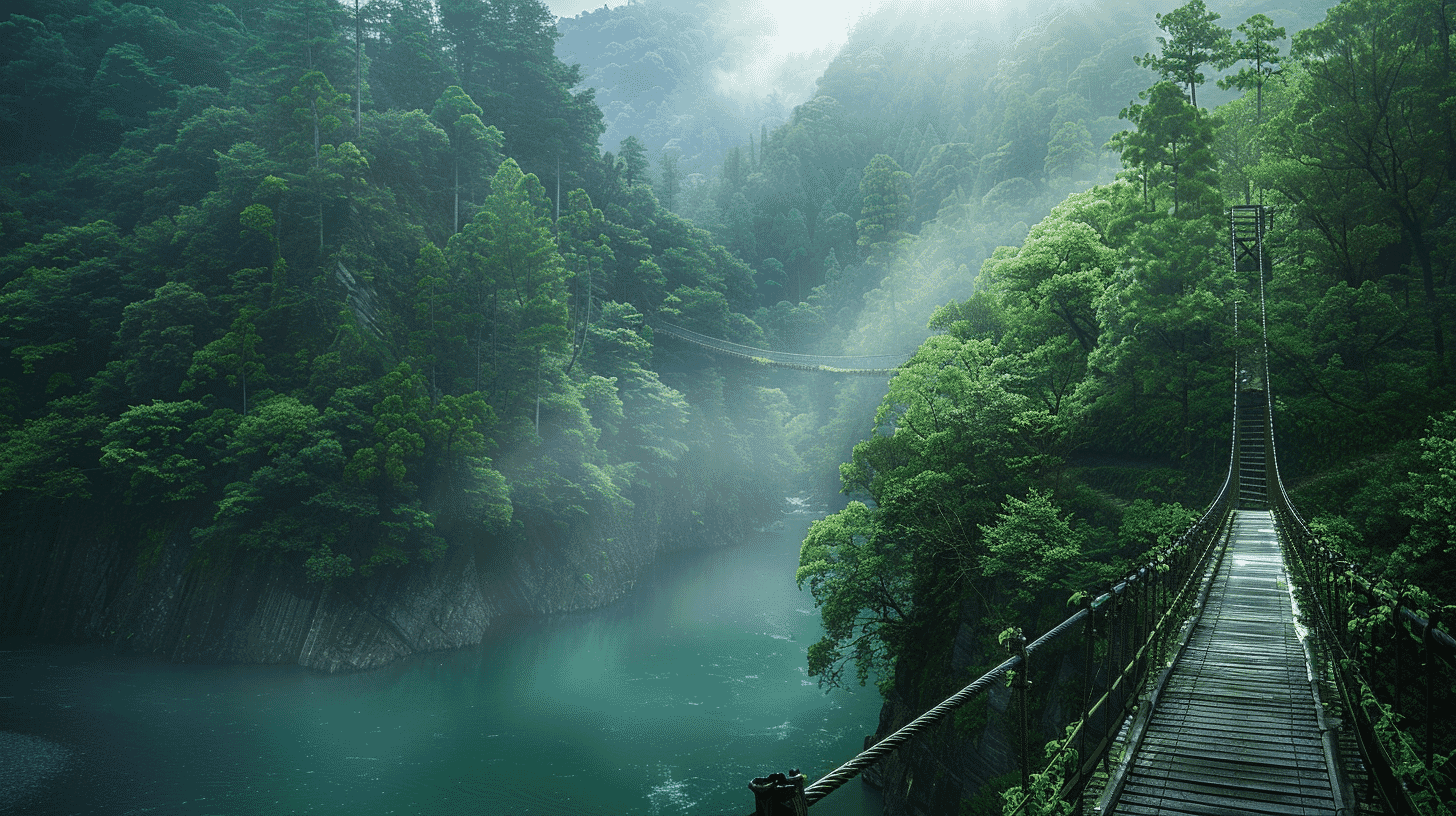
The Iya Kazurabashi is a suspension bridge woven from the vines of hardy kiwi plants (scientific name: Actinidia arguta). The current bridge spans approximately 45 meters in length, 2 meters in width, and stands about 14 meters above the water surface. The spacing between bridge planks is irregular, allowing glimpses of the clear Iya River below—a sight that requires some courage for first-time visitors.
The earliest documented mention of vine bridges appears in the mid-Edo period text Awa Meisho Zue (Illustrated Guide to Famous Places in Awa, published during the Bunka era), which states: "There is a vine bridge in the Iya mountains, said to have been built by Heike fugitives." At that time, multiple vine bridges existed throughout the Iya Valley, used by locals for crossing to the opposite bank and as defensive structures that could be quickly severed in case of enemy attack.
The present-day "Iya Kazurabashi" (located in Zentoku, Nishi-Iya-yama Village) was used for daily life until the early Showa period. It has since been preserved as a cultural and tourism resource, with reconstruction occurring every three years. Local craftspeople maintain traditional construction methods during these renewals, preserving historical techniques while ensuring safety.
Historical Analysis of the Heike Fugitive Legend: Between Fact and Oral Tradition
Several specific narratives comprise the Heike legends transmitted in Iya. The most prominent tells of a clan descended from Taira no Kunimori, who fled to Iya and built vine bridges that could be cut to deter pursuers. While Kunimori is said to be related to Taira no Kiyomori, no definitive genealogical records survive.
However, the Iya region contains multiple sites claiming association with the Heike, including a location designated as "Emperor Antoku's temporary residence" (Iya-yama Tennō Shrine) and various Heike-related place names. Folklorist Yanagita Kunio, in his preface to Tōno Monogatari, touched upon the significance of Heike fugitive legends, suggesting they represent not mere fabrications but oral preservation of actual historical migrations.
The local folk song "Iya no Konabiki-bushi" also incorporates themes of Heike sorrow, demonstrating how deeply rooted historical consciousness has become in regional culture.
How to Cross the Bridge and Proper Etiquette
When visiting the Kazurabashi Bridge, please observe the following guidelines.
Basic Information
- Location: 162-2 Zentoku, Nishi-Iya-yama, Miyoshi City, Tokushima Prefecture
- Opening Hours: Dawn to dusk (varies by season)
- Crossing Fee: Adults ¥550, Children ¥350 (as of 2024)
- Time Required: Approximately 10 minutes for crossing only; 30 minutes including surrounding area exploration
Crossing Etiquette and Precautions The bridge operates as one-way traffic. During busy periods, please wait your turn and maintain appropriate distance from others ahead. The bridge planks are secured with vines and may sway depending on where you step. I recommend gripping the handrails firmly and proceeding carefully while watching your footing.
Photography is permitted, but prolonged stops for shooting will obstruct those behind you. Please continue moving while taking photos. Tripod use is not prohibited, but on the bridge itself, please prioritize the passage of other visitors.
The Iya River surrounding the bridge maintains cold water temperatures even in summer, so exercise caution if entering the water. Additionally, deliberately shaking the bridge structure or pulling on vines is strictly prohibited for safety management reasons.
Related Historical Sites for Combined Visits
When visiting the Kazurabashi Bridge, exploring the following sites will provide a more comprehensive understanding of Iya's history.
Heike Yashiki Folk Museum This facility preserves an old family residence in Iya associated with the Heike. It displays items considered family treasures of the Heike and daily-life tools from that era. While the historical value of these items remains subject to scholarly debate, the museum offers valuable insight into how Heike legends have been received and transmitted in Iya.
Iya-yama Tennō Shrine A shrine built based on the tradition that Emperor Antoku temporarily stayed in this location. The main hall dates from the mid-Edo period, with Emperor Antoku and Emperor Sutoku enshrined as deities. Visiting is free, but as this remains a place of local worship, please visit respectfully.
Biwa Falls A waterfall where, according to legend, Heike fugitives played the biwa (lute) in longing for the capital. This beautiful 50-meter waterfall is located approximately 10 minutes by car from the Kazurabashi Bridge.
Practical Information and Preparation for Your Visit
Access By public transportation, take the Shikoku Kōtsū bus bound for "Kazurabashi" from JR Dosan Line Ōboke Station (approximately 20 minutes). Service is limited, so verify schedules in advance. By private vehicle, take National Route 32 and Prefectural Route 45 from the Ikawa-Ikeda IC on the Tokushima Expressway (approximately 1 hour). Parking is paid (around ¥500 for regular cars) and may fill during peak seasons.
Clothing and Items to Bring Comfortable walking shoes are essential due to the bridge's unstable footing. Crossing in heels or sandals is dangerous and should be avoided. Temperatures along the gorge remain cool; even in summer, bringing a light jacket is advisable. I also recommend carrying insect repellent.
Photography Guidelines Personal photography is unrestricted, but commercial use requires advance contact with the management. Drone use is prohibited due to natural conservation and safety concerns in the surrounding area.
Community Efforts to Preserve This Heritage
The Kazurabashi Preservation Society, centered on local residents, leads bridge conservation efforts. Reconstruction every three years requires several hundred person-hours and approximately 6 tons of vine material. Rather than harvesting wild vines, the project uses sustainably cultivated vines from nearby regions for environmental consideration.
The Iya region actively continues cultural transmission centered on Heike legends. Each autumn, the "Heike Festival" features local children performing dramas about Heike fugitives and presentations of traditional arts, creating opportunities to pass history to the next generation.
Thus, the Iya Kazurabashi represents more than a tourist attraction—it embodies the concentrated historical consciousness and living culture of the region. When visiting, reflecting on the lives of the people behind this site will yield deeper understanding.
FAQ
Q1: Did Heike fugitives actually build the Kazurabashi Bridge?
A: While no definitively established documentary evidence exists, the Edo-period gazetteer Awa-shi records that "Heike fugitives built it," indicating such traditions were established by at least the Edo period. Modern historical scholarship suggests that people who left the capital for political reasons after the Heike's fall may have resettled in Iya, with memories preserved through oral tradition. While we cannot treat the entire legend as historical fact, it represents a crucial element for understanding regional historical culture.
Q2: Is crossing the bridge dangerous? Can children and elderly people cross safely?
A: The bridge undergoes reconstruction every three years with regular safety inspections. However, the wide spacing between planks and views of the river below may cause psychological stress for those uncomfortable with heights. Crossing slowly while gripping handrails firmly poses no problem, but for young children, I recommend parents hold their hands while crossing. Wheelchair and stroller passage is structurally impossible.
Q3: What is the best season to visit the Kazurabashi Bridge?
A: Each season offers distinct appeal: spring brings fresh greenery, summer offers cool gorge breezes, autumn displays autumn foliage, and winter presents snowy landscapes. To avoid crowds, I recommend avoiding the autumn foliage season (late October to mid-November) and major holidays. Winter visits may encounter frozen roads, requiring tire chain preparation.
Q4: Are there other vine bridges in the Iya region?
A: Yes, the Oku-Iya area features the "Oku-Iya Double Kazurabashi"—two bridges called the Male Bridge (approximately 42 meters) and Female Bridge (approximately 20 meters). This location offers an even more secluded atmosphere than Nishi-Iya's bridge. While access is more challenging than to Nishi-Iya, I recommend it for those seeking a quieter environment to experience history.
Q5: Is visiting the Heike Yashiki Folk Museum essential?
A: Visiting in conjunction with the Kazurabashi Bridge deepens understanding of Iya's Heike legends. While scholarly debate continues regarding the authenticity of displayed items, the museum holds significance for understanding how local people have inherited Heike legends. If time permits, I recommend visiting. Admission is approximately ¥550 for adults.
References
- Awa-shi (compiled during Kyōhō era, collection of Tokushima Prefectural Library)
- Awa Meisho Zue (published during Bunka era)
- Miyoshi City Board of Education, ed., Folklore and History of Iya
- Tokushima Prefecture Tourism Association official website, "About Kazurabashi"
- Yanagita Kunio, preface to Tōno Monogatari (reference to Heike fugitive legends)
- Miyoshi City official tourism website (access information and fees)