
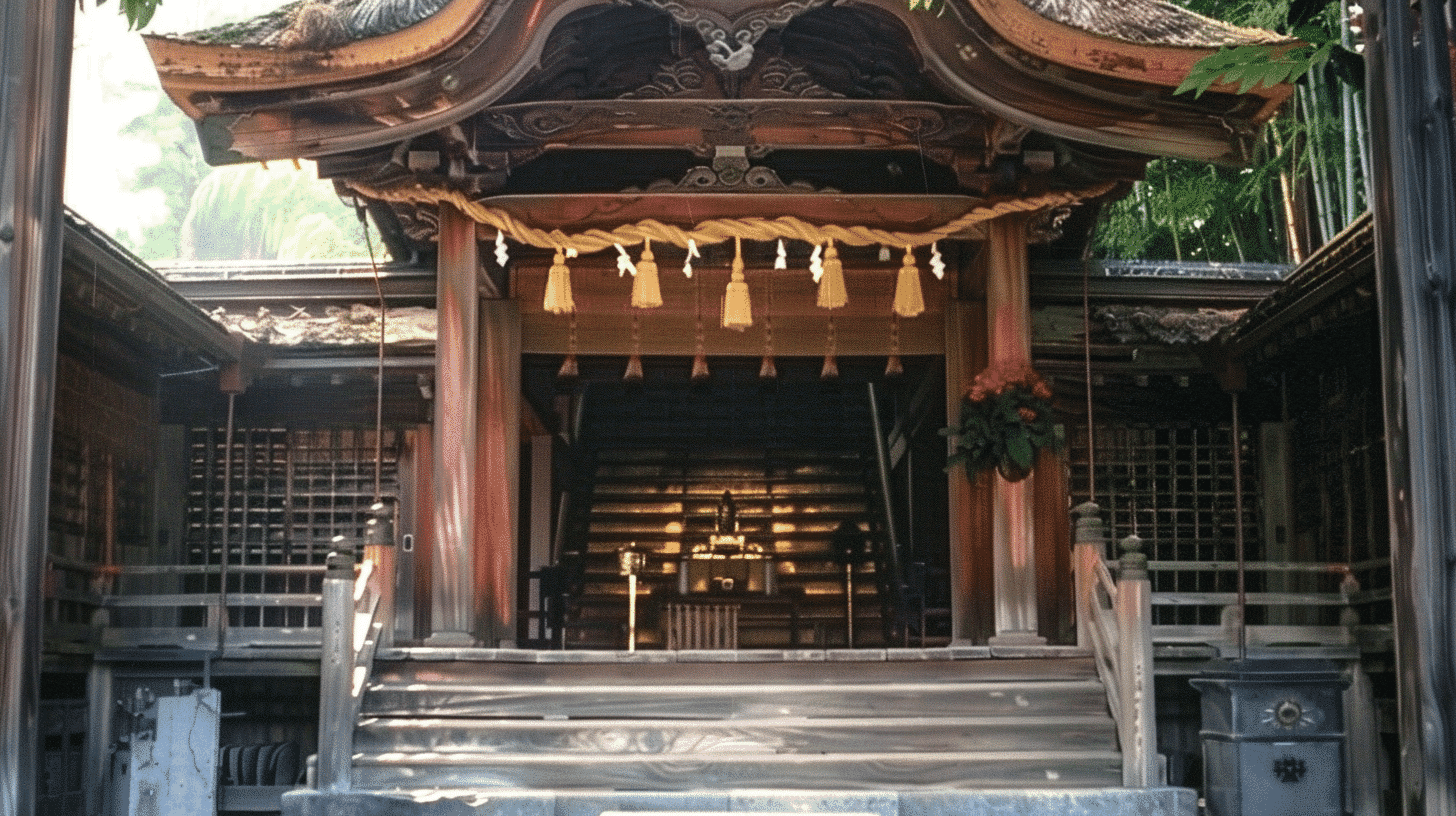
Discovering Nidouji Shrine Main Hall: A Testament to Edo Period Craftsmanship
Hidden within the sacred forests of Shiga Prefecture stands the Nidouji Shrine Main Hall, an architectural jewel that has weathered more than three centuries since its construction in 1703. This Important Cultural Property represents one of the finest examples of Kasuga-zukuri style architecture from the mid-Edo period, offering visitors a rare glimpse into Japan's sophisticated religious architectural traditions.
The Significance of Kasuga-zukuri Architecture
The Nidouji Shrine Main Hall exemplifies the refined Kasuga-zukuri architectural style, characterized by its single-bay structure (ikkensha) with distinctive features that set it apart from other shrine architectures. This style, which originated at Kasuga Taisha in Nara, represents a harmonious blend of indigenous Japanese design principles and continental influences that arrived through Buddhism.
What makes this particular example exceptional is its rarity in Shiga Prefecture, where Kasuga-zukuri shrines are remarkably uncommon. The main hall's compact yet elegant proportions, measuring approximately one bay square, demonstrate the sophisticated spatial concepts that Japanese architects had mastered by the Genroku period (1688-1704).
Architectural Features and Cultural Value
The main hall's construction reveals the exceptional craftsmanship of early 18th-century builders. The structure features a cypress bark roof (hiwadabuki), topped with a distinctive box ridge (hakomune) that exemplifies the refined roofing techniques of the period. The interior space is skillfully divided into two areas: the inner sanctuary (naijin) and the outer worship area (gejin), creating a sacred threshold between the divine and human realms.
Dating inscriptions and ridge tags confirm the building's construction in Genroku 16 (1703), placing it within a particularly prosperous period of the Edo era when religious architecture flourished under stable political conditions. This precise dating makes the structure invaluable for understanding the evolution of shrine architecture during this pivotal period in Japanese history.
Why It Earned National Recognition
The designation as an Important Cultural Property acknowledges several exceptional qualities of the Nidouji Shrine Main Hall. First, its architectural integrity remains remarkably intact, preserving original construction techniques and materials that have become increasingly rare. The building represents what experts consider an exemplary model of early modern shrine architecture, showcasing the refinement achieved during the height of Edo period craftsmanship.
Furthermore, the shrine's significance extends beyond its physical structure. It embodies centuries of continuous religious practice and community devotion, serving as a tangible link to Japan's spiritual heritage. The meticulous preservation of construction details, from the precise joinery to the traditional roofing methods, provides invaluable insights into historical building techniques that might otherwise be lost.
Highlights for International Visitors
For those interested in Japanese architectural heritage, the Nidouji Shrine Main Hall offers several compelling features. The intimate scale of the structure allows visitors to appreciate intricate details often lost in larger shrine complexes. The weathered cypress bark roofing, with its organic texture and subtle coloration, demonstrates the Japanese aesthetic principle of finding beauty in natural aging (wabi-sabi).
Photography enthusiasts will find the interplay of light and shadow on the shrine's surfaces particularly captivating, especially during the golden hours of early morning or late afternoon. The surrounding environment, typical of Shiga Prefecture's lush landscapes, provides a serene backdrop that enhances the spiritual atmosphere of this sacred site.
Exploring the Surrounding Area
Shiga Prefecture, home to Lake Biwa - Japan's largest freshwater lake, offers numerous cultural and natural attractions that complement a visit to Nidouji Shrine. The region is renowned for its concentration of Important Cultural Properties, ranking fourth nationally in the number of designated cultural assets. This wealth of heritage sites makes Shiga an ideal destination for cultural tourism off the beaten path.
Nearby attractions include historic castle towns, ancient Buddhist temples, and traditional craft workshops where visitors can experience centuries-old artistic traditions. The prefecture's proximity to Kyoto (approximately 20 minutes by train) makes it easily accessible while offering a more tranquil alternative to the busier tourist destinations.
Best Time to Visit
Each season brings its own charm to Nidouji Shrine. Spring offers the delicate beauty of cherry blossoms that may dot the shrine grounds, while summer provides lush green foliage creating a cool, shaded sanctuary. Autumn transforms the landscape with vibrant colors, and winter's bare branches reveal the architectural lines of the shrine in their purest form.
Consider visiting during weekday mornings for a more contemplative experience, as these times typically see fewer visitors. The quality of light during these hours also provides optimal conditions for photography and quiet reflection.
- 📍 Plan Your Visit to Shiga
- Find tours, activities & transport passes near Nikodoji Shrine Main Hall
- [ Hikone Castle & Lake Biwa Cruise Experiences ]
Q&A
- What makes Kasuga-zukuri architecture unique?
- Kasuga-zukuri is characterized by its gabled roof with a curved roofline, front-facing entrance, and an attached pent roof (kohai) that extends forward. This style combines simplicity with elegance, representing a distinctly Japanese interpretation of sacred architecture.
- How does this shrine compare to other Important Cultural Properties in Shiga?
- Among Shiga's 800+ cultural properties, Nidouji Shrine Main Hall stands out as one of the few examples of Kasuga-zukuri style in the prefecture. Its excellent preservation and precise dating make it particularly valuable for understanding Edo period religious architecture.
- Can visitors enter the main hall?
- As with most shrine main halls in Japan, the interior is typically restricted to preserve the sacred space and protect the historic structure. Visitors can appreciate the architecture from the outside and may participate in worship from the designated areas.
- What is the significance of the year 1703 in Japanese history?
- 1703 (Genroku 16) falls within the culturally rich Genroku period, often considered the golden age of Edo culture. This was a time of economic prosperity, artistic flowering, and architectural refinement under the stable Tokugawa shogunate.
Basic Information
| Name | Nidouji Shrine Main Hall (二童子神社本殿) |
|---|---|
| Cultural Property Status | Important Cultural Property (National Designation) |
| Architectural Style | Kasuga-zukuri (Spring Day Style) |
| Construction Date | 1703 (Genroku 16) |
| Prefecture | Shiga |
| Structure | Single-bay shrine (Ikkensha) |
| Roofing | Cypress bark shingles (Hiwadabuki) |
References
- Cultural Heritage Online - Nidouji Shrine Main Hall
- https://bunka.nii.ac.jp/heritages/detail/139018
- Shiga Prefecture Official Tourism Information
- https://www.biwako-visitors.jp/
- Agency for Cultural Affairs National Database
- https://kunishitei.bunka.go.jp/
Last verified: 2025.11.07