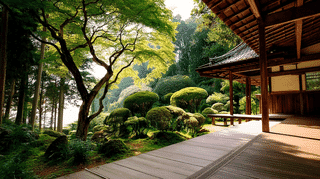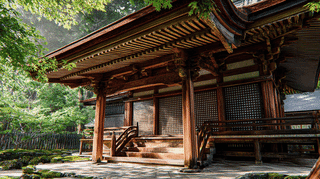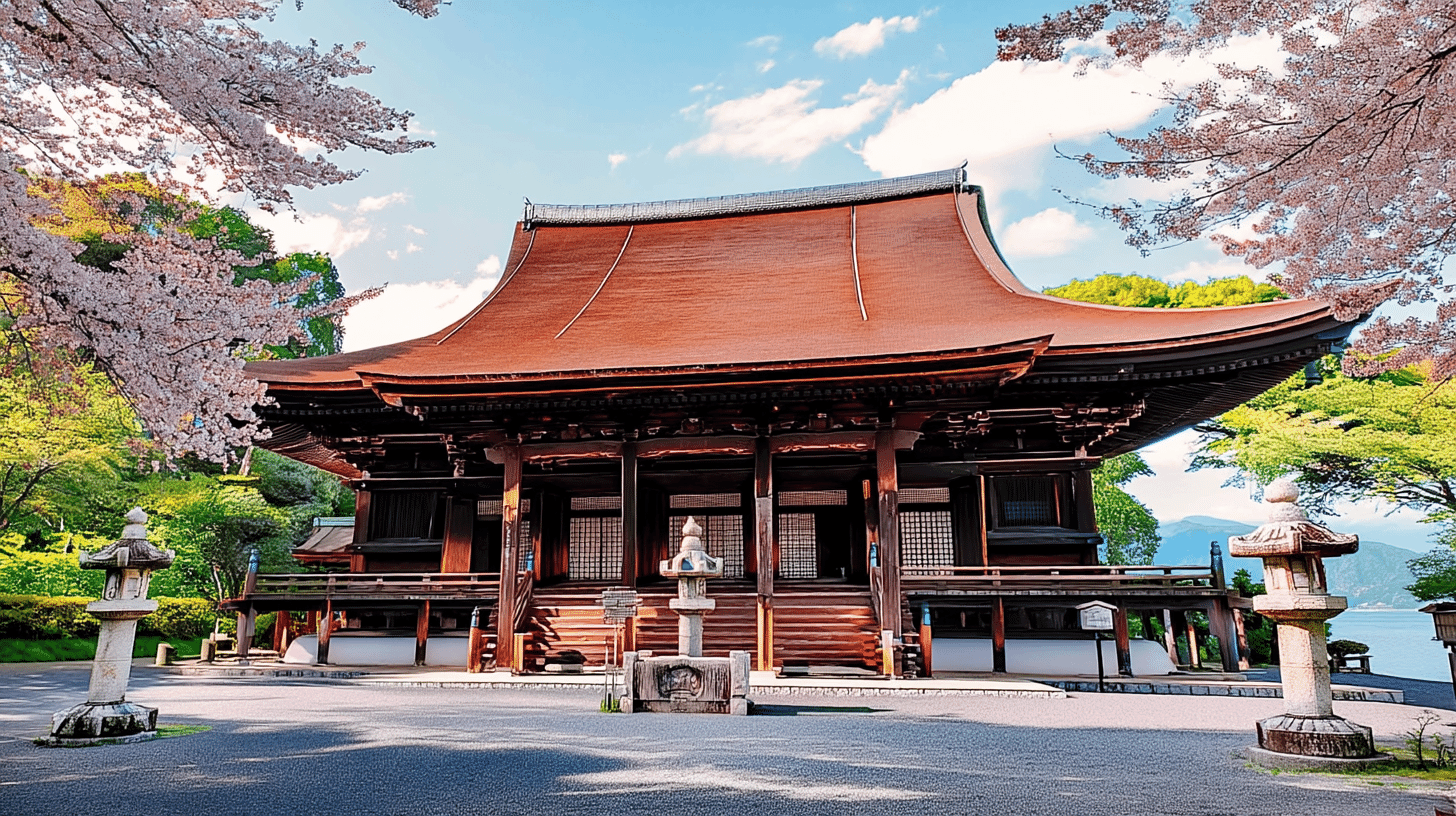
One Building, National Treasure since 1953
Onjoji Temple Golden Hall (園城寺金堂, Onjoji Kondo) is a Momoyama-period structure at Onjoji-cho, Otsu City, Shiga Prefecture, made an Important Cultural Property on 14 April 1906 and designated a National Treasure on 31 March 1953. The quantity is one building, the designation number 00109, and the owner the temple.
The date is given as the fourth year of Keicho, 1599. The hall is seven bays by seven bays, single-storeyed, with a hip-and-gable roof, a three-bay porch, and a roof of cypress bark.
The listing of 14 April 1906 is among the earliest met here, eleven years before that of the Ninsei wisteria tea jar.
The Commentary Field Is Empty
In the national database, nothing is written in the field for commentary.
Twenty one-sentence commentaries have appeared here: a work of the Heian period, material of the Nara period, and the like. Short as they were, they were sentences.
Here there is not one. The field for founding and history is empty too, as is the field for ridge tablets, ink inscriptions and other matters of note.
The structural field, however, is full: bay counts, roof form, porch and roofing material are all recorded. The date is given twice over, by era name and by year.
The category field reads pre-modern, temple. In records of structures, that field carries the division of periods.
The Temple's Name Spread to Other Kinds of Property
The name Onjoji does not belong to buildings alone.
Related entries include old maps of the precinct, one of them a painted scroll; a kettle named for the temple; one scroll of a picture scroll about tengu; and a print from a series on the western pilgrimage.
Maps, a kettle, one scroll of a narrative painting, a print. The name of a building has moved to pictures and to utensils.
At Zuiryuji, a building, postcards and an oil painting shared one name. Here the reach is wider, extending to objects for the tea room.
A bamboo flower container carries the temple's name as its by-name: attributed to Sen no Rikyu, dated 1590, in bamboo, 33.9 centimetres high, counted as one piece.
The Container's By-Name Comes from a Split
How that by-name arose shows how the name travelled.
The record states that the split running down the surface of the bamboo was likened to the temple bell that Benkei was said to have dragged away and cracked, and the by-name was given from that.
A crack in the bamboo was read as a bell broken in legend. Damage became the source of a name.
The Rishukyo on white-line paper is called the eyeless sutra because faces were left unfinished: being incomplete gives the name. This flower container is named for being split.
It is recorded as having belonged to the tea master Matsudaira Fumai. The inner box of the butterfly hand box also carries an inscription in his hand. One person appears in the records of two properties.
Visiting
The hall stands at Onjoji-cho, Otsu City, Shiga Prefecture, owned by the temple. It stands in the precinct and its exterior can be seen on a visit.
Other buildings in the precinct are recorded as well: a votive tablet hall, a moon-viewing stage, a hall of a hundred images, a bell tower, a Kannon hall and a hall of Bishamonten.
One further point. The commentary on the tengu scroll lists the monks it depicts by temple, and names both Onjoji and Miidera among them.
Miidera is well known as another name for Onjoji, yet this record lists the two as separate temples. This article notes the point without settling it.
Access to the interior follows the temple's own arrangements. Check before travelling.
Q&A
- When was the hall designated?
- It became an Important Cultural Property on 14 April 1906 and a National Treasure on 31 March 1953. The quantity is one building, the designation number 00109, and the owner the temple.
- Is there a commentary?
- No. The commentary field in the national database is empty, as is the field for founding and history. The structural field, by contrast, records seven bays by seven, a hip-and-gable roof, a three-bay porch and cypress bark roofing.
- When was it built?
- The date field gives the fourth year of Keicho, 1599, in both era name and year. The period field reads Momoyama.
- Do other properties share the name?
- Yes. Old maps of the precinct, a kettle, one scroll of a tengu picture scroll and a bamboo flower container all carry the temple's name, so it extends to pictures, utensils and tea wares.
- Where does the flower container's by-name come from?
- The record states that the split in the bamboo was likened to the temple bell Benkei was said to have dragged away and cracked, and the name was given from that.
Basic Information
| Name | Onjoji Temple Golden Hall (園城寺金堂, Onjoji Kondo) |
|---|---|
| Location | Onjoji-cho, Otsu City, Shiga Prefecture |
| Designation | National Treasure (structure); the category field reads pre-modern, temple, designation no. 00109 |
| Year Designated | 1906 (14 April), Important Cultural Property; 1953 (31 March), National Treasure |
| Quantity | 1 building |
| Dimensions | 7 bays by 7 bays, single-storeyed, hip-and-gable roof, 3-bay porch, roofed in cypress bark. The date is Keicho 4, or 1599, and the period Momoyama. The fields for commentary and for founding and history are both empty |
| Owner | Onjoji |
| Public Access | Standing in the precinct; the exterior can be seen on a visit, while the interior follows the temple's own arrangements |
References
- Agency for Cultural Affairs, National Cultural Properties Database: Onjoji golden hall
- https://kunishitei.bunka.go.jp/heritage/detail/102/1333
- Cultural Heritage Online: bamboo flower container named Onjoji
- https://bunka.nii.ac.jp/heritages/detail/540901
- Cultural Heritage Online: the tengu picture scroll, Onjoji scroll
- https://bunka.nii.ac.jp/heritages/detail/101049
- Miidera cultural properties repository
- https://miidera-museum.jp/cultural-property/contents/4/
Last verified: 2026.09.05