
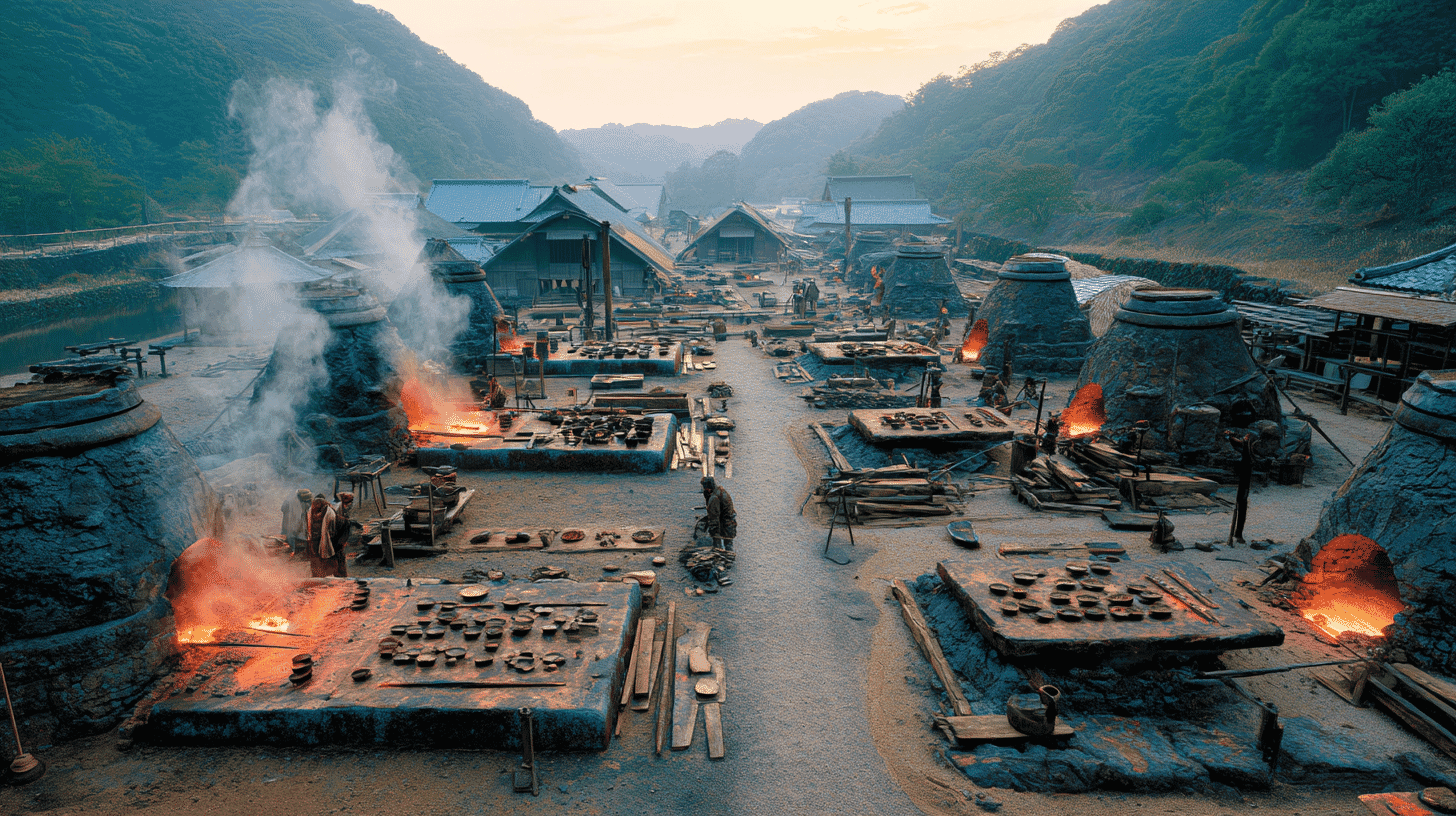
One Workshop Site, Designated by the State in 2001
Asukaike Kobo Ruins (飛鳥池工房遺跡, Asukaike Kobo Iseki) lie in Asuka Village, Takaichi District, Nara Prefecture, the site of workshops of the Asuka period, designated by the state on 13 August 2001. Its category is that of historic sites.
The field for a managing body stands empty.
The Agency records it in a valley among the low hills that bound the east of the Makami plain at the southern end of the Nara basin. The valley runs about 300 metres from north to south and is shaped like the character for person. The site is thought to date from the late 7th to the early 8th century.
An Edo-Period Pond Gave Its Name to an Asuka-Period Workshop
The site's name is not the name of the time when the workshops worked.
The Agency records that in the Edo period the valley was dammed and the Asuka pond made.
When the pond was to be filled in, it continues, the national research institute and the village board of education excavated in 1991 and found tools, lacquer jars, crucibles, wooden models and the traces of hearths, showing that workshops had made metal, glass and lacquer goods here.
A crucible is a vessel for melting metal. The wooden models were patterns for the goods to be made.
From beneath an Edo-period reservoir appeared workshops about a thousand years older. The pond in the name belongs to a later age.
The grave of Fumi no Nemaro and the Nukatabe kiln were found in farm work or by chance. Here a plan to fill in a pond led to the discovery.
A Museum Redesigned to Keep the Site
It was the building plan that was changed to suit the site.
The Agency records that in 1997 the prefecture planned a museum here, and that the institute excavated ahead of it until 1999.
Because that work yielded important findings, it continues, the prefecture changed the museum's design and took steps to preserve the site.
At Ichinosaka, a great dwelling found in digging ahead of housing was preserved; at Kanenokuma, a hall was built over the excavation.
Here the design of a museum already planned was changed. The building was reworked to spare the site.
The designation came in 2001, two years after the excavation ended.
A Wall Dividing Management to the North from Making to the South
Within the valley, two districts with different roles were set apart.
The Agency records that the site divides into northern and southern districts at an east-west wall near the middle of the valley.
In the north were found a stone-paved well, a stone-lined square pond, water channels and buildings like those of an office, with many wooden tablets; the district is judged to have held the offices that ran the workshops. Wooden tablets are strips of wood written on in ink.
In the south, a facility for dealing with waste water, of basins and a causeway on the valley floor, was found, with buildings holding many hearths on either side; this is taken to be where the workshops making various goods stood.
At Ichinosaka, the great dwelling was a work place for stone tools and walnuts. Here the places of making and of management are divided by a wall, and the making side even has a system for its dirty water.
The Agency records it as a state workshop closely tied to the great temples such as Asukadera, to the Asuka Kiyomihara palace and to the Fujiwara capital.
Visiting
The site lies in Asuka Village, Takaichi District, Nara Prefecture. The mouth of the valley to the north opens at the south-east corner of Asukadera; to the south is a turtle-shaped stone, and on the hill beyond, the historic site of the Sakafune stone.
What was made here ranged over gold, silver, copper and iron goods, beads of glass, amber, agate and crystal, lacquer ware and roof tiles. The Agency records that Fuhon coins, whose place and time of making had been unknown, were made here in quantity, and were found to be the oldest copper coins in Japan.
The objects found here are held by the National Institutes for Cultural Heritage as a separate cultural property from this site.
A prefectural facility stands over the site. Visiting follows the arrangements of the facility and the local authority. Check before travelling.
The Agency closes that it is of the greatest importance for ancient history and the history of technology.
Q&A
- When was the site designated?
- On 13 August 2001, by the state, as a historic site.
- What is the Asuka pond?
- A pond made by damming this valley in the Edo period. The workshops were found in digging ahead of a plan to fill it in.
- What was made here?
- Gold, silver, copper and iron goods, beads of glass and amber, lacquer ware and tiles, and Fuhon coins in quantity.
- How was the site laid out?
- An east-west wall divided it: the north held the offices that ran the workshops, the south the workshops with many hearths.
- How was it preserved?
- The prefecture changed the design of the museum it had planned and took steps to preserve the site.
Basic Information
| Name | Asukaike Kobo Ruins (飛鳥池工房遺跡, Asukaike Kobo Iseki) |
|---|---|
| Location | Asuka Village, Takaichi District, Nara Prefecture |
| Designation | Historic site; designated as an archaeological site rather than as a building or a work of art |
| Year Designated | 2001 (13 August), designated |
| Quantity | 1 workshop site |
| Dimensions | The valley runs about 300 metres north to south. An east-west wall divides the north district (offices) from the south district (workshops). Late 7th to early 8th century |
| Owner | The field for a managing body stands empty in the record |
| Public Access | A prefectural facility stands over the site; visiting follows the arrangements of the facility and the local authority |
References
- Cultural Heritage Online: the workshop site
- https://bunka.nii.ac.jp/heritages/detail/218229
- Cultural Heritage Online: objects from the site
- https://bunka.nii.ac.jp/heritages/detail/570311
- Nara National Research Institute for Cultural Properties: site reports, Asukaike
- https://sitereports.nabunken.go.jp/63489
- Agency for Cultural Affairs, National Cultural Properties Database
- https://kunishitei.bunka.go.jp/
Last verified: 2026.09.24