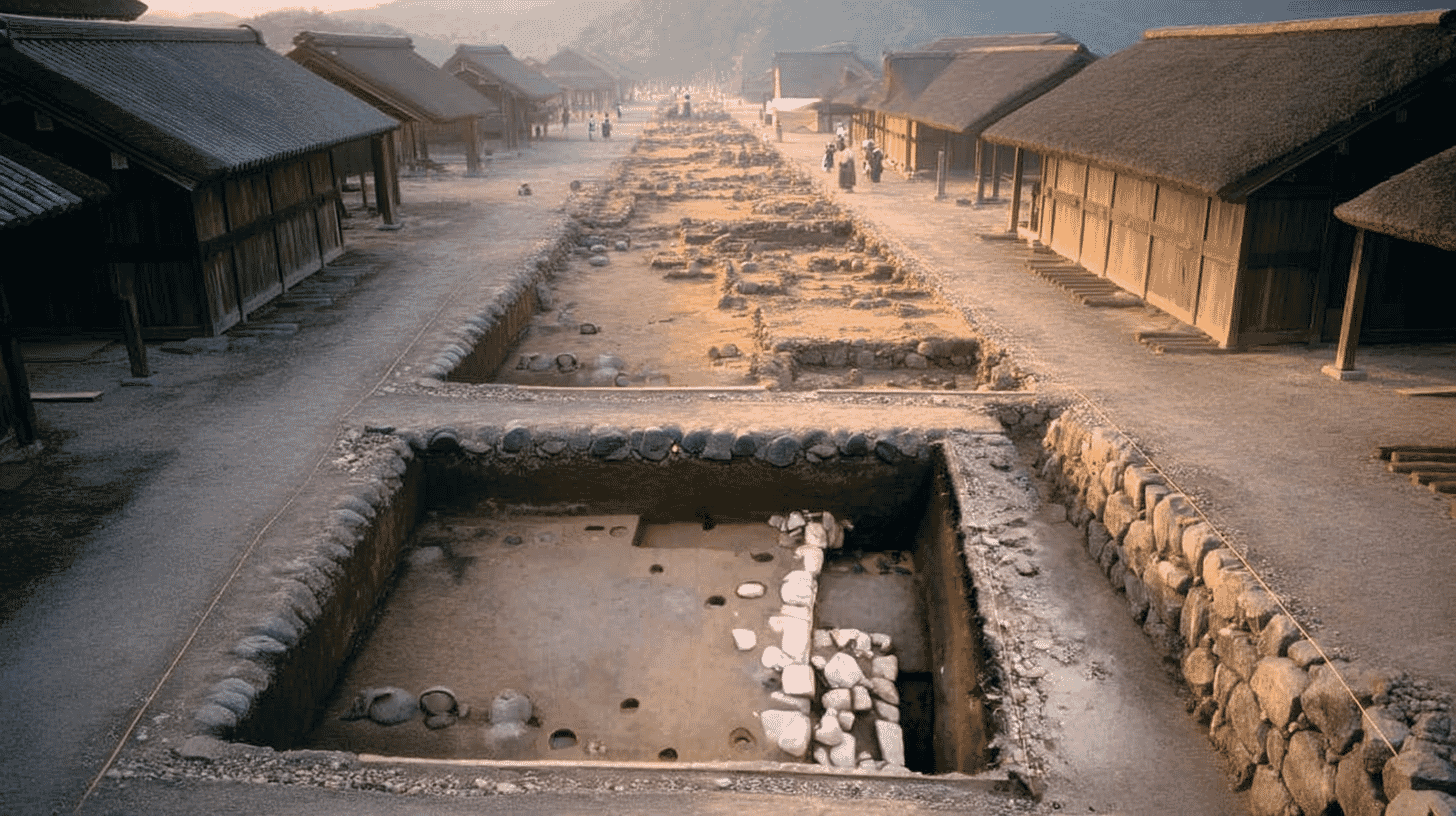
Bingo Kokufu Ruins: A Window into Ancient Japan's Provincial Governance
Hidden within the modern cityscape of Fuchu City in Hiroshima Prefecture lies one of Japan's most significant archaeological treasures—the Bingo Kokufu Ruins. Designated as a National Historic Site in 2016, this remarkable site offers visitors a rare glimpse into the sophisticated administrative system that governed ancient Japan for nearly five centuries, from the 8th through the 12th century.
Unlike the crowded tourist destinations of Kyoto or Nara, the Bingo Kokufu Ruins provide an intimate and authentic experience of Japan's ancient past. Here, you can walk the same grounds where provincial governors once conducted affairs of state, performed ceremonies, and shaped the cultural landscape of the Bingo region.
What Was a Kokufu? Understanding Japan's Ancient Provincial System
The term "Kokufu" refers to the provincial capital and administrative center established during Japan's Nara Period (710-794 CE) as part of the Ritsuryō system—a centralized government structure modeled after Tang Dynasty China. Each of Japan's ancient provinces had its own Kokufu, serving as the regional seat of government where officials dispatched from the capital conducted administrative, judicial, military, and taxation duties.
The Bingo Kokufu governed what is now the eastern portion of Hiroshima Prefecture. Historical records in the "Wamyō Ruijushō," a 10th-century Japanese dictionary, confirm that the provincial government was located in Ashida District—the area encompassing present-day Fuchu City. For approximately 500 years, from the Nara Period through the late Heian Period, this site served as the political, economic, and cultural heart of the Bingo region.
Why Bingo Kokufu Ruins Earned National Historic Site Designation
The Bingo Kokufu Ruins hold exceptional archaeological and historical value that warranted their designation as a National Historic Site. Through systematic excavations beginning in 1967, researchers have uncovered extensive evidence of governmental activities spanning four centuries of continuous use.
The site is particularly significant because it demonstrates the complete evolution of a provincial government—from its establishment in the 8th century to its decline in the 12th century. Unlike many Kokufu sites across Japan where only fragments remain, Bingo Kokufu provides a comprehensive picture of how these administrative centers functioned and transformed over time.
Archaeologists have identified multiple building periods, showing how structures evolved from post-built wooden buildings to more sophisticated stone-foundation architecture. The discovery of artifacts typically associated with high-ranking officials—including ceramic inkstones, belt ornaments, and administrative seals—confirms that this site served essential governmental functions.
Exploring the Three Designated Districts
The National Historic Site designation encompasses three distinct archaeological areas, each revealing different aspects of the ancient provincial government.
Tsuji District: The Administrative Heart
The Tsuji District represents what scholars believe was the core administrative zone of Bingo Kokufu. Excavations have revealed a planned layout of large buildings arranged in an orderly grid pattern within a roughly 109-meter square enclosure defined by boundary ditches. These structures housed the officials who managed the province's governance, from tax collection to legal proceedings.
The artifacts recovered from this district are exceptional in both quality and quantity. Researchers have unearthed "Kokufu-style" roof tiles bearing patterns identical to those found at Heijō Palace in Nara, indicating the high status of these buildings. The presence of green-glazed ceramics, Chinese trade porcelain, and ceramic inkstones throughout the site—continuing from the 8th through the 12th century—suggests continuous sophisticated administrative activity.
Kinryuji-higashi District: Ceremonial Grandeur
The Kinryuji-higashi District has yielded some of the most impressive architectural remains at the site. Archaeologists discovered a monumental stone-foundation building comparable in scale to major structures at Kawaradera Temple in Nara—one of the most important temples of ancient Japan. The building featured an elevated stone platform measuring 25 meters east-west by 18.3 meters north-south, with formal staircases on all four sides.
Adjacent to this grand structure, researchers uncovered a garden pond complex (enyū), suggesting this area served ceremonial or reception purposes—perhaps hosting visiting dignitaries or conducting important religious rituals associated with provincial governance.
Den-Kichida-ji District: Religious Heritage
Added to the National Historic Site designation in 2019, the Den-Kichida-ji District contains the remains of what tradition identifies as Kichida Temple, believed to have been established in the late 7th century. Excavations have revealed temple-associated roof tiles and building foundations, including what may have been a formal gate structure.
This district illustrates the close relationship between provincial governance and Buddhism during the Nara and Heian periods, when temples often served important administrative and ceremonial functions alongside religious ones.
Treasures from the Earth: Notable Archaeological Discoveries
The artifacts recovered from Bingo Kokufu provide invaluable insights into the daily life, administration, and cultural sophistication of ancient provincial government.
Among the most significant finds is the bronze seal inscribed "Kayū Shiin" (賀友私印)—a personal seal that would have been used by a government official. Ancient seals are extremely rare in Japan, with fewer than 300 examples surviving nationwide, making this discovery particularly precious.
The site has also yielded numerous belt ornaments (yōtaiku)—decorative metal fittings that adorned the formal belts worn by officials. These indicate the presence of ranked bureaucrats who followed the strict dress codes mandated by the central government.
Perhaps most remarkable is the "Nara Tricolor" pottery vessel containing 54 glass beads, discovered in what appears to be a foundation ritual deposit. This rare ceremonial object demonstrates the sophisticated religious practices associated with major construction projects in ancient Japan.
Other notable finds include ink-inscribed pottery bearing administrative notations such as "kuriya" (kitchen) and "gon-no-suke" (deputy governor), wooden ritual figurines (hitogata) used in purification ceremonies, and extensive collections of Sue ware and Haji ware pottery.
Visiting Bingo Kokufu Ruins Today
While the central government hall (kokucho) itself remains undiscovered beneath Fuchu City's modern urban fabric, visitors can still experience the authentic atmosphere of this ancient administrative center.
The Fuchu City History and Folk Museum serves as the ideal starting point for your exploration. Housed in the former Ashina District Office Building—a beautiful Meiji-era structure designated as a Fuchu City Important Cultural Property—the museum displays artifacts from the Bingo Kokufu excavations and offers periodic opportunities to try on replica court costumes from the ancient period.
From the museum, visitors can take guided walking tours of the archaeological districts, seeing the actual excavation sites where history was uncovered. The city also hosts regular lectures, symposiums, and hands-on cultural experiences including magatama (comma-shaped bead) making workshops.
Surrounding Attractions: Make It a Full Day
Fuchu City offers numerous attractions that complement a visit to the Bingo Kokufu Ruins.
Koishiki is a registered national tangible cultural property—a magnificent traditional inn dating from 1872 that once hosted prime ministers and famous literary figures. Today, visitors can tour the stunning wooden architecture, stroll through the Japanese garden, and enjoy tea or meals in this historic setting.
Food enthusiasts should not miss trying "Fuchu-yaki"—the local specialty okonomiyaki (savory pancake) that differs from standard Hiroshima-style by using minced meat instead of sliced pork belly. The result is a crispy, caramelized texture that has won first place in regional competitions.
The Jōge District in northern Fuchu City preserves a beautiful streetscape of white-walled merchant houses from the Edo period, when this area served as a stopping point on the historic Iwami Ginzan Kaidō (Silver Mountain Road).
Nature lovers will appreciate the numerous shrines and temples in the area, including Jingu-ji Temple—known as the "Hydrangea Temple" for its 3,000 blooming plants in early summer—and the scenic Sanrō Falls waterfall.
Planning Your Visit
The most convenient access to Fuchu City is via the JR Fukuen Line, which connects Fukuyama Station (on the Shinkansen line) to Fuchu Station in approximately 45 minutes. From Fuchu Station, the main archaeological districts and museum are accessible by local bus or taxi.
For those driving, Fuchu City is approximately 15 minutes from Onomichi-kita Interchange on the Onomichi-Matsue Expressway, or about 40 minutes from Fukuyama-higashi Interchange on the San'yō Expressway.
The Fuchu City History and Folk Museum offers free admission and is open from 10:00 to 17:00, closed on Mondays (except holidays) and during the year-end/New Year period.
- 📍 Plan Your Visit to Hiroshima
- Find tours, activities & transport passes near Bingo Provincial Capital Ruins
- [ Itsukushima Shrine & Hiroshima Peace Memorial ]
Q&A
- Can I see the actual excavation sites?
- Yes, portions of the Tsuji, Kinryuji-higashi, and Den-Kichida-ji districts are accessible to visitors. The city periodically conducts open-site explanation sessions during active excavations. Check with the Fuchu City Board of Education Cultural Properties Office for current schedules.
- Is English-language information available?
- While most signage and materials are in Japanese, the Fuchu Tourism Association can help arrange English-speaking volunteer guides with advance notice. Basic English pamphlets may be available at the tourism information center.
- What is the best season to visit?
- Spring (April-May) and autumn (October-November) offer the most pleasant weather for walking the archaeological sites. The museum hosts special events called "Shiryōkan Festa" in May and October featuring ancient costume try-on experiences and hands-on activities.
- How long should I plan for my visit?
- Allow 2-3 hours to visit the museum and walk through the main archaeological districts. If combining with other Fuchu City attractions like Koishiki or trying Fuchu-yaki, plan for a full day.
- Are there any annual festivals related to Bingo Kokufu?
- Yes, the Bingo Kokufu Festival is held every summer, celebrating the city's ancient heritage with historical reenactments, traditional performances, and local food. The "Fuchu History Forum" also hosts regular lectures and symposiums throughout the year.
Basic Information
| Official Name | Bingo Kokufu Ruins (備後国府跡) |
|---|---|
| Designation | National Historic Site (designated October 3, 2016; expanded June 21, 2019) |
| Historical Period | 8th century - 12th century (Nara to late Heian period) |
| Location | Motomachi area, Fuchu City, Hiroshima Prefecture, Japan |
| Designated Areas | Tsuji District, Kinryuji-higashi District, Den-Kichida-ji District |
| Managing Organization | Fuchu City |
| Related Museum | Fuchu City History and Folk Museum (admission free) |
| Museum Hours | 10:00-17:00, closed Mondays (except holidays) and year-end/New Year |
| Museum Address | 882-2 Habu-cho, Fuchu City, Hiroshima 726-0021 |
| Contact | Fuchu City Board of Education, Cultural Properties Section: 0847-43-7180 |
| Access | JR Fukuen Line to Fuchu Station (45 min from Fukuyama), then taxi or bus |
References
- 備後国府跡 文化遺産オンライン
- https://bunka.nii.ac.jp/heritages/detail/221647
- 府中のルーツ「備後国府」|広島県府中市
- https://www.city.fuchu.hiroshima.jp/soshiki/kyoiku_iinkai/kyoikuseisakuka/bingokokufu/901.html
- 備後国府 - Wikipedia
- https://ja.wikipedia.org/wiki/備後国府
- 府中市歴史民俗資料館|広島県府中市
- https://www.city.fuchu.hiroshima.jp/soshiki/kyoiku_iinkai/kyoikuseisakuka/bingokokufu/museum/798.html
- 府中市立図書館 - 府中市歴史資料:ふるさとの歴史
- https://adeac.jp/fuchu-hiroshima-lib/texthtml/d100040/mp000040-100040/ht000140
- 府中市観光協会 FUN!FAN!FUCHU !!
- https://fuchu-kanko.jp/
- 恋しき | 府中市観光協会
- https://fuchu-kanko.jp/recommended/recommended-902/
Last verified: 2026.01.02
Nearby heritages
- The Beloved Main House
- 564-1 Yokomachi, Fuchucho, Fuchu City, Hiroshima Prefecture, 181-1 Nagai
- Dear Annex (Bamboo and Hagi Room)
- 179-5 Nagai, Fuchu-cho, Fuchu City, Hiroshima Prefecture
- Dearly Beloved Annex (Kiri and Satsuki Rooms)
- 178, 179-2 Nagai, Fuchu-cho, Fuchu City, Hiroshima Prefecture
- Dear Annex (Chrysanthemum Room)
- 178 Nagai, Fuchu-cho, Fuchu City, Hiroshima Prefecture
- Dearly Departed Room (Kikyō Room)
- 177 Nagai, Fuchu-cho, Fuchu City, Hiroshima Prefecture
- Nobutoshi Family Residence Western-Style Building
- 37-1 Deguchicho, Fuchu City, Hiroshima Prefecture
- Ento Family Residence Japanese Building (Tosenso)
- 37-1 Deguchicho, Fuchu City, Hiroshima Prefecture
- Kuwata Family Residence Stone Walls and Fences
- 1517-1 Higashitani Yorimune, Motoyamacho, Fuchu City, Hiroshima Prefecture
- Kuwata Family Residence Main Building
- 1517-1 Higashitani Yorimune, Motoyamacho, Fuchu City, Hiroshima Prefecture
- Kuwata Family Residence
- 1517-1 Higashitani Yorimune, Motoyamacho, Fuchu City, Hiroshima Prefecture