
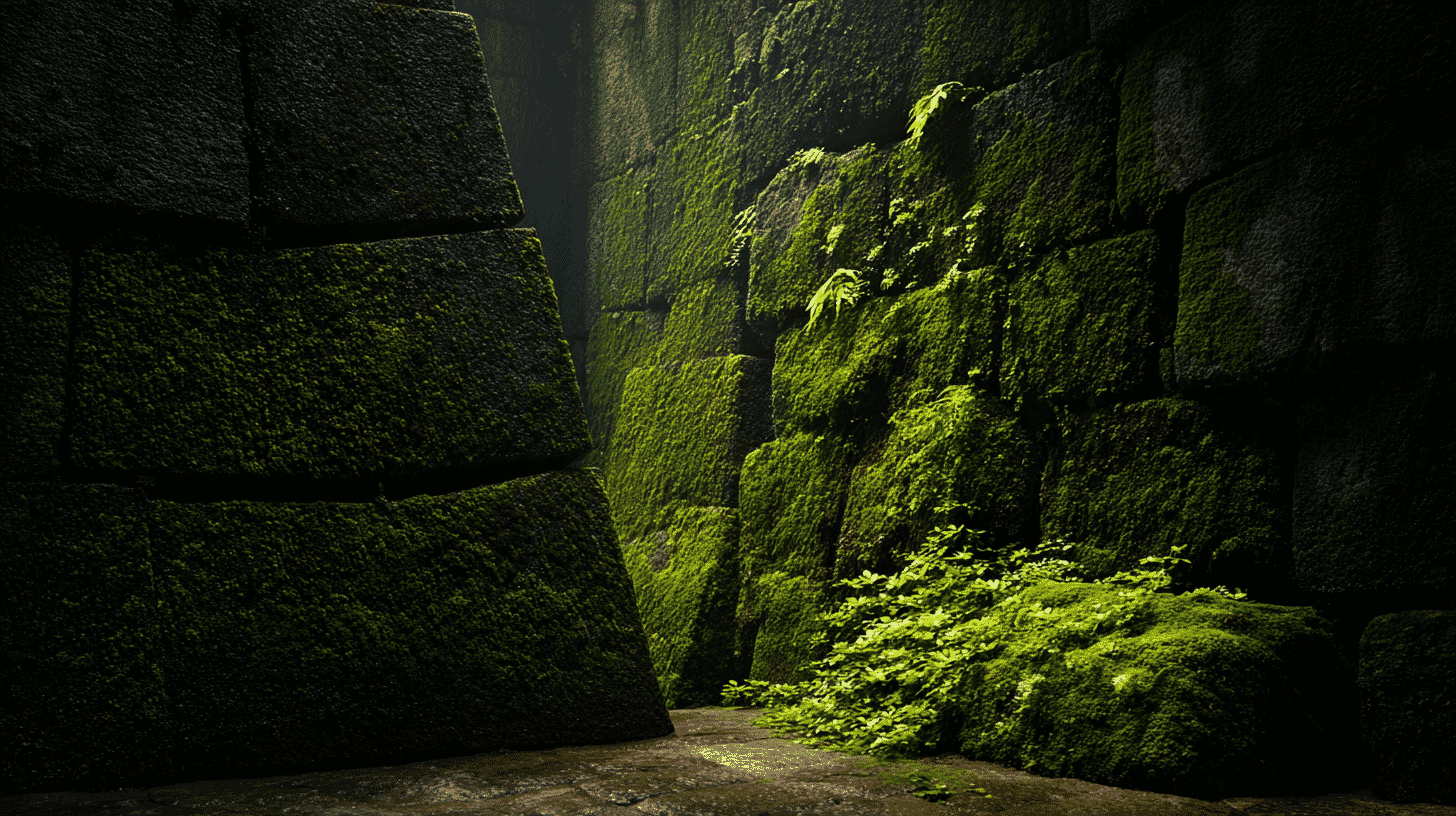
Luminous Moss Growth Site at Edo Castle Ruins: Tokyo's Most Mysterious Natural Monument
Hidden within the ancient stone walls of Edo Castle, just steps away from the bustling heart of Tokyo, lies one of Japan's most extraordinary natural treasures—a colony of luminous moss that glows with an ethereal emerald light. The Luminous Moss Growth Site at Edo Castle Ruins (江戸城跡のヒカリゴケ生育地) represents a remarkable intersection of natural wonder and historical heritage, making it one of the most unique designated natural monuments in all of Japan.
What is Luminous Moss?
Luminous moss, known scientifically as Schistostega pennata (and called "Hikari-goke" in Japanese), is a primitive and rare moss species belonging to the family Schistostegaceae. This remarkable plant is the sole member of its genus—making it a 1-family, 1-genus, 1-species botanical wonder.
Contrary to what its name suggests, luminous moss does not actually emit light like fireflies or bioluminescent organisms. Instead, its enchanting glow comes from a sophisticated natural optical system. The moss's protonema (the filamentous stage of moss development) contains unique spherical, lens-shaped cells that collect and concentrate even the faintest available light. These cells contain abundant chloroplasts that absorb useful light wavelengths for photosynthesis while reflecting the remainder back toward the light source. The result is a mesmerizing golden-green or emerald glow that has inspired legends of goblin gold and fairy treasures throughout history.
This moss typically grows in cool, humid environments with very low light conditions—usually in mountain caves, under overturned tree roots, or in rock crevices at elevations between 1,700 and 2,500 meters. The optimal light level for this moss is remarkably dim, between 40 and 300 lux.
An Astonishing Discovery in Tokyo's Heart
On April 29, 1969, calligrapher Kōhachirō Ishikawa was taking an afternoon stroll near Chidorigafuchi moat, close to his home in Ichiban-chō, Chiyoda Ward. While walking along the ancient stone walls of the former Edo Castle, he noticed something glowing in the gaps between the massive stones. Peering closer, he discovered what appeared to be hundreds of fireflies clustered together, emitting a soft greenish light. Upon careful observation, he realized this was not insects, but a colony of glowing moss.
Having knowledge of plants, Ishikawa immediately suspected this might be the legendary luminous moss. He promptly contacted the Agency for Cultural Affairs, who connected him with renowned botanist Hisakichi Takeda. When Takeda confirmed the identification on May 8, 1969, the botanical world was stunned. The discovery defied conventional wisdom—luminous moss was supposed to thrive only in pristine mountain environments with clean air, not in the polluted, traffic-heavy center of one of the world's largest metropolises.
Bryologist Hiroshi Inoue from the National Museum of Nature and Science examined the site days later and reportedly rubbed his eyes in disbelief at what he saw. As he later wrote, the discovery was truly extraordinary—the moss was growing in lowland urban conditions, surrounded by major highways including the Shuto Expressway Inner Circular Route and busy thoroughfares like Uchibori-dōri and Yasukuni-dōri.
Why It Was Designated a Natural Monument
On June 14, 1972, the Luminous Moss Growth Site at Edo Castle Ruins was officially designated as a National Natural Monument. This designation was based on several extraordinary factors.
First, there is the remarkable uniqueness of urban survival. Prior to this discovery, luminous moss in Japan was only known from two nationally designated sites: Iwamura in Nagano Prefecture (designated in 1921) and Yoshimi Hyakuana in Saitama Prefecture (designated in 1928). Both locations are in relatively rural, low-pollution areas. The Tokyo site represents the only known instance of this delicate moss thriving in a major urban center.
Second, there is exceptional scientific value. The fact that this environmentally sensitive species can survive despite being surrounded by heavy traffic, air pollution, and the extreme conditions of Tokyo's urban heat island effect challenges previous scientific understanding of the moss's ecological requirements.
Third, this site holds important historical significance. The moss grows within the stone walls of Edo Castle, a National Special Historic Site. Scientists theorize that the moss spores may have arrived centuries ago, attached to stones brought from various regions across Japan when feudal lords contributed materials for castle construction during the Edo period (1603-1868).
Finally, this is the most centrally located national natural monument among all six designated natural monuments within Tokyo's 23 special wards, and the only one within Chiyoda Ward.
The Secret Location: A Protected Mystery
Unlike most natural monuments in Japan, the exact location of this luminous moss colony is kept strictly confidential. There are no signs, markers, or monuments indicating its presence within Kitanomaru Park. The site is completely off-limits to the public, protected behind locked gates and managed by the Ministry of the Environment's Kokyogaien (Imperial Palace Outer Gardens) Management Office.
This unusual secrecy serves multiple purposes. The overlapping designation as part of the Special Historic Site of Edo Castle means that installing protective fencing or other structures would require complex cultural property procedures. Additionally, the site's proximity to the Imperial Palace raises security concerns. The moss's extreme sensitivity to environmental disturbance means that even well-intentioned visitors could inadvertently damage or destroy the colony.
Scientific surveys conducted in 1981 and 2011 confirmed that the moss continues to thrive in several locations along approximately 200 meters of stone wall. The 2011 survey by researchers from the National Museum of Nature and Science found the moss growing vigorously in at least four locations, all in gaps at the very bottom or second-from-bottom level of the stone walls.
The Science Behind the Survival
How does this delicate moss survive in such an unlikely environment? Scientists believe the answer lies in the unique microclimate created by the massive stone walls of Edo Castle. The deep gaps between the ancient stones function like natural air conditioning systems, maintaining the specific temperature, humidity, and light levels the moss requires regardless of external conditions.
The stone walls face Chidorigafuchi moat and are heavily shaded by overhanging trees, creating a forest-like microenvironment in the midst of the city. The observer Ishikawa noted that even in the heat of July, the interior of the stone wall crevices remained remarkably cool. The moss exhibits seasonal variation—its glow fades during the cold, dry winter months but returns vigorously each spring.
Visitor Information: What You Can Experience
While the luminous moss itself cannot be viewed, a visit to Kitanomaru Park and the surrounding Edo Castle ruins offers rich rewards for nature lovers and history enthusiasts alike.
Kitanomaru Park is a beautiful 19.3-hectare forest park that was originally part of Edo Castle's North Citadel (Kitanomaru). Today it offers peaceful walking paths, seasonal flowers, and important cultural facilities including the Science Museum, the National Museum of Modern Art Tokyo, and the famous Nippon Budokan martial arts arena.
The park's stone walls and moats preserve the atmosphere of Edo-period castle architecture. The Tayasu-mon and Shimizu-mon gates, both Important Cultural Properties, offer glimpses into the grandeur of the original castle fortifications. Chidorigafuchi moat, famous for its spectacular cherry blossoms in spring, runs alongside where the luminous moss colony exists hidden from view.
For those wishing to see luminous moss in Japan, the Yoshimi Hyakuana site in Saitama Prefecture offers public viewing opportunities. This ancient burial mound complex contains horizontal cave tombs where luminous moss can be observed glowing in the darkness.
Nearby Attractions
Kitanomaru Park is surrounded by numerous attractions worth exploring. Adjacent to the park, the Imperial Palace East Gardens offer free public access to beautifully maintained Japanese gardens within the former main compound of Edo Castle. Yasukuni Shrine and the Yushukan War Memorial Museum lie just north of the park. The historic Kanda district with its famous used bookstores is within walking distance, and the prestigious universities of Hosei and Sophia are nearby.
The area is also renowned for seasonal beauty. Chidorigafuchi is considered one of Tokyo's premier cherry blossom viewing spots, with illuminated evening boat rides available during sakura season. In autumn, the ginkgo trees along Uchibori-dōri turn brilliant gold.
- 📍 Plan Your Visit to Tokyo
- Find tours, activities & transport passes near Luminous Moss Habitat at the Edo Castle Ruins
- [ Tokyo Skytree Asakusa & teamLab Experiences ]
Q&A
- Can visitors see the luminous moss at Edo Castle?
- No, the luminous moss site is not open to the public. The exact location is kept confidential, and the area is restricted to protect this sensitive natural monument. There are no signs or markers indicating its location within Kitanomaru Park.
- Does luminous moss actually produce light?
- No, luminous moss does not generate its own light like fireflies. Instead, it reflects incoming light through specialized lens-shaped cells in its protonema. The chloroplasts in these cells give the reflected light its characteristic emerald-green color. The moss only appears to glow when viewed in dim conditions with a light source behind the viewer.
- Where else in Japan can I see luminous moss?
- Two other nationally designated luminous moss sites exist in Japan: Iwamura Hikari-goke Site in Saku City, Nagano Prefecture, and the Yoshimi Hyakuana Hikari-goke Site in Yoshimi Town, Saitama Prefecture. The Yoshimi site, located within ancient burial caves, offers public viewing opportunities. Regional sites also exist in places like Rausu, Hokkaido, and Komagane, Nagano.
- Why is luminous moss so rare in urban areas?
- Luminous moss is extremely sensitive to environmental changes. It requires specific conditions of humidity, temperature, and dim light (40-300 lux) to survive. Air pollution, temperature fluctuations, and habitat destruction typically make urban environments unsuitable. The Edo Castle site is remarkable because the stone wall crevices create a protected microclimate that mimics the moss's natural mountain cave habitat.
- When was the luminous moss at Edo Castle discovered?
- The moss was discovered on April 29, 1969, by calligrapher Kōhachirō Ishikawa during an afternoon walk near Chidorigafuchi moat. It was officially designated as a National Natural Monument on June 14, 1972, making it the third such designated luminous moss site in Japan.
Basic Information
| Official Name | Luminous Moss Growth Site at Edo Castle Ruins (江戸城跡のヒカリゴケ生育地) |
|---|---|
| Designation | National Natural Monument (国指定天然記念物) |
| Date Designated | June 14, 1972 |
| Location | Kitanomaru Park, Chiyoda-ku, Tokyo |
| Species | Luminous Moss / Hikari-goke (Schistostega pennata) |
| Management | Ministry of the Environment, Kokyogaien Management Office |
| Public Access | Not permitted (location confidential) |
| Nearest Stations | Kudanshita Station (Toei Shinjuku Line / Tokyo Metro Hanzomon Line) - 5 min walk; Takebashi Station (Tokyo Metro Tozai Line) - 5 min walk |
| Park Hours | Kitanomaru Park: Open 24 hours (some facilities have separate hours) |
| Admission | Free (Kitanomaru Park) |
References
- 江戸城跡のヒカリゴケ生育地 - 文化遺産データベース
- https://bunka.nii.ac.jp/db/heritages/detail/201386
- 江戸城跡のヒカリゴケ生育地 - Wikipedia
- https://ja.wikipedia.org/wiki/江戸城跡のヒカリゴケ生育地
- 皇居外苑の一年間(8月)- 環境省
- https://www.env.go.jp/garden/kokyogaien/1_intro/08_aug.html
- Schistostega - Wikipedia
- https://en.wikipedia.org/wiki/Schistostega
- Luminous moss - Encyclopædia Britannica
- https://www.britannica.com/plant/luminous-moss
- 北の丸公園 - 千代田区観光協会
- https://visit-chiyoda.tokyo/app/spot/detail/12
Last verified: 2026.01.28