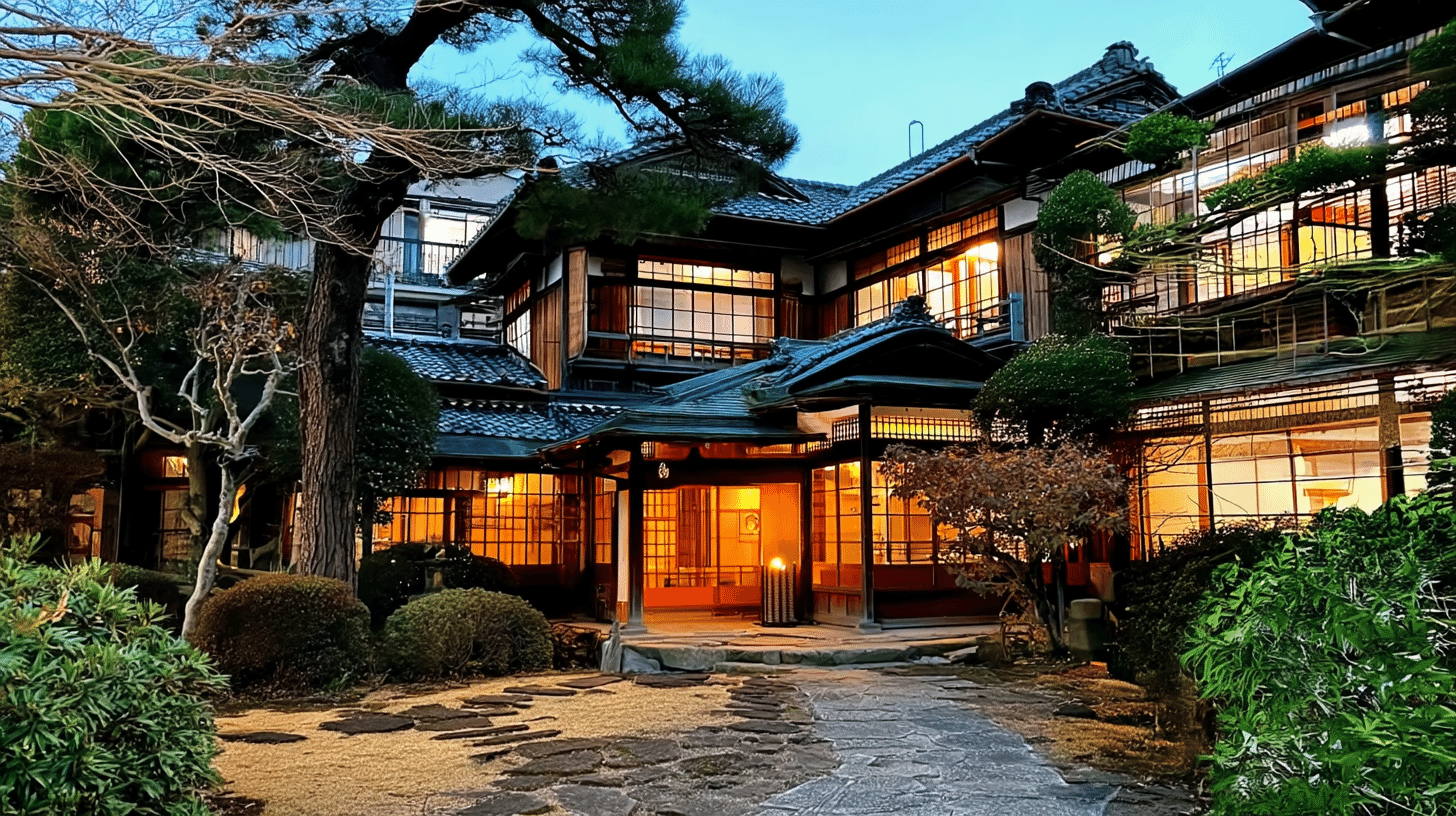
Mitsubishi Electric Takanawa-so: A Hidden Gem of Early Showa Architecture in Tokyo's Shirokanedai

Discover Mitsubishi Electric Takanawa-so, a Registered Tangible Cultural Property in Tokyo's prestigious Shirokanedai district. This historic estate features three early Showa-period buildings showcasing the finest Japanese-Western hybrid residential architecture of the 1930s.

Introduction: Where Finance History Meets Architectural Heritage

Nestled in the prestigious Shirokanedai district of Tokyo's Minato Ward, Mitsubishi Electric Takanawa-so stands as a remarkable testament to the wealth and refined taste of Japan's early 20th-century business elite. This historic estate, comprising three distinct buildings—the Main House (Shuoku), the Western-style Building (Yokan), and the Storehouse (Kura)—was originally constructed as the Tokyo residence of Toyama Yoshizo, the founder of Toyama Securities.

While this cultural treasure is not open to the public, its designation as a Registered Tangible Cultural Property in December 2000 underscores its significant value as a window into the urban development and architectural sophistication of Tokyo's Yamanote upland residential areas during the early Showa period.

Historical Background: The Toyama Legacy

Mitsubishi Electric Takanawa-so was built in 1931 (Showa 6) as the private residence of Toyama Yoshizo, who had amassed considerable wealth through stock trading. Toyama was the founder of Toyama Securities, which was later absorbed by Nikko Securities. His success in the financial world allowed him to commission this magnificent estate in one of Tokyo's most desirable neighborhoods.

The location, situated south of Meiji Gakuin University, was chosen for its elevated position and the refined atmosphere of the Shirokanedai area—a district that had developed as a prestigious residential zone for the wealthy and influential during the Meiji and Taisho periods. After World War II, the property came under the ownership of Mitsubishi Electric Corporation, which has maintained it as a corporate facility while preserving its historical integrity.

Architectural Significance of the Three Buildings

The Main House (Shuoku)

The Main House is a stunning example of modern Japanese residential architecture from the early Showa period. This two-story wooden structure features an irimoya-style roof (a combination of hip and gable styles) covered with san-kawara tiles, covering a building area of approximately 410 square meters.

The interior layout demonstrates the sophisticated spatial planning characteristic of upper-class Japanese homes of the era. The entrance and reception room are positioned at the eastern end, while a series of interconnected tatami rooms—arranged in sets of 10-jo and 8-jo, 8-jo and 8-jo, and 8-jo and 6-jo—extend westward in a graceful echelon formation known as "gankō" (flying geese pattern). This arrangement creates a dynamic flow of space while maximizing views of the garden from multiple rooms.

The Western-style Building (Yokan)

Standing independently to the west of the Main House, the Western-style Building is a two-story wooden structure with a hipped roof covered in san-kawara tiles. The building measures approximately 55 square meters and connects to the Main House through a stairway passage at its northeastern corner.

A distinctive feature is the sunroom projecting from the southwestern corner, measuring approximately 2.7 meters square. This architectural element demonstrates the wa-yo setchu (Japanese-Western hybrid) residential style that became popular among affluent Japanese during the early 20th century. Together with the Japanese-style rooms facing the southern garden, this building exemplifies the coexistence of Japanese and Western living spaces within a single residential compound.

The Storehouse (Kura)

Perhaps the most architecturally innovative of the three buildings, the Storehouse is a reinforced concrete structure comprising four levels: three above ground and one basement. Built to the west of the kitchen area of the Main House, it covers a building area of approximately 41 square meters.

The basement level was designed as a garage, while the upper floors served as storage space. The southern facade features an extended eave creating a traditional "kuramae" (storehouse forecourt) space. The flat roof and box-like form represent the modern interpretation of the traditional Japanese storehouse, showcasing the distinctive characteristics of early Showa-period reinforced concrete warehouse architecture.

Why It Was Designated a Cultural Property

Mitsubishi Electric Takanawa-so was registered as a Tangible Cultural Property on December 4, 2000, with all three buildings receiving this designation. The primary reasons for this recognition include:

  • Historical Value: The estate provides invaluable insights into the development patterns of upland residential areas in Tokyo's Yamanote district during the early Showa period.
  • Architectural Integrity: The buildings retain their original design features and demonstrate the high-quality craftsmanship of the era.
  • Cultural Significance: The combination of Japanese and Western architectural elements reflects the evolving lifestyle preferences of Japan's business elite during a period of rapid modernization.
  • Urban Development Documentation: The estate serves as an important record of how wealthy individuals established residences in Tokyo's expanding suburban areas.

Viewing Information

It is important to note that Mitsubishi Electric Takanawa-so is not open to public visitation. The property is enclosed by high walls, and even the exterior is largely hidden from view. There are currently no special public opening events scheduled.

However, architecture enthusiasts and cultural heritage aficionados can appreciate the neighborhood's rich architectural heritage through various nearby sites that are accessible to visitors.

Surrounding Attractions

The Shirokanedai area offers numerous cultural attractions that complement a visit to see the exterior of Mitsubishi Electric Takanawa-so:

Meiji Gakuin University Campus

Located immediately north of Takanawa-so, Meiji Gakuin University's Shirokanedai Campus features several historic buildings including the Meiji Gakuin Memorial Hall (1890), designed in Neo-Gothic style, and the Imbrie House, a Registered Tangible Cultural Property that served as a missionary residence. Visitors may enter the campus during daylight hours by checking in at the guard station.

Tokyo Metropolitan Teien Art Museum

This stunning Art Deco mansion, formerly the residence of Prince Asaka, opened as a museum in 1983. The building itself is designated as an Important Cultural Property, and visitors can enjoy both its exquisite interior and beautiful gardens. Located approximately 15 minutes' walk from Takanawa-so.

Happo-en Garden

A magnificent 12,000-tsubo Japanese garden featuring a strolling pond, tea houses, and over 500-year-old bonsai trees. Admission to the garden is free, and visitors can also enjoy tea ceremony experiences, restaurants, and cafes with garden views.

Zuisho-ji Temple

Founded in 1670 as Tokyo's first Obaku Zen temple, Zuisho-ji features the Daiohoden (Main Hall), an Important Cultural Property. The temple recently gained attention for its modern Kuri (monks' quarters) designed by architect Kengo Kuma.

Institute for Nature Study

Adjacent to the Teien Art Museum, this facility of the National Museum of Nature and Science preserves a remnant of the Musashino natural forest. It offers a peaceful retreat and a glimpse of what Tokyo looked like before urbanization.

Access Information

Mitsubishi Electric Takanawa-so is located at 2-6-11 Shirokanedai, Minato-ku, Tokyo. The nearest stations are:

  • Shirokanedai Station (Tokyo Metro Namboku Line, Toei Mita Line) - approximately 7 minutes' walk
  • Takanawadai Station (Toei Asakusa Line) - approximately 7 minutes' walk
  • Shirokane-takanawa Station (Tokyo Metro Namboku Line, Toei Mita Line) - approximately 7 minutes' walk

By bus, take the Toei Bus from Meguro Station or Shinagawa Station and alight at "Meiji Gakuin-mae" bus stop.

📍 Plan Your Visit to Tokyo
Find tours, activities & transport passes near Mitsubishi Electric Takanawa Manor House
[ Tokyo Skytree Asakusa & teamLab Experiences ]

Q&A

QCan I visit the inside of Mitsubishi Electric Takanawa-so?
AUnfortunately, Mitsubishi Electric Takanawa-so is not open to the public. The property is enclosed by high walls, and there are no regular public opening events. The estate is maintained by Mitsubishi Electric Corporation as a corporate facility.
QWhat is the connection between this property and the Toyama family of Nikko Securities?
AThe property was originally built as the residence of Toyama Yoshizo, founder of Toyama Securities. Toyama Yoshizo was a cousin of Toyama Genichi, the founder of Kawashimaya Securities (later Nikko Securities, now SMBC Nikko Securities). Both men were prominent figures in Japan's securities industry during the early 20th century.
QWhat other cultural properties can I see in the Shirokanedai area?
AThe area is rich in cultural heritage. Nearby attractions include the Tokyo Metropolitan Teien Art Museum (former Prince Asaka residence, Important Cultural Property), Meiji Gakuin University's historic buildings including the Imbrie House (Registered Tangible Cultural Property), Zuisho-ji Temple's Daiohoden (Important Cultural Property), and Happo-en Garden with its 400-year history.
QWhat is the best season to visit the Shirokanedai area?
AEach season offers unique charms. Spring (late March to April) brings beautiful cherry blossoms at Happo-en and the Institute for Nature Study. Autumn (mid-November to early December) offers stunning foliage at the Teien Art Museum gardens and Happo-en. Winter provides a serene atmosphere with fewer crowds.
QIs there an English audio guide available at nearby attractions?
AYes, several nearby attractions offer English-language services. Happo-en provides a free audio guide app in English and Japanese. The Tokyo Metropolitan Teien Art Museum offers English audio guides and signage. Meiji Gakuin University's historic buildings have some English explanatory panels.

Basic Information

Name Mitsubishi Electric Takanawa-so (Main House, Western-style Building, Storehouse)
Cultural Property Designation Registered Tangible Cultural Property (Architectural Structure)
Registration Date December 4, 2000
Construction Period Early Showa Period (1926-1988)
Main House Specifications Two-story wooden structure, tiled roof, building area 410㎡
Western-style Building Specifications Two-story wooden structure, tiled roof, building area 55㎡
Storehouse Specifications Reinforced concrete, 3 floors above ground + 1 basement, building area 41㎡
Original Owner Toyama Yoshizo (Founder of Toyama Securities)
Current Owner Mitsubishi Electric Corporation
Address 2-6-11 Shirokanedai, Minato-ku, Tokyo
Public Access Not open to the public
Nearest Stations Shirokanedai Station, Takanawadai Station, Shirokane-takanawa Station (all approx. 7 min. walk)

References

Mitsubishi Electric Takanawa-so Main House - Cultural Heritage Online (Agency for Cultural Affairs)
https://bunka.nii.ac.jp/heritages/detail/137788
Mitsubishi Electric Takanawa-so Western-style Building - Cultural Heritage Online
https://bunka.nii.ac.jp/heritages/detail/193019
Mitsubishi Electric Takanawa-so Storehouse - Cultural Heritage Online
https://bunka.nii.ac.jp/heritages/detail/186750
National Database of Designated Cultural Properties (Agency for Cultural Affairs)
https://kunishitei.bunka.go.jp/bsys/maindetails/101/00002018
Toyama Genichi - Wikipedia
https://ja.wikipedia.org/wiki/%E9%81%A0%E5%B1%B1%E5%85%83%E4%B8%80
Visit Minato City - Happo-en Garden Guide
https://visit-minato-city.tokyo/ja-jp/articles/530

Last verified: 2026.01.28

Nearby heritages
